
UK to answer for its ‘dismal record’ in Eurovision before committee of MPs
The UK’s Eurovision fortunes have become a parliamentary concern, with the Digital, Culture, Media and Sport Committee set to interrogate the BBC and music industry insiders over a record that has slipped from top‑ten regularity to repeated last‑place finishes.
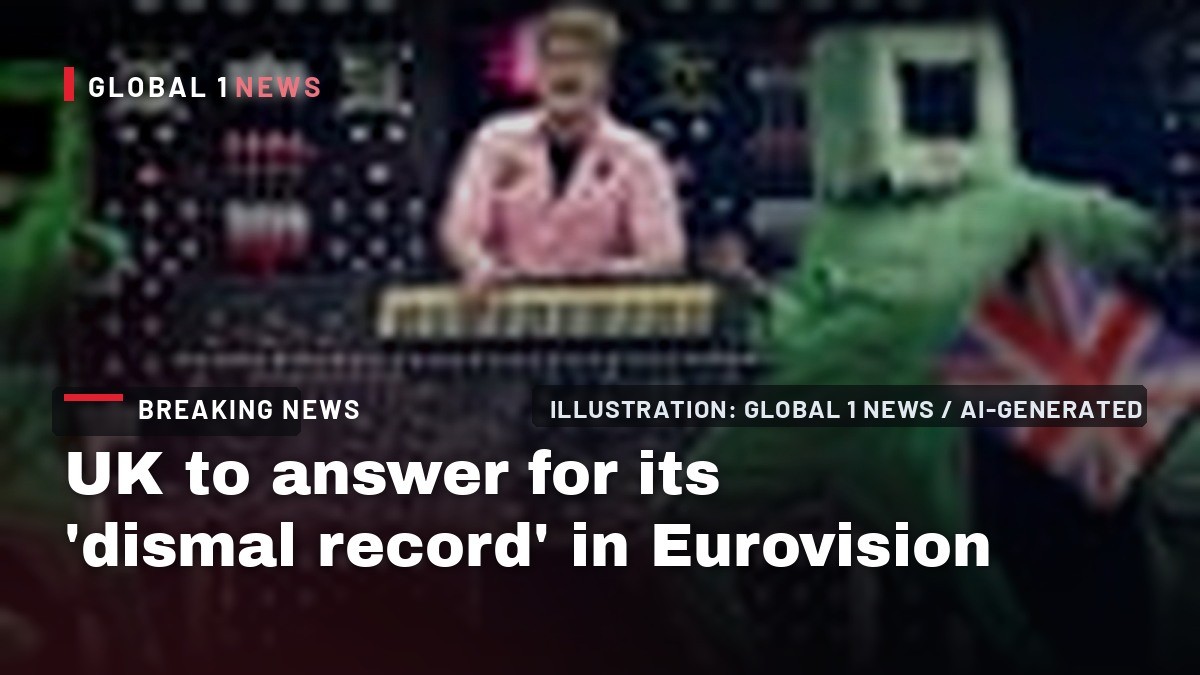
The UK’s Eurovision fortunes have become a parliamentary concern, with the Digital, Culture, Media and Sport Committee set to interrogate the BBC and music industry insiders over a record that has slipped from top‑ten regularity to repeated last‑place finishes. As Dame Caroline Dinenage, chair of the committee, warned, the nation needs to understand whether poor song choice, weak performance or deeper structural issues are to blame for a “dismal record” that now threatens the country’s cultural credibility on the European stage.
The historical high‑water mark
Until the turn of the millennium the United Kingdom could almost take its Eurovision participation for granted. Apart from three outliers – 1978, 1987 and 1999 – the UK secured a top‑ten finish every year, even clinching a victory in 1997 with Katrina and the Waves’ “Love Shine a Light”. That era cemented a perception of Britain as a reliable contender, a perception that has since eroded dramatically.
Those early successes are now invoked as a benchmark against which the current record is measured. The stark contrast underscores how far the nation has drifted from its once‑consistent presence in the contest’s upper echelons, prompting the committee to ask whether the mechanisms for selecting an entrant have become outdated or misaligned with contemporary musical tastes.
A decade of decline and last‑place finishes
Since 2000 the UK’s performance trajectory has been unmistakably downward. The country has managed only three top‑ten placements in the past twenty‑four years, a stark reduction from the near‑annual top‑ten streak of the previous two decades. More damningly, the UK has finished dead last on six occasions – in 2003, 2008, 2010, 2019, 2021 and most recently in 2026.
These low points have often been accompanied by the dreaded “nul points” outcome, a humiliation that struck twice: first with Jemini in 2003 and again with James Newman in 2021. The 2026 entry, a YouTuber known as Look Mum No Computer (real name Sam Battle), also failed to attract any public‑vote points, underscoring a pattern of entries that struggle to resonate beyond niche audiences.
The 2022 anomaly – Sam Ryder’s near‑victory
Amid the gloom, Sam Ryder’s 2022 performance offered a fleeting glimpse of redemption. His song “Space Man” secured second place, the highest finish for the UK since the 1997 win. The result suggested that a compelling pop‑oriented performance, combined with strong staging, could still capture European votes.
However, the committee’s inquiry will likely treat Ryder’s success as an exception rather than a template. The fact that a single strong act can break a long‑standing slump does not address the systemic issues surrounding selection, preparation and perhaps the broader cultural relevance of the UK’s entries.
The selection process under scrutiny
The BBC, in partnership with a record label or music management company, retains sole authority over the choice of the UK’s Eurovision act. This model, while offering professional industry input, has drawn criticism for its opacity and perceived detachment from public sentiment. The committee’s hearings will probe who sits at the decision‑making table, what criteria guide their choices, and whether commercial considerations outweigh artistic merit.
Industry experts such as Joe and Jake – unnamed in the source but slated to testify – may shed light on whether the BBC’s reliance on established music industry channels limits the pool of talent to those already within a commercial framework, potentially sidelining more experimental or grassroots acts that could capture a broader European audience.
The political dimension of Eurovision
Eurovision’s evolution into a politically charged arena adds another layer of complexity to the UK’s challenges. The contest’s inclusion of Israel since 1973 has become a flashpoint, prompting boycotts and withdrawals. Ireland, for instance, is set to boycott the competition for a second consecutive year over the Gaza war, joining Iceland, the Netherlands, Spain and Slovenia in refusing participation this year.
These geopolitical tensions can influence voting patterns, with blocs forming around shared political stances. The UK’s own diplomatic posture may therefore indirectly affect its chances, a factor that the committee may consider when assessing whether “something else” – beyond song choice and performance – contributes to the nation’s poor results.
2026: Bulgaria’s breakthrough and the UK’s low point
The 2026 contest highlighted the shifting dynamics of the competition. Bulgaria, a relatively new entrant having joined in 2005 and missed the previous three editions, secured its first victory with 27‑year‑old singer Dara’s “Bangaranga”. The triumph illustrated how newer participants can rapidly ascend, challenging the notion that long‑standing members hold an inherent advantage.
In stark contrast, the UK’s 2026 entry – Look Mum No Computer – failed to garner any public‑vote points, finishing last. The act’s reliance on a YouTuber persona and self‑made synthesiser rigs did not translate into broad appeal, suggesting that novelty alone cannot compensate for a lack of connection with the contest’s diverse voting audience.
Looking ahead: potential reforms and the road to redemption
The forthcoming committee hearings promise to surface candid assessments of the BBC’s selection framework, the role of commercial partners, and the broader cultural relevance of the UK’s Eurovision strategy. Recommendations may include greater public involvement in the selection process, clearer artistic criteria, or even a reevaluation of the partnership model with record labels.
Beyond procedural tweaks, the UK must grapple with the contest’s increasingly political climate. Aligning its entry with a song that can transcend geopolitical divides while still resonating musically may prove essential. As the committee seeks answers, the underlying question remains: can Britain reclaim a place in Eurovision’s cultural pantheon, or will its “dismal record” become a permanent footnote in the contest’s history?
This article was produced with AI-assisted research and editorial support. Reporting is based on the source material cited below. Sources: The Guardian UK; theguardian.com; Global1.News (21 September 2026).
By Erica Thornton, Staff Writer
What's Your Reaction?
 Like
0
Like
0
 Dislike
0
Dislike
0
 Love
0
Love
0
 Funny
0
Funny
0
 Wow
0
Wow
0
 Sad
0
Sad
0
 Angry
0
Angry
0

US Politics and Policy Correspondent at Global1.News. Based in Washington DC, covering American politics, policy, elections, and the courts. Knows how the system works and tells you what it actually means.











Comments (0)