
Trump Signs Sweeping Russia Sanctions Into Law, With 100 Percent Tariffs Hanging Over Putin's Oil Buyers
President Donald Trump signed the Lindsey O. Graham Sanctioning Russia and Iran Act of 2026 into law on Friday, the White House announced, authorizing sanctions on Russia and tariff authority of up to 100 percent on the largest buyers of Russian oil and gas.
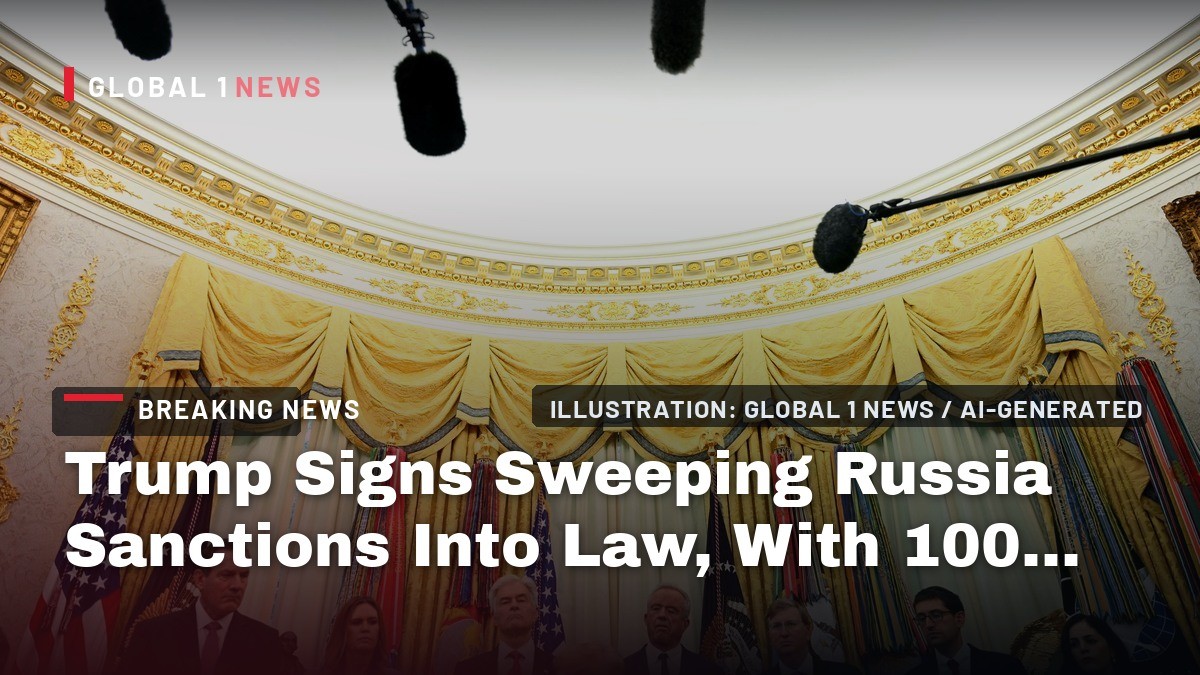
President Donald Trump signed the Lindsey O. Graham Sanctioning Russia and Iran Act of 2026 into law on Friday, the White House announced, authorizing sanctions on Russia's officials, its banks and the shadow fleet of tankers that moves its oil, and handing the president the power to levy tariffs of up to 100 percent on the five largest buyers of Russian energy.
Trump Signs Sweeping Russia Sanctions Into Law, With 100 Percent Tariffs Hanging Over Putin's Oil Buyers
WASHINGTON, D.C. — The White House announced Friday that the president had signed H.R. 5334, the Lindsey O. Graham Sanctioning Russia and Iran Act of 2026, earlier that day, on September 18, 2026. The statement said the law "authorizes and expands statutory sanctions, tariffs, and prohibitions on Russia and extends existing sanctions on Iran." It ends a fight that ran more than a year, stalled for months at the White House, and cleared both chambers of Congress with lopsided bipartisan majorities.
What the President Actually Signed
The law pushes in three directions at once. It sanctions Russia: officials, banks, the shadow tanker fleet, the energy sector and the defence industry. It grants the executive branch the authority to impose tariffs of up to 100 percent on the five largest buyers of Russian oil and gas. And it extends existing sanctions on Iran. The bill carries Lindsey Graham's name and the number H.R. 5334. It is the first major Ukraine-related bill to clear Congress in more than two years. What it does not do is impose anything by itself. Every sanction and every tariff it authorizes has to be invoked by the executive branch, and as of Saturday morning nothing had been.
The Vote That Got It to His Desk
The Senate passed the bill 86 to 11 in August 2026. The House passed it 262 to 159 on Wednesday, September 16, 2026. Fifty-eight Democrats crossed party lines to back it. A vocal set of Democratic lawmakers opposed it anyway, warning that Trump could use his expanded tariff powers to impose fresh levies on the European Union and elsewhere. House Minority Leader Hakeem Jeffries of New York explained his no vote this way: "Life is way too expensive in the United States of America. Why in the world would this Congress or the People's House give this president unfettered authority to visit more tariffs on the world that will have an adverse economic impact on the American people?" He added: "I can't do it." Jeffries also warned that the tariff powers would raise costs for American families, and he called the sanctions provisions full of loopholes. House Speaker Mike Johnson said the bill placed maximum pressure on what he called the Russian war machine.
Who the Law Now Reaches
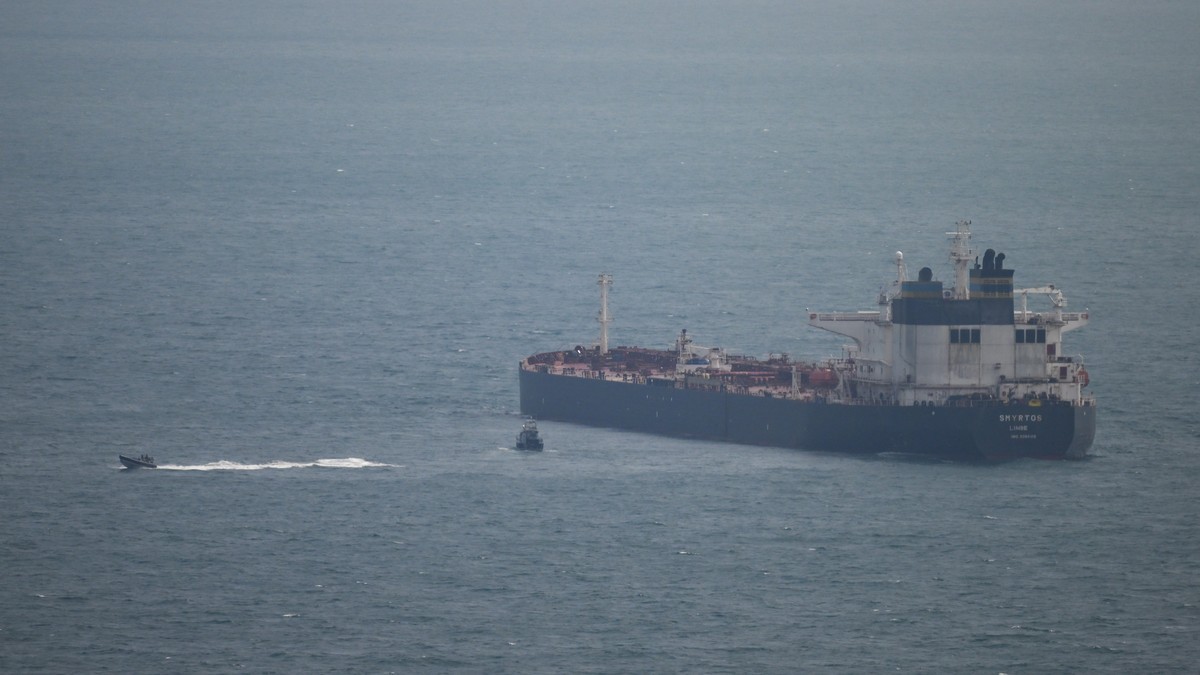
The law names people, not just sectors. Vladimir Putin is named, along with senior Russian officials and oligarchs, their family members, and foreign persons. Russian banks and financial institutions are in scope. So are Moscow's energy and defence industries. So is the shadow fleet, the network of tankers that keeps Russian crude moving around Western sanctions. The tariff authority points at the five largest purchasers of Russian energy, with China and India at the front of that line, and the president is separately empowered to sanction the five countries doing the most to help Russia dodge energy sanctions. On paper the exposure is enormous. In practice none of it has been used yet. The law does not name a single bank, company or vessel for designation, and no designation has been announced under it.
The Tariff Clause That Outlives a Presidency
Reuters reported that critics say the tariff provisions could herald trouble for other countries if they find themselves in Trump's crosshairs, because the law also authorizes the president to impose tariffs that could last well beyond his presidency. That is the crux. The authority is not tied to Trump's time in office. The law authorizes tariffs of up to 100 percent at the top five purchasers of Russian oil and gas, or at countries helping Russia evade sanctions. Countries that import less than 15 percent of Russia's natural gas exports and have taken significant steps to reduce those imports are carved out. But the law does not automatically impose any of it. It grants the authority, and the authority sits unused. No tariff has been imposed, set, scheduled or threatened against any named country under this law, which means the oil market is currently pricing a threat that has not yet become a policy.
The Two Names on the Bill's Edge
The law is named for the late Sen. Lindsey Graham, Republican of South Carolina, who died unexpectedly in July 2026, shortly after returning from a visit to Ukraine. He co-wrote the bill with Sen. Richard Blumenthal, Democrat of Connecticut. Graham's funeral service was held at Washington National Cathedral on July 28, 2026, where President Trump stood alongside Vice President JD Vance. His sister, Sen. Darline Graham, was appointed to complete her late brother's Senate term. The measure carries the family name. So does the arithmetic of the week that produced it: a vote in the House on Wednesday, a signature on Friday, two days apart, with a seat in the chamber now held by a sister.

India Says It Is Not Backing Down
India said this week that it remains firmly committed to ensuring energy security for its 1.4 billion people. Its Ministry of External Affairs added: "This issue has been discussed at high levels in recent months with various US interlocutors. Its potential implications for not just the bilateral relationship but also the international energy market have been very clearly articulated by the Indian side." The numbers explain the exposure. Russia supplied 30.3 percent of India's crude imports in fiscal 2026, worth 40.8 billion dollars out of a total crude import bill of 134.7 billion dollars. In July, Russian crude accounted for more than half of India's imports, with the UAE next at 10.8 percent and Saudi Arabia at 9.6 percent. The BBC noted that the United States is threatening tariffs on Indian exports to America, not a tax on Russian crude entering India, so the impact would land on Indian exporters, the rupee, refinery margins and the trade balance.
Why Lindsey Graham's Name Is on It
Graham's path to this day was not smooth. Trump stalled the bill for months, arguing that he wanted greater flexibility to negotiate with Putin, and the White House had to be convinced that the president would retain enough room to move on sanctions. Trump gave his nod only after the bill included his push for a five-year extension of existing sanctions on Iran. That extension is now the framework keeping Iran sanctions in place until 2031. Graham's sister said in a statement on Friday: "I wish Lindsey were here to celebrate this historic day. I know he would be so proud. Lindsey believed this bill, which he worked on for well over a year, would help end the war through squeezing Putin economically and forcing his customers to reevaluate their relationship with Russia." Blumenthal said Graham would be "already thinking about the next one."
Moscow's Answer
The Kremlin did not wait for the signing to respond. Spokesman Dmitry Peskov, speaking to journalists on Thursday, September 17, before the signing, said: "We are, of course, monitoring the progress of this document. This concerns unfriendly actions, and, of course, the introduction of any additional sanctions by the US will undoubtedly complicate efforts to find a peaceful settlement in Ukraine." He called the package an unfriendly step. The signature now lands in the middle of a fragile diplomatic push. Trump's special envoys Steve Witkoff and Jared Kushner, the president's son-in-law, visited Moscow and Kyiv in September, and Witkoff said the United States is confident that trilateral talks will produce a good resolution after a weekend-long ceasefire was called for that visit.
What Is Not Yet Done
Nothing under this law has been applied. No person, bank, company or tanker has been newly designated or sanctioned under it, and no tariff has been triggered. That distinction matters for every government in the crosshairs and for every shipping company that is now waiting to see whether the authority in this law is ever used, because a statute that grants power is not the same thing as an administration that wields it. It also matters for the oil market. Barrels can be redirected to other buyers, according to Sumit Ritolia of the maritime intelligence firm Kpler, but it is unclear whether enough alternative crude is available to replace them without tightening the global market further. S&P Global notes that alternative supplies can mean higher crude, freight and insurance costs. The first designation, whenever it comes, is the moment the threat becomes real for the countries still buying Putin's oil.
What Comes Next
Ukrainian President Volodymyr Zelenskyy thanked Trump on X for signing what he called critically important legislation. He wrote: "I thank all the senators and members of the House of Representatives who supported it. The best way to honor Lindsey's memory will be to implement the provisions of this law fully and swiftly. And the best reward for everyone helping us put pressure on Russia to end its war will be peace. Peace, and an end to all the problems and challenges this war has brought." He added that when Graham was in Ukraine, he would always talk about how important it was not to ease pressure on Russia. The war has reignited since the peace talks, with Russia hitting targets in Kyiv and other major cities earlier this week; Ukrainian officials told Reuters that more than 20 people were injured in those strikes. Trump is due to host Chinese President Xi Jinping at the White House about a week from now.
By Jessica Ali, Staff Writer
This article was produced with AI-assisted research and editorial support. Sources: the White House, Reuters, the Associated Press, Al Jazeera, DW, Anadolu Agency, The Hill, NBC News, Fortune, the BBC, TASS, Ukrainska Pravda, the Centre for Research on Energy and Clean Air, the Global Trade Research Initiative and S&P Global.
What's Your Reaction?
 Like
0
Like
0
 Dislike
0
Dislike
0
 Love
0
Love
0
 Funny
0
Funny
0
 Wow
0
Wow
0
 Sad
0
Sad
0
 Angry
0
Angry
0

Editor-in-Chief at Global1.News. Atlanta-based journalist who cuts through the BS and tells it like it is. Lead anchor, host, and the voice you hear when the spin stops and the truth starts.












Comments (0)