
Troops rescue seven kidnapped victims along Katsina road
In the quiet darkness of a September night, security forces on the Dayi‑Malumfashi road in Katsina State intercepted a green Volkswagen Golf 3 and rescued seven individuals who had been abducted earlier that day.
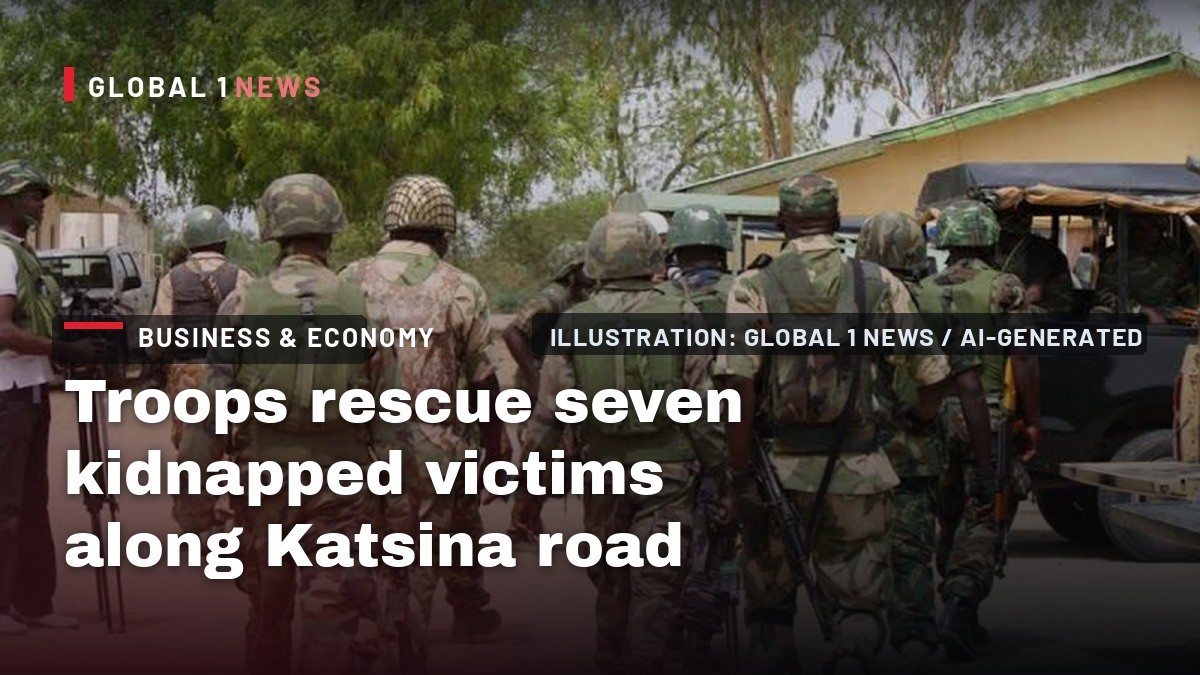
In the quiet darkness of a September night, security forces on the Dayi‑Malumfashi road in Katsina State intercepted a green Volkswagen Golf 3 and rescued seven individuals who had been abducted earlier that day. The operation, carried out by troops of the 17 Brigade in close collaboration with the Nigerian Police, underscores the heightened vigilance of the military in the northern region as it confronts a surge in kidnapping incidents that have plagued key transport corridors.
Chronology of the rescue operation
The rescue unfolded at approximately 11:45 p.m. on 21 September 2026, when patrol units of the 17 Brigade, acting on intelligence, halted a vehicle bearing the registration Kano BCH‑528ZY. Security analyst Zagazola Makama, who has been monitoring the incident, confirmed that the intercepted vehicle was a green‑coloured Volkswagen Golf 3 transporting the abducted victims.
According to the official report, the occupants of the car included six young women identified as students of the Federal University Dutsin‑Ma, as well as the driver, a man named Sani Umar. The swift interception prevented the perpetrators from moving the hostages further along the route, and the victims were liberated without reported injury.
Profile of the rescued victims
The six female victims are university students, a detail that highlights the vulnerability of young scholars travelling between campuses and their homes in the northern states. Their enrolment at the Federal University Dutsin‑Ma, a key institution in Katsina State, places them among a demographic that has increasingly become a target for criminal gangs seeking ransom or political leverage.
The driver, identified as Sani Umar, played a crucial role in the chain of events. While the report does not elaborate on his background, his presence in the vehicle suggests he was either coerced or complicit in the kidnapping operation. The fact that he was rescued alongside the students indicates that security forces treated all occupants as victims of the same criminal act.
Operational readiness of the 17 Brigade
Military sources, as cited by Zagazola Makama, emphasized that the troops remain on high alert and have maintained strong operational readiness across the area. This statement reflects a broader strategic posture adopted by the Nigerian armed forces in response to a wave of kidnappings that have disrupted commerce and education in the north.
The 17 Brigade’s involvement signals a coordinated effort between the army and police to secure major highways. Their presence on the Dayi‑Malumfashi road, a vital artery linking towns and agricultural markets, demonstrates a commitment to safeguarding movement for civilians, traders, and students alike.
Implications for security policy in Katsina State
The rescue operation arrives at a time when the state government has intensified security sweeps along major routes. The successful interception of the kidnappers’ vehicle serves as a tangible outcome of these policies, reinforcing the message that law‑enforcement agencies are actively confronting the menace of abduction.
Moreover, the incident underscores the necessity for sustained patrols and intelligence‑driven operations. By targeting the specific vehicle used by the kidnappers, the forces were able to thwart a potential escalation that could have seen the victims moved to a more remote hideout, complicating rescue efforts.
Community response and the road ahead
Local communities along the Dayi‑Malumfashi corridor have expressed relief at the safe return of the students and driver. Families of the victims, though not quoted directly in the source material, are likely to feel a mixture of gratitude and lingering anxiety, given the broader climate of insecurity that continues to affect daily life in the region.
The rescue also sends a reassuring signal to other students and commuters who rely on these roads for travel. While the operation does not eradicate the underlying causes of kidnapping, it demonstrates that coordinated military and police action can yield immediate, life‑saving results.
Broader trends in northern Nigeria’s security landscape
Kidnapping for ransom has become a persistent challenge across northern Nigeria, affecting not only individuals but also the economic vitality of the region. The incident on the Dayi‑Malumfashi road reflects a pattern where criminal groups target vulnerable groups—students, traders, and travelers—who are perceived as easy prey on isolated stretches of highway.
Analysts like Zagazola Makama note that the continued high alert status of troops indicates an acknowledgment by the security establishment of the evolving threat landscape. The emphasis on “strong operational readiness” suggests that forces are adapting tactics, increasing patrol frequencies, and leveraging intelligence to pre‑empt kidnappings before they can be executed.
Future security measures and recommendations
In light of the successful rescue, security officials may consider expanding joint patrols and enhancing real‑time communication between the army, police, and local vigilante groups. Strengthening community reporting mechanisms could further improve the speed at which suspicious movements—such as an unmarked green Volkswagen—are flagged and intercepted.
Additionally, safeguarding students travelling to and from university campuses remains a priority. Initiatives could include dedicated escort services for university convoys, especially during late‑night travel, and the establishment of safe houses along high‑risk routes. While the source material does not detail such measures, the rescue outcome points to the efficacy of rapid response, which could be institutionalised into a broader security framework for the state.
This article was produced with AI-assisted research and editorial support. Reporting is based on the source material cited below. Sources: Daily Post Nigeria; dailypost.ng; Global1.News (22 September 2026).
By Sarah Okafor, Staff Writer
What's Your Reaction?
 Like
0
Like
0
 Dislike
0
Dislike
0
 Love
0
Love
0
 Funny
0
Funny
0
 Wow
0
Wow
0
 Sad
0
Sad
0
 Angry
0
Angry
0

Africa Correspondent at Global1.News. Based in Lagos, covering politics, business, technology, and culture across the continent. Focused on telling African stories beyond the headlines — the innovation, entrepreneurs, and communities shaping the region's future.












Comments (0)