
Tamil Nadu Assembly Votes to Scrap NEET: Federal Battle
The Tamil Nadu Legislative Assembly on Tuesday passed a resolution demanding the Union government abolish the National Eligibility-cum-Entrance Test (NEET), escalating a constitutional standoff that has simmered for over 1,400 days.
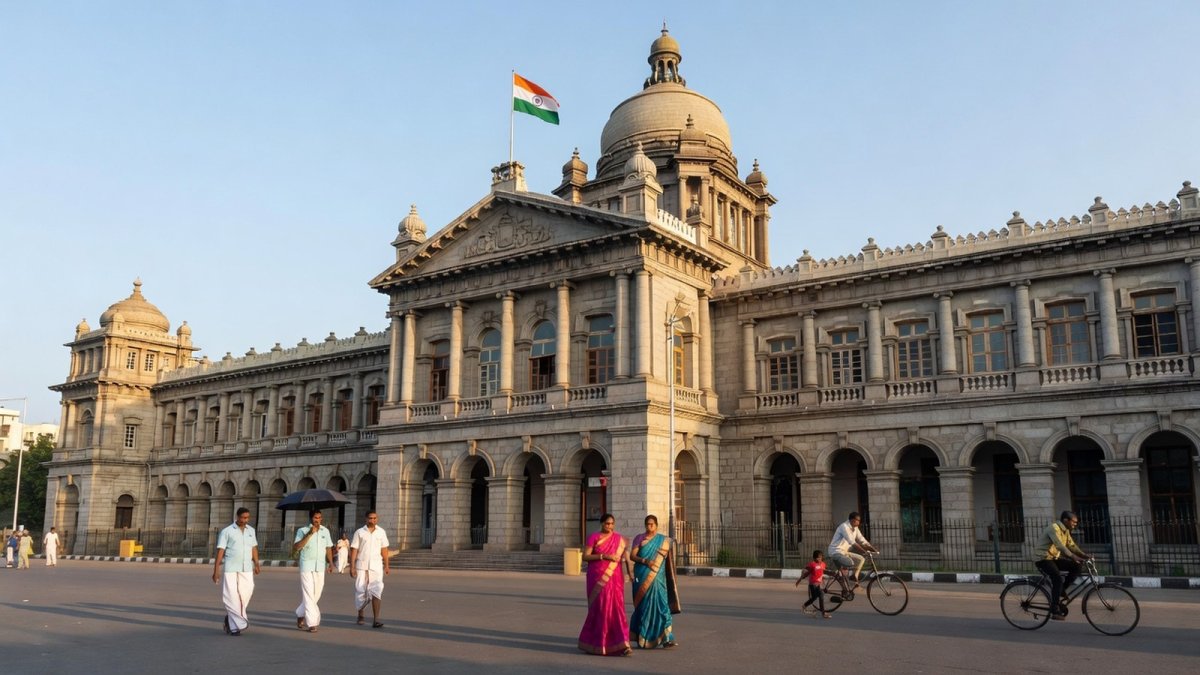
The Tamil Nadu Legislative Assembly on Tuesday passed a resolution demanding the Union government abolish the National Eligibility-cum-Entrance Test (NEET), escalating a constitutional standoff that has simmered for over 1,400 days. The resolution, moved by State Health Minister K G Arunraj, argues that the single-day test is "against social justice and equality" and calls for medical admissions to be based on Class 12 examination marks instead.
NEET Abolition Vote: TN's Federal Challenge to Centre
Chennai, Tamil Nadu – August 11, 2026 — The Tamil Nadu Assembly's cross-party resolution — supported by the ruling TVK, its ally Congress, the DMK, AIADMK, PMK and Left parties — represents the most significant legislative challenge yet to the Modi government's medical education policy. The lone BJP MLA, Bhojarajan, opposed the resolution and staged a walkout, underscoring the partisan fault lines that now define the NEET debate. The resolution specifically demands the scrapping of NEET nationwide by amending the National Medical Commission Act, 2019, the National Commission for Indian System of Medicine Act, 2020 and the National Commission for Homoeopathy Act, 2020.
A Test Under Siege: The 2026 Paper Leak Crisis
The Assembly's action comes barely three weeks after Union Education Minister Dharmendra Pradhan resigned on July 25, 2026, over the NEET-UG 2026 paper leak controversy — the first ministerial resignation from the Modi government in 12 years. The leak triggered nationwide student protests, a CBI probe, and a 26-day hunger strike by activist Sonam Wangchuk, alongside agitation by the Cockroach Janta Party (CJP) at Jantar Mantar in Delhi. NEET-UG 2026 was ultimately cancelled and re-conducted, with the National Testing Agency (NTA) publishing final answer keys for the re-examination. The Tamil Nadu resolution explicitly cites these "continuous question paper leaks and irregularities," noting that the cancellation caused "distress to eligible students and eroded trust in the examination system." It also references student suicides linked to examination-related distress — a grim statistic that has haunted the test since its nationwide rollout.
The Constitutional Standoff: 1,400 Days and Counting
Tuesday's resolution is not a new demand but a reiteration of a legal battle that has reached the Supreme Court. The Assembly unanimously passed Bill No 43 of 2021 — the Tamil Nadu Admission to Undergraduate Medical Degree Courses Bill, 2021 — to exempt the state from NEET. That bill remains pending without presidential approval, a delay now exceeding 1,400 days. In November 2025, the Tamil Nadu government moved the Supreme Court against the President's withholding of assent, arguing the bill should be deemed to have received assent under Article 254(2) of the Constitution, or alternatively, be placed before the President for fresh consideration. The constitutional question is stark: does a state have the right to determine its own medical admissions policy, or does a centralised exam override federal principles? States argue a centralised exam violates India's federal structure and strips their right to manage local healthcare needs — a position the Union government has consistently rejected.
Beyond Tamil Nadu: A Growing State Rebellion
Tamil Nadu is not alone in this fight. Karnataka, under a Congress-led government, and West Bengal, under Mamata Banerjee's TMC, have both passed resolutions to completely scrap the exam. Kerala, under the CPI(M)-led LDF and Congress-led UDF, has successively opposed NEET, while legal challenges have also come from Andhra Pradesh and Telangana. This state-by-state rebellion marks a significant shift from the exam's origins. The Centre first proposed NEET in 2013 to consolidate a fractured selection process where the All India Pre-Medical Test filled a 15% national quota and states ran separate exams for the remaining 85% of seats, with AIIMS managing its own entry tests. Fierce court disputes over NEET ended in 2017, making the exam compulsory across the country. By 2020, the system had absorbed elite colleges, cementing NEET as the sole gateway for Indian medical aspirants. Now, a decade later, the federal consensus that enabled this centralisation is fracturing.
The Tamil Nadu Specifics: Quota, Language and Coaching Economics
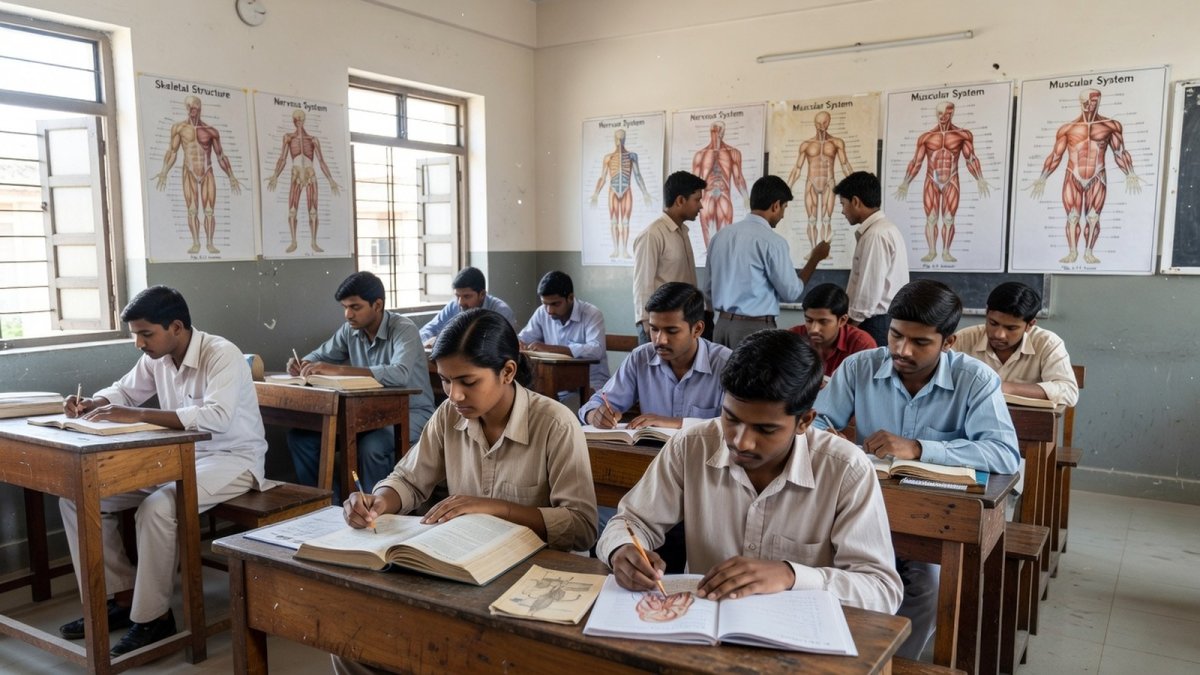
The resolution's language is pointed: NEET "gravely undermines the medical education opportunities of Tamil medium students, rural and socio-economically disadvantaged students." This is not rhetorical flourish. In 2019, the Madras High Court observed that NEET is discriminatory towards poor students. On October 30, 2020, then-Governor Banwarilal Purohit gave assent to a Bill reserving 7.5% of undergraduate medical seats for government-school students who clear NEET — a recognition that the exam systematically disadvantages those without access to private coaching. In August 2026, Health Minister Arunraj said the state is considering raising that 7.5% quota for NEET-qualified government school students in medical admissions. The minister also highlighted the economic distortion caused by the test: the "proliferation of coaching centres that charge exorbitant fees" and the fact that "NEET has diverted focus of students from school curriculum to coaching alone." Student protests against NEET have been held across Tamil Nadu districts including Chennai, Madurai, Vellore and Tirunelveli, indicating the issue's deep resonance beyond the Assembly chamber.
Political Calculus: Vijay's TVK and the 2026 Landscape
Chief Minister C Joseph Vijay, whose TVK leads the state government, has made NEET abolition a cornerstone of his administration's identity. On July 22, 2026, Vijay said the Union government "must respect the sentiments of people and students on the NEET issue and scrap it altogether, calling it the only solution." Tuesday's resolution, moved by his Health Minister, converts that rhetoric into legislative action. The political alignment is notable: the DMK, which originally championed the anti-NEET cause, and the AIADMK, its traditional rival, both supported the resolution — a rare moment of consensus in Tamil Nadu's polarised politics. The lone BJP MLA's walkout only sharpens the narrative of a state united against the Centre. The Assembly also moved a separate resolution against the FCRA Amendment Bill, 2026, framing the debate around social justice in admissions and autonomy for charitable institutions — suggesting a broader federal pushback against centralising tendencies.
What This Means for Indian Students and Federalism
The practical implications of Tuesday's resolution are significant, even if symbolic in the short term. For the roughly 2.4 million students who appear for NEET-UG annually, the prospect of state-level Class 12-based admissions would fundamentally alter preparation strategies, reducing the coaching industry's stranglehold and potentially easing the financial burden on rural and lower-income families. For the Union government, the resolution — combined with Karnataka and West Bengal's similar moves — represents a coordinated federal challenge that could force a Supreme Court ruling on the limits of central authority in education. The pending presidential assent on Tamil Nadu's 2021 Bill, now the subject of a Supreme Court case, will likely be the flashpoint. If the court rules in Tamil Nadu's favour, it could open the floodgates for other states to reclaim control over medical admissions, effectively dismantling the national framework the NTA has built since 2017.
The Bottom Line
Tuesday's resolution is not merely a political gesture; it is a legal and constitutional gauntlet thrown at the Union government. With a minister already resigned over the NEET-UG 2026 paper leak, a CBI probe ongoing, and three major states now formally demanding abolition, the exam's legitimacy is under unprecedented strain. The Supreme Court's handling of Tamil Nadu's pending bill will determine whether India's medical admissions remain a centralised, single-test system or revert to a federal patchwork of state-controlled processes. For the millions of students caught in between — and for the credibility of India's medical education framework — the stakes could not be higher.
— By Dr. Raj Patel, Staff Writer
This article was produced with AI-assisted research and editorial support. Reporting is based on sources cited in the article.
What's Your Reaction?
 Like
0
Like
0
 Dislike
0
Dislike
0
 Love
0
Love
0
 Funny
0
Funny
0
 Wow
0
Wow
0
 Sad
0
Sad
0
 Angry
0
Angry
0

India/South Asia Correspondent at Global1.News. Analytical voice with a background in science and health journalism. Based in New Delhi, covering Indian politics, education, healthcare, technology, and policy. Breaks down complex data into clear, actionable reporting.














Comments (0)