
Sharren Haskel on Israel's Wartime Diplomacy and the Launch of Israel First
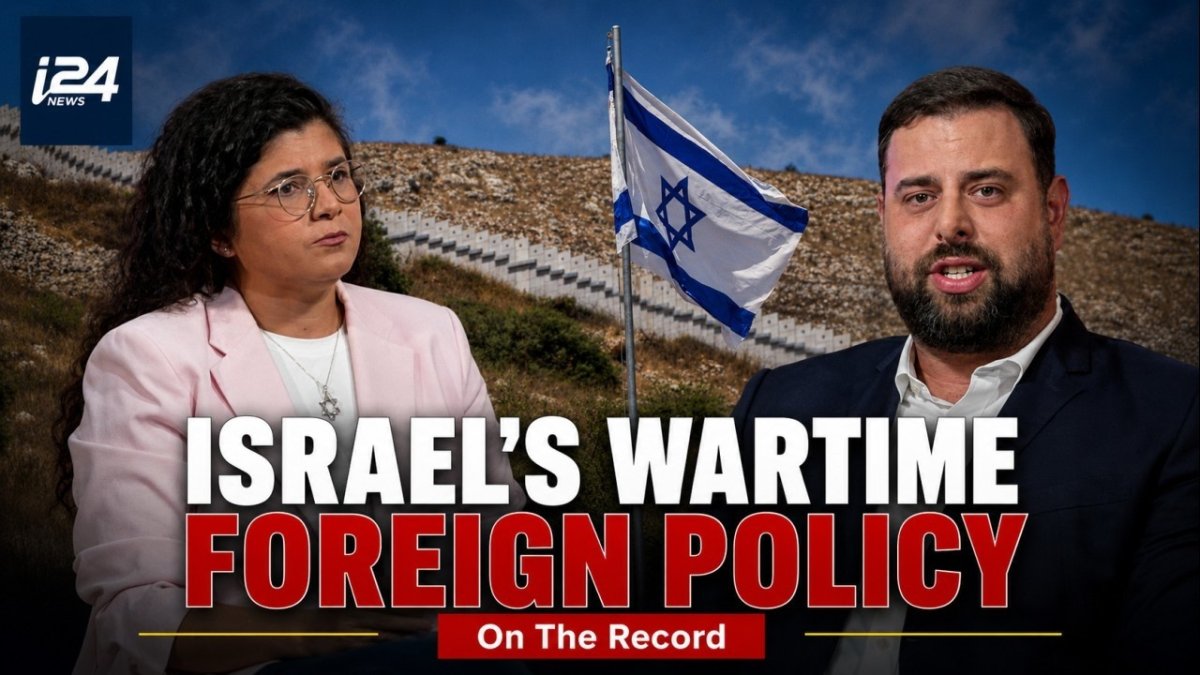
In a recent i24NEWS On the Record interview, former Deputy Foreign Minister Sharren Haskel delivered a stark assessment of the global battlefield Israel faces, arguing that the Jewish state's diplomatic struggles are a symptom of a broader Western identity crisis.
In a recent i24NEWS On the Record interview, former Deputy Foreign Minister Sharren Haskel delivered a stark assessment of the global battlefield Israel faces, arguing that the Jewish state's diplomatic struggles are a symptom of a broader Western identity crisis. Speaking with i24NEWS Senior Middle East Correspondent Ariel Oseran, Haskel, who resigned from the coalition in July and immediately launched a new right-wing party called Israel First, framed the current conflict as a fight against "radical Islamism taking over the world." Her comments come as Israel navigates a multi-front war, from Gaza and Lebanon to the new and volatile front in Syria, while simultaneously heading into a contentious election cycle in Jerusalem.
Sharren Haskel on Wartime Diplomacy, the "October 7 Doctrine," and the Launch of Israel First
Jerusalem, Israel – this week — Sharren Haskel, the former Deputy Minister of Foreign Affairs who resigned from Prime Minister Benjamin Netanyahu's coalition in July, is not pulling punches. In a wide-ranging interview on i24NEWS' On the Record, she defended Israel's wartime diplomatic performance, excoriated Western governments for allowing anti-Israel "propaganda" to fester, and laid out the security doctrine she believes must guide Israel's actions on the Syrian and Lebanese fronts. The interview, conducted by Ariel Oseran, comes at a critical juncture: the Knesset has dispersed, elections are looming, and Haskel has positioned herself as the leader of a new political home for right-wing voters who feel disenfranchised by the current government's policies.
Diplomacy in the Crossfire: Defending Israel's Global Standing
Haskel, who served as Deputy Foreign Minister from 2024 until her resignation on July 14, pushed back against the narrative that Israel has lost the hasbara (public diplomacy) war. She argued that the Foreign Ministry has adapted to the digital age, utilizing artificial intelligence to accelerate its response times to global crises. "We can respond immediately and not wait six, seven, eight hours until we get a report from the embassy," she told Oseran, detailing a technological overhaul that allows Jerusalem to counter misinformation in real-time from Tel Aviv and the Foreign Ministry headquarters in the capital.
However, her core argument transcends bureaucratic efficiency. Haskel placed the blame for Israel's diplomatic isolation squarely on the shoulders of Western societies, which she claims have allowed a toxic narrative to take root. "From Paris to New York to Berlin, Western governments have allowed propaganda not just to settle in, but to root into their society so that their children are growing up with hatred towards their own country, to despise their own flag and their traditions," she said. She warned that this phenomenon is not merely an Israeli problem but a systemic failure of the West, creating a generation that is hostile to its own heritage and, by extension, to the Jewish state.
Haskel was equally critical of the political extremes that have hijacked the discourse. "On one side, extreme progressives that refuse to have a debate and a conversation, refuse to acknowledge facts, data, or real information, and base all of their theories only on emotions. And then you have the other radical right-wing propaganda where they rely a lot on conspiracy theories," she explained, calling for a return to factual, data-driven debate. She acknowledged the inherent difficulty of this task, noting, "Any expert will tell you that it's far easier to spread lies than to spread the truth."
The October 7 Doctrine: Dismantle, Don't Manage
The interview delved deep into Israel's military strategy, with Haskel articulating what she calls the "October 7 doctrine." She argued that the biggest lesson of the Hamas massacre is that Israel must abandon the policy of conflict management in favor of total dismantlement of its enemies. "One of the biggest lessons learned from the October 7th is that Israel should never manage the conflict, but dismantle the enemy. Because whenever you try to manage it, it grows to proportions that are life-threatening and pose an existential threat," she stated.
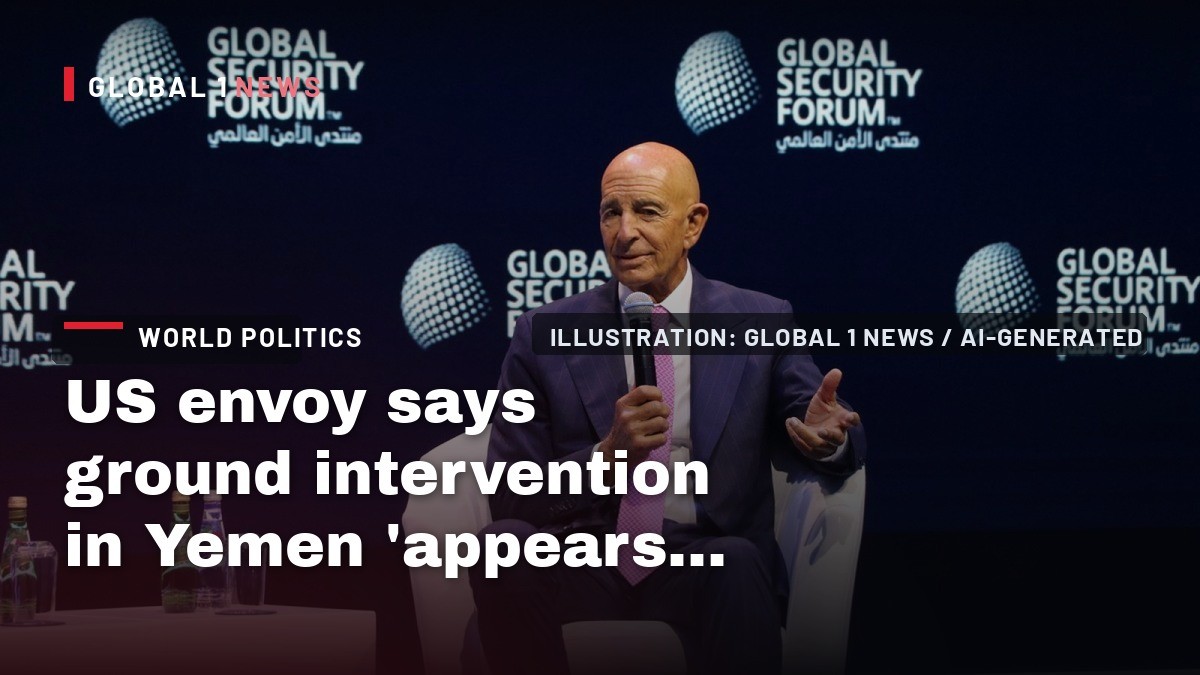
This doctrine directly informs her views on the Syrian front, where Israel has conducted strikes near the Turkish border against radical Islamist forces—a move that U.S. Ambassador Tom Barrack warned nearly triggered a military confrontation with Ankara. Haskel rejected criticism that Israel has become "trigger happy" since October 7, telling Oseran that Israel's critics lack the perspective of facing an existential threat. "None of these countries had to face a real life-threatening situation straight on their borders. So they don't understand it. And I will not let my children or my people die for the sympathies of European countries," she said, a direct rebuke to Western calls for restraint.
She painted a grim picture of the forces operating in Syria, comparing them unfavorably to Hamas. "What's happening there right now are armies. If you think that Hamas are some of the most brutal, most vile, disgusting terrorist organizations, this is nothing close to Jabat Nusra and others who were released from their prison and are now serving the police forces and army forces," she warned, referring to the former Al-Qaeda affiliate now operating within Syrian security structures. For Haskel, the choice is clear: strike decisively now or face a far larger war later. "When you deal with these problems when they start, then you are able to prevent a far greater tragedy and war that will be coming," she added.

Regional Context: Syria, Lebanon, and the Limits of Patience
Haskel's comments on Syria and Lebanon reflect a broader shift in Israeli security thinking in Jerusalem. On the northern front, Israel has made clear its intention to prevent radical Sunni jihadist groups from consolidating power in post-Assad Syria, even if that means operating in the Turkish sphere of influence. The IDF has maintained a presence in the buffer zone and continues to conduct precision strikes against weapons caches and command centers, viewing the new Syrian government with deep suspicion.
Regarding Lebanon, Haskel struck a dual tone of openness and resolve. "We want peace with Lebanon. We are constructing a road for peace with Lebanon," she insisted, referencing ongoing diplomatic efforts. However, she drew a firm red line: "But a terrorist, radical Islamist Iranian organization like Hezbollah must be disarmed." This position aligns with the IDF's continued operations to degrade Hezbollah's capabilities in southern Lebanon, ensuring that the terror group cannot rebuild the offensive infrastructure that threatened Israeli communities in the Galilee. The tension between the desire for normalization and the security imperative to neutralize Hezbollah remains the central challenge for Israeli policymakers.
Diplomatic and International Reactions: The Trump Factor and Western Criticism
The interview also touched upon the friction between Israel and its most important ally. Haskel addressed reports of former President Donald Trump urging Israel to de-escalate. "When Trump says you need to stop your strikes in Gaza, you need to stop your strikes in Syria, we need to continue and do everything in our capability to make sure there is no threat on our children and our country," she said, signaling that even allied pressure will not deter Israel from its security objectives. This stance highlights a growing divergence between Washington's desire for a diplomatic off-ramp and Jerusalem's insistence on military victory, a dynamic that will be tested in the coming months.
Haskel's resignation adds a domestic political layer to this international friction. She stepped down on July 14, immediately after the Knesset passed legislation freezing the arrests of haredi (ultra-Orthodox) draft evaders. "I feel that I can no longer support a government that harms the security of the country during wartime," she told the press in the Knesset, calling the legislation "absolutely morally wrong" and accusing the coalition of "backstabbing" IDF soldiers. Her vote against the bill, alongside a small group of coalition lawmakers, was a direct challenge to the haredi parties that anchor Netanyahu's government.
Analysis and What This Means: The Rise of Israel First
Haskel's political maneuver is a significant development in the run-up to the elections. By launching Israel First on July 15, the day after her resignation, she is targeting a specific demographic: right-wing, Zionist voters who are hawkish on security but liberal on civil liberties and economic issues. "The old political order has, to this day, prioritized sectoral interests over our fighters on the front lines," she declared at the party's launch. "We are here to ensure that every person who defines themselves as Zionists, who believes in a security, national, and liberal right-wing and refuses to accept compromises at the expense of those who serve, will now know that they have a political home with Israel First."
The party's platform—strong security and victory without compromise, a free economy, education for excellence, expansion of civil liberties, and Zionist unity—is designed to appeal to voters who feel "politically homeless." This includes secular and national-religious Israelis who are disillusioned with the coalition's concessions to the haredi parties on draft exemptions, a policy that has sparked widespread public anger amid an IDF manpower crisis. Haskel's move could fragment the right-wing vote, potentially drawing support away from Likud and other parties, and she is not alone in this space; names like former UN Ambassador Gilad Erdan and Likud MK Yuli Edelstein have also been floated in alternative-party talks.
For Israeli readers, Haskel's emergence represents a potential realignment of the political map. Her message—that security must trump sectoral interests and that Israel must proactively dismantle threats rather than manage them—resonates with a public still traumatized by October 7. The question remains whether a new party can break through the existing party structures and whether her hawkish, liberal-right platform can gain traction in a Knesset that has drifted toward more extreme positions. As Israel heads to the polls, Haskel's Israel First is a wildcard that could either siphon off crucial votes from the center-right or emerge as a kingmaker in the coalition negotiations that will follow. Her insistence on a proactive military doctrine and her willingness to defy both domestic and international pressure suggest that she intends to be a major voice in the post-war Israeli discourse, regardless of the election outcome.
By Hannah Berg, Staff Writer
This article was produced with AI-assisted research and editorial support. Reporting is based on sources cited in the article.
What's Your Reaction?
 Like
0
Like
0
 Dislike
0
Dislike
0
 Love
0
Love
0
 Funny
0
Funny
0
 Wow
0
Wow
0
 Sad
0
Sad
0
 Angry
0
Angry
0
Israel Correspondent at Global1.News. Based in Tel Aviv, covering Israeli politics, security, technology, and society. Provides balanced, deeply-sourced reporting on one of the most closely-watched regions in the world.












Comments (0)