
Israeli Activists Protest Mistreatment of Palestinian Women at Damon Prison
Protesters Gather Outside Damon Prison Demanding Release of Palestinian Women Detainees HAIFA — Dozens of Israeli and Palestinian human rights activists gathered outside Damon Prison in Haifa on Saturday, August 22, 2026, to demand the release of Palestinian women held at the facility, following rec
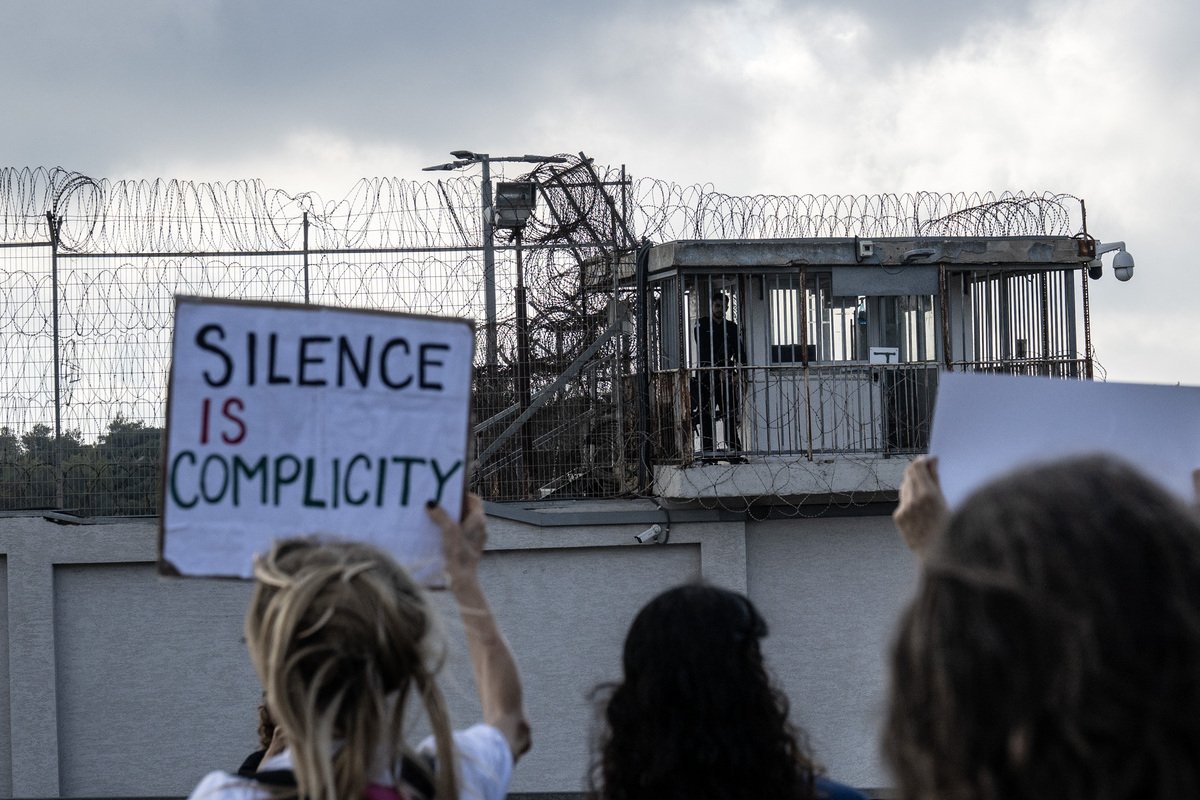
Protesters Gather Outside Damon Prison Demanding Release of Palestinian Women Detainees
HAIFA — Dozens of Israeli and Palestinian human rights activists gathered outside Damon Prison in Haifa on Saturday, August 22, 2026, to demand the release of Palestinian women held at the facility, following recent reports of mistreatment and rights violations inside the detention center. The demonstration, which drew supporters from across the region, came after the Palestinian Commission of Detainees' Affairs documented a female detainee's account of repeated sexual harassment and coercive interrogation tactics allegedly employed by an Israeli interrogator.
The protest marks a rare moment of public solidarity between Israeli and Palestinian activists, who stood together with banners calling for an end to what they describe as systematic abuses against female prisoners. Organizers told the crowd that the women held at Damon Prison are not security threats but victims of a punitive system that has long operated with limited oversight and accountability.
Detainee's Testimony Details Alleged Abuse During Interrogation
The Commission of Detainees' Affairs, a Palestinian governmental body that monitors prison conditions, reported in July that a female detainee had formally accused an Israeli interrogator of sexually harassing her on multiple occasions during her detention. In a statement released through the commission, the detainee described the ordeal in stark terms.
"I was subjected during interrogation to threats of assault against family members, repeated insults and attempts to extract confessions under pressure," she said. The testimony, which has not been independently verified by Global1.News, adds to a growing body of allegations regarding the treatment of Palestinian women in Israeli custody.
Israeli prison authorities have not publicly responded to the specific allegations, and figures on the number of formal complaints filed by female detainees were not immediately available. Human rights lawyers familiar with the case say the detainee's account fits a broader pattern of psychological pressure and gender-based intimidation reported by other women who have been held at Israeli facilities.
Official Figures Show Widespread Detention of Palestinians
The protest comes against the backdrop of staggering numbers. According to official Israeli figures cited by the Commission of Detainees' Affairs, Israel holds approximately 9,400 Palestinians in its prisons as of early July 2026. This includes 94 female detainees, more than 350 children, 3,244 administrative detainees, and 1,320 individuals classified as "unlawful combatants."
The figures represent one of the highest Palestinian prisoner populations in recent years, reflecting an ongoing military campaign and a tightening of security measures across the occupied territories. The 94 women currently held include students, mothers, and healthcare workers, according to prisoner support groups, though a full breakdown of their profiles was not immediately available.
Among the most concerning categories are the 3,244 administrative detainees — prisoners held without charge or trial, often for renewable six-month periods based on secret evidence. This practice, which Israel defends as a necessary security measure, has been widely criticized by international human rights organizations, including Amnesty International and Human Rights Watch, as a violation of due process and the right to a fair trial.
Administrative Detention: A Shadowy Legal Framework
Administrative detention is a cornerstone of Israel's military justice system in the occupied Palestinian territories. Under this framework, detainees are not informed of the evidence against them, are denied access to legal counsel during the initial stages of detention, and face the possibility of indefinite renewal of their detention orders.
For women, the experience is often compounded by isolation from family and community support networks. Many female administrative detainees are held far from their homes in the West Bank or Gaza, making regular visits nearly impossible. The International Committee of the Red Cross has repeatedly raised concerns about the psychological toll of prolonged detention without trial, particularly for women who are often primary caregivers.
Palestinian legal advocacy groups have documented cases where women detainees have been held for years without ever facing formal charges. The practice has drawn condemnation from United Nations experts, who have called on Israel to either charge detainees with a recognizable criminal offense or release them immediately.
Conditions for Women in Israeli Prisons Under Scrutiny
Saturday's protest focused specifically on conditions at Damon Prison, which has housed Palestinian female detainees for years. Activists and former detainees have described overcrowding, inadequate medical care, and routine strip searches as persistent problems within the facility.
In recent months, several reports have emerged detailing allegations of verbal abuse and humiliation by prison staff. The Commission of Detainees' Affairs has documented multiple cases of female detainees being denied basic hygiene products and adequate nutrition, though these claims have not been independently verified.
Israeli human rights groups, including B'Tselem and Physicians for Human Rights Israel, have called for independent oversight of detention facilities, arguing that the current system of internal complaints is insufficient to protect detainees from abuse. They have also urged Israeli authorities to investigate the sexual harassment allegations raised in July with full transparency.
The issue has gained renewed attention amid broader international scrutiny of Israel's treatment of Palestinian prisoners. In recent years, the United Nations Committee Against Torture has expressed concern about allegations of ill-treatment in Israeli detention centers, and the European Parliament has passed resolutions calling for improved conditions for Palestinian prisoners.
Activists Demand Accountability and Release
At Saturday's demonstration, speakers called on the Israeli government to release all female detainees who have not been formally charged with a crime. They also demanded a transparent investigation into the sexual harassment allegations and the implementation of safeguards to prevent future abuses.
"These women are not bargaining chips," one activist told the crowd, speaking on condition of anonymity for fear of reprisal. "They are human beings with rights, and the international community must hold Israel accountable for its treatment of them."
The protest comes at a time of heightened tensions in the region, with ongoing military operations in the West Bank and Gaza contributing to a steady increase in arrests. Palestinian families have staged their own demonstrations outside prisons and courthouses, demanding the release of their loved ones and an end to what they describe as collective punishment.
For the families of the 94 women currently held, Saturday's protest offered a rare moment of visibility. Many have spent months navigating a complex military court system, often without clear information about the status of their relatives. The emotional weight of these separations was evident in the faces of those who gathered in Haifa, holding photographs of daughters, sisters, and mothers behind bars.
International Legal Framework and the Path Forward
The detention of Palestinian women raises serious questions under international law. The Fourth Geneva Convention, which governs the treatment of civilians in occupied territory, prohibits collective punishment and requires that detainees be treated humanely at all times. The Convention also explicitly protects women from attacks on their honor, including sexual violence and harassment.
Israel maintains that it operates its detention system in accordance with international standards and has repeatedly denied allegations of systematic abuse. However, the sheer scale of detention — nearly 9,400 Palestinians — and the continued use of administrative detention have led many legal experts to question whether Israel is meeting its obligations under international humanitarian law.
Human rights organizations have called for the establishment of an independent monitoring mechanism to investigate conditions in Israeli prisons and to ensure accountability for any violations. They have also urged the international community to pressure Israel to comply with its legal obligations and to release all detainees who have not been charged with a recognizable criminal offense.
As the sun set over Haifa on Saturday, the protesters began to disperse, but their demands echoed long after. For the women inside Damon Prison, and for the thousands of other Palestinians held in Israeli custody, the fight for dignity and justice is far from over. The international community, which has often been slow to act on such issues, faces a critical test of its commitment to human rights and the rule of law.
This article was produced with AI-assisted research and editorial support. Sources: Middle East Monitor (Anadolu Agency), Palestinian Commission of Detainees' Affairs.
By Fatima Al-Rashid, Staff Writer
What's Your Reaction?
 Like
0
Like
0
 Dislike
0
Dislike
0
 Love
0
Love
0
 Funny
0
Funny
0
 Wow
0
Wow
0
 Sad
0
Sad
0
 Angry
0
Angry
0

Gulf/MENA Correspondent at Global1.News. Based in Doha, covering Gulf politics, energy markets, diplomacy, and development across the Middle East and North Africa. Tracks the economic transformation of the Gulf states.














Comments (0)