
Deadline Looms: Senators Demand Answers on Navy Warship Conditions as Crews Endure Record Deployments
The clock hit zero today. September 1 was the deadline, and the question hanging over the Pentagon is simple: will Defense Secretary Pete Hegseth and acting Navy Secretary Hung Cao actually answer for what has happened to the men and women serving on America’s most advanced warships?
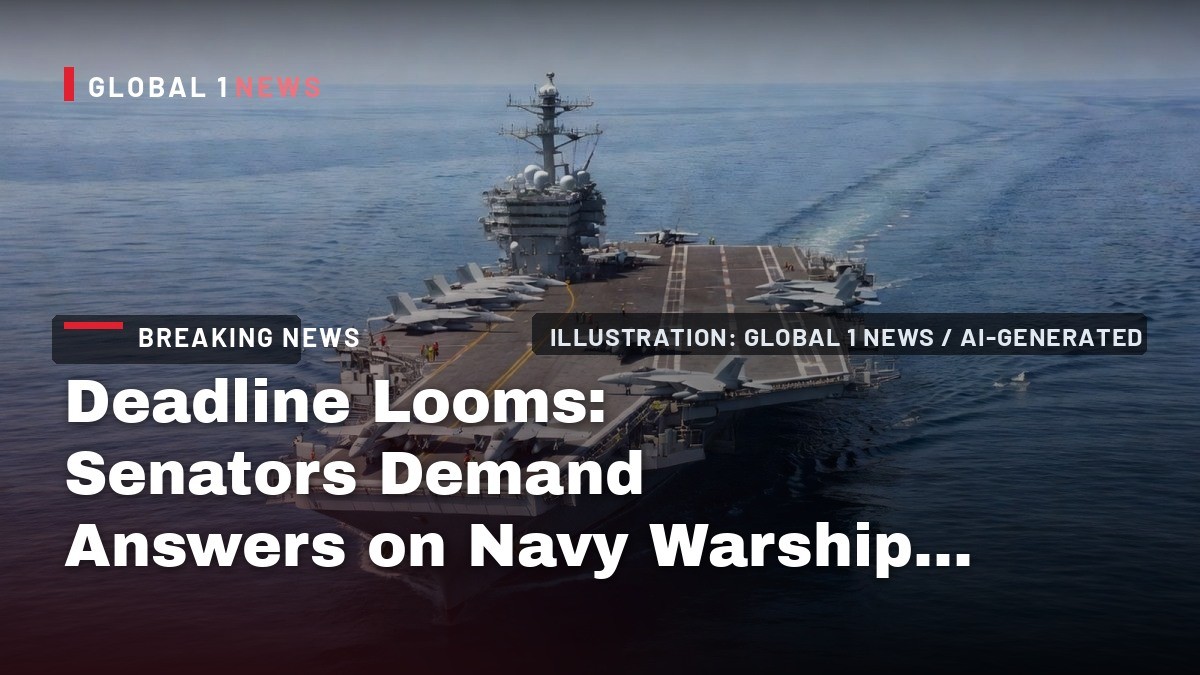
The clock hit zero today. September 1 was the deadline, and the question hanging over the Pentagon is simple: will Defense Secretary Pete Hegseth and acting Navy Secretary Hung Cao actually answer for what has happened to the men and women serving on America’s most advanced warships? Two of the most powerful Democrats in the Senate aren’t waiting for a PR spin cycle. They want an independent, strategic review of the conditions that have pushed crews on the USS Gerald R. Ford, the USS Abraham Lincoln, and the USS Benfold to their breaking points—and they want it now.
This isn’t a bureaucratic squabble. This is about sailors who have spent the better part of a year at sea, missing weddings, missing graduations, and in some cases, reportedly trying to end their own lives. The letter, sent Monday, Aug. 24, to Hegseth and Cao, demands an "immediate independent strategic review" of recent deployments, according to a copy shared with CNN. The senators gave the Pentagon until today—September 1—to provide answers and open a formal inquiry. The pressure is on, and the stakes couldn't be higher for the future of the U.S. Navy.
The Deadline Letter: A Demand for Truth
The demand comes from the top Democrats on the Senate Appropriations Committee: Patty Murray of Washington, the committee’s vice chair, and Chris Coons of Delaware, the top Democrat on the defense panel. These aren’t fringe voices; these are the people who write the checks for the federal budget. When they ask for a review, the Pentagon is expected to listen. The letter, addressed directly to Hegseth and Cao, requests a deep dive into "readiness issues related to operations, manning, quality of life, including mental health, and culture on the ships as well as communications with the crews' families," per CNN.
It’s a sweeping mandate. The senators aren’t just asking for a tally of broken equipment. They want to know about the human cost. They want to know about the culture onboard. They want to know how the Navy is talking to the families back home who are watching their loved ones suffer from afar. And crucially, they want recommendations. The review, if authorized, must provide actionable steps "to improve future extended deployments for sailors and Marines." This isn’t just about punishing bad actors; it’s about fixing a system that seems to be grinding its people into dust.
What Sailors Reported: Mail, Food, and Morale
Let’s be clear about what we’re talking about. This isn’t a complaint about long hours or tough duty. This is about basic necessities failing. CNN previously reported that sailors aboard the Lincoln experienced disruptions to the mail system—a lifeline for morale on any deployment—and intermittent shortages of supplies such as hygiene items and fresh food. Imagine being 5,000 miles from home, in a combat zone, and you can’t get a bar of soap or a letter from your partner. That is the reality these crews have been living.
The situation is so dire that Navy Times and Stars and Stripes have reported suicide attempts and declining morale. The Guardian went further, reporting that sailors tried to jump overboard. Let that sink in. We are talking about active-duty service members on a billion-dollar aircraft carrier, and they are so desperate that they are attempting to throw themselves into the ocean. This is not a morale problem; this is a crisis. Families back home are watching this unfold, and they are furious. According to USA Today, family members dispute the accounts coming from Trump administration officials and Hegseth himself. They say they are seeing the reality of what their loved ones describe—and it does not match the official story.
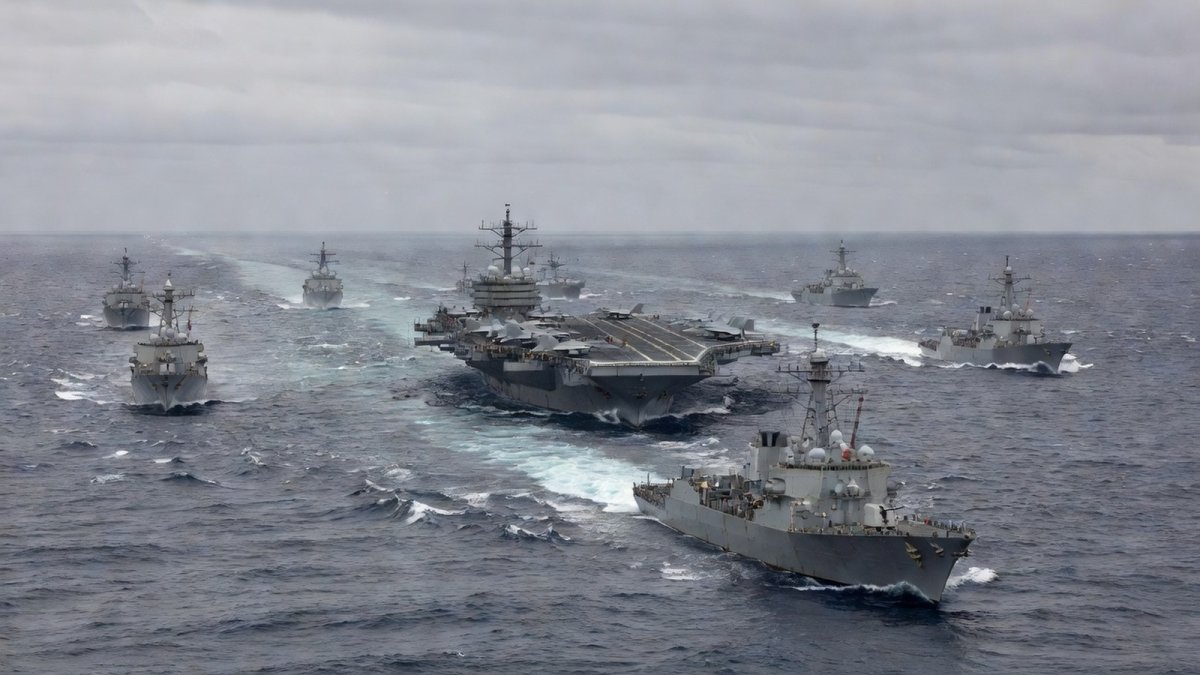
The Three Ships' Ordeals: A Tale of Endurance and Failure
Let’s break down the specific hell each of these ships has endured. First, the USS Abraham Lincoln. This Nimitz-class carrier, CVN 72, carries a crew of roughly 5,000. They deployed on November 21, 2025. They are currently on their way home to San Diego after a deployment that has seen virtually no shore time since a brief stopover in Guam in December 2025. We are talking about over 260 days deployed. That is a modern-era record for a U.S. aircraft carrier. The Navy’s own target for a deployment is seven months. The Lincoln has blown past that by months, and the crew has paid the price.
Then there’s the USS Gerald R. Ford. This is the Navy’s newest and most technologically advanced carrier, and it returned to Norfolk, Virginia, on May 16 after a staggering 326-day deployment. That is the longest post-Vietnam deployment on record. During that time, it conducted combat missions against Venezuela and Iran. But the combat wasn’t the only enemy. The ship suffered a major fire that started in the laundry department. It took 30 hours to defeat. Thirty hours. And in the aftermath, roughly 600 sailors were left without access to their bunks. These are the people who keep the ship running, and they couldn’t even sleep in their own racks.
And finally, the USS Benfold. This Arleigh Burke-class guided-missile destroyer suffered an engineering failure that left it without power for four days in the South China Sea. Four days. Dead in the water in one of the most contested maritime regions on the planet. That is not just an inconvenience; that is a strategic vulnerability and a massive safety risk. These three ships represent the full spectrum of the Navy’s current crisis: overextension, mechanical failure, and a leadership culture that seems willing to accept these conditions as normal.
The Pentagon Pushback: 'Fake News' vs. Reality
You would think that with this kind of evidence, the Pentagon would be in crisis-management mode. Instead, they are in denial mode. On Aug. 13, Hegseth claimed that conditions aboard the Lincoln have been "completely misrepresented" following reports that sailors were struggling. He called the accounts "more fake news," according to The Hill. That dismisses the accounts of sailors and the families who say they are living through these conditions—and the reporters who have documented them.
The next day, Aug. 14, acting Navy Secretary Cao tried a different angle. He praised the crew’s endurance, arguing "our young men and women have been pushed to their limits—but they have never broken." That is a nice soundbite, but it ignores the fact that some of them have broken. The Guardian reported suicide attempts. Sailors have tried to jump overboard. That is a system under profound stress. Cao's statement is a classic deflection tactic: praise the resilience of the troops to avoid addressing the systemic failures that are causing the suffering in the first place.
This pushback isn’t fooling anyone on Capitol Hill. Earlier, Sen. Richard Blumenthal (D-Conn.) called for the Navy to account for conditions. And on Aug. 17, senators presented Hegseth with a list of 12 questions about the Lincoln’s status, living conditions, morale, crew health, and family well-being, according to the Jerusalem Post. The questions are on the table. The deadline is today. The ball is in Hegseth’s court.
Why Deployments Keep Stretching: The Strategic Context
So why is this happening? Why are we pushing these ships and their crews to the breaking point? The answer lies in the strategic environment. The Lincoln and the Ford have both been heavily involved in operations related to the standoff with Iran. The Lincoln conducted blockade operations related to the Strait of Hormuz in April. This is the choke point for global oil supplies, and the U.S. Navy is the muscle that keeps it open. When you have a high-intensity geopolitical confrontation with Iran, the demand for carrier presence skyrockets.
But here’s the problem: the Navy doesn’t have enough ships to meet the demand without stretching deployments beyond their limits. Extended deployments beyond the Navy’s own seven-month target length have become increasingly common. The median length of U.S.-based carrier deployments has been steadily increasing since 2020. This isn’t a one-off anomaly; it’s a trend. The Navy is trying to do more with less, and the cost is being paid in the mental and physical health of its sailors.
This has massive implications for retention. Why would a sailor re-enlist after spending 260 days at sea without fresh food or mail, only to hear the Secretary of Defense dismiss their suffering as "fake news"? The Navy is bleeding experienced personnel, and this crisis is only going to accelerate that exodus. You cannot treat your most valuable asset—your people—like disposable machinery and expect them to stick around.
What Happens Next: The Clock Is Ticking
Today is the deadline. Hegseth and Cao have to respond to the senators. They have to either authorize the independent review or explain why they won’t. If they refuse, they will face the wrath of the Appropriations Committee, which controls their budget. That is a powerful lever, and Murray and Coons know how to pull it.
But even if the review is authorized, the damage is done. The sailors on the Lincoln are heading home, but they are heading home scarred. The families who missed weddings and graduations will never get those moments back. The Navy has a long road ahead to rebuild trust with its workforce. The first step is admitting there is a problem. So far, the Pentagon has refused to do that.
This is a test of leadership. Will Hegseth and Cao choose to protect the institution by hiding the truth, or will they choose to protect the sailors by confronting it? The answer will define their tenure and, more importantly, the future of the U.S. Navy. The deadline is today. We are watching.
By Jessica Ali, Staff Writer
This article was produced with AI-assisted research and editorial support. Sources: CNN, The Guardian, USA Today, The Hill, Military Times, Stars and Stripes, Navy Times, Jerusalem Post.
What's Your Reaction?
 Like
0
Like
0
 Dislike
0
Dislike
0
 Love
0
Love
0
 Funny
0
Funny
0
 Wow
0
Wow
0
 Sad
0
Sad
0
 Angry
0
Angry
0

Editor-in-Chief at Global1.News. Atlanta-based journalist who cuts through the BS and tells it like it is. Lead anchor, host, and the voice you hear when the spin stops and the truth starts.














Comments (0)