
Rodina Party Sues to Disqualify Yabloko From State Duma Elections
Rodina Party files a Supreme Court lawsuit to disqualify Yabloko from September's State Duma elections, accusing Russia's only pro-peace party of working for the West. A hearing is set for Monday as the Kremlin-aligned system tightens its grip on the ballot.
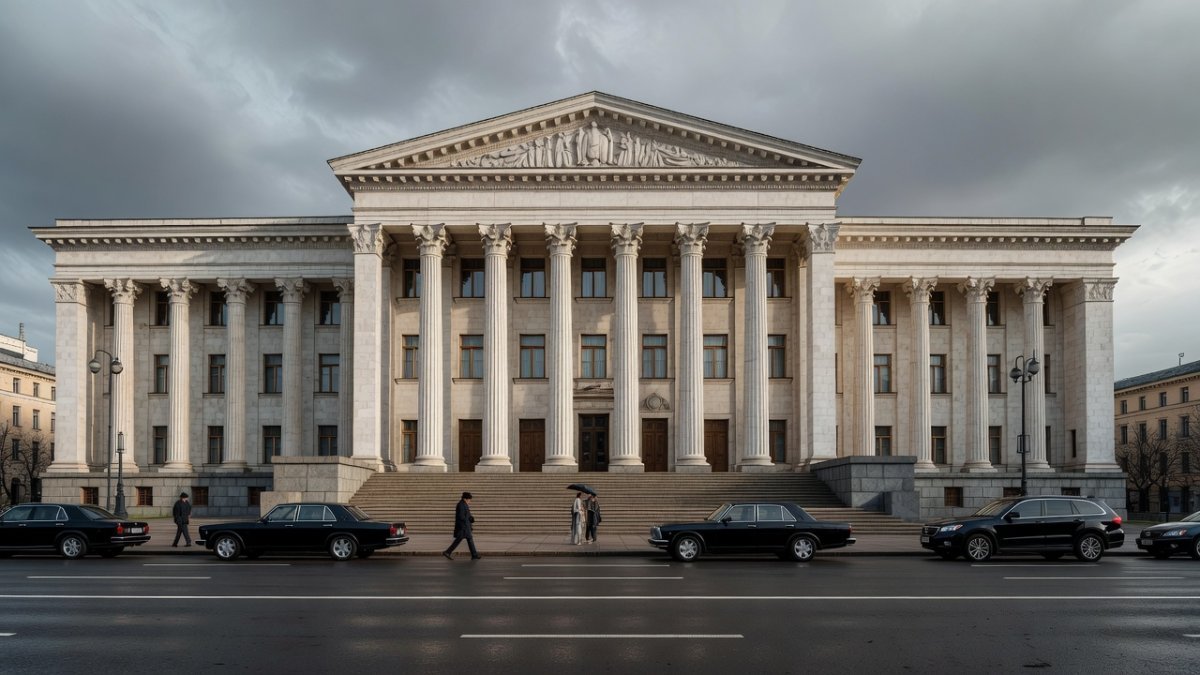
In a direct challenge to Russia's sole officially registered pro-peace party, the small nationalist Rodina party has filed a lawsuit with the Supreme Court seeking to disqualify Yabloko from the September State Duma elections. Rodina leader Alexei Zhuravlyov announced the move on Friday outside the Supreme Court building in Moscow, accusing Yabloko of fielding candidates who work for the West. The filing, confirmed by the Supreme Court's press service, sets up a hearing scheduled for August 10 and highlights ongoing tensions in the managed electoral system ahead of the vote for 450 lower house seats.
The Lawsuit and Its Immediate Context
Rodina submitted the disqualification request to the Supreme Court earlier on Friday, according to statements from Zhuravlyov, who also serves as a State Duma deputy aligned with the Liberal Democratic Party. The Supreme Court press service verified receipt of the documents to TASS and Kommersant. This action follows the Central Election Commission's registration of Yabloko's candidate list on July 29, which included more than 400 approved candidates running on a pro-peace platform.
Russia's managed democracy has long featured selective enforcement of electoral rules, where smaller parties aligned with the Kremlin face fewer obstacles than those offering alternative foreign policy views. The current challenge arrives against a backdrop of tightened controls on political participation that have intensified since the start of the special military operation. Observers suggest the timing could indicate an effort to test the resilience of Yabloko's federal registration before the campaign period advances further.
Within the broader Kremlin power structures, disputes of this nature often serve as signals to other opposition groups about acceptable boundaries. The Central Election Commission operates under guidelines that prioritize national security considerations, particularly when parties are accused of external ties. This framework has historically limited the space for liberal platforms even before the current wartime restrictions took hold.
Zhuravlyov's Public Accusations
Zhuravlyov told reporters that Yabloko is full of traitors who hold Western values and work for the West. He claimed without evidence that Rodina had uncovered various violations by the party. During last week's Central Election Commission meeting, Zhuravlyov further criticized Yabloko for not sending candidates to the special military operation zone in Ukraine, a point echoed by other officials present.
The accusations draw on the dominant SVO narrative that frames support for the military campaign as a litmus test for political legitimacy. In this environment, parties that avoid explicit endorsement of the operation risk being portrayed as insufficiently patriotic. Analysts note that such rhetoric from nationalist figures like Zhuravlyov often amplifies pressure on liberal groups already navigating a narrowed political field.
Rodina's move reflects how smaller parties aligned with the ruling consensus can act as proxies in testing institutional responses. The war economy has further shaped campaign dynamics, with resources and media access heavily tilted toward factions that back the official line. This dynamic leaves limited room for platforms that question the direction of foreign policy.
Yabloko's Counterthreat and Internal Stance
Yabloko responded by threatening to sue Zhuravlyov for defamation over the remarks. Party chairman Nikolay Rybakov has sought to distance the organization from exiled opposition figures, noting on Telegram that their support could lead to removal from the ballot under current rules. Rybakov emphasized that Yabloko remains focused on its registered pro-peace platform despite the broader crackdown on dissent that has jailed several prominent members in recent years.
As Russia's oldest liberal party, Yabloko has maintained a consistent pro-peace position through multiple election cycles, even as the space for such views contracted. The party's history includes repeated attempts to register candidates under increasingly restrictive conditions that favor established parliamentary factions. Rybakov's careful distancing from external supporters illustrates the strategic calculations required to preserve legal status.
The crackdown on dissent has created a climate where even registered parties must calibrate their messaging to avoid triggering further scrutiny. Prior cases of disqualification have shown that accusations of foreign influence can quickly escalate into formal legal challenges. This pattern suggests the current lawsuit fits within a longer trajectory of managing electoral competition through institutional mechanisms.
Supreme Court Schedule and Legal Process
The Supreme Court confirmed the filing and set the hearing for August 10. Russia's legal framework for election disputes allows such challenges from registered parties, though outcomes often reflect the priorities of Kremlin-aligned institutions. Rodina itself is one of 11 additional parties cleared by the Central Election Commission to contest seats in the lower house.
The upcoming hearing could clarify how courts interpret rules on candidate eligibility amid heightened national security concerns. In past disputes, the Supreme Court has tended to uphold decisions that align with the broader political consensus rather than expand opposition access. Observers suggest the ruling may influence whether other parties attempt similar challenges before the September vote.
Electoral law in Russia grants registered parties standing to question rivals' compliance, creating avenues for intra-system competition that can sideline less favored groups. The process underscores the centralized nature of oversight, where federal institutions hold significant sway over regional and national contests alike.
Criticism from Other Parliamentary Parties
Sergey Mironov, head of A Just Russia, and Leonid Slutsky, head of the LDPR, joined Zhuravlyov in criticizing Yabloko at the Central Election Commission session. Slutsky called for the party to be declared an undesirable organization. These statements from established Duma factions illustrate the coordinated pressure faced by parties that deviate from the dominant narrative on foreign policy.
Parliamentary parties have increasingly converged on support for the special military operation, leaving little tolerance for platforms that advocate negotiation or reduced confrontation. This alignment strengthens the managed system by presenting a unified front against perceived internal dissent. Reactions from Mironov and Slutsky fit this pattern of reinforcing boundaries around acceptable political discourse.
The coordinated criticism also highlights how the war economy influences elite behavior, with factions competing to demonstrate loyalty while securing their own positions. Such dynamics reduce the likelihood of cross-party alliances that might challenge the status quo. The episode reveals the limited leverage available to any group operating outside the prevailing consensus.
Support from Exiled Opposition Figures
Exiled opposition figures including Yulia Navalnaya, Vladimir Kara-Murza, Ilya Yashin, Lyubov Sobol, Maxim Reznik, and Oleg Orlov have publicly urged voters to back Yabloko. This endorsement comes amid restrictions targeting anti-war voices, yet Rybakov has kept the party at arm's length to preserve its ballot status. The contrast underscores divisions between registered domestic parties and those operating from abroad.
Exiled figures face legal barriers that prevent direct participation, pushing them toward symbolic endorsements that registered parties must navigate carefully. The support for Yabloko illustrates how the crackdown has fragmented the broader opposition landscape into domestic and external tracks. Rybakov's response reflects awareness that association with these voices could trigger additional institutional scrutiny.
This dynamic reveals the trade-offs inherent in Russia's managed democracy, where maintaining legal registration often requires distancing from more confrontational elements. The endorsements may mobilize certain voters but also provide ammunition for critics seeking to portray Yabloko as influenced by external actors.
Regional Registration Outcomes
While the Central Election Commission approved Yabloko's federal list, the St. Petersburg election commission refused to register party candidates for local city elections last week. In contrast, the Tomsk Region Electoral Commission confirmed Yabloko's candidate list for the regional Legislative Duma on August 2. These differing decisions reflect uneven application of rules across Russia's federal subjects.
Regional variations in enforcement often mirror local political climates and the degree of alignment with federal priorities. St. Petersburg's refusal follows a pattern of stricter oversight in major urban centers where liberal sentiment has historically been stronger. Tomsk's approval, meanwhile, suggests that some peripheral regions apply rules with marginally greater flexibility.
Such inconsistencies are common in the electoral system and can create uncertainty for parties attempting nationwide campaigns. They also demonstrate how federal subjects retain limited discretion even as overarching Kremlin guidance shapes the broader environment. The contrast between regions adds another layer of complexity to Yabloko's efforts to maintain visibility ahead of the September vote.
Impact on Ordinary Voters and Electoral Choice
Yabloko stands as the only registered party offering a pro-peace platform in an environment where authorities have restricted dissent. Voters in September's elections, scheduled for 18-20 September across Russia, face a narrowed field shaped by such legal maneuvers and institutional oversight. The lawsuit adds another layer to the managed democracy system, where challenges from smaller nationalist groups test the boundaries for liberal-leaning alternatives.
The case could signal to voters the risks associated with supporting parties outside the parliamentary mainstream. In a system where the SVO narrative dominates public discourse, options that question prevailing policy face structural disadvantages. This environment limits the practical impact of pro-peace messaging even when parties remain on the ballot.
Ultimately, the proceedings highlight how electoral competition in Russia operates within tightly managed parameters that prioritize stability over pluralism. Voters encounter a choice set already filtered through institutional and political pressures that have accumulated over successive cycles. The outcome of the Supreme Court hearing may further define the contours of that choice in the weeks ahead.
By Irina Volkov, Staff WriterThis article was produced with AI-assisted research and editorial support. Reporting is based on sources cited in the article.
What's Your Reaction?
 Like
0
Like
0
 Dislike
0
Dislike
0
 Love
0
Love
0
 Funny
0
Funny
0
 Wow
0
Wow
0
 Sad
0
Sad
0
 Angry
0
Angry
0
Russia/Eastern Europe Correspondent at Global1.News. Covering Russian politics, energy, security, and the shifting dynamics of the post-Soviet space. Provides clear-eyed analysis on one of the world's most opaque regions.











Comments (0)