
Robredo Nominates Leonen as Philippines' Next Chief Justice
Leni Robredo formally nominates Senior Associate Justice Marvic Leonen as the Philippines' next Chief Justice in a letter to President Marcos, as the JBC opens applications to replace retiring Chief Justice Alexander Gesmundo.
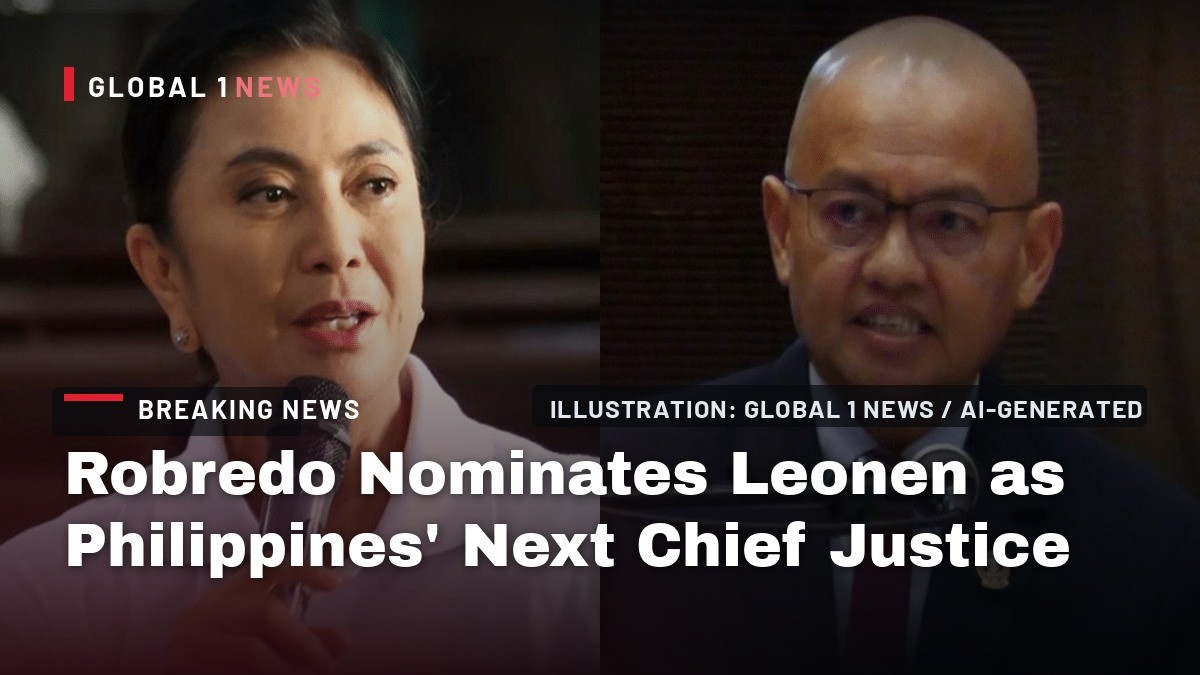
Naga City Mayor and former Vice President Leni Robredo has formally nominated Supreme Court Senior Associate Justice Marvic M.V.F. Leonen to be the next Chief Justice of the Philippines. The three-page letter, dated Sept. 11, 2026 and addressed to President Ferdinand Marcos Jr., was received by the Judicial and Bar Council and the Office of the Chief Justice on Sept. 23 — with the application window for the post closing on Oct. 13.
Robredo Nominates Leonen as Philippines' Next Chief Justice
MANILA, Philippines — The endorsement places the country's most senior associate justice, a nearly 14-year veteran of the High Court, at the center of the first chief justice selection of Marcos's presidency. Robredo, who served as Vice President from 2016 to 2022 and lost the 2022 presidential race to Marcos, wrote that Leonen exceeds the constitutional requirements for the post. The JBC, chaired by the retiring Chief Justice Alexander Gesmundo, now holds a nomination it did not solicit — and one that carries public weight regardless of what the council does with it.
The Letter That Landed on September 23
Robredo addressed the letter to President Marcos, with a copy furnished to the Judicial and Bar Council and its chair, Chief Justice Gesmundo. She wrote: "With great honor, I nominate and endorse Senior Associate Justice Marvic Leonen to be the next Chief Justice of the Republic of the Philippines."
"Justice Marvic M.V.F. Leonen is the most senior among all the justices of the Court," the letter continued. "He has proven to be way beyond the constitutional requirements of competence, independence, probity, and integrity."
She cited his workload and his leadership: "As a justice, his current docket is one of the lowest in the Court. He has also displayed mature, effective, and collegial leadership in the administration of justice." At this juncture in the country's political economy, she wrote, "we need his leadership to inspire credibility and genuine social justice."
She said she had "no doubt that his appointment will be acceptable to all sectors, including big business, small and medium scale entrepreneurs, local and national government officials, and those who suffer from poverty, inequality, and disempowerment."
The Man Robredo Is Pushing
Leonen was appointed to the Supreme Court in November 2012 by then-President Benigno Aquino III, at age 49. He is Senior Associate Justice and heads the Court's Second Division, the Senate Electoral Tribunal and the House of Representatives Electoral Tribunal.
He chairs or co-chairs the Management Committee for the Strategic Plan for Judicial Innovations, the Committee on Access to Justice for Underserved Areas, the Judicial Committee on Sustainability and Environmental Concerns, and the Committee on Human Rights. He leads the Court's digitalization work through eCourtPH and the Guidelines for the Use of Human-Centered Augmented Intelligence in the Judiciary, and chaired the 2020/2021 Bar examinations, introducing the first digitalized and localized bar exam.
Before joining the bench, Leonen co-founded the Legal Rights and Natural Resources Center in 1987 and belonged to the Free Legal Assistance Group, working as a public interest lawyer for indigenous peoples, farmers, fisherfolk and victims of political abuse. In 2010 he became the government's Chief Peace Negotiator and led the talks with the Moro Islamic Liberation Front that produced the Framework Agreement on the Bangsamoro in 2012.
He graduated magna cum laude in Economics from UP Diliman, placed 4th in the 1987 Bar Examinations, holds a Master of Laws from Columbia University and served as dean of the UP College of Law.
A Vacancy With a Deadline
Chief Justice Gesmundo, the 27th Chief Justice of the Philippines, reaches the mandatory retirement age of 70 and retires on Nov. 6, 2026. He was appointed by former President Rodrigo Duterte. Under the Constitution, a Supreme Court vacancy must be filled within 90 days, with the President choosing from a JBC shortlist, and applications close at 4:30 p.m. on Oct. 13.
Supreme Court spokesperson Camille Sue Mae L. Ting said that when the post falls vacant, Leonen will serve as acting Chief Justice until a permanent successor is officially appointed and qualified. She cited Section 12 of Republic Act No. 296, the Judiciary Act of 1948, under which the duties and powers of the Chief Justice pass to the most senior Associate Justice during a vacancy.
This would be Marcos's first appointment of a chief justice. His first Supreme Court appointment overall came in June 2025, when he named Associate Justice Raul Villanueva to replace retired Associate Justice Mario Lopez.
The Five Names the JBC Invited
Ting said the JBC invited the five most senior associate justices to apply: Leonen, along with Associate Justices Alfredo Benjamin S. Caguioa, Ramon Paul L. Hernando, Henri Jean Paul B. Inting and Rodil V. Zalameda.
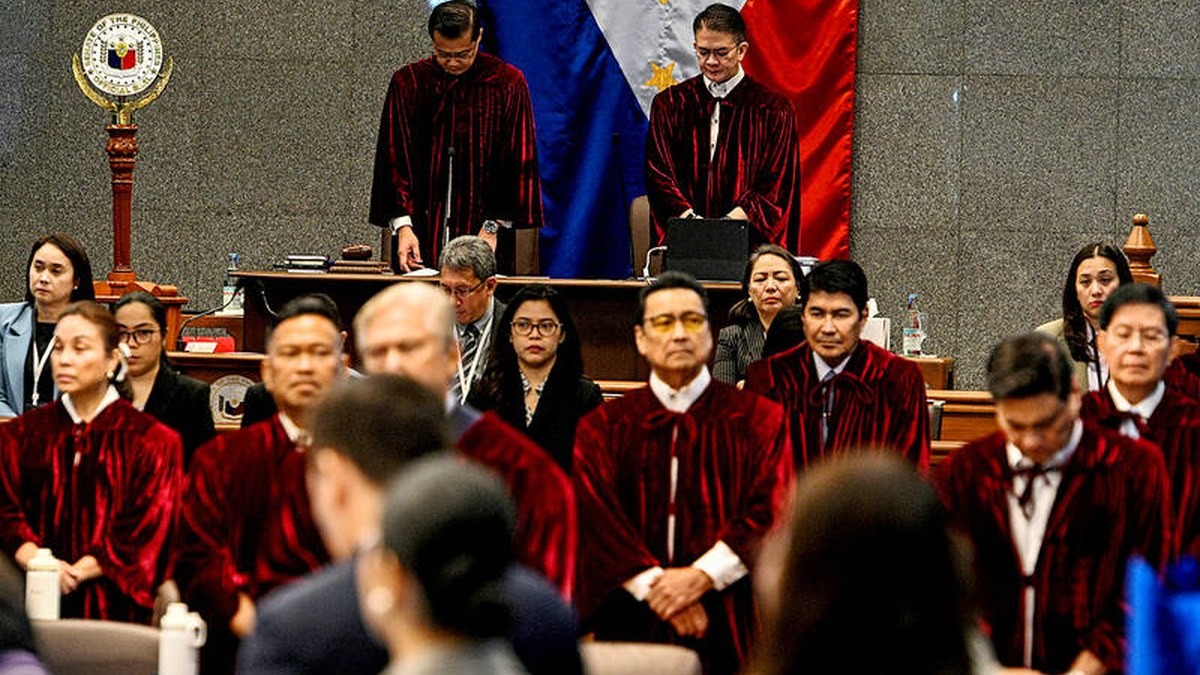
On the practice, Ting said: "What began as an informal practice has since become a standing JBC policy." She described the invitations as an established practice since the early 2000s, carried out as a matter of courtesy and in recognition of seniority, and said they do not guarantee inclusion in the shortlist submitted to the president.
The field is not limited to those five. Retired Supreme Court Associate Justice Arturo Brion nominated Associate Justice Jose Midas Marquez, in a letter to Gesmundo and JBC members dated Sept. 4, 2026, citing Marquez's work ethic and his service as Court Administrator.
The Footnote This Court Has Not Escaped
Leonen wrote the 97-page decision of July 25, 2025 that declared the Articles of Impeachment against Vice President Sara Duterte unconstitutional. The vote was 13-0-2; Associate Justice Caguioa inhibited and Associate Justice Maria Filomena D. Singh was on leave. The grounds were the one-year bar under Article XI, Section 3(5) of the Constitution and a violation of due process — which meant, the Court held, that the Senate could not acquire jurisdiction.
Footnote 30, on page 8 of that decision, states: "At 4:47 p.m. of February 5, 2025, House Secretary Velasco transmitted the Articles of Impeachment to the Senate even without a plenary vote." It cited two ABS-CBN News reports.
On Aug. 6, 2025, ABS-CBN News issued a statement saying its articles "did not state that the House of Representatives transmitted the articles of impeachment to the Senate without a plenary vote." The network said it "covered and also aired live the House plenary vote on the impeachment complaint," reporting that 215 of 306 members endorsed it.
The House of Representatives filed a motion for reconsideration, arguing the Court committed a factual error. Speaker Martin Romualdez said the ruling "misunderstood — and effectively reversed — this clear chronology." The coalition 1Sambayan filed its own motion, calling the reliance on news reports "misplaced and contrary to law and public policy." Retired Justice Antonio Carpio said: "They just assumed that because of a newspaper report, it was never taken up. But it's basic." Ting said the footnote issue "is among the issues raised in the motions for reconsideration." Those motions were still pending.
Why This Is Political
Robredo and Marcos were rivals in the 2022 presidential election. Palace Press Officer Claire Castro has said the President considers all local chief executives, including Robredo, allies regardless of political colour, distinguishing constructive critics from obstructionists.
Marcos visited Naga City and announced a P500-million Local Government Support Fund for the rehabilitation of the Jesse M. Robredo Coliseum into a disaster refuge centre, and for heavy equipment for the city.
The five justices the JBC invited include three — Hernando, Inting and Zalameda — who penned the Supreme Court's acquittal of the President's mother, former First Lady Imelda Marcos, on seven counts of graft, a ruling Marcos welcomed.
The Trial in the Next Room
On Sept. 23, the Philippine Senate, sitting as an impeachment court, lowered the number of votes needed to convict Vice President Sara Duterte from 16 to 14. The court ruled that only senator-judges able to participate in the trial should be counted when determining the threshold for conviction. Four of the 24 senator-judges have been unable to participate and cannot vote.
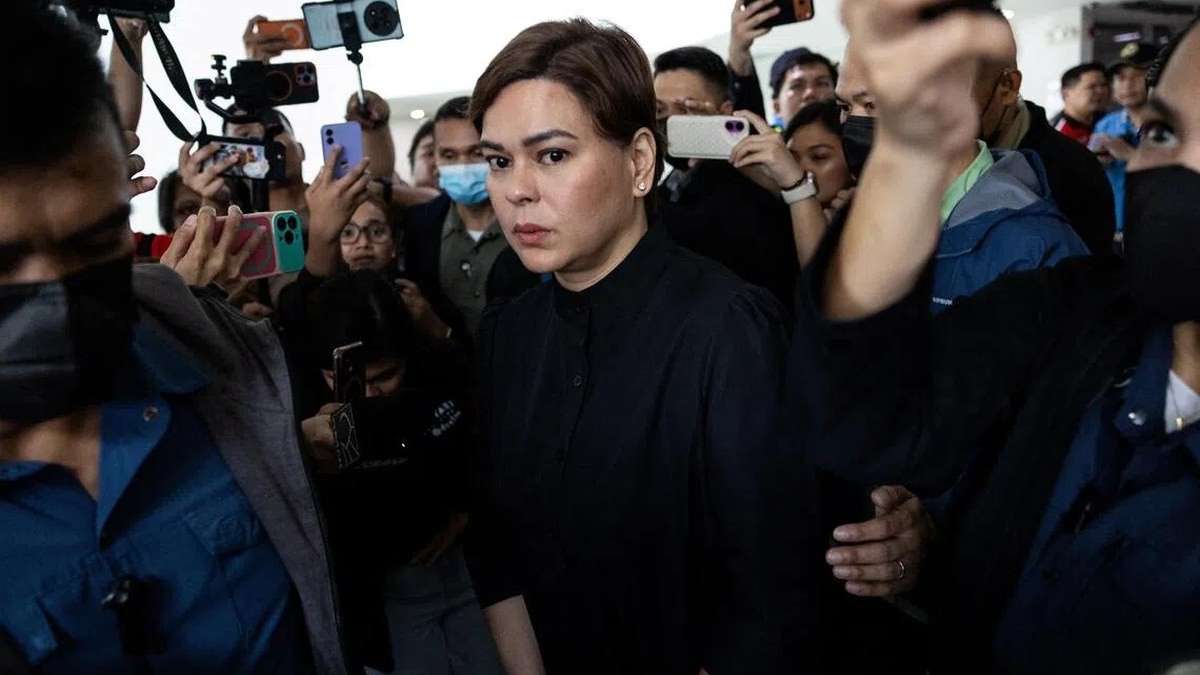
The ruling came after Senator-judge Erwin Tulfo challenged the July 6 interpretation of Senate President Francis Escudero that two-thirds of all senators, including those not present during the trial, is required to convict. Senator Rodante Marcoleta is behind bars over alleged undeclared election donations worth P75 million, and Senator Jinggoy Estrada is detained over alleged irregularities in flood control projects.
Duterte faces allegations of graft, bribery, misuse of public funds, unexplained wealth and threatening the lives of Marcos, the first lady and a former House Speaker. She denies wrongdoing. A conviction would bar her from holding office and end her 2028 presidential bid; she is a frontrunner in early opinion polls. The trial follows the fallout between Duterte and Marcos, her former ally and running mate, who is limited to a single term and is expected to back a successor.
Michael Henry Yusingco called the threshold ruling "the best chance to secure a conviction." Ederson Tapia, a public administration professor at the University of Makati, said: "Senators still have to weigh the evidence, and, admittedly, weigh public opinion. But if I were Vice President Duterte, I would be concerned." The prosecution said the conviction-voting issue may be raised before the Supreme Court.
What the President Has Said
Asked about the Imelda Marcos ruling, Marcos told reporters: "Well, I'm glad that that case is over. It's been hanging over our heads for about 40 years. Yeah, I'm glad, especially for my mother."
Asked whether that decision could favour the justices who decided it, Marcos replied: "Why?" He added: "That's the first time I made any connection between the choice of Chief Justice and — no, that's never been, that will never enter our thinking in any way."
Castro said critics linking the ruling to the chief justice selection were merely speculating: "Minsan magsasalita sila na maaaring ganito, maaaring ganyan, pero walang pinanghuhugutan ng anumang facts or data." She said such claims have no factual basis and could undermine respect for the independence of the Supreme Court.
On Vice President Duterte's tirades against him, Marcos said on Sept. 15: "You know, I hear about them, but I don't really even have a response. You cannot force anyone to love you."
What Happens Next
The JBC will evaluate applicants and nominees, including Robredo's endorsement of Leonen and Brion's nomination of Marquez, before submitting a shortlist to the President. The 90-day constitutional clock starts when Gesmundo retires on Nov. 6.
Until a permanent successor is appointed and qualified, Leonen serves as acting Chief Justice under Section 12 of Republic Act No. 296. Nothing in the JBC's invitation to the five most senior justices obliges the council to shortlist any of them.
What to Watch
Watch the JBC's handling of the two nominations on its table, and whether any of the five invited justices formally applies before Oct. 13. Watch the two clocks: the JBC's, and the constitutional 90 days that begin on Nov. 6.
Watch the Supreme Court's pending motions for reconsideration in the Duterte impeachment case, and whether the House's factual-error argument gains traction. Watch the Senate impeachment court, where a 14-vote threshold now governs a trial that could end Sara Duterte's political career.
And watch the Palace, which says the chief justice selection and the Imelda Marcos acquittal are unconnected in the President's thinking. The shortlist will test that.
By Jessica Ali, Staff Writer
This article was produced with AI-assisted research and editorial support. Sources: Philippine Daily Inquirer, The Philippine Star, Manila Bulletin, Daily Tribune, Manila Times, Journal News, Rappler, Reuters, Nikkei Asia, Taipei Times.
What's Your Reaction?
 Like
0
Like
0
 Dislike
0
Dislike
0
 Love
0
Love
0
 Funny
0
Funny
0
 Wow
0
Wow
0
 Sad
0
Sad
0
 Angry
0
Angry
0

Editor-in-Chief at Global1.News. Atlanta-based journalist who cuts through the BS and tells it like it is. Lead anchor, host, and the voice you hear when the spin stops and the truth starts.















Comments (0)