
Qusra Under Siege: Amnesty Condemns State-Backed Settler Attacks as West Bank Violence Reaches Unprecedented Levels
Amnesty International condemns the siege of three Palestinian families in Qusra by Israeli settlers, exposing a state-backed campaign of displacement as settler violence in the West Bank hits record levels in 2026.
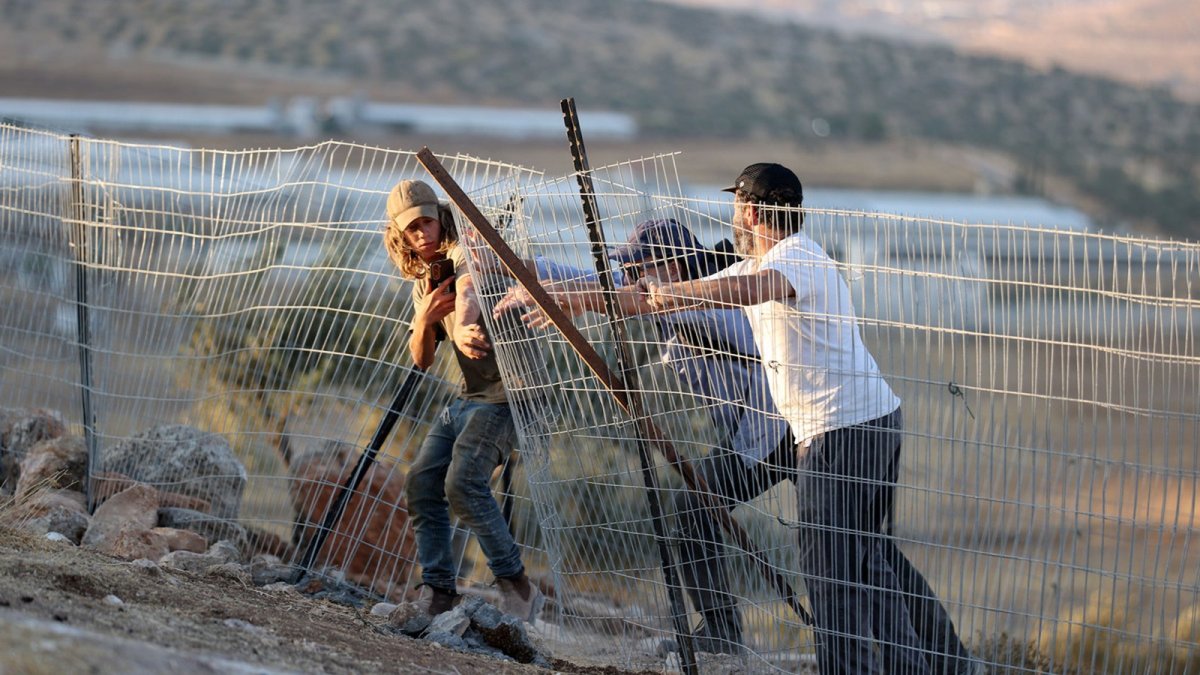
The village of Qusra, southeast of Nablus in the northern occupied West Bank, has become the latest flashpoint in a year of relentless and escalating violence against Palestinian communities. Three Palestinian families remain confined to their homes under a siege imposed by Israeli settlers since Sunday, 9 August, with food supplies dwindling and no access to running water. The siege, which has drawn a strong condemnation from Amnesty International, is not an isolated incident but rather a stark illustration of a coordinated campaign of displacement that human rights groups say is enabled, funded, and backed by the Israeli state.
A Community Under Lockdown
The three families targeted in Qusra have endured months of threats, harassment, and physical attacks from settlers residing in nearby outposts. The current siege, now entering its sixth day, has effectively turned their homes into prisons. According to Amnesty International, the families are running out of food and lack access to basic necessities, including running water. The situation is further exacerbated by the fact that Palestinian Red Crescent ambulances attempting to deliver food and water to the besieged homes were themselves attacked by settlers. Despite these violent assaults, Israeli forces have allowed the settlers to remain in close proximity to the Palestinian families' homes, raising serious questions about the military's role in the incident.
The homes are located in Area B of the West Bank, a classification under the Oslo Accords that designates the territory as under Palestinian administrative control and Israeli military control. This legal framework, however, has provided no protection for the residents. In a particularly egregious development, sources in Qusra told Amnesty International that the Israeli military forced two of the besieged families, along with six neighbouring families, to evacuate their homes for several hours on Thursday. The military then reportedly used the vacated homes as military outposts. As one resident poignantly put it, "instead of removing the attackers, the Israeli forces removed the attacked families, while allowing the settlers to stay all this time."
A Pattern of State-Backed Terror
Amnesty International’s Senior Director for Research, Advocacy, Policy and Campaigns, Erika Guevara Rosas, was unequivocal in her condemnation. "The horrors unfolding in Qusra are far from an isolated incident," she stated. "They reflect the relentless escalation and expansion of an accelerating and well-documented pattern of coordinated and strategic settler terror, enabled, backed and funded by the State of Israel, with the aim of displacing Palestinians across the occupied West Bank."
This assessment is supported by a growing body of data. The United Nations has warned that settler violence in the West Bank has reached unprecedented levels in 2026, with more than 1,430 attacks documented since the start of the year, targeting around 260 Palestinian communities. The human cost is staggering. UN officials reported that as of 10 August, 76 Palestinians, including 18 children, had been killed in the West Bank in 2026. Attacks, demolitions, and evictions have displaced 3,800 Palestinians, nearly half of them children. The UN Office for the Coordination of Humanitarian Affairs (OCHA) has noted that fatalities linked directly to settler attacks in 2026 have already surpassed the total for all of 2025, with 18 killed by late July compared to 17 in the entirety of the previous year.
Beyond Area C: The Expanding Front
The siege in Qusra is particularly significant because it challenges the long-held assumption that such violence is confined to Area C, the roughly 60 percent of the West Bank under full Israeli control. In June, Amnesty International published a landmark report, "Erasing anything Palestinian: Israel's ethnic cleansing of West Bank Bedouin and herding communities," which detailed how the Israeli government has made formal annexation an explicit policy objective. The report exposed how the state is implementing the settler movement’s religious nationalist agenda through accelerated settlement expansion, land grabs, and increased financial and logistical support to settlements. Crucially, it documented how the state has armed settlers, enabling a brutal, state-sanctioned campaign of violence and forced displacement.
However, recent raids and attacks, including those on the village of Tell and the ongoing assaults on the Christian village of Taybeh, demonstrate that these unlawful actions extend well beyond Area C and are not limited to Bedouin and herding communities. The attack on Taybeh, a historic Christian village near Ramallah, has caused deep concern among its residents, even after the Israeli army declared the area a "closed military zone." The targeting of Qusra, located in Area B, signals a dangerous expansion of the settler enterprise, threatening the very fabric of Palestinian life across the entire West Bank.
A Rare Rebuke and a Call for Accountability
The situation in Qusra has even drawn a rare public rebuke from within the Trump administration. US Ambassador to Israel Mike Huckabee, known for his staunchly pro-settlement views, described the settlers besieging a Palestinian-American family in Qusra as committing a "horrific act of terror" and branded them "Israeli terrorists." While this statement marks a significant departure from the administration's usual rhetoric, it has yet to translate into any concrete policy changes or protective measures for Palestinian communities.
Amnesty International is calling for far more than verbal condemnation. "Israel, as the occupying power, has a legal obligation to protect the Palestinian population under its control and not to stand by or worse, stand with settlers – while they lay siege to Palestinian homes and cut off families’ access to healthcare, electricity and water for days on end," said Guevara Rosas. The organisation is urging states to end any form of direct and indirect support for Israel’s unlawful occupation and its "brutal system of apartheid," including banning trade and investment that contribute to the maintenance of settlements. It also calls for targeted sanctions on senior Israeli officials allegedly responsible for international crimes, including the crimes against humanity of apartheid and forcible transfer.
The Lived Reality of Displacement
For the families in Qusra, the international legal debates and diplomatic statements are a distant echo against the immediate, visceral reality of their confinement. They are running out of food. They have no water. They are cut off from healthcare. The psychological toll of being under siege, of watching armed settlers patrol outside their doors while the military that is supposed to protect them does nothing—or worse, actively facilitates the attack—is immeasurable.
The broader context is one of a relentless campaign that has intensified since the start of the Gaza war in October 2023. According to Palestinian figures, Israeli forces and settlers have killed more than 1,183 Palestinians in the West Bank, injured around 13,000, and arrested nearly 25,000 in that period. The international community has repeatedly expressed concern, but as Amnesty International notes, "For far too long, the world has ignored the immense, unfathomable suffering of Palestinians being uprooted and erased from land they have inhabited for generations."
The siege in Qusra is a test case for the international community's willingness to move beyond rhetoric. The question is whether the world will continue to treat these incidents as isolated flare-ups, or finally acknowledge the coordinated, state-backed campaign of forcible transfer that is unfolding in real-time across the occupied West Bank. As Guevara Rosas warned, "Failure to act would further embolden Israel and state-backed Israeli settlers to continue their unlawful and violent actions against Palestinians, who are left unprotected and without any recourse to justice."
This article was produced with AI-assisted research and editorial support. Sources: Amnesty International, Middle East Monitor, UN OCHA, Wafa. By Fatima Al-Rashid, Staff WriterWhat's Your Reaction?
 Like
0
Like
0
 Dislike
0
Dislike
0
 Love
0
Love
0
 Funny
0
Funny
0
 Wow
0
Wow
0
 Sad
0
Sad
0
 Angry
0
Angry
0

Gulf/MENA Correspondent at Global1.News. Based in Doha, covering Gulf politics, energy markets, diplomacy, and development across the Middle East and North Africa. Tracks the economic transformation of the Gulf states.














Comments (0)