
Former Israeli Soldier Dodges Question on Killing Palestinian Children
In a recent Middle East Eye report, a former Israeli soldier and prominent pro-Israel activist, Yoseph Haddad, appears to visibly dodge direct questions about whether he killed Palestinian children or ordered a strike on a school during his military service. The exchange, which took place during a podcast...
In a recent Middle East Eye report, a former Israeli soldier and prominent pro-Israel activist, Yoseph Haddad, appears to visibly dodge direct questions about whether he killed Palestinian children or ordered a strike on a school during his military service. The exchange, which took place during a podcast recording in Los Angeles, has ignited a firestorm online and raised uncomfortable questions about accountability, impunity, and the platforms given to those who defend wartime actions.
The confrontation, which turned physical both inside the studio and later in the parking lot, has become a flashpoint in the ongoing global debate over Israel's military operations in Gaza. It underscores a deeper, unresolved tension: who gets to tell the story of the war, and what happens when those narratives are challenged face-to-face.
Former Israeli Soldier's Evasions Spark Violent Clash in LA
Los Angeles, United States – August 16, 2026 — The episode of the Digital Social Hour podcast, hosted by Sean Kelly, was recorded on Monday, August 10, in a Los Angeles studio. It featured Haddad in a "one versus 10" format, facing a rotating group of pro-Palestinian and anti-Israel activists in a debate that quickly descended from heated rhetoric to physical confrontation.
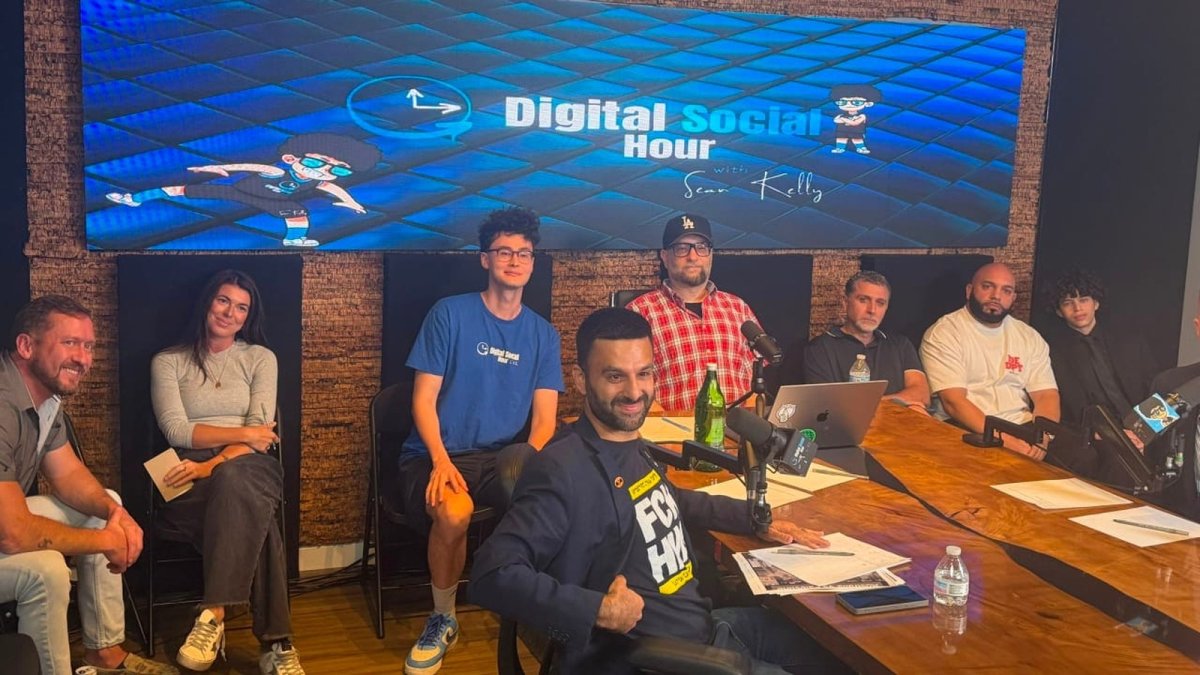
The Exchange That Broke the Room
The pivotal moment came when content creator and former congressional candidate Dennis Feitosa, known online as Def Noodles, pressed Haddad on his role as a commander in the Israeli military. Feitosa asked whether Haddad had ever ordered bombs to be dropped and, more pointedly, whether he had ever ordered a strike on a school. Haddad admitted to ordering bombs during his time as a commander but claimed he had not done so "personally," a distinction that Feitosa immediately challenged.
Feitosa pressed Haddad to explain where those bombing orders had been carried out, according to the Middle East Eye report, and the exchange grew increasingly tense as Haddad's answers appeared to sidestep the question. For many observers, the moment crystallized a broader pattern: the difficulty of holding individuals accountable for actions taken within a military hierarchy, especially when those actions have resulted in civilian casualties.
From Words to Violence
The verbal sparring soon turned physical. Per reports from the Jerusalem Post and Ynet, Feitosa called Haddad a "genocidal f***ing freak," a "baby killer," and a "murderous monster." Footage shows Feitosa grabbing Haddad's hand, after which Haddad pulled him forward, knocking their heads together before the two were separated by others in the studio.
The conflict did not end there. After filming, the fight resumed in the building's parking lot. According to Ynet, Haddad said Feitosa attacked him from behind, and Haddad and members of his entourage fought back, with Haddad seen throwing punches. The Forward reported that Feitosa grabbed Haddad by the neck before Haddad punched him in the stomach. Haddad's security personnel then pinned Feitosa to the ground. Both parties were eventually separated and went their separate ways.
The Aftermath on Social Media
In the hours following the incident, both men took to X (formerly Twitter) to frame the narrative. Haddad called Feitosa a "groyper," a term used for followers of far-right activist Nick Fuentes, and a "neo-Nazi." He wrote, "I was attacked by a groyper in the U.S... he just didn't realize he had picked a Golani soldier!" Haddad also stated that he had filed a police report, adding, "I have filed a police report against my attacker. He will soon be arrested and I hope he's prosecuted here in the US. People like him have one place - behind bars."
Feitosa, for his part, characterized Haddad as a "self-admitted child killer" who "admitted to ordering numerous bombings and tacitly admitted to ordering strikes on schools. Throughout the debate, he joked about and demeaned the very people killed in those operations."
Who Is Yoseph Haddad?
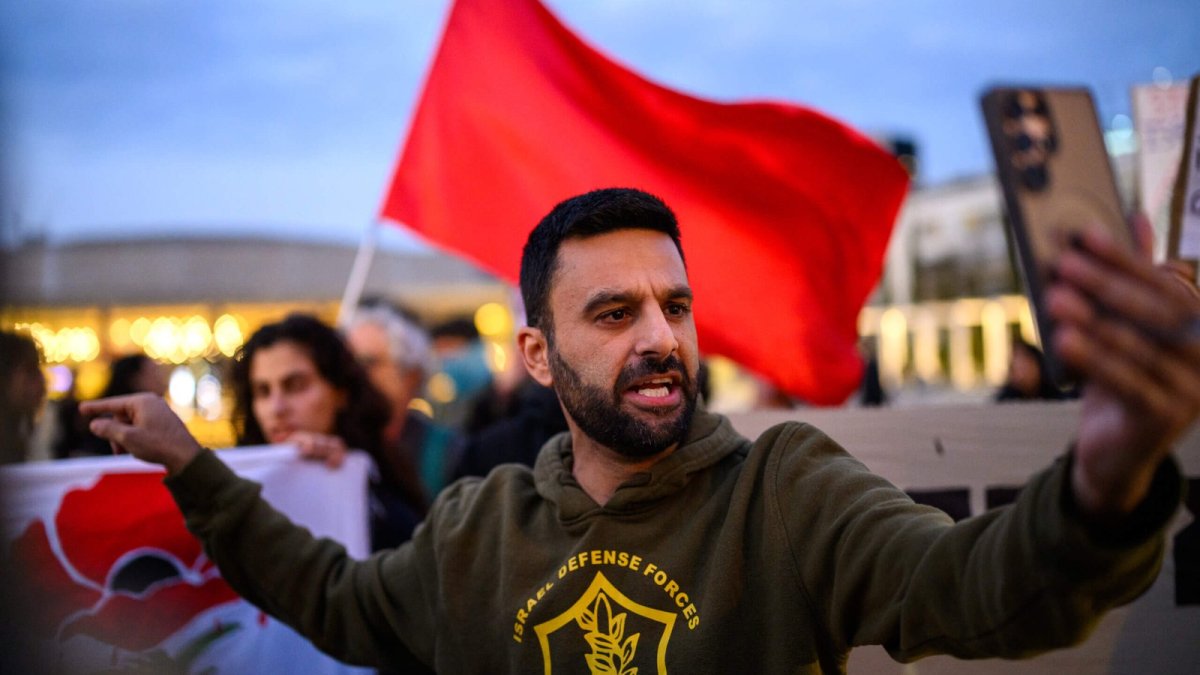
Haddad is an Arab-Israeli Christian Arab journalist, social activist, and public speaker who voluntarily served in the Israel Defense Forces' Golani Brigade. He is the CEO of Together – Vouch For Each Other, an organization he founded in 2018 to bridge gaps between Israel's Arab sector and wider Israeli society. He previously lit a torch at Israel's Independence Day ceremony, a symbolic honor. With nearly one million Instagram followers and about 336,000 followers on X, Haddad has positioned himself as a prominent voice advocating for Arab integration within the Israeli state.
His wife, Emily Schrader, was present at the podcast recording. This is not the first time Haddad has been involved in a physical altercation. In 2024, he was involved in a heated argument with a demonstrator outside Columbia University and was shoved and punched. At the time, Haddad said the incident reflects "their constant method" — "when they are defeated in a verbal confrontation and have nothing to answer, they move to physical violence."
The Irony of the Accuser
The confrontation carries a layer of irony that has not been lost on observers. Feitosa, who unsuccessfully ran as a Republican for California's 30th Congressional District and was eliminated after receiving a small share of the vote, is himself a figure on the political fringe. Haddad's use of the term "groyper" — a label for followers of far-right activist Nick Fuentes — underscored the unlikely nature of the confrontation. Yet in this instance, it was Feitosa who positioned himself as the moral inquisitor, demanding accountability for actions that have, according to Gaza health authorities, contributed to the deaths of thousands of Palestinian children.
The broader context is staggering. A ceasefire has been in place since October 2025, but Gaza health authorities say 1,258 Palestinians have been killed and 4,139 injured by Israeli fire since the ceasefire took effect. UNICEF reports that Israeli forces have killed 300 Palestinian children since the ceasefire. The overall Palestinian death toll in Gaza since October 7, 2023, has risen above 73,000, with more than 174,000 wounded, the majority of them children, women, and the elderly. Approximately 90% of the enclave's infrastructure has been destroyed.
The Question of Platforms and Impunity
The incident raises a critical question: why are individuals like Haddad given prominent platforms to defend military actions that have resulted in such devastating civilian tolls? The International Criminal Court issued arrest warrants in November 2024 for Israeli Prime Minister Benjamin Netanyahu and former defense minister Yoav Gallant over alleged war crimes, and a separate genocide case is before the International Court of Justice. Yet, in the world of podcasts and social media, the architects and defenders of these policies continue to find receptive audiences.
Haddad's evasiveness during the podcast is emblematic of a broader strategy of deflection. By claiming he did not act "personally," he attempts to distance himself from the consequences of orders he admits to giving. This rhetorical maneuver, while perhaps legally defensible in a narrow sense, does little to address the moral weight of those actions. For the families of the 300 children killed since the ceasefire, the distinction between ordering a strike and carrying it out is meaningless.
Analysis and Implications
The physical violence that erupted in Los Angeles is a symptom of a deeper malaise. When debates about life and death are reduced to shouting matches and fisticuffs, the underlying issues — the killing of children, the destruction of infrastructure, the displacement of entire populations — are obscured. The fact that a far-right American activist was the one to press Haddad on these issues, rather than a mainstream journalist or human rights organization, speaks to the failure of traditional media to hold such figures accountable.
For Palestinians, the incident is likely to be seen as yet another example of how their suffering is instrumentalized in Western debates, used as a rhetorical weapon by figures who have little genuine interest in their liberation. The irony that an Arab citizen of Israel, who advocates for the state that has waged war on his own people, was challenged by an American far-right activist, is not lost on those who have long criticized the co-opting of Palestinian pain for political gain.
The legal aftermath remains uncertain. Haddad has filed a police report, and Feitosa could face charges. But the deeper accountability — for the bombs ordered, the schools struck, and the children killed — remains elusive. As the ceasefire holds, fragile and frequently violated, the world watches to see whether any of this will lead to genuine justice, or whether it will simply become another viral moment in an endless cycle of outrage and forgetting.
In the end, the clash in Los Angeles was not just about two men fighting in a parking lot. It was about the impunity that allows those who order bombs to walk free, the platforms that give them voice, and the children whose lives are reduced to statistics in a debate that never seems to end. Until that changes, the violence — both physical and structural — will continue.
By Fatima Al-Rashid, Staff Writer
This article was produced with AI-assisted research and editorial support. Reporting is based on sources cited in the article.
What's Your Reaction?
 Like
0
Like
0
 Dislike
0
Dislike
0
 Love
0
Love
0
 Funny
0
Funny
0
 Wow
0
Wow
0
 Sad
0
Sad
0
 Angry
0
Angry
0
Gulf/MENA Correspondent at Global1.News. Based in Doha, covering Gulf politics, energy markets, diplomacy, and development across the Middle East and North Africa. Tracks the economic transformation of the Gulf states.











Comments (0)