
Qusra's Palestinians Recall Months of Militant Israeli Settler Violence
For nearly a week, the Palestinian village of Qusra, south of Nablus, has been the epicenter of a crisis that lays bare the accelerating erosion of Palestinian life in the occupied West Bank.
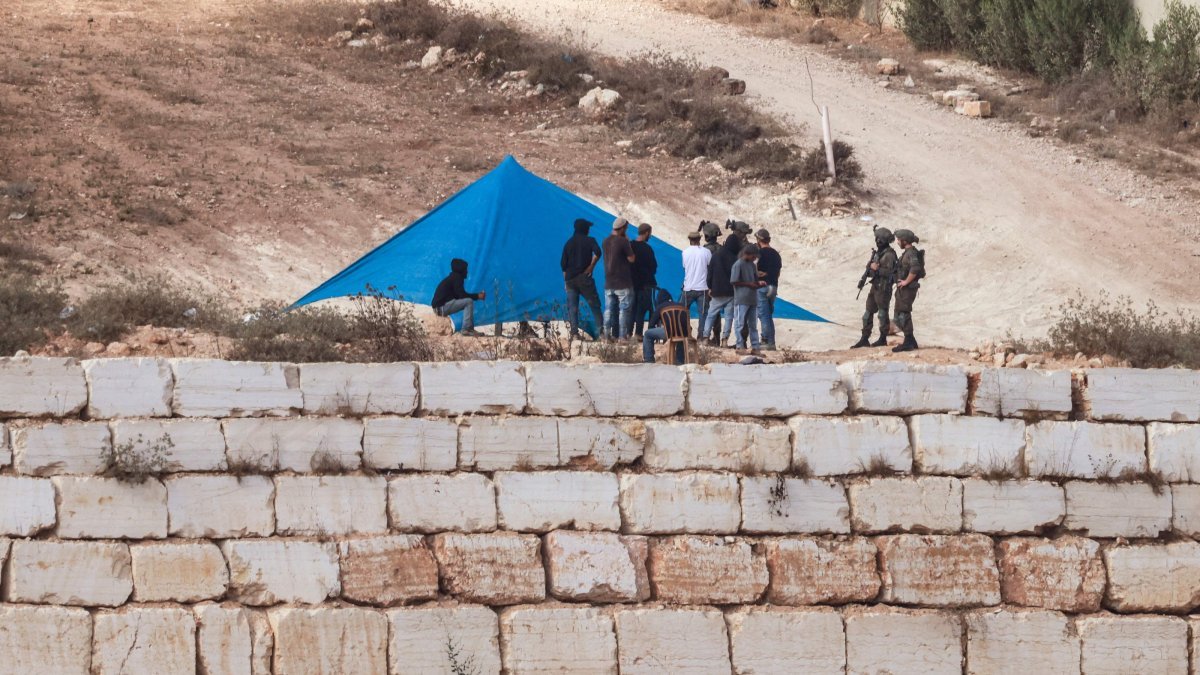
For nearly a week, the Palestinian village of Qusra, south of Nablus, has been the epicenter of a crisis that lays bare the accelerating erosion of Palestinian life in the occupied West Bank. What began as a localized siege of three homes by militant Israeli settlers has spiraled into a diplomatic flashpoint, drawing a rare public rebuke from Washington and exposing the limits of Israeli Prime Minister Benjamin Netanyahu’s willingness—or ability—to rein in the far-right elements that anchor his coalition.
The standoff, which entered its seventh day on Sunday, is not an isolated incident. It is the culmination of months of what residents describe as a concerted, often deadly campaign of harassment, land seizure, and violence aimed at forcing Palestinian families off their land. The United Nations reports that more than 2,200 Palestinians have been displaced during the first half of 2026 due to settler violence and access restrictions. In Qusra, the toll is measured in shattered windows, spray-painted slurs, and at least one funeral.
Qusra's Palestinians Recall Months of Militant Israeli Settler Violence
Qusra, Occupied West Bank – August 16, 2026 — Marmar Ouda has spent the past five months fortifying his home against an enemy he says the state refuses to restrain. Metal fences now ring his property. Bars cover his windows. On the wall beside his house, the words "death to Arabs" are spray-painted in Hebrew—a message, he says, from the militant settlers who have made his family a target.
The violence turned deadly in March. Ouda's nephew was shot and killed by a settler; his brother was wounded in the same incident. Israeli media reported at the time that a settler who also served as a reservist had been arrested, though Reuters could not determine whether charges were ever filed. "I wish I had died at that moment rather than see my nephew die in front of me and my brother get shot," Ouda told reporters, adding that despite filing complaints with Israeli police, he and his family have received no protection.
Since the shooting, the attacks have not stopped. On Wednesday, settlers threw stones at his house. "They want to expel us, they want to kill us," he said.
The Siege That Shook a Village
The current crisis began roughly a week ago, when militant settlers surrounded three Palestinian homes on the outskirts of Qusra, preventing families from leaving safely as food and water supplies dwindled. For five nights, the siege persisted. The Israeli military declared the area a closed military zone during the standoff, effectively sealing the village from outside observers and journalists.
At one point, Israeli forces evicted the settlers besieging the homes—but, according to reporting from the New York Times, the settlers returned hours later. Photographs from the scene show Israeli soldiers standing by as settlers erected a tent just outside the entrance of one besieged family home. The military has said soldiers have been deployed in Qusra since Thursday to "protect residents and maintain security," but residents and rights groups describe a far more ambiguous reality on the ground.
Ibrahim Hassan knows that ambiguity intimately. Around a month ago, he says, illegal settlers and men in Israeli army uniform entered his house, smashed windows, and beat him in front of his wife and children. He and his family fled their home on the outskirts of Qusra shortly afterward. All that remains are a tangled blanket, a few books, and some pictures on the wall. Hassan now rents a home elsewhere, joining the growing ranks of Palestinians displaced by settler violence. The Israeli military did not immediately respond to a request for comment on his allegations.
Impunity by Design
For Israeli rights groups, the Qusra siege is not an anomaly but a symptom of a systemic failure. "They are very provocatively going and literally taking over houses," said Ezra Brownstein, a researcher for the Israeli rights group Rabbis for Human Rights. The group and others have long argued that Jewish settlers operate with near-total impunity under Israel's far-right coalition government, which has actively supported significant settlement expansion in the West Bank.
That impunity is structural. Settler violence is often investigated by the Israeli police and military justice systems, which rights groups say are reluctant to prosecute settlers, particularly those with ties to the security establishment or the ruling coalition. The case of Ouda's nephew—where an arrest was reported but charges remain unclear—exemplifies the pattern. Complaints filed by Palestinian families rarely result in protection, let alone accountability.
The result is a slow-motion land grab. In Qusra, rights groups say militant settlers are mounting a concerted effort to seize more land, further eating into territory where Palestinians aim to establish a future state. The displacement of at least two families from the village's outskirts in recent weeks is part of a broader trend documented by the United Nations, which recorded more than 2,200 Palestinians displaced across the West Bank in the first half of 2026.
Washington's Growing Frustration
The Qusra crisis has pushed the United States into an unusually public confrontation with its closest Middle East ally. U.S. and Israeli officials said Friday that Washington wants Netanyahu to publicly condemn the militant settlers who have besieged Palestinians in their homes. The demand reflects growing friction between Washington and Israel's far-right coalition over settlement policy, and signals that even the most settlement-friendly U.S. administration has limits when violence against Palestinian civilians becomes a global spectacle.
The American position was underscored Thursday when U.S. Ambassador to Israel Mike Huckabee, a longtime and vocal supporter of Jewish settlement in the West Bank, condemned the settlers besieging the Palestinian home as "terrorists." The statement was striking not only for its content but for its source: Huckabee has been one of the most prominent American advocates for settlement expansion, making his rebuke a significant political signal.
Netanyahu, however, has remained silent. His office did not immediately respond to a request for comment on the siege, and as of Saturday he had not publicly addressed the situation in Qusra. That silence is itself a statement, reflecting the delicate political calculus facing the Israeli prime minister, whose governing coalition depends on the very far-right parties and figures who champion settler violence.
Netanyahu's Coalition Bind
Netanyahu's reluctance to condemn the settlers is rooted in political survival. His coalition includes ultranationalist parties that view settlement expansion not as a controversial policy but as a core ideological mission. Publicly rebuking militant settlers would risk alienating the political base that keeps him in power—a risk he appears unwilling to take, even under direct American pressure.
This dynamic has created a paradox at the heart of Israeli policy. The same government that deploys soldiers to "protect" Palestinian villages like Qusra also empowers, funds, and legitimizes the settler movement that threatens them. The military's declaration of a closed military zone during the siege—ostensibly to maintain order—also served to shield the settlers from international scrutiny and prevent Palestinian residents from documenting the violence.
The result is a policy of managed chaos, where the state intervenes just enough to avoid outright international condemnation but not enough to actually protect Palestinian civilians or hold settlers accountable. For residents of Qusra, the distinction between state action and settler violence has become increasingly meaningless.
The October 7 Shadow
The surge in settler violence cannot be understood outside the context of the October 7, 2023 attacks and the subsequent war. In the three years since the Hamas-led assault on Israel, violence by Jewish settlers in the West Bank has risen dramatically, fueled by a combination of revenge rhetoric, increased weapons availability, and a political environment that rewards hardline positions.
The war has also shifted international attention away from the West Bank, allowing settlement expansion and violence to proceed with less scrutiny. But the Qusra siege has forced the issue back onto the agenda, precisely because it is so brazen—settlers openly surrounding homes, cutting off supplies, and daring the state to stop them, all while Israeli soldiers stand nearby.
For Palestinians, the message is clear: the occupation is not a static condition but an active, violent process of dispossession. Each siege, each shooting, each displacement chips away at the possibility of a viable Palestinian state, replacing it with a patchwork of settlements, closed military zones, and abandoned homes.
Regional Implications
The Qusra crisis reverberates far beyond the village's olive groves and stone houses. It is a test case for the limits of American influence over Israeli policy, and for the viability of the two-state solution that remains the stated goal of the international community.
Washington's demand for a public Netanyahu condemnation is a significant escalation, but it is also a measure of how far the relationship has deteriorated. The United States has limited leverage over an Israeli government that views settlement expansion as non-negotiable, and Netanyahu has repeatedly demonstrated his willingness to absorb American criticism in exchange for coalition stability.
For the region, the implications are stark. The continued displacement of Palestinian communities, the expansion of settlements, and the impunity enjoyed by militant settlers all point toward a future of permanent conflict rather than negotiated resolution. Arab states that have normalized relations with Israel face growing domestic pressure to distance themselves from a government seen as actively enabling violence against Palestinians.
In Qusra, the immediate crisis may eventually subside—the settlers may withdraw, the closed military zone may be lifted, and the soldiers may return to their bases. But the underlying conditions that produced the siege remain unchanged. Marmar Ouda's metal fences and barred windows are not a temporary measure; they are a permanent feature of life under occupation. "They want to expel us, they want to kill us," he said. Until the international community—and the Israeli government—treats that reality with the seriousness it demands, Qusra will remain a warning of what lies ahead for the West Bank.
By Malik Hassan, Staff Writer
This article was produced with AI-assisted research and editorial support. Reporting is based on sources cited in the article.
What's Your Reaction?
 Like
0
Like
0
 Dislike
0
Dislike
0
 Love
0
Love
0
 Funny
0
Funny
0
 Wow
0
Wow
0
 Sad
0
Sad
0
 Angry
0
Angry
0

Middle East Correspondent at Global1.News. Based in Beirut, covering politics, conflict, energy, and society across the Middle East. Brings context and depth to a region often reduced to headlines.











Comments (0)