
Qatar condemns attack on LNG tanker in Gulf, warns of threat to global energy supplies
Qatar’s foreign ministry issued a forceful denunciation on Sunday after the LNG tanker Al Mayeda, owned by Qatar Gas Transport Company (Nakilat), was struck while navigating Gulf waters.
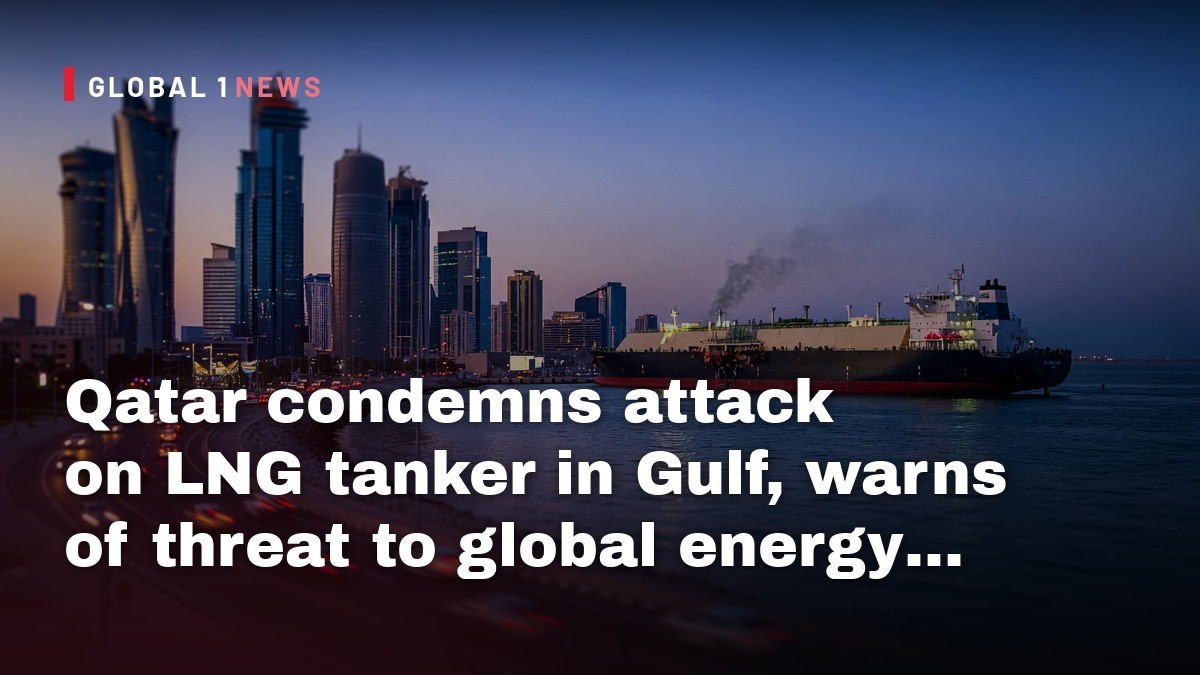
Qatar’s foreign ministry issued a forceful denunciation on Sunday after the LNG tanker Al Mayeda, owned by Qatar Gas Transport Company (Nakilat), was struck while navigating Gulf waters. The ministry labelled the incident a “dangerous act that threatens the safety of maritime navigation and the security of global energy supplies,” and warned that such attacks could destabilise regional security and the world economy. As the vessel continued its voyage without crew injuries or apparent environmental harm, the episode underscored the growing vulnerability of commercial shipping in the Gulf and the broader strategic stakes tied to the flow of liquefied natural gas.
Details of the attack and immediate response
According to the foreign ministry’s statement, the Al Mayeda was hit on 30 October by “unidentified objects” while sailing in Gulf waters. Nakilat, the Qatari public‑shareholding firm that operates the tanker, confirmed the strike but did not disclose the nature of the objects, the precise location, or any attribution for the assault. The company reported that none of the crew were injured and that there was no immediate environmental damage, suggesting that the impact was limited in its physical effects.
In the wake of the incident, Qatari authorities launched an investigation to determine the circumstances and identify those responsible. The ministry emphasized that Qatar “reserves the right to take all necessary measures under international law and the UN Charter to protect its property, safeguard its interests and ensure the safety of its vessels and crews.” This language signals a readiness to invoke legal mechanisms, potentially including self‑defence provisions, to respond to threats against its maritime assets.
Legal and diplomatic framing
Qatar’s reference to “international law and the UN Charter” reflects a strategic appeal to the global legal order that governs the use of force at sea. By invoking the UN Charter, Doha positions any future response within the accepted norms of self‑defence and the protection of commercial shipping, a sector that underpins its national economy. The statement also serves a diplomatic purpose, signalling to both allies and adversaries that any aggression against Qatari vessels will be met with a lawful, measured, and internationally justified reaction.
The emphasis on legal recourse aligns with Qatar’s broader diplomatic posture, which often seeks to balance its reliance on energy exports with the need to maintain stable relations with regional powers and global partners. By framing the attack as a violation of maritime safety and global energy security, Doha invites the international community to view the incident not merely as a bilateral dispute but as a threat to the collective stability of energy markets.
Implications for regional maritime security
The Al Mayeda incident occurs against a backdrop of heightened insecurity in the Gulf and the Strait of Hormuz. Recent months have seen a series of attacks on commercial tankers, oil carriers, and gas vessels across the Gulf, the Strait of Hormuz, and the Gulf of Oman. Some of these incidents resulted in fires and material damage, underscoring the tangible risks to shipping infrastructure. The persistence of “reckless and irresponsible practices,” as described by Qatar’s foreign ministry, suggests a pattern of disruption that could erode confidence in the safety of these vital sea lanes.
Maritime security analysts have linked the uptick in attacks to the broader geopolitical tension between the United States and Iran. The Strait of Hormuz remains a chokepoint through which a significant share of global oil and gas passes, making it a focal point for power projection and proxy confrontations. The continuation of such incidents threatens to amplify insurance premiums, reroute shipping, and potentially trigger supply chain bottlenecks that would reverberate through global energy markets.
Environmental concerns and water security
Beyond the immediate safety of crews and vessels, Qatar’s foreign ministry highlighted the “potential environmental risks” associated with attacks on energy tankers. A breach of an LNG carrier could release large quantities of liquefied natural gas, posing fire hazards and contributing to atmospheric emissions. Moreover, any spillage could jeopardise marine ecosystems and affect the water security of coastal states that depend on the Gulf’s fisheries and desalination plants.
While the Al Mayeda strike did not result in observable environmental damage, the warning underscores a broader vulnerability: the Gulf’s marine environment is already under pressure from industrial activity, and repeated assaults on tankers could exacerbate degradation. The cumulative impact of such incidents may undermine regional efforts to safeguard water resources, a concern that resonates deeply with communities whose livelihoods hinge on a healthy marine environment.
Economic stakes for Qatar and the global LNG market
Qatar’s economy is heavily anchored in LNG exports, with Nakilat playing a central role in transporting the commodity from offshore fields to global buyers. Any disruption to its fleet threatens not only national revenue but also the reliability of supply contracts that underpin energy‑dependent economies worldwide. The foreign ministry’s assertion that attacks “threaten the security of global energy supplies” reflects the interconnected nature of modern energy markets, where a single incident can ripple through pricing, contract performance, and geopolitical calculations.
While the Al Mayeda episode did not cause a direct supply interruption, the broader pattern of attacks raises concerns about the resilience of Qatar’s export infrastructure. Persistent threats could compel shipping firms to seek alternative routes, invest in additional security measures, or even reconsider the viability of certain contracts. Such outcomes would have downstream effects on energy‑importing nations, potentially prompting them to diversify sources or accelerate transitions to alternative fuels.
Historical context of the 2026 Gulf conflict
The attack on Al Mayeda must be understood within the larger narrative of the 2026 conflict between the United States and Iran. After a war that began on 28 February and concluded with a ceasefire in April, hostilities resumed in July when diplomatic efforts stalled. This renewed fighting has intensified the security environment in the Gulf, with both state and non‑state actors leveraging maritime attacks to signal resolve or disrupt adversary logistics.
In this climate, commercial vessels have become collateral targets, caught between strategic calculations and opportunistic aggression. The recurrence of attacks on tankers in October, as noted in maritime security reports, suggests a deliberate campaign to undermine the flow of energy commodities—a tactic that leverages the Gulf’s strategic geography to exert pressure on regional economies and their global partners.
Future outlook and possible responses
Looking ahead, Qatar is likely to pursue a multi‑layered response. Legally, it may file complaints with the International Maritime Organization and seek UN Security Council attention to label such attacks as violations of international law. Diplomatically, Doha may deepen security cooperation with allies, including the United States, to bolster naval patrols and intelligence sharing in the Gulf and the Strait of Hormuz.
On the operational front, Nakilat could enhance onboard security protocols, adopt advanced detection systems, and consider convoy arrangements for its vessels. Such measures would aim to deter future assaults and reassure customers of the safety of Qatar’s LNG supply chain. Ultimately, the effectiveness of these steps will depend on the broader geopolitical trajectory: if tensions between the United States and Iran subside, the frequency of maritime attacks may decline; if hostilities persist, the Gulf’s shipping lanes will remain a contested arena where commercial interests intersect with strategic rivalry.
This article was produced with AI-assisted research and editorial support. Reporting is based on the source material cited below. Sources: Middle East Monitor; middleeastmonitor.com; Global1.News (03 November 2026).
By Fatima Al-Rashid, Staff Writer
What's Your Reaction?
 Like
0
 Dislike
0
 Love
0
 Funny
0
 Wow
0
 Sad
0
 Angry
0

Gulf/MENA Correspondent at Global1.News. Based in Doha, covering Gulf politics, energy markets, diplomacy, and development across the Middle East and North Africa. Tracks the economic transformation of the Gulf states.












Comments (0)