
Putin Orders Seizure of U.S. Packaging Maker’s Russian Plant
President Vladimir Putin signed an executive order on Monday that placed the Russian subsidiary of Illinois‑based packaging manufacturer AptarGroup under temporary state control, marking the latest in a rapid series of Kremlin seizures of Western corporate assets.
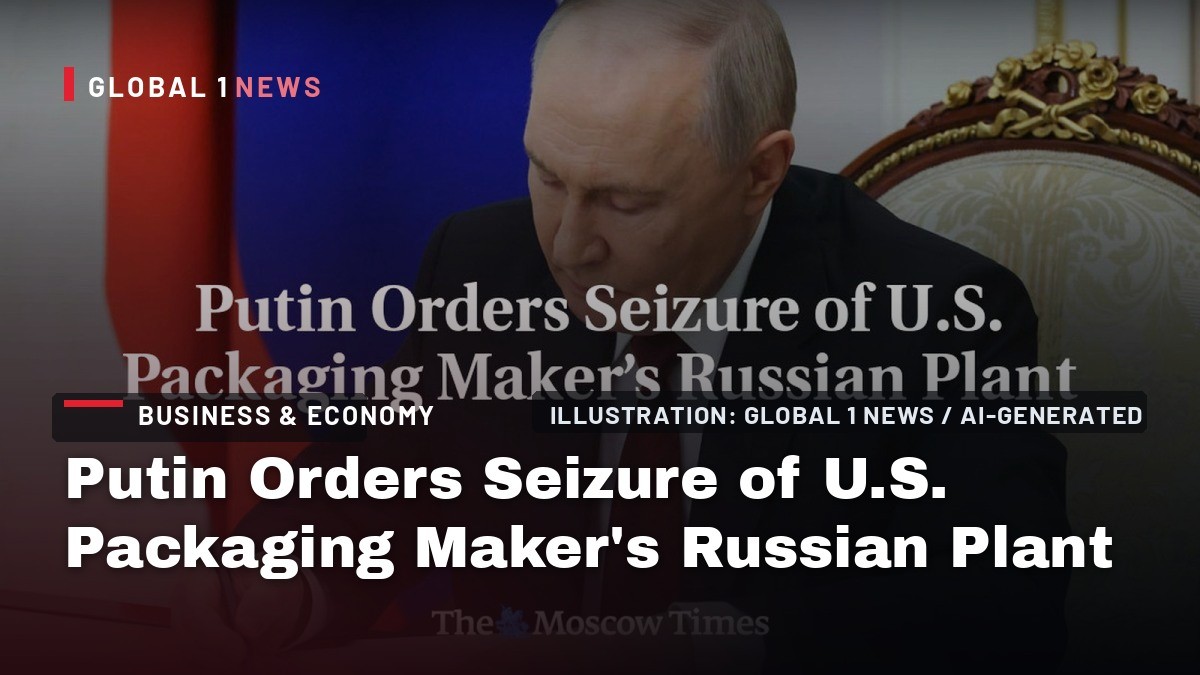
President Vladimir Putin signed an executive order on Monday that placed the Russian subsidiary of Illinois‑based packaging manufacturer AptarGroup under temporary state control, marking the latest in a rapid series of Kremlin seizures of Western corporate assets. The order transferred ownership of Aptar Vladimir—owned by Aptar Europe Holding—to the Russian firm Health & Nutrition (H&N), a company that previously assumed control of French dairy giant Danone’s Russian operations after a similar expropriation in 2023.
Background to the Aptar seizure
The move follows a pattern of asset transfers that began earlier in the week. On Thursday, Putin ordered the Russian operations of French supermarket chain Auchan, Swiss food conglomerate Nestlé, home‑improvement retailer Lemana PRO (formerly Leroy Merlin) and French logistics operators FM Logistics and Bati Logistics to be placed under the management of L.E.V. Management, a little‑known Russian firm. According to the business daily Kommersant, the combined value of those assets was estimated at a minimum of 600 billion rubles (approximately $7.14 billion).
These actions are presented by the Kremlin as retaliation for “unfriendly” Western measures, particularly sanctions imposed after Russia’s 2022 invasion of Ukraine. The government argues that foreign firms operating in Russia must either protect their facilities from Ukrainian attacks or swiftly repair any damage; failure to do so, it claims, justifies state takeover under the executive order signed in August that broadened the Kremlin’s expropriation powers.
The expanding list of seized Western firms
Since the invasion began, Moscow has taken control of assets belonging to at least 30 foreign companies, a tally that includes well‑known brands such as Carlsberg, Finnish energy group Fortum, German utility Uniper, Italian heating system maker Ariston, German engineering giant Bosch and American appliance manufacturer AB. The Kyiv School of Economics Institute estimates the pre‑takeover value of all seized foreign assets at $74 billion, while total losses for companies exiting Russia—including write‑offs, court rulings and exit taxes—reach $170 billion.
These figures illustrate the scale of the Kremlin’s campaign to wrest strategic and economically significant assets from foreign owners. The pattern suggests a systematic approach: first, identify firms deemed “unfriendly” or vulnerable; second, invoke the August executive order to justify seizure; third, transfer control to a Russian entity, often one with prior experience in managing expropriated assets, such as H&N.
Strategic motives behind the Aptar takeover
Packaging is a critical component of Russia’s consumer‑goods supply chain, linking food production, pharmaceuticals and retail distribution. By placing Aptar Vladimir under state control, the Kremlin secures a domestic source of packaging technology and materials, reducing reliance on foreign suppliers that could be disrupted by sanctions. The transfer to H&N, a firm already versed in managing Danone’s former Russian assets, indicates a preference for operators with proven capacity to integrate seized businesses into the Russian economy.
Analysts note that the timing of the Aptar seizure coincides with the recent signing of a sweeping U.S. sanctions bill by President Donald Trump, which authorises punitive tariffs against countries that purchase Russian oil and gas. While the Moscow Times report does not confirm a direct link, the proximity of the two events suggests that the Kremlin may be using asset seizures as a bargaining chip in broader geopolitical negotiations, signalling willingness to retaliate against punitive Western measures.
Legal and procedural framework for expropriation
The legal basis for the recent wave of seizures rests on an executive order signed by Putin in August, which expands state authority to take control of “strategically important” facilities when owners fail to protect them from Ukrainian attacks or to repair damage promptly. This decree effectively lowers the threshold for expropriation, allowing the government to justify seizures on security grounds rather than purely economic ones.
Under Russian law, such transfers are presented as temporary “temporary government control,” a phrasing that implies eventual return to private ownership. In practice, however, the transferred assets have been placed under the management of Russian firms with close ties to the state, raising questions about the likelihood of any future restitution to original owners.
Impact on foreign investors and the Russian business climate
The rapid succession of seizures within a single week underscores the heightened risk environment for foreign investors operating in Russia. Companies that have already exited the market, such as Carlsberg and Danone, have incurred substantial write‑offs, while those still present face the prospect of losing control over valuable assets without compensation.
For remaining foreign firms, the message is clear: non‑compliance with Kremlin directives—or even perceived non‑alignment with Russian strategic interests—can trigger expropriation. This climate discourages new investment and may accelerate capital flight, further isolating the Russian economy from Western technology and finance.
Domestic political implications
Domestically, the seizures serve a dual purpose. First, they allow the Kremlin to portray itself as defending national interests against hostile Western actions, reinforcing a narrative of resilience and self‑sufficiency. Second, by channeling seized assets to firms like H&N, the state can reward loyal enterprises and consolidate economic power within a circle of trusted actors.
Critics within Russia, including independent media such as The Moscow Times, have highlighted the growing use of “undesirable” and “foreign agent” designations to silence dissent. The newspaper’s own experience—being labeled an “undesirable organization” and facing criminal prosecution—illustrates the broader crackdown on independent reporting that accompanies these economic measures.
Outlook and potential next steps
Looking ahead, the Kremlin is likely to continue leveraging asset seizures as a tool of geopolitical retaliation and domestic consolidation. The pattern suggests that any further escalation in Western sanctions—particularly those targeting Russian energy exports—could trigger additional expropriations of foreign‑owned facilities deemed strategically important.
For foreign companies still operating in Russia, the prudent course is to assess the vulnerability of their assets under the expanded executive order and to prepare for possible state takeover. Meanwhile, Western governments may need to weigh the economic costs of sanctions against the risk of further entrenching Russian control over foreign enterprises, a calculus that will shape the next phase of the economic conflict sparked by the Ukraine war.
This article was produced with AI-assisted research and editorial support. Reporting is based on the source material cited below. Sources: The Moscow Times; themoscowtimes.com; Global1.News (23 September 2026).
By Irina Volkov, Staff Writer
What's Your Reaction?
 Like
0
Like
0
 Dislike
0
Dislike
0
 Love
0
Love
0
 Funny
0
Funny
0
 Wow
0
Wow
0
 Sad
0
Sad
0
 Angry
0
Angry
0
Russia/Eastern Europe Correspondent at Global1.News. Covering Russian politics, energy, security, and the shifting dynamics of the post-Soviet space. Provides clear-eyed analysis on one of the world's most opaque regions.











Comments (0)