
Pentagon Watchdog Confirms US Munitions Shortfall in Iran War
The Pentagon inspector general's first quarterly report on Operation Epic Fury confirms strategic munitions shortfalls, names industrial bottlenecks, and prices the Iran war at $33.4 billion.
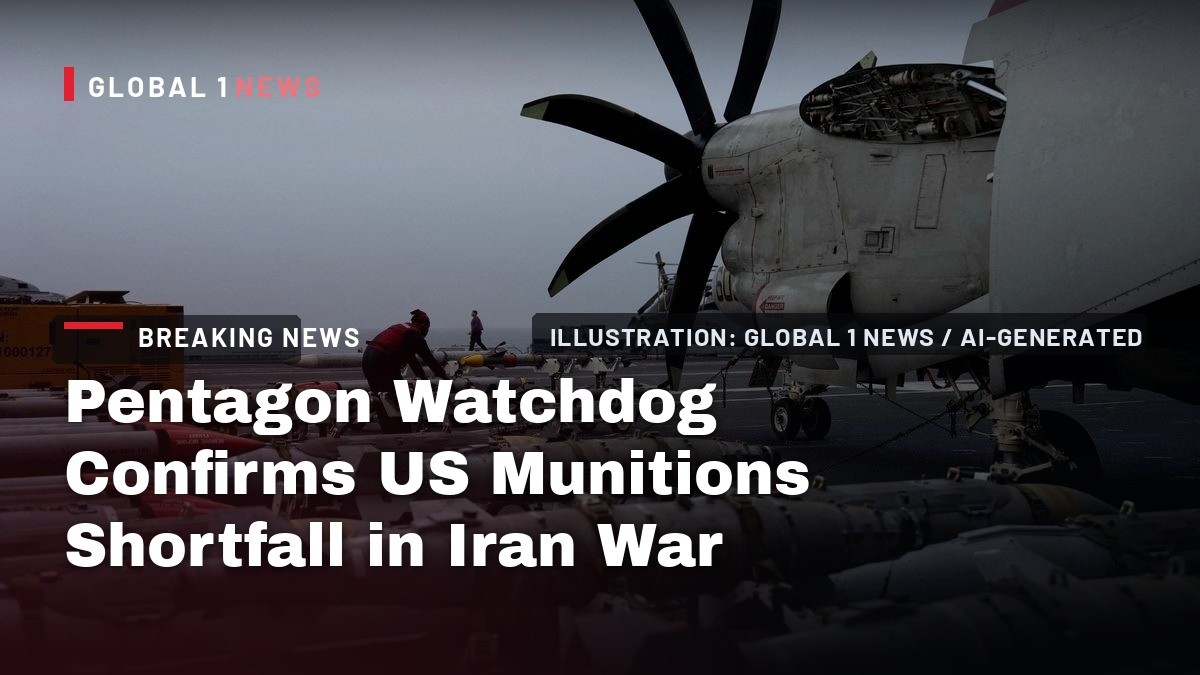
The Pentagon's inspector general has now put numbers to the war the White House spent six months describing as costless. The first quarterly accounting of Operation Epic Fury confirms strategic munitions shortfalls, names the industrial bottlenecks behind them, and prices part of the campaign at $33.4 billion - a figure that excludes the repairs no one has yet estimated. It landed Monday against a public record of denial that US stockpiles were ever a problem.
Pentagon Watchdog Confirms US Munitions Shortfall in Iran War
Washington, D.C. - The Defense Department's inspector general released its first quarterly report on Operation Epic Fury (OEF) on Monday, a congressionally mandated accounting that covers the war from its opening on Feb. 28, 2026, through June 30. The document, hosted at media.defense.gov, is one of the first public accountings from any government agency detailing the cost, scope and scale of the US and Israel-led conflict across the Defense Department, the State Department and other agencies. NBC News described it as first-of-its-kind.
What the Inspector General Actually Confirmed
The report's central finding is stated in its own language: "The munitions expenditure on OEF has resulted in strategic inventory shortfalls and revealed industrial base bottlenecks for munitions resupply."
To mitigate those constraints, the report says, the Defense Department is "working to streamline procurement processes and production lead times, and to stockpile critical materials, components, and selected munitions to respond rapidly to a contingency."
The Office of the Under Secretary of Defense for Acquisition and Sustainment told the inspector general that munitions consumption in the war has already created gaps in strategic stockpiles, while exposing real limitations in supply chains and in the defense industry's ability to replenish them at the required pace. The department acknowledges that increasing production capacity requires "significant time."
Gen. Dan Caine, chairman of the Joint Chiefs of Staff, said the OEF mission is to defend the United States and "disrupt, degrade, deny, and destroy Iran's ability to conduct and sustain combat operations." The full mission statement is classified.
The Munitions Math Behind the Shortfall
The report prices the war at $33.4 billion from Feb. 28 through June 30. Of that, $22.3 billion is expended munitions, $3.7 billion is equipment losses, and $7.4 billion falls under other operational expenditures.
That total does not account for repairing damaged US facilities in the region, replacing aircraft, or replenishing critical weaponry. The report states that costs of repairing damaged equipment "could change based on when and if assets are replaced and contract pricing," and that an accurate repair estimate "requires a full diagnostic review of aircraft and other damaged assets."
The bottlenecks are named specifically: production of solid-fuel rocket motors, shortages of high-quality explosives and propellants, and a shortage of skilled workers in the defense industry.
Independent analysis from CSIS, by Mark F. Cancian and Chris H. Park, found that for four of seven key munitions, the United States may have expended more than half of the prewar inventory. Rebuilding to prewar levels for those seven munitions will take from one to four years. Even before the Iran war, CSIS found, stockpiles were deemed insufficient for a peer competitor fight.
CNN has previously reported that shortages of long-range guided missiles and air-defense interceptors affected Trump's strategy in the conflict, with the US military having nearly exhausted 80 percent of its stock of THAAD interceptors.
Four F-15s, an F-35 and Thirty Reaper Drones
The report lists four F-15E fighter jets destroyed - three by US forces and one by enemy fire. An F-35A was damaged by Iranian ground fire over Iran. An A-10 was destroyed after being damaged during a rescue mission. Seven KC-135 tanker aircraft were damaged or destroyed. Up to 30 MQ-9 Reaper drones were destroyed.
One caveat belongs on that list. The reporting on the tanker fleet does not agree: AFP's account of the same document gives seven KC-135 tankers damaged, while NBC's rendering, citing the Congressional Research Service, gives 12 KC-135 refuelers destroyed or extensively damaged, along with nine other aircraft and more than 30 MQ-9 drones as of June. Both are readings of the same report, and both are on the record.
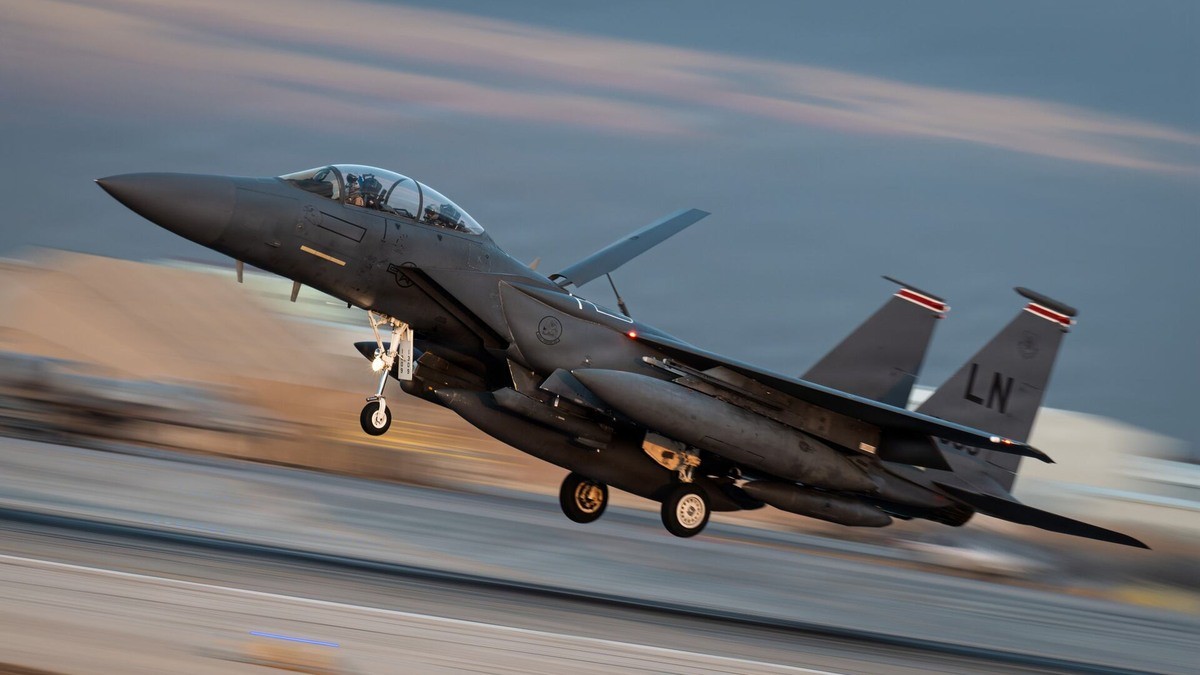
Congressional Research Service report IN12692, updated May 13, 2026, and reported by Stars and Stripes and Military Times, counted 42 fixed-wing or rotary-wing aircraft including uncrewed aircraft reportedly lost or damaged in the operation. Drones accounted for 25 of the 42 - 24 MQ-9 Reapers and one MQ-4C Triton lost in a mishap reported April 14.
The first losses came March 1-2, when a Kuwaiti Air Force F/A-18 mistakenly shot down three F-15E Strike Eagles over Kuwait. All six aircrew ejected and were recovered. A fourth F-15E was shot down over Iran on April 3; both crew members were recovered in separate search-and-rescue operations. An F-35A took Iranian ground fire over Iran on March 19 and returned to base. An A-10 Thunderbolt II went down April 3 after taking enemy fire during a search-and-rescue mission; the pilot ejected and was recovered.
Two MC-130J Commando II special operations aircraft were intentionally destroyed on the ground in Iran during the rescue effort after the transports could not fly out of a forward airstrip. An HH-60W Jolly Green II took small-arms fire during the same mission. Iranian missiles and drones struck Prince Sultan Air Base in Saudi Arabia, damaging five KC-135s on the ground, bringing total tanker losses to seven. An E-3 Sentry was damaged while parked on an unprotected taxiway at Prince Sultan. Early in the war a KC-135 refueling tanker flying in friendly airspace in Iraq crashed, killing all six crew members aboard; another tanker was involved and made an emergency landing.
Bases Damaged in Eight Countries, and No One Has Priced the Repair
The report states that "Iranian strikes damaged and destroyed hundreds of buildings and structures at U.S. bases in Kuwait, Bahrain, Qatar, UAE, Saudi Arabia, Iraq, Oman, and Jordan during the conflict."
Those costs are not included in the $33.4 billion estimate, because it is not yet clear whether all the bases will be rebuilt, or who will foot the bill.
The State Department reported more than $208 million in damages across four countries - Iraq, Kuwait, Saudi Arabia and the United Arab Emirates. That includes $184 million in damages to diplomatic facilities and another $25 million due to delays in construction projects.
Iran also caused damage to US intelligence, surveillance and reconnaissance assets in the region on an unprecedented scale for US intelligence agencies, with restoration estimated at billions of dollars, according to NBC News, citing four people with knowledge of the matter.
After medical evacuation assets were moved from some bases because of fears of Iranian attacks, most medical evacuations were carried out by land - sometimes using local ambulances - to hospitals in countries across the region.
The Bahrain Confirmation
The report is the first government confirmation that Iran targeted the US Navy's main logistics hub in the region, in Bahrain, with one-way attack drones and ballistic missiles.
In response, the United States was forced to move part of its maritime supply network to alternative locations. In some cases the longer supply routes created logistics cycles lasting 14 to 18 days.
The scale of the campaign that drew those strikes is documented elsewhere in the report. More than 50,000 US troops deployed across the US Central Command area of responsibility. During the main phase of fighting, CENTCOM reported approximately 36,000 combat sorties and strikes against about 13,500 targets. Up to 5,000 support sorties launched from bases in Europe. More than 20,000 US military personnel and diplomats were relocated when the war began and in the days and weeks that followed.
US and allied air defenses in the region intercepted more than 6,000 one-way attack drones and more than 1,500 ballistic missiles launched at US and allied forces during the period. During the first 24 hours of the war the United States struck more than 1,000 targets, CENTCOM has said, and has not returned to such large-scale attacks in recent months.
CSIS reported the United States struck more than 13,000 targets over 39 days before the ceasefire took effect, and that Iran fired more than 2,000 drones and 500 ballistic missiles in the first four days of the war. After a week, launches were down by 83 percent for drones and 90 percent for ballistic missiles.
Fourteen Dead by June, and Four More in July
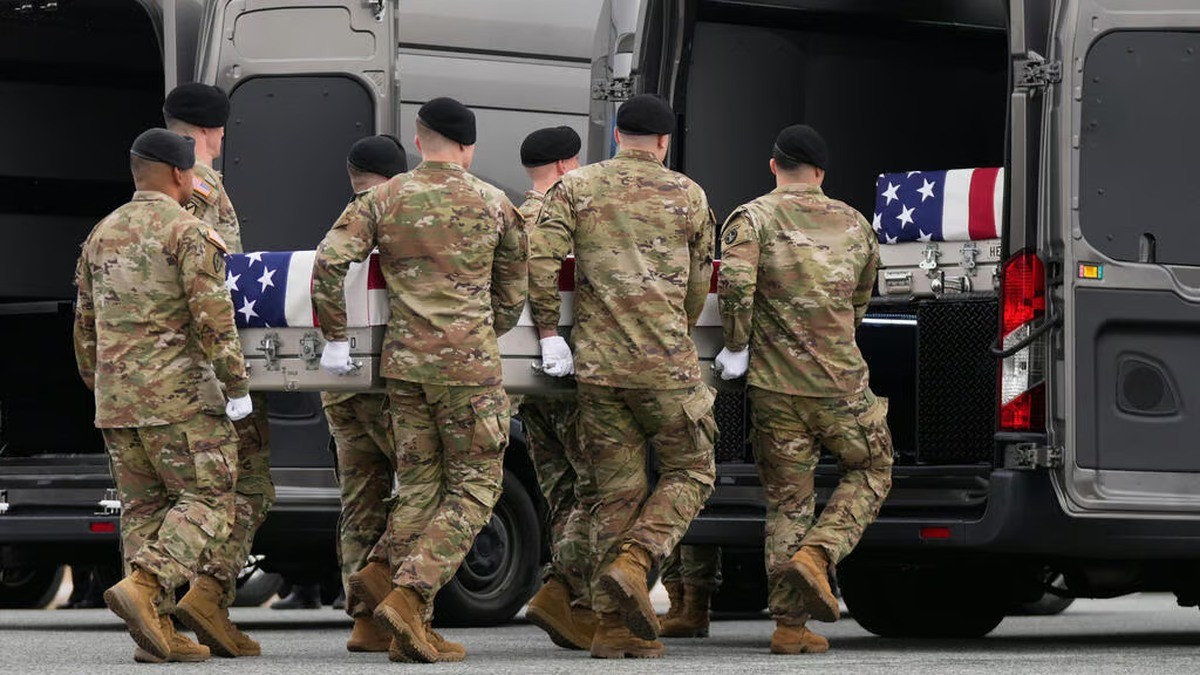
By the end of June, seven US service members had been killed in combat operations, another seven died in incidents not caused by enemy fire, and 417 troops were wounded in combat. Four additional US service members were killed in combat operations during July.
The human accounting sits alongside a document that does not address the morale of US troops deployed as part of the war effort. Concerns had escalated in recent weeks about deteriorating conditions for troops on the USS Abraham Lincoln during an extended deployment; the Pentagon announced it was replacing the aircraft carrier. The Lincoln is now en route back to its port in San Diego after a stop in Thailand.
The Gap Between $33.4 Billion and $100 Billion
The inspector general's $33.4 billion figure is the first official government number. It is also the lowest.
NBC News reported in July 2026 that the war had so far cost between $80 billion and $100 billion, according to three US officials and three people familiar with internal cost estimates. The Pentagon publicly said in July the war cost $37.5 billion, in testimony from Defense Secretary Pete Hegseth before the Senate. Pentagon acting comptroller Jules Hurst testified to Congress in May 2026 that the estimated cost of military operations in Iran had reached $29 billion, which included equipment repair and replacement but not damage to US bases.
The White House submitted a request to Congress on June 24 for an additional $87.6 billion, including $67.1 billion for the Pentagon. Of that, $21 billion was earmarked for munitions.
What the President Says
Trump has repeatedly brushed off concerns of depleted weapons stores during the six months of war, saying the US has "virtually unlimited" ammunition just a couple of weeks ago.
On Monday, the same day the report was released, Trump posted to Truth Social that the US is producing "more Exquisite and Elite Weapons than at any time in our History." The Jerusalem Post added that the post said the weapons "are being delivered on a daily basis to our Forces in the Middle East and beyond."
Hegseth has denied reports that the US is running low on munitions. He warned in congressional testimony in July that without additional funding the Defense Department could face "critical shortages" that would impair its ability to replenish equipment and ammunition consumed in the war while maintaining essential operations around the world.
Trump said over the weekend that the war might not end until "right after" November's midterm elections, or perhaps before. He initially said the campaign would last only weeks.
What the Report Does Not Say
The report does not address a possible US strike on an elementary school in Iran during the opening hours of the campaign, which killed 175 people. The US military has yet to release the findings of its internal investigation; NBC News reported in June that the report on the probe was being finalized.
It does not touch on troop morale, or on conditions aboard the Lincoln. It does not price the repair of damaged bases. The Pentagon did not immediately respond to a request for comment on the report.
Why the Next War Is the Real Concern
The report's munitions finding is not a statement about this war's outcome. It is a statement about the inventory the United States would carry into the next one.
CSIS found that for four of seven key munitions, more than half the prewar inventory may have been expended, and that rebuilding to prewar levels will take from one to four years. It also found that even before the Iran war, stockpiles were deemed insufficient for a peer competitor fight.
The Defense Department's own answer, as recorded by the inspector general, is that increasing production capacity requires "significant time." The bottlenecks it names - solid-fuel rocket motors, high-quality explosives and propellants, skilled defense-industry workers - are not line items that close in a quarter.
The war is paused in a shaky ceasefire, as CSIS describes it. The $33.4 billion is what the government has so far agreed to count. The rest - the aircraft, the bases, the interceptors, the intelligence assets - remains unpriced, and in some cases unexamined.
By Jessica Ali, Staff Writer
This article was produced with AI-assisted research and editorial support. Sources: AFP via The Hindu, AFP via The Straits Times, NBC News, The Jerusalem Post, Ynetnews, the Congressional Research Service, Stars and Stripes, Military Times, CSIS, and the U.S. Department of Defense Office of Inspector General.
What's Your Reaction?
 Like
0
Like
0
 Dislike
0
Dislike
0
 Love
0
Love
0
 Funny
0
Funny
0
 Wow
0
Wow
0
 Sad
0
Sad
0
 Angry
0
Angry
0

Editor-in-Chief at Global1.News. Atlanta-based journalist who cuts through the BS and tells it like it is. Lead anchor, host, and the voice you hear when the spin stops and the truth starts.















Comments (0)