
Myanmar army-Karen clashes spill across border, injuring Thai woman
When the early morning calm of Mae Sot was broken by the crack of distant explosions, a single household on the Thai side of the border became an unexpected battlefield.
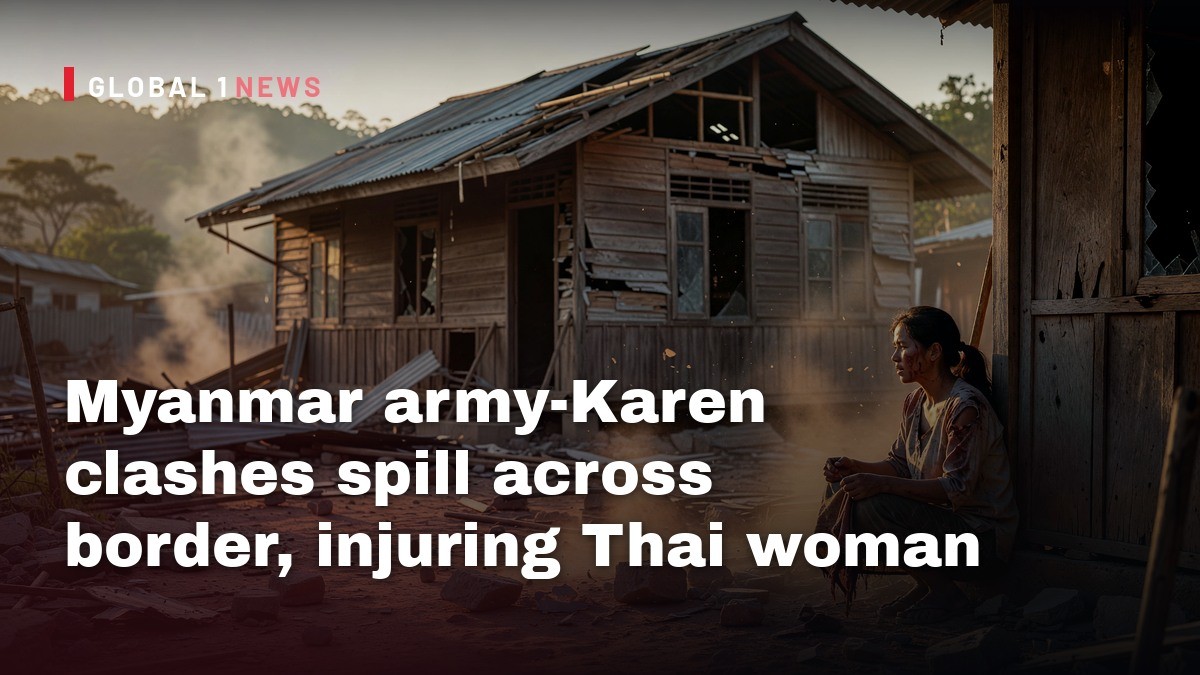
When the early morning calm of Mae Sot was broken by the crack of distant explosions, a single household on the Thai side of the border became an unexpected battlefield. Lamyong Nala, a 55‑year‑old resident of Ban Huai Mahawong, felt shrapnel pierce her body as shells from the clash across the frontier in Myanmar landed in her living room. The incident, reported on 29 October 2026, underscores how the ongoing conflict between Myanmar’s army and Karen armed groups can spill over into Thai communities, testing the resilience of border towns and the vigilance of Thai security forces.
Cross‑border violence reaches Thai soil
The fighting that erupted near Min La Pa village in Myawaddy township, Karen State, Myanmar, was intense enough to send artillery fragments across the natural barrier that separates the two nations. According to the Khaosod English report, the Myanmar military mobilised troops from several infantry battalions, surrounding the village and engaging Karen fighters. The exchange of fire produced explosions whose shockwaves travelled across the border, striking a house in Ban Huai Mahawong, a community within the Mahawan subdistrict of Mae Sot district, Tak province.
For Lamyong Nala, who was sheltering inside her home at the time, the sudden impact was a stark reminder that the border is not an impermeable line but a shared space where the reverberations of conflict can be felt directly. She was quickly taken to Mae Sot Hospital for treatment, highlighting the immediate medical response available to residents of this border province.
Thai security response under the Rajamanu Task Force
At 06.00 hours on Thursday, the Thai military’s Rajamanu Task Force, operating under the larger Naresuan Force, responded to the incursion of violence by firing warning shots. The task force adhered strictly to the rules of engagement (ROE), a protocol designed to manage cross‑border incidents without escalating them further. By choosing warning shots rather than direct fire, the Thai forces signalled their intent to protect Thai sovereignty while avoiding a broader confrontation.
The coordination of the response was a joint effort. The task force worked closely with Mae Sot district officials, Border Patrol Police Company 346, and local village security teams. This collaborative approach ensured that security personnel could maintain a presence around the clock, reinforcing the protective umbrella over the community and demonstrating Thailand’s commitment to safeguarding its citizens amid external turmoil.
Community impact and immediate reactions
The explosions triggered panic among residents of the border area. Families hurriedly evacuated the risk zone, seeking shelter in safer parts of the town or in the open fields that stretch beyond the rice paddies. The sudden need to flee homes and the sound of distant gunfire left a lingering sense of unease, reminding the community that the peace they enjoy can be fragile.
Local authorities, aware of the psychological toll such incidents can have, worked to calm the situation. By quickly informing residents of the source of the danger and the steps being taken to secure the border, officials aimed to prevent misinformation and further panic. The presence of security forces throughout the night helped reassure the community that they were not alone in facing the spill‑over of conflict.
Historical context of Thai‑Myanmar border tensions
The Thai‑Myanmar border has long been a zone of complex interactions, shaped by trade, migration, and occasional conflict. In recent years, the rise of armed clashes in Myanmar’s border states, particularly in areas inhabited by ethnic minorities such as the Karen, has occasionally crossed the invisible line, affecting Thai border towns. While Thailand has traditionally maintained a policy of non‑intervention, it also upholds a responsibility to protect its citizens and territory.
These cross‑border incidents are not new, but each occurrence adds a layer of caution to Thailand’s diplomatic and security calculations. The Thai government’s careful adherence to ROE, as demonstrated in the warning‑shot response, reflects a desire to balance respect for Myanmar’s sovereignty with the need to defend Thai lives and property.
The role of Buddhism and community resilience
In Thai society, Buddhist principles of compassion and mindfulness often guide the collective response to crises. After the incident, local monks and community leaders gathered to offer prayers for the injured and for peace in the region. Such spiritual practices provide a communal anchor, helping residents process fear and loss while reinforcing a shared sense of humanity across the border.
Mae Sot’s residents, many of whom are accustomed to the rhythms of border life—cross‑border trade, cultural exchange, and occasional tension—draw on these traditions to maintain social cohesion. The act of sheltering together, sharing information, and supporting one another in times of danger reflects a deep-rooted resilience that has been cultivated over generations.
Implications for Thai‑Myanmar relations
The spill‑over of fighting into Thai territory, even in the form of stray shrapnel, carries diplomatic weight. It underscores the need for continued dialogue between Bangkok and Nay Pyi Taw, especially regarding border security and the management of armed groups operating near the frontier. While Thailand cannot control the internal dynamics of Myanmar’s civil war, it can negotiate mechanisms to mitigate cross‑border impacts.
In the wake of the incident, Thai officials reiterated their commitment to “safeguarding Thai sovereignty” while cooperating with local authorities on both sides of the border. This stance aligns with Thailand’s broader foreign policy, which seeks stability in the region through cautious engagement and the promotion of peaceful coexistence among neighboring nations.
Looking ahead: preparedness and hope for peace
The episode in Mae Sot serves as a reminder that border communities remain on the front lines of regional conflicts. Continued vigilance, robust coordination among security forces, and community preparedness are essential to protect civilians from unintended harm. The Rajamanu Task Force’s prompt response and the round‑the‑clock presence of security personnel illustrate Thailand’s proactive stance.
Beyond security measures, lasting peace will require addressing the root causes of the Myanmar conflict, including ethnic grievances and political instability. For the people of Mae Sot, daily life will likely return to its familiar cadence—markets bustling, temples ringing with chants, and families gathering for meals. Yet the memory of shrapnel striking a home will linger, reinforcing the hope that one day the border will be a place of shared culture and commerce, not a line marked by stray bullets.
This article was produced with AI-assisted research and editorial support. Reporting is based on the source material cited below. Sources: Khaosod English; khaosodenglish.com; Global1.News (29 October 2026).
By Ann Srisawat, Staff Writer
What's Your Reaction?
 Like
0
 Dislike
0
 Love
0
 Funny
0
 Wow
0
 Sad
0
 Angry
0

Southeast Asia Correspondent at Global1.News. Based in Bangkok, covering Thai and Southeast Asian politics, economy, technology, and culture. Deep regional perspective on one of the world's most dynamic regions.












Comments (0)