
Morocco Disperses Migrants at Ceuta, Expels Journalists as Border Tensions Persist
The hills overlooking Ceuta have become the stage for a recurring drama of desperation and diplomacy, where human movement collides with state sovereignty and the strategic calculus of two kingdoms separated by a fence.
Morocco’s Iron Fist at Ceuta: Migrants Dispersed, Journalists Expelled as Rabat Tightens Grip on EU’s Southern Border
Rabat, Morocco – August 16, 2026 — Moroccan security forces moved decisively on Saturday to prevent a mass crossing into Spain’s Ceuta enclave, arresting 111 people and dispersing hundreds more from hills overlooking the border, while simultaneously ordering Spanish journalists to leave the area — a dual message of control and opacity that underscores the delicate, transactional nature of Madrid-Rabat migration diplomacy.
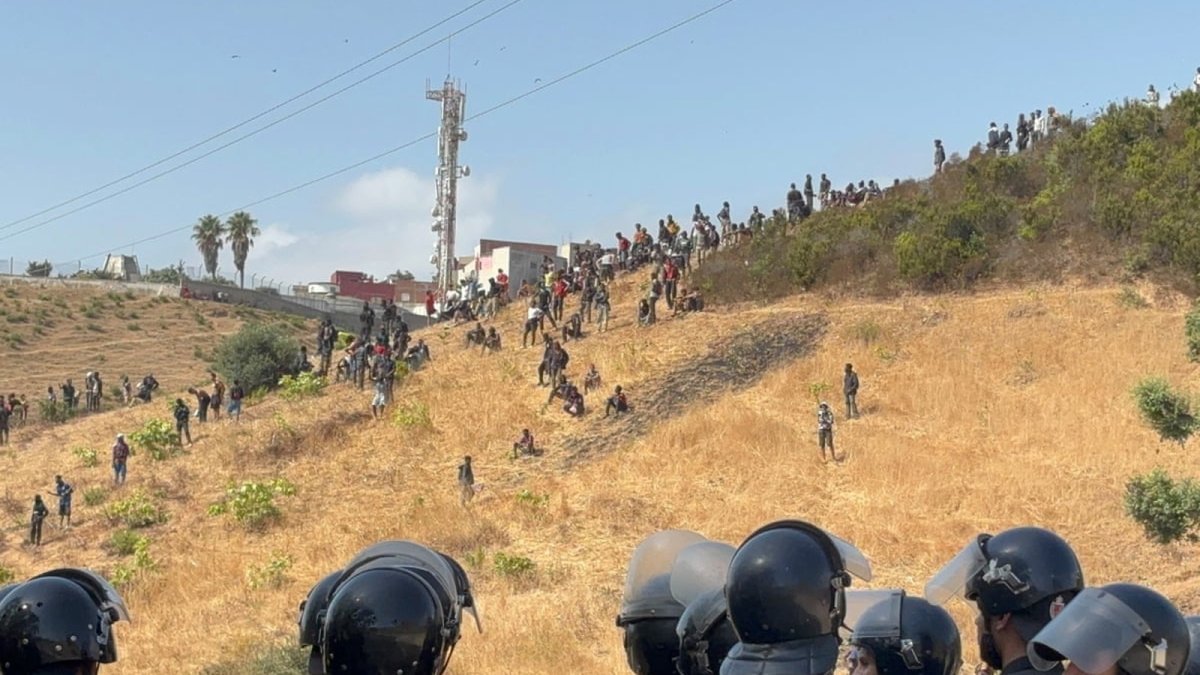
Saturday’s Crackdown: A Show of Force at Fnideq
Moroccan police arrested 111 people as they attempted to enter Ceuta on August 15 — 109 migrants from sub-Saharan Africa and two Moroccan citizens — according to a Morocco Interior Ministry source cited by Reuters and Morocco World News. The arrests occurred in and around Fnideq, the Moroccan border town known historically as Castillejos, which has become the epicenter of migration pressure on the enclave. The operation extended beyond arrests. Moroccan security forces deployed tear gas to disperse groups of migrants gathered on hills approximately 3 kilometers (1.9 miles) from the border, according to Spanish news agency EFE. Moroccan security sources told EFE that at least 294 migrants — 248 from sub-Saharan Africa and 46 Moroccan nationals — had been intercepted during operations designed to prevent a mass crossing. Reuters correspondents on the ground witnessed hundreds of police officers, some in riot gear and others in plainclothes, returning from the hills outside Fnideq after the operations. The scale of the security deployment was visible in Fnideq itself, where schools were converted into accommodation for security forces. Authorities also prevented several groups from boarding trains and buses to northern Morocco in cities including Casablanca, Fez, and Kenitra, forcing some migrants to bypass checkpoints by taking mountain routes toward the border. The message from Rabat was unambiguous: the border would hold.The July 30-31 Surge: A Crisis That Reshaped the Border
Saturday’s events cannot be understood without reference to the extraordinary influx of July 30-31, when more than 72,000 migrants surged into Ceuta — a figure equivalent to roughly 70 percent of the enclave’s regular population. Many swam around the breakwater separating Morocco from the enclave, climbed fences, or waded across shallow waters. The scale of the movement overwhelmed Spanish authorities and sent shockwaves through European capitals. The human cost was staggering. At least 96 people died trying to reach European soil during the crisis, according to Guardian and Reuters reporting, while EFE cited humanitarian organizations putting the toll at 141 dead. The deaths occurred primarily in the waters between Morocco and the enclave, where strong currents and overcrowding proved lethal. Investigative reporting by EL PAÍS and other outlets found that Moroccan security forces at the border refrained from confronting the tens of thousands heading for Ceuta during those two days. A Moroccan government source later said forces did not confront the crowd “to avoid causing harm” — a statement that raised questions in Madrid about whether the influx was permitted as a pressure tactic. The May 2021 precedent, when approximately 10,000 migrants entered Ceuta in a single day amid a diplomatic crisis between Rabat and Madrid over Western Sahara, loomed large in Spanish analysis of the July events.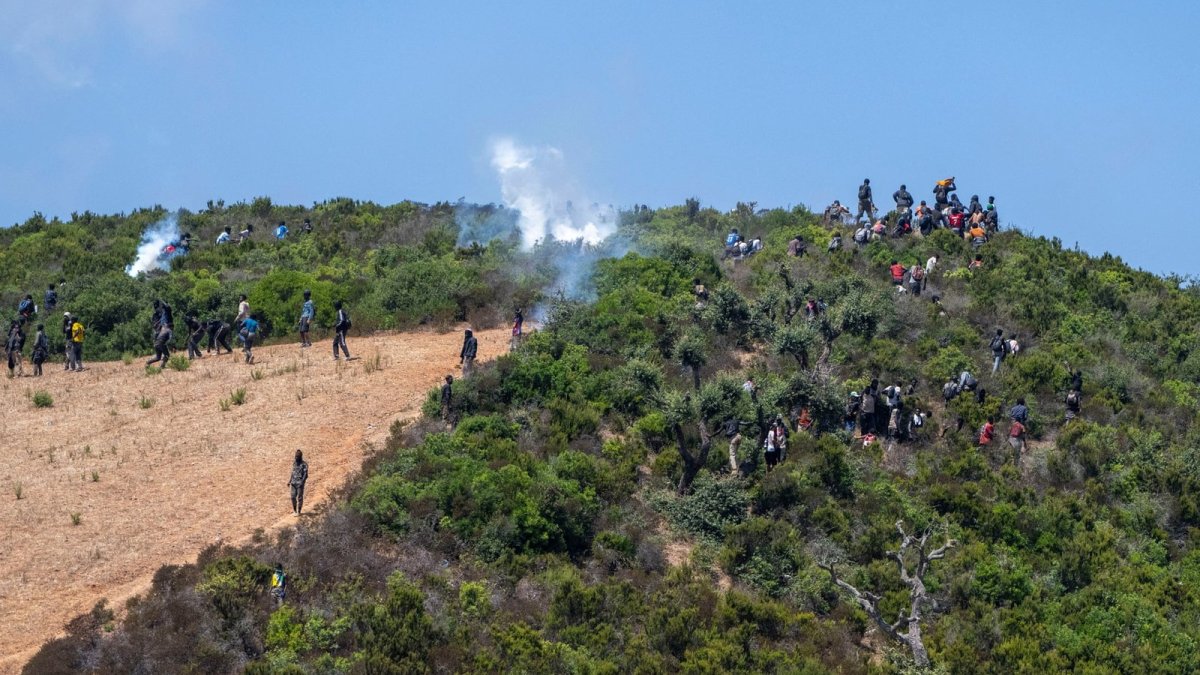
Morocco’s Security and Political Calculus
Morocco’s response to the August 15 mobilization was swift and comprehensive, reflecting a strategic decision to demonstrate border control capabilities while managing domestic political dynamics. Morocco’s Interior Ministry spokesman Rachid el Jalfi said: “All necessary measures have been taken to prevent any attempt at an illegal crossing and to intercept anyone who tries to participate in one,” describing a “system of continuous surveillance.” He urged citizens to ignore calls he called “suspicious and misleading” that pose “serious risks to people’s safety.” The reference to “calls of unknown origin” is significant. Morocco said it was monitoring social media posts “of unknown origin” calling for a mass crossing on August 15 — a Spanish holiday — and warned it would prosecute organizers. Authorities arrested 61 people suspected of inciting or promoting irregular migration on social media, signaling that Rabat views online mobilization as a genuine threat to border security. The political context is equally important. Morocco holds legislative elections on September 23, 2026, and the Authenticity and Modernity Party (PAM), whose leaders have been confrontational toward Spain, is positioning itself for victory. PAM’s candidate Fuzi Lekjaa — president of the Royal Moroccan Football Federation and minister of budgets — is widely seen as the likely winner. Justice Minister Abdelatif Uahbi, a PAM leader, told EFE: “We prevent migrants from leaving, not only Moroccans but others too, but when they arrive in Spain they are accepted and their situation is regularized” — a pointed critique of Spanish migration policy that resonates with domestic audiences. Morocco’s Foreign and Interior Ministries, whose chiefs are appointed directly by King Mohammed VI, have maintained a diplomatic tone during the crisis. This division between the palace-controlled security apparatus and the more confrontational political class reflects a deliberate strategy: maintain functional cooperation with Madrid while allowing political parties to channel nationalist sentiment ahead of the elections.The Journalist Expulsions: Controlling the Narrative
Perhaps the most telling development of August 15 was Morocco’s decision to expel journalists from EFE and Spanish state broadcaster TVE from Fnideq. Morocco’s Interior Ministry ordered the journalists to leave immediately, without explanation. Hotels were told to evict them, and an Interior Ministry representative warned that credentials and equipment could be confiscated. The ministry did not respond to EFE’s request for comment. The expulsions represent a significant escalation in Morocco’s media management strategy. By removing Spanish journalists from the border area, Rabat sought to control the visual narrative of the crackdown — a lesson learned from July, when images of migrants swimming toward Ceuta and Moroccan forces standing aside generated global headlines and diplomatic pressure. Morocco’s second public channel 2M countered by noting that Spanish authorities had restricted entry of one of its camera crews into Ceuta earlier in August, suggesting a mutual game of media restrictions. For journalists covering the border, the message is clear: access will be granted only on terms acceptable to Moroccan authorities, and independent verification of events in the border region will become increasingly difficult.Spain’s Response: Fortification and Deterrence
Spain’s response to the crisis has been characterized by rapid militarization of the enclave’s defenses and a hardening of political rhetoric. Spain’s Interior Minister Fernando Grande-Marlaska, on his second visit to Ceuta since the crisis began, delivered a stark message to potential migrants: “I tell them not to heed the mafias who play with their lives. None of them will stay [in Ceuta], none of them will go to the peninsula, none of them will get legal status.” The Spanish National Police and Civil Guard presence in Ceuta has risen from just over 1,100 to about 1,600 officers, supplemented by 2,000 military troops in support roles. Madrid also installed a maritime barrier along the El Tarajal breakwater, with a similar structure around Melilla, the other Spanish enclave on Morocco’s Mediterranean coast. These physical fortifications complement the floating barrier installed off Ceuta in early August, following a New York Times report on Spain’s accelerated border hardening. Approximately 5,000 irregular migrants remained in Ceuta as of August 15, according to Grande-Marlaska. Migrants sheltered from scorching heat under makeshift bamboo shelters on the urban beach of El Trampolin, their presence a visible reminder of the humanitarian dimension of the crisis. Additionally, 1,898 Moroccan minors who entered Ceuta in late July had been placed under Spanish guardianship, creating a complex child-welfare challenge that will persist for years.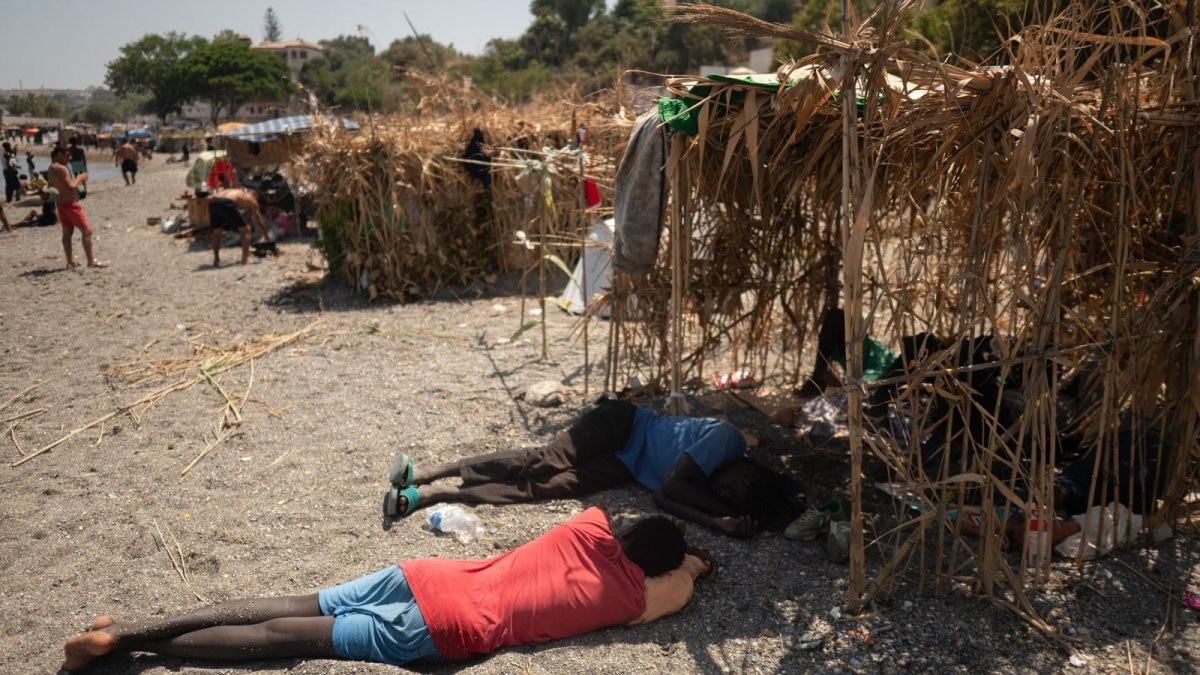
The EU Dimension: External Borders and Partnership Leverage
The Ceuta crisis has revived fundamental debates within the European Union about the nature of its external borders and the viability of migration partnerships with North African states. The EU has pressed Morocco to manage its northern border as a condition of partnership, and Saturday’s crackdown demonstrates Rabat’s capacity to deliver — when it chooses to do so. Grande-Marlaska called Madrid-Rabat cooperation “extraordinary and exceptional,” recalling that in May 2021, 10,000 migrants entered Ceuta in one day. The implicit message is that current cooperation represents a significant improvement, even as the July influx demonstrated the limits of Moroccan goodwill. The crisis has also exposed tensions within the EU. The influx prompted anti-immigration rhetoric among far-right parties worldwide, and Spain’s Supreme Court ruling that migrants entering by sea cannot be immediately sent back has been cited by some officials as a factor in the July dynamics. The ruling creates a legal framework that limits Spain’s options for rapid returns, making prevention at the border — and therefore Moroccan cooperation — all the more critical.Strategic Calculus: What Each Side Wants
The August 15 events reveal the strategic calculus of all parties involved. Morocco seeks to demonstrate that it is an indispensable partner for European border security, leveraging this position for diplomatic and economic concessions from Madrid and Brussels. The crackdown serves multiple purposes: it reassures European partners of Morocco’s reliability, it prevents the domestic political fallout of another mass exodus, and it reinforces the narrative that Morocco is a victim of migration pressures rather than a source of them. Spain seeks to maintain functional cooperation with Morocco while avoiding the appearance of capitulation to Rabat’s demands. The fortification of Ceuta and Melilla, combined with the increased police and military presence, signals to domestic audiences that Madrid is taking decisive action. The public statements by Grande-Marlaska are designed to deter future migrants while preserving the diplomatic channel with Morocco. For the migrants themselves, the calculus is starkly different. The deaths of at least 96 people in July — with humanitarian organizations citing figures as high as 141 — have not deterred new attempts. The desperation that drives sub-Saharan Africans to risk their lives on the breakwater at Ceuta reflects deeper structural factors: economic collapse, political instability, and climate pressures across the Sahel and West Africa. No amount of border fortification or police deployment addresses these root causes.Regional Implications: The New Normal at Europe’s Southern Border
The events of August 15, 2026, suggest that the Ceuta border has entered a new phase of managed tension. Morocco has demonstrated both the capacity and the will to prevent mass crossings when it chooses to do so, but the underlying pressures remain unresolved. The social media mobilization that preceded Saturday’s attempt indicates that migration networks are adapting to new realities, using digital tools to coordinate and inspire new attempts. The expulsion of Spanish journalists from Fnideq raises troubling questions about transparency and accountability at Europe’s southern border. If independent media cannot document events in the border region, the humanitarian costs of migration control will become increasingly invisible. The Moroccan government’s willingness to restrict access suggests that the full picture of what occurred on August 15 — and what occurs daily in the hills around Ceuta — may never be fully known. For the European Union, the Ceuta crisis represents a strategic dilemma without easy resolution. Morocco’s cooperation is essential to border management, but that cooperation comes with costs — both financial and normative. The EU’s external border is increasingly managed by third countries whose interests do not always align with European values of transparency and human rights. The question for Brussels is whether the price of security is worth the erosion of the principles that define the European project. As Morocco prepares for its September elections and Spain continues to fortify its enclaves, the hills around Ceuta remain a pressure point in Mediterranean geopolitics. The migrants who gather there, the security forces who disperse them, and the journalists who document their movements are all actors in a complex drama that will continue to shape relations between Europe and North Africa for years to come. The August 15 crackdown was a success for Moroccan border control, but it resolved nothing about the underlying forces that drive people toward Europe’s shores. By Malik Hassan, Staff WriterThis article was produced with AI-assisted research and editorial support. Reporting is based on sources cited in the article.
What's Your Reaction?
 Like
0
Like
0
 Dislike
0
Dislike
0
 Love
0
Love
0
 Funny
0
Funny
0
 Wow
0
Wow
0
 Sad
0
Sad
0
 Angry
0
Angry
0
Middle East Correspondent at Global1.News. Based in Beirut, covering politics, conflict, energy, and society across the Middle East. Brings context and depth to a region often reduced to headlines.












Comments (0)