
Nvidia weighs playing the cosigner for Nscale’s AI data center in West Virginia
When Nvidia steps in to cosign a loan for a fledgling AI cloud provider, it’s a signal that the whole sector is sweating the big‑ticket bills. Why Nvidia is willing to be a “cosigner” The chip giant is not just selling silicon; it’s now dangling its balance sheet to keep a customer afloat.
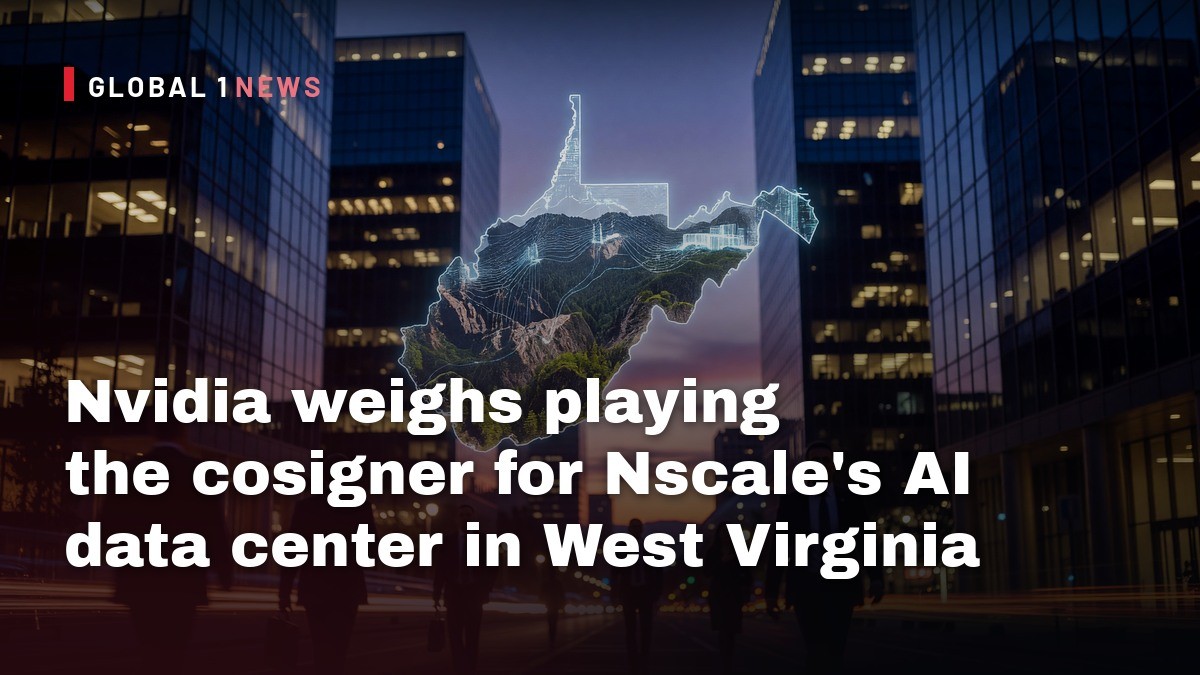
When Nvidia steps in to cosign a loan for a fledgling AI cloud provider, it’s a signal that the whole sector is sweating the big‑ticket bills. The latest chatter about Nvidia guaranteeing billions of debt for Nscale’s West Virginia data centre is a textbook case of a hyperscaler using its deep pockets to keep the AI pipeline flowing—while the rest of us watching from the trenches wonder if the whole thing is built on sand.
Why Nvidia is willing to be a “cosigner”
The chip giant is not just selling silicon; it’s now dangling its balance sheet to keep a customer afloat. According to The Information, Nvidia would provide a residual‑value guarantee on Nscale’s construction loans, stepping in if the provider defaults, taking over the facility temporarily and hunting for a buyer or new tenant. This is a step beyond the usual lease‑back and chip‑purchase deals Nvidia has done with cloud players.
From a risk‑management perspective, Nvidia’s move makes sense only if the payoff outweighs the exposure. The West Virginia campus is slated to run its first 460‑megawatt building on Nvidia’s next‑gen Vera Rubin chips, and Anthropic has already signed a $44.6 billion contract for that building alone. If the project stalls, Nvidia could lose a massive order and see its chips sit idle—something it can’t afford when investors are already jittery about AI spend.
The financing gauntlet Nscale faces
Nscale is walking a tightrope. The company is eyeing a public valuation of up to $35 billion, yet it has only about 25,000 advanced AI chips running as of August, a fraction of the nearly 500,000 it plans to deploy. The gap between current capacity and ambition is a red flag for any lender.
Adding to the pressure, Nscale’s West Virginia site has already run into practical problems. Runoff from the construction site has flooded nearby homes more than once, and the project only secured state certification in September after months of negotiations. These hiccups hint at operational risk that can quickly turn a construction loan sour.
Investor anxiety and the broader neocloud crunch
Neoclouds—AI‑focused cloud providers without a cash‑rich core—are feeling the squeeze. The Information notes Nvidia has poured roughly $170 billion into the sector, including a $1 billion convertible financing commitment to Nscale in September. Yet that money is being spread thin across a wave of startups that are struggling to turn promised capacity into revenue.
Shares of CoreWeave, Nebius and IREN each fell more than 30 percent in October, according to CNBC. The market is punishing firms that can’t demonstrate a clear path to profitability, and any sign of financial distress—like Nscale’s need for a cosigner—feeds that narrative.
Anthropic’s role and its own credit worries
Anthropic is the anchor tenant for Nscale’s West Virginia campus, and its $44.6 billion contract is the primary justification for Nvidia’s involvement. The company is also discussing a second deal worth roughly $45 billion for another building, which would double the exposure.
But Anthropic isn’t immune to the credit crunch either. The firm filed to go public this week, and Blackstone warned that it could receive a below‑investment‑grade rating after its IPO. A junk rating would hike borrowing costs and force Anthropic to lean even harder on partners like Nvidia to back its debt, creating a feedback loop of dependence that could destabilize the whole ecosystem.
What Microsoft’s pull‑out tells us
Microsoft recently walked away from a planned Nscale site in England after the grid power timeline was pushed into the 2030s. That move underscores a growing reality: AI data centres are power‑hungry beasts, and if the utility grid can’t guarantee reliable, affordable electricity, even the biggest hyperscalers will back off.
The West Virginia project is similarly vulnerable. While the state certification was finally secured, the site’s flood issues and the broader power infrastructure challenges mean the construction risk is still high. Nvidia’s guarantee is essentially a hedge against those utility‑related headwinds.
The hidden cost of “best practices” in AI builds
Industry playbooks often preach “best practices” like over‑provisioning power, stacking chips to the ceiling, and signing massive multi‑year contracts. In the real world, those practices can balloon CAPEX and OPEX beyond what most providers can sustain. Nscale’s ambition to deploy half a million chips while only having a few tens of thousands in service is a textbook case of over‑reach.
When you factor in construction delays, utility bottlenecks, and the need for a cosigner, the theoretical ROI of a 460‑megawatt, Vera‑Rubin‑powered building evaporates fast. The math only works if you can lock in a long‑term, credit‑worthy tenant—something that’s becoming harder to guarantee as investors tighten their purse strings.
Actionable takeaways for independent hosting founders
First, don’t count on a hyperscaler to bail you out. Nvidia’s guarantee is a rare, high‑risk move that may not be replicated. Build your financing model on cash flow, not on the hope that a chip maker will step in when you’re in trouble.
Second, align your capacity rollout with realistic power and construction timelines. The flood issues at West Virginia and Microsoft’s England pull‑out are cautionary tales: if the grid can’t keep up, your project stalls, and your investors lose confidence.
Third, keep a tight grip on debt ratios. Nscale’s need for a $1 billion convertible note and a residual‑value guarantee signals a leverage level that could quickly become unsustainable if revenue lags.
Finally, diversify your tenant base. Relying heavily on a single AI lab like Anthropic amplifies risk, especially when that lab’s own credit rating is under scrutiny. A mix of enterprise customers, research institutions, and smaller AI startups spreads the exposure and makes your cash flow more resilient.
In short, Nvidia’s willingness to cosign for Nscale is a band‑aid on a deeper wound. The AI data‑centre boom is still alive, but it’s being pruned by hard‑nosed financial realities. Founders who can navigate the power‑grid, construction, and credit‑risk minefields will survive; the rest will be left holding the bag when the next loan guarantee expires.
— Allan Ali, Founder
This article was produced with AI-assisted research and editorial support. Reporting is based on the source material cited below. Sources: TechCrunch; techcrunch.com; Global1.News (01 November 2026).
By Allan Ali, Global1.News
What's Your Reaction?
 Like
0
 Dislike
0
 Love
0
 Funny
0
 Wow
0
 Sad
0
 Angry
0

Publisher of Global1.News. Automation architect, systems builder, and the guy making sure the truth gets published.












Comments (0)