
Mars opens first Pringles factory in Thailand with 7 billion baht investment
In the bustling heart of the Eastern Economic Corridor, a new chapter of Thai industry has begun. From blueprint to reality: the birth of a smart factory The journey started in October 2023 when Mars broke ground on a site that would soon span 208,000 square metres.
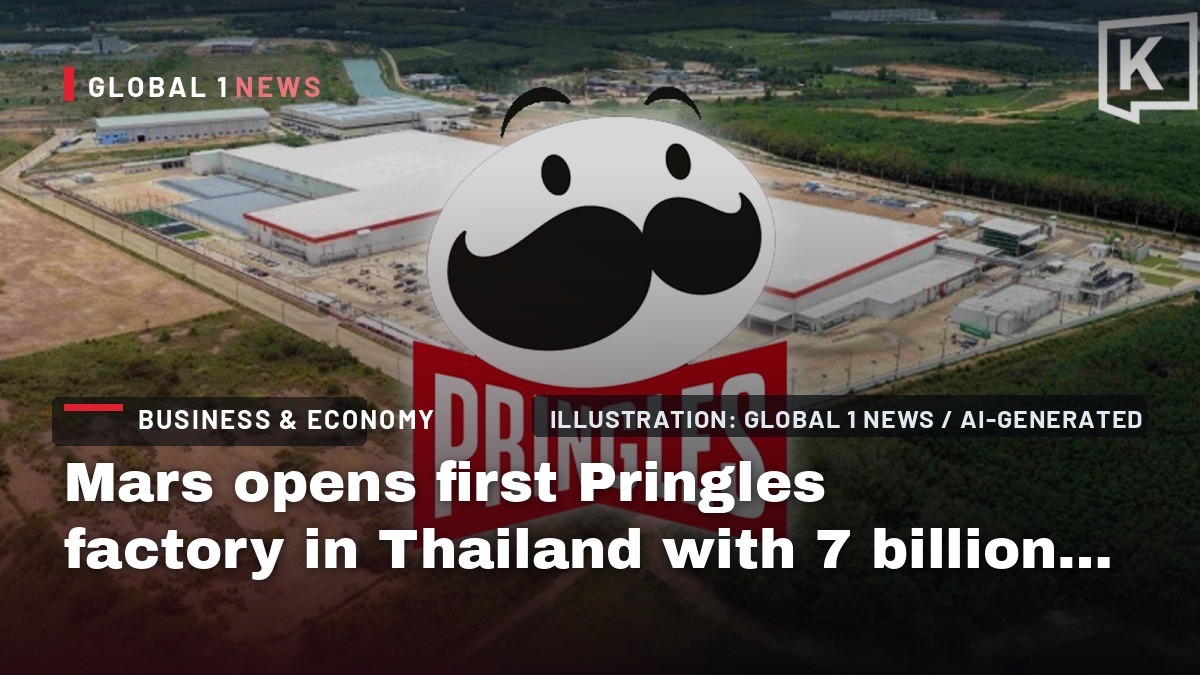
In the bustling heart of the Eastern Economic Corridor, a new chapter of Thai industry has begun. Mars, the global snack giant, has opened its first Pringles® manufacturing plant in Chonburi, marking a significant milestone not only for the company but also for Thailand’s ambition to become a hub for advanced manufacturing in Southeast Asia. The investment, exceeding 7 billion baht, brings together modern technology, local talent, and a vision of regional trade that resonates with Thailand’s long‑standing role as a bridge between East and West.
From blueprint to reality: the birth of a smart factory
The journey started in October 2023 when Mars broke ground on a site that would soon span 208,000 square metres. Within a little over two years, the company completed a 73,800‑square‑metre factory designed as a “smart factory.” Real‑time dashboards, equipment performance monitoring and digital systems now guide every step of the production line, allowing operators to fine‑tune processes and boost efficiency. This digital backbone reflects a broader trend in Thai industry, where the government’s “Industry 4.0” push encourages the adoption of data‑driven manufacturing.
Operations began in late 2025, and by September 2026 the second production line was up and running. The new line has already expanded capacity, positioning the plant to meet the rising demand for Pringles® across the Asia‑Pacific, Middle East and Africa (AMEA) region. Mars has signalled its intent to add a third line in late 2027, further cementing the plant’s role in a regional supply network.
Employment and inclusion: a balanced workforce
The factory’s opening created more than 170 direct jobs, a figure that may seem modest but carries symbolic weight. Men and women share the workforce in roughly equal numbers, and women hold about half of the leadership positions. This gender balance mirrors Thailand’s cultural emphasis on community and harmony, echoing the Buddhist principle of equitable opportunity. For many local families, the plant offers stable, skilled employment that aligns with the country’s broader goal of moving up the value chain.
Beyond the numbers, Mars’ commitment to developing local talent reflects a growing expectation among multinational investors to nurture home‑grown expertise. Training programmes, on‑the‑job learning and exposure to advanced manufacturing technologies will equip Thai workers with skills that can be transferred to other sectors, strengthening the nation’s human capital and supporting long‑term economic resilience.
Connecting to the domestic supply chain
Nearly half of the plant’s procurement budget is allocated to Thai suppliers, a deliberate choice that weaves the factory into the fabric of the national economy. By sourcing raw materials, packaging, and services locally, Mars not only supports existing businesses but also encourages the emergence of new suppliers capable of meeting international standards. This ripple effect can generate wider economic value, fostering a network of small and medium enterprises that benefit from the steady demand of a global brand.
Such integration aligns with the Board of Investment’s (BOI) vision of creating clusters of advanced manufacturing. Director Anin Mekasuksai highlighted how the plant demonstrates Thailand’s potential as a base for sophisticated production, noting that the facility will help develop skills and strengthen the domestic supply chain. In a country where agriculture has long been the backbone of the economy, this shift toward high‑tech manufacturing signals a diversification that can buffer against global commodity shocks.
Regional trade and the AMEA ambition
Today, Pringles® produced in Chonburi already travel to India, Hong Kong and Taiwan. The new second line expands the plant’s ability to serve a broader market, reinforcing Thailand’s role as a logistics gateway for the AMEA region. Gabriel Fernandez, president of Mars Snacking for AMEA, emphasized that Thailand’s strategic location and infrastructure make it an ideal hub for delivering snack products across Asia, the Middle East and Africa.
The plant’s flexibility in adjusting production volumes and flavours to suit different markets underscores a nuanced understanding of regional consumer preferences. By tailoring products to local tastes, Mars can deepen its connection with consumers while supporting Thailand’s export‑driven growth model. This approach also dovetails with the ASEAN Economic Community’s goal of deeper market integration, where seamless movement of goods fuels regional prosperity.
Environmental stewardship in a modern facility
Environmental responsibility is woven into the plant’s design. Energy‑efficient technologies, wastewater treatment, waste‑reduction processes and recycling systems help minimise the factory’s ecological footprint. Continuous monitoring of energy, water use and greenhouse‑gas emissions ensures that the operation can improve its performance over time.
Such measures resonate with Thailand’s growing emphasis on sustainable development, a theme echoed in Buddhist teachings that stress respect for the natural world. By adopting greener practices, Mars not only complies with global standards but also contributes to Thailand’s national goals of reducing emissions and promoting responsible industrial growth.
Implications for Thailand’s future manufacturing landscape
The Chonburi plant stands as a tangible example of how foreign investment can align with national development strategies. It showcases the benefits of a well‑planned industrial zone like the EEC, where infrastructure, logistics and policy incentives converge to attract high‑value projects. As more multinational firms observe Mars’ success, the EEC may see a wave of similar investments, reinforcing Thailand’s position as a manufacturing hub in the region.
Moreover, the plant’s emphasis on digitalisation and skill development could inspire other Thai manufacturers to adopt smarter technologies. By learning from the Pringles® factory’s data‑driven approach, local firms in textiles, automotive parts and electronics might accelerate their own digital transformation, fostering a more competitive and innovative industrial ecosystem.
Looking ahead: a snack that tells a larger story
Pringles® may be a simple snack, but its production in Thailand tells a broader story of economic ambition, cultural values and regional connectivity. The plant’s balanced workforce reflects Thai society’s commitment to inclusion, while its integration with local suppliers highlights the importance of community‑based growth. The environmental safeguards echo a reverence for nature that is deeply rooted in Buddhist practice.
As the third production line prepares to launch in late 2027, the factory will continue to expand its reach, bringing more jobs, skills and trade opportunities to Thailand. For the people of Chonburi and the nation at large, the hum of the Pringles® line is more than a sound of machinery; it is a reminder that Thailand’s future can be built on a blend of tradition, technology and thoughtful partnership.
This article was produced with AI-assisted research and editorial support. Reporting is based on the source material cited below. Sources: Khaosod English; khaosodenglish.com; Global1.News (23 September 2026).
By Ann Srisawat, Staff Writer
What's Your Reaction?
 Like
0
Like
0
 Dislike
0
Dislike
0
 Love
0
Love
0
 Funny
0
Funny
0
 Wow
0
Wow
0
 Sad
0
Sad
0
 Angry
0
Angry
0

Southeast Asia Correspondent at Global1.News. Based in Bangkok, covering Thai and Southeast Asian politics, economy, technology, and culture. Deep regional perspective on one of the world's most dynamic regions.













Comments (0)