
Marcos pushes waste-to-energy facilities to address 'critical' garbage issues
President Marcos Jr. calls waste-to-energy plants the "only solution" to the Philippines' critical garbage crisis, citing full landfills and rising hauling costs. Ecowaste Coalition warns of health risks, while Smokey Mountain residents face displacement from a P26-B project.
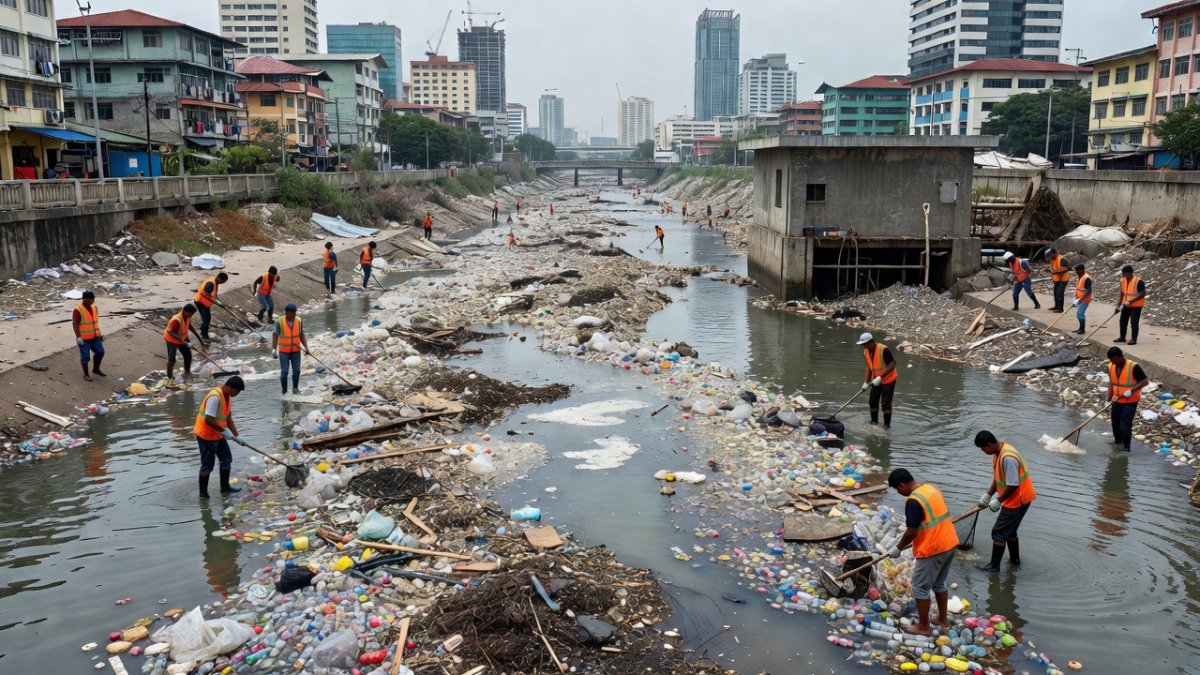
MANILA — The sight was heartbreaking and all too familiar. After a week of relentless Habagat rains, tons of trash floated along the Redemptorist Water Channel beside the Baclaran River, a murky testament to a problem that has plagued the nation for decades. On Wednesday, August 12, President Ferdinand Marcos Jr. stood at the Diokno Pumping Station in Pasay City, inspecting the ongoing clearing and waste collection operations, and delivered a stark message: the country is facing a "critical garbage crisis," and he believes waste-to-energy facilities are the "only solution."
For ordinary Filipinos, the image of garbage-choked waterways is not just a news headline. It is the smell that wafts through barangays after a storm, the sight of children wading through debris, and the frustration of local government units (LGUs) struggling to find a place to dump their trash. The President's remarks, made during a media statement on Wednesday, signal a major policy shift that could reshape how the country manages its waste — and who bears the cost.
"Yan ang tanging solusyon dahil yung mga landfill puno na at pamahal na ng pamahal ang pagpapadala," Marcos said in Filipino. (That's the only solution because the landfills are full and transporting waste to landfills is getting more expensive.) His words resonate deeply in a nation where many sanitary landfills are nearing capacity, and where the daily hauling of garbage from Metro Manila to provincial dumps has become a logistical and financial burden for cash-strapped LGUs.
A President's Push for a Controversial Technology
The concept of waste-to-energy (WtE) is not new, but it has gained significant traction under the Marcos administration. In July, during his State of the Nation Address (SONA), the President first proposed adopting these technologies. Now, with the recent flooding and the visible accumulation of garbage in Manila Bay and its tributaries, the urgency has intensified. Waste-to-energy plants convert non-recyclable municipal solid waste into usable forms like electricity, fuel, or heat through burning. The President's vision is straightforward: instead of hauling garbage to distant landfills, the waste would be brought to these facilities, reducing both the volume of trash and the cost of transportation. "Ang ating iniisip, imbes na sa landfill dadalhin, dadalhin sa waste-to-energy plant. So tinitignan natin kung ano yung mga location para naman hindi masyadong malaki ang kailangang bayaran ng LGU para sa hauling," Marcos explained. (We are thinking that instead of bringing the garbage to landfills, they will bring it to waste-to-energy plants. We are looking into possible locations so that the local government units don't need to spend much for hauling.) The Department of Energy is expected to hold an auction, the President said, to determine how much of the energy produced by these plants will be sold to the government and at what cost. The President expressed optimism about the timeline, saying, "Maybe we will begin to see it in a year, a year and a half. We push it as quickly as we can." For many Filipinos, this promise of a swift solution offers a glimmer of hope. The daily struggle of dealing with overflowing trash bins, clogged canals, and the ever-present threat of flooding is a reality for millions. The idea of turning that garbage into electricity sounds like a modern-day miracle — a way to transform a curse into a resource.The Human Cost of a Garbage Crisis
To understand the gravity of the situation, one only needs to look at the communities living on the frontlines of this crisis. In Tondo, Manila, the infamous Smokey Mountain has long been a symbol of poverty and environmental degradation. Now, it is at the center of a proposed P26-billion waste-to-energy facility, as reported by the Philippine Daily Inquirer, a project that has sparked both hope and fear among its residents. The project, being developed by construction firm R-II Builders Inc., led by businessman Reghis Romero II, promises to bring jobs and modern waste management to the area. But for the residents of Upper Smokey Mountain, the prospect of demolition to make way for the facility is a terrifying thought. These are families who have built their lives, their sari-sari stores, and their communities on this land. The threat of displacement looms large, and the promise of progress rings hollow when it comes at the cost of one's home. The tension between development and displacement is a recurring theme in Philippine urban planning. From the relocation of informal settlers along waterways to the clearing of public spaces, the government's push for modernization often clashes with the realities of the urban poor. The Smokey Mountain project is a microcosm of this larger conflict, where the need for better waste management is pitted against the rights of the most vulnerable. Residents have protested the project, citing health risks and the loss of their homes. Their voices join a growing chorus of environmental groups and advocates who are raising alarms about the dangers of waste-to-energy technology.Environmental Groups Sound the Alarm
The Ecowaste Coalition, a prominent environmental advocacy group, has been at the forefront of the opposition to waste-to-energy plants. In a statement released in July, the coalition warned that WtE facilities pose serious threats to public health and the environment. "WtE threatens the right to clean, healthy, and sustainable environment as well as the right to life due to the adverse environmental impacts caused by its emissions, which then could lead to serious health risks such as cancer, respiratory complications, and even premature mortality upon prolonged exposure," the group said. The coalition's policy officer, Glory Rose Manatad, has been vocal in her criticism of the proposed WtE bills, arguing that they would replace sanitary landfills with waste-to-energy incineration facilities nationwide. This, she says, runs contrary to the goal of Republic Act 9003, also known as the Ecological Solid Waste Management Act of 2000, which emphasizes waste segregation, recycling, composting, and waste reduction. The group denounced the WtE push during the SONA and urged the President to uphold RA 9003. For them, the solution to the garbage crisis lies not in burning waste but in addressing the root causes: overconsumption, lack of proper segregation, and inadequate recycling infrastructure. This is a perspective that resonates with many Filipinos who have grown up with the mantra of "reduce, reuse, recycle." In schools, in barangay halls, and in public service announcements, the message has been drilled into the national consciousness. Yet, the reality on the ground is that recycling rates remain low, and the country continues to generate massive amounts of waste daily.The Economic and Political Dimensions
The push for waste-to-energy is not just an environmental issue; it is deeply political and economic. For LGUs, the cost of hauling garbage to landfills has become a significant drain on their budgets. The President's proposal to build WtE plants in strategic locations is partly driven by the desire to reduce these costs. "Tinitignan natin kung ano yung mga location para naman hindi masyadong malaki ang kailangang bayaran ng LGU para sa hauling," Marcos said, highlighting the financial burden on local governments. This is a concern that resonates with mayors and governors across the country, who often have to allocate a substantial portion of their funds to waste management. The auction to be held by the Department of Energy will determine the economics of the WtE projects. How much of the energy produced will be sold to the government, and at what price, will be crucial factors in the viability of these facilities. For the private sector, this represents a significant business opportunity. For the government, it is a chance to address a pressing public health and environmental issue while potentially generating revenue. However, the political implications are complex. The President's push for WtE has drawn both support and criticism from various sectors. Proponents argue that it is a modern, efficient solution to a chronic problem. Critics, on the other hand, see it as a capitulation to corporate interests at the expense of public health and environmental justice. The debate also touches on the broader issue of energy independence. The Philippines has long struggled with high electricity costs and reliance on imported fuels. Waste-to-energy plants could provide a domestic source of power, reducing the country's dependence on foreign energy. This is an attractive proposition for a nation that has been grappling with energy security concerns.What This Means for the Filipino People
For the average Filipino, the waste-to-energy debate is not an abstract policy discussion. It is about the air they breathe, the water they drink, and the communities they live in. It is about whether the garbage that piles up on their streets will be turned into electricity or into toxic emissions. The President's promise to push the WtE agenda "as quickly as we can" offers a sense of urgency, but it also raises questions about due process and public consultation. Will the affected communities, like those in Smokey Mountain, have a say in the decisions that will shape their lives? Will environmental safeguards be put in place to protect public health? These are questions that demand answers. The Filipino people have seen too many projects that promised progress but delivered only displacement and pollution. The bayanihan spirit, the tradition of community cooperation, must be harnessed to ensure that any solution to the garbage crisis is inclusive and sustainable. As the nation grapples with this critical issue, one thing is clear: the status quo is no longer acceptable. The sight of garbage floating in Manila Bay, the stench of uncollected trash in urban centers, and the health risks posed by improper waste disposal are all urgent problems that require immediate action. Whether waste-to-energy is the right solution remains a matter of intense debate. But what is certain is that the Filipino people deserve a future where their children can play in clean rivers, where their communities are free from the scourge of garbage, and where progress does not come at the cost of their health and homes. The President's words on Wednesday were a call to action, but they were also a reminder of the long road ahead. The journey from a "critical garbage crisis" to a sustainable waste management system will require not just political will, but also the active participation of every Filipino — from the barangay captain organizing clean-up drives to the student segregating waste in school, from the OFW sending remittances home to the farmer composting organic waste. In the end, the solution to the garbage crisis lies not just in technology, but in a collective change of behavior and a renewed commitment to the environment. The waste-to-energy plants may be part of the answer, but they are not the whole answer. The real solution begins with each of us, in our homes, our communities, and our daily choices.What Filipinos Can Do Now
While the national debate over waste-to-energy continues, barangay-level action remains the most immediate response to the garbage crisis. Proper waste segregation at home — separating biodegradable waste from non-biodegradable and recyclable materials — directly reduces what ends up in canals and rivers during the rainy season. LGUs, from the barangay captain down to the street sweeper, rely on this first step to make collection, composting, and recycling programs work. Residents can also demand a seat at the table. Public consultations on major projects like waste-to-energy facilities are opportunities for affected communities to ask tough questions about emissions, health safeguards, and fair treatment of families who may be displaced. Whether the government ultimately pursues WtE or strengthens recycling under RA 9003, the most durable solution will be one shaped with the Filipino people — not imposed on them. By Bella Reyes, Staff Writer This article was produced with AI-assisted research and editorial support. Sources: PhilStar, ABS-CBN News, Ecowaste Coalition, Philippine Daily Inquirer.What's Your Reaction?
 Like
0
Like
0
 Dislike
0
Dislike
0
 Love
0
Love
0
 Funny
0
Funny
0
 Wow
0
Wow
0
 Sad
0
Sad
0
 Angry
0
Angry
0

Isabella "Bella" Reyes
Philippines/Southeast Asia Correspondent at Global1.News. Manila-based journalist covering Philippine politics, environment, maritime security, and social issues. Passionate about marine conservation and the communities protecting the Philippines' natural heritage.









Comments (0)