
Likud Primaries 2026: Netanyahu's Reserved Slots and a Battle for the Party's Soul
Benjamin Netanyahu's Likud party holds primaries Monday as 140,000 members choose the Knesset slate for Israel's October 27 election, with the PM controlling eight of the first 30 positions and battles over reserved slots, turnout and MK Tali Gotliv.
In a recent i24NEWS English report, the focus was on the contentious internal battle unfolding within Prime Minister Benjamin Netanyahu's Likud party as it held its primary elections on Monday, August 17, 2026. With roughly 140,000 registered members eligible to cast ballots for the party's Knesset slate ahead of the October 27 national election, the vote is a high-stakes test of Netanyahu's control over the party machinery and the direction of its base. The primaries come at a pivotal moment, with Likud currently holding around 40 ministerial and Knesset positions, yet recent polls projecting the party could win as few as 22 seats in the upcoming general election.
Likud Primaries 2026: Netanyahu's Reserved Slots and a Battle for the Party's Soul
[Jerusalem, Israel - August 17, 2026] - Likud members streamed to polling stations across Israel on Monday, from Jerusalem to Beersheva, to select the party's list for the 26th Knesset. The vote, which opened at 10:00 a.m. and is expected to close at 9:00 p.m., features over 100 candidates competing for a limited number of realistic slots, with each voter choosing exactly 12 candidates on the national list and one candidate in their district. By 12:15 p.m., the party reported that 14,307 members had voted, representing 10.07% of eligible voters-a figure that already surpasses the 12,339 who had voted by the same time in the 2022 primaries, with Jerusalem leading the turnout with 564 voters.
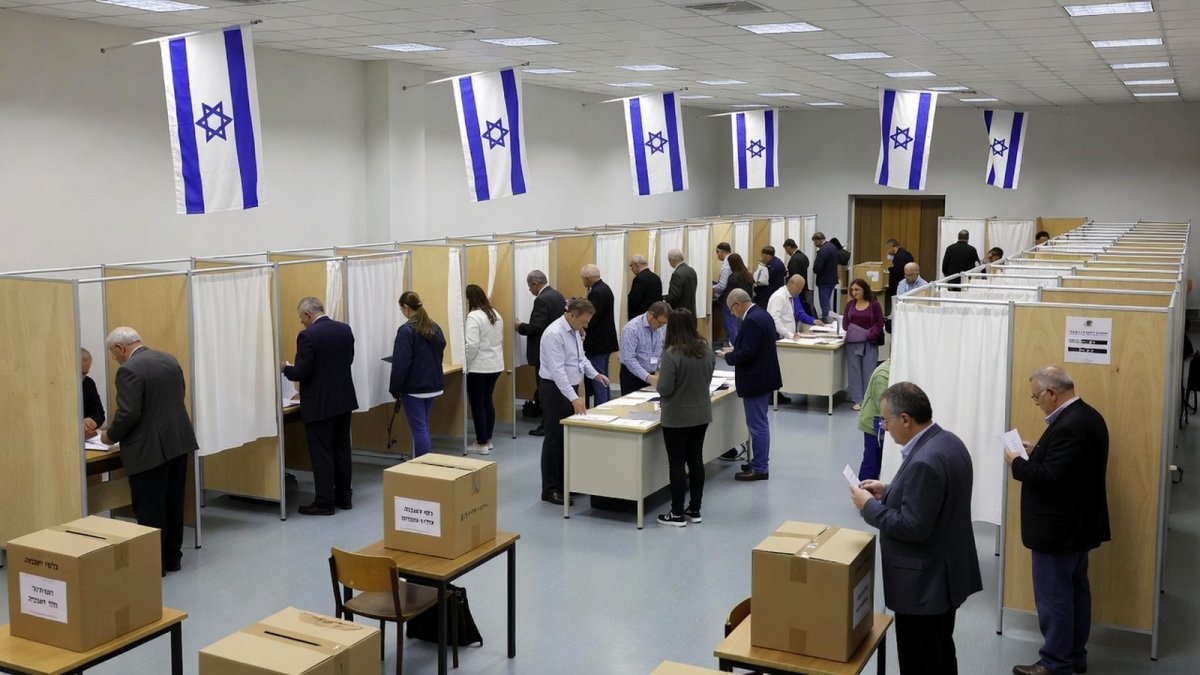
A Vote That Reshapes Likud
The primary is not merely a routine internal party procedure; it is a decisive moment that will determine the composition of Likud's Knesset faction for the next term. The party is completing a full four-year term defined by two historic events: the government's judicial overhaul, which sparked deep political confrontation, and the October 7, 2023 massacre, which reshaped the nation's security paradigm. This context looms large over the vote, as the primary tests which force matters more inside Likud: the registered members who control party institutions versus the larger pool of Likud voters in national elections.
Transportation and Road Safety Minister Miri Regev told JNS that the primary demonstrates the party's democratic character. "There is democracy within Likud," Regev said, adding that registered members "are coming to vote and will put together the next list that will, God willing, form the next government." She framed the vote as producing "the best list" to run alongside "our leader, Bibi Netanyahu." Communications Minister Shlomo Karhi echoed this sentiment, telling JNS that the primary will produce a list "that will not be afraid of the deep state" and will press on with the party's agenda on the judiciary and the economy. "With that list, we will win [the Oct. 27 national election]," Karhi asserted, urging members to back candidates unafraid of "the bureaucrats, courts and judges."
Netanyahu's Grip on the Slate
The most contentious aspect of this year's primary is the system change pushed by Netanyahu in recent weeks. The Likud Central Committee last month granted the prime minister authority to fill eight of the first 30 slots on the party's Knesset candidates list, specifically positions 3, 5, 9, 11, 15, 18, 26, and 29. This unprecedented power, which followed reports that Netanyahu had threatened to leave Likud if the changes were not advanced, has fundamentally altered the dynamics of the race. Opponents argue the changes will cause those who would otherwise score highly in the primaries to fall further down the list, effectively allowing Netanyahu to hand-pick a loyalist core within the party's top tier.
Netanyahu addressed the membership on Sunday night, framing the vote in stark national security terms. "I will vote tomorrow in the Likud primary for a winning list that will ensure that [Yashar Party leader Gadi] Eisenkot and [The Democrats Party head] Yair Golan do not form a narrow government with the Arab parties, as they promised," he said. He also emphasized his non-interference in the national list, stating, "I trust you, Likud members, to choose your representatives correctly, according to your own judgment. I am not interfering in the national list, and I wish everyone success." This dual message-asserting control over reserved slots while claiming deference to the membership-captures the tension at the heart of this primary.
The New Faces: Reserved Slots and Controversy
The reserved slots have already generated significant controversy, particularly the inclusion of Oren Dobronsky, a high-tech entrepreneur from Silicon Valley and co-founder of Hotbar, who also founded Oren's Hummus in Palo Alto and appears as a Shark Tank investor. Dobronsky is the first non-incumbent to receive a reserved position, a move that signals Netanyahu's desire to inject new blood into the party. However, Dobronsky's past criticism of US President Donald Trump has created a firestorm. In a June 17, 2026 post on X/Twitter, Dobronsky called Trump "a morally corrupt person" for not inviting Israel to the negotiating table over the Iran agreement. On Monday, Dobronsky walked back the statement, saying, "President Trump is the greatest friend that Israel ever had in the Whitehouse. I posted in his favor countless times. On one occasion, not knowing all the facts, I lost my temper and posted something I regret. My apologies to President Trump."
The other reserved slots went to Defense Minister Israel Katz, Foreign Minister Gideon Sa'ar, and Likud Central Committee Chairman Haim Katz. Sa'ar's inclusion is particularly notable, as he previously resigned from Likud in 2020, heavily criticizing Netanyahu, before merging his New Hope-United Right party back into Likud in 2025. The internal party court ruled that the defense minister should receive a reserved slot "to allow him to focus on security needs rather than engage in politics at this time." Meanwhile, the Tel Aviv District Court on Monday rejected Likud MK Afif Abed's attempt to restore a narrowly approved change allowing current and former MKs, ministers, and deputy ministers to run in the party's district primaries, leaving the restrictions in place.
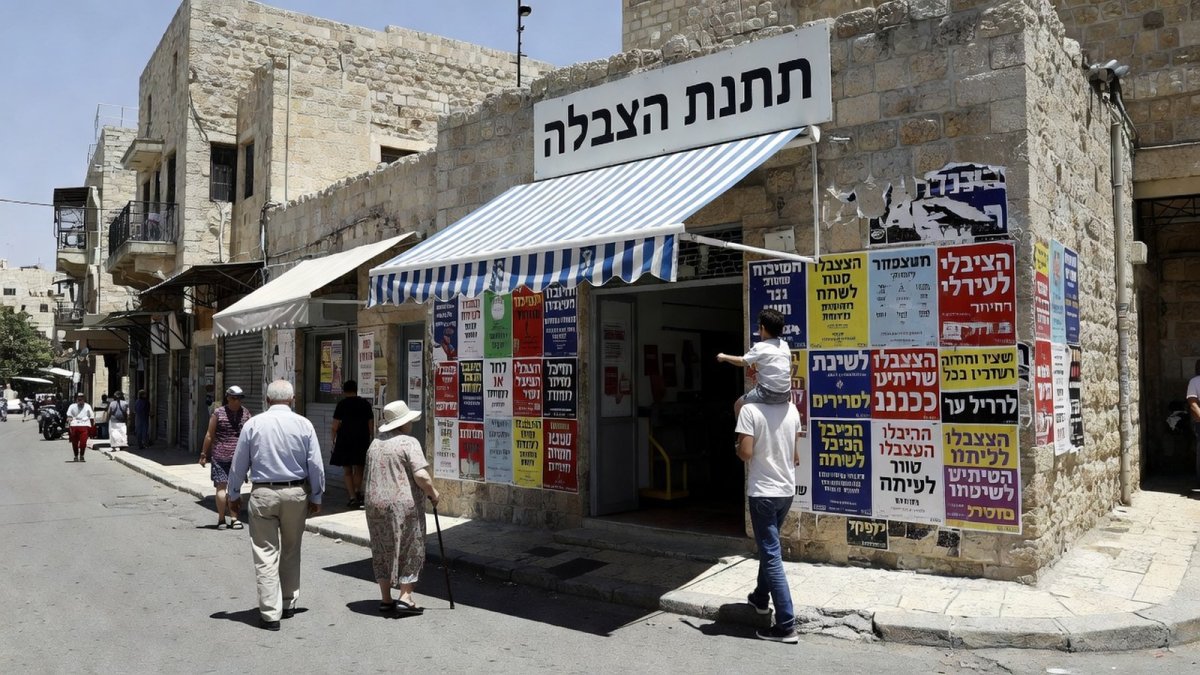
On the Ground: Voting Day
Across the country, senior Likud figures made their presence felt at polling stations. Agriculture and Food Security Minister Avi Dichter told JNS that he visited Ashkelon, Beersheva, and Jerusalem during the day, noting, "I have rarely seen so many voters at 2 p.m." He added that Likudniks "understand the importance, and this time it's something special." Culture and Sports Minister Miki Zohar framed the primary as being about "succeeding in the [Oct. 27 national] elections and returning the prime minister to the leadership of the country." Zohar also highlighted the party's internal diversity, stating that Likud "is a very diverse faction, and there is a wide range of opinions on all the topics," a diversity that "is what is beautiful about it."
Regional Cooperation Minister David Amsalem posted a photo of himself voting, calling on members: "I believe in Likud members, in their wisdom, their hearts, and in our path. We did our part with great love. Now I call on everyone who has not yet voted: Get out of the house, go to the polls, and make your voice heard." Lawmaker Amit Halevi told JNS he wants the list to work for "our real defense, our real freedom and real democracy." Knesset Speaker Amir Ohana is expected to receive a high slot, reflecting his standing within the party hierarchy. In a notable development, Yoni Yosef, grandson of Rabbi Ovadia Yosef and former Jerusalem City Council member, announced the withdrawal of his candidacy, transferring his support to attorney Yair Gabai, who is running in the Jerusalem, Judea and Samaria, and Shfela district.
The Gotliv Factor
One of the most closely watched races is that of MK Tali Gotliv, who has become one of the party's most popular figures without following the traditional Likud playbook. Gotliv does not attend Central Committee gatherings and does not cultivate local networks, yet her appeal to the party's base has made her a formidable force. The term "Gotlivism" has been coined by outgoing MK Eliyahu Revivo, who said he would not run because the system left him little chance. Her performance is seen as one of the clearest indicators of where the party's base is heading, with polls shown to Netanyahu suggesting that Gotliv's strong showing could cost the party 2-3 Knesset seats in the general elections due to her polarizing nature.
During voting on Monday, Gotliv claimed that some polling stations had ballots that did not include her name. "Attention, Likud voters! There are polling stations with fake ballots that do not include my name! Stay alert," she wrote. She added, "Likud operatives and vote brokers are hysterical over the power of the free votes. Update me directly. A polling station with a fake ballot will be disqualified." The claim, which has not been independently verified, adds another layer of tension to an already fraught process. In the race for the women's slot, Netanyahu expressed support Monday morning for Osnat Zohar, who is considered close to him. "She has worked for years on behalf of the Likud and for me. I would be happy to see her continue her work in the Knesset as well," he said. Zohar competes against Dr. Ruth Kabessa Abramson and Keren Atias Bublil.
What This Means for October 27
The stakes of this primary extend far beyond the internal party dynamics. With the general election set for October 27, 2026, the composition of Likud's list will be decisive in determining whether Netanyahu can form a governing coalition. Recent polls project Likud winning only about 22 seats, a dramatic drop from its current 40 ministers and MKs, which would leave many incumbents without a place in the next Knesset. Netanyahu's push for "a disciplined, loyal and statesmanlike list" reflects his understanding that the 2026 campaign will be fought on the party's ability to present a united front.
The broader context is inescapable. The judicial overhaul, which Karhi referenced in his comments about the High Court of Justice "simply stopping" legislation, remains a central fault line in Israeli politics. The October 7 massacre and its aftermath continue to shape security discourse, with Netanyahu's warning about Eisenkot and Golan forming a government with Arab parties tapping into deep anxieties within the Likud base. The primary results, expected later this evening, will reveal whether the party's registered members prioritize loyalty to Netanyahu's leadership or a broader appeal to the national electorate. For now, the 140,000 members who hold the party's future in their hands are making their voices heard, one ballot at a time.
By Hannah Berg, Staff Writer
This article was produced with AI-assisted research and editorial support. Reporting is based on sources cited in the article.
What's Your Reaction?
 Like
0
Like
0
 Dislike
0
Dislike
0
 Love
0
Love
0
 Funny
0
Funny
0
 Wow
0
Wow
0
 Sad
0
Sad
0
 Angry
0
Angry
0

Israel Correspondent at Global1.News. Based in Tel Aviv, covering Israeli politics, security, technology, and society. Provides balanced, deeply-sourced reporting on one of the most closely-watched regions in the world.













Comments (0)