
Liberals Sweep Three Byelections, Cementing Majority as Carney Government Passes Key Test
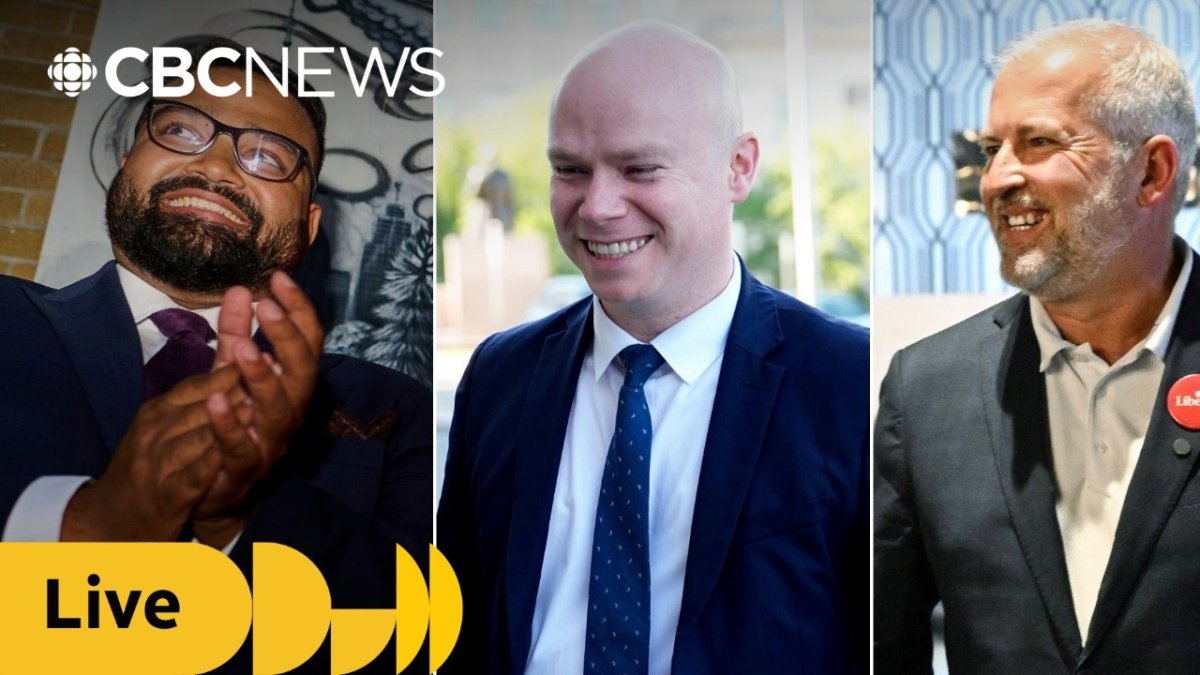
In a recent CBC News report, the Liberal Party swept all three federal byelections held Monday in Quebec, Ontario, and British Columbia, a decisive victory that cements the governing party's majority in the House of Commons and delivers a sharp rebuke to Conservative Leader Pierre Poilievre.
In a recent CBC News report, the Liberal Party swept all three federal byelections held Monday in Quebec, Ontario, and British Columbia, a decisive victory that cements the governing party's majority in the House of Commons and delivers a sharp rebuke to Conservative Leader Pierre Poilievre. The wins — in the Toronto riding of Beaches-East York, the Quebec riding of Chicoutimi-Le Fjord, and the British Columbia riding of North Vancouver-Capilano — mark the second byelection hat trick for the Liberals this year, following a similar sweep in April that first gave them a majority since 2019.
Liberals Sweep Three Byelections, Cementing Majority as Carney Government Passes Key Test
Ottawa, Ontario – Monday night — The Liberal Party has won all three federal byelections held Monday, flipping a Conservative-held seat in Quebec and holding two of its own strongholds, according to results from Elections Canada and CBC News projections. The victories ensure Prime Minister Mark Carney's government retains its majority in the House of Commons, with six more byelections expected in the coming months.
A Hat Trick in Chicoutimi-Le Fjord
The most significant Liberal win came in Chicoutimi-Le Fjord, a riding in Quebec's Saguenay region that had been held by Conservative Richard Martel, who was appointed to the Senate earlier this summer by Prime Minister Carney. The Liberal candidate, Daniel Gobeil, a dairy farmer and former head of Quebec's Dairy Farmers association, defeated his Bloc Québécois opponent Caroline Dube, a municipal worker and former political staffer, and Conservative candidate Régis Gaudreault, a longtime lawyer.
A year ago, with Martel running, the riding was nearly a three-way tie: Martel took 34 per cent, the Bloc 31 per cent, and the Liberals 31 per cent. The last time the Liberals won the riding was 2015, by less than two percentage points. Gobeil's victory marks a significant shift in a region that has often favoured the Conservatives or the Bloc in recent years.
Analysts described the Liberal margin in Chicoutimi-Le Fjord as surprisingly large, given the riding's recent history. Martel's departure to the Senate — a move orchestrated by the Prime Minister's Office — removed a well-entrenched Conservative incumbent and opened the race in a way that few anticipated. During door-knocking in the weeks leading up to the vote, Bloc MP Marilene Gill said voters in the riding repeatedly raised the spectre of U.S. President Donald Trump and the ongoing tariffs, suggesting that the trade war had penetrated even the most local of political conversations. For a region that has historically oscillated between Conservative and Bloc loyalties, the Liberal breakthrough signals that the Carney government's message of economic defence is resonating well beyond the traditional Liberal heartland of Montreal and the Gatineau.
Beaches-East York: A Safe Seat Stays Red
In Beaches-East York, one of the safest Liberal seats in Canada — red since the early 1990s except for 2011, when the NDP won it during Jack Layton's Orange Wave — Liberal candidate Tanveer Shahnawaz cruised to victory. Shahnawaz's vote share was higher than what former MP Nate Erskine-Smith won when first elected in 2015 and on par with his 2019 and 2021 results, though down from Erskine-Smith's 68 per cent last year. The NDP vote rebounded from 6.9 per cent in 2025 to above 20 per cent in 2026, with the NDP finishing second and the Conservatives third.
Shahnawaz, a former Toronto city councillor, told supporters at his watch party: "It's a great time to be a Liberal in Canada and in Beaches-East York." University-Rosedale MP Danielle Martin, who attended the event, said in a moment when Canada's sovereignty is under attack, "there can be nothing more important than continuing to work our democratic muscles."
The riding had faced a potential headwind over the proposed Billy Bishop Airport expansion, a contentious local issue that the federal government rejected last month, days before the byelection was called. That decision removed a significant irritant for voters who had been mobilising against the airport's growth, allowing the campaign to focus on national issues rather than local grievances. The NDP's improved showing, while still well short of victory, suggests the party is beginning to rebuild its urban base after a devastating 2025 result, though it remains a distant second in a riding that has been reliably Liberal for three decades. The Conservative vote share, meanwhile, was down in the riding, continuing a trend that has seen the party struggle to make inroads in Toronto's inner suburbs.
North Vancouver-Capilano: A Carney Aide Holds the Fort
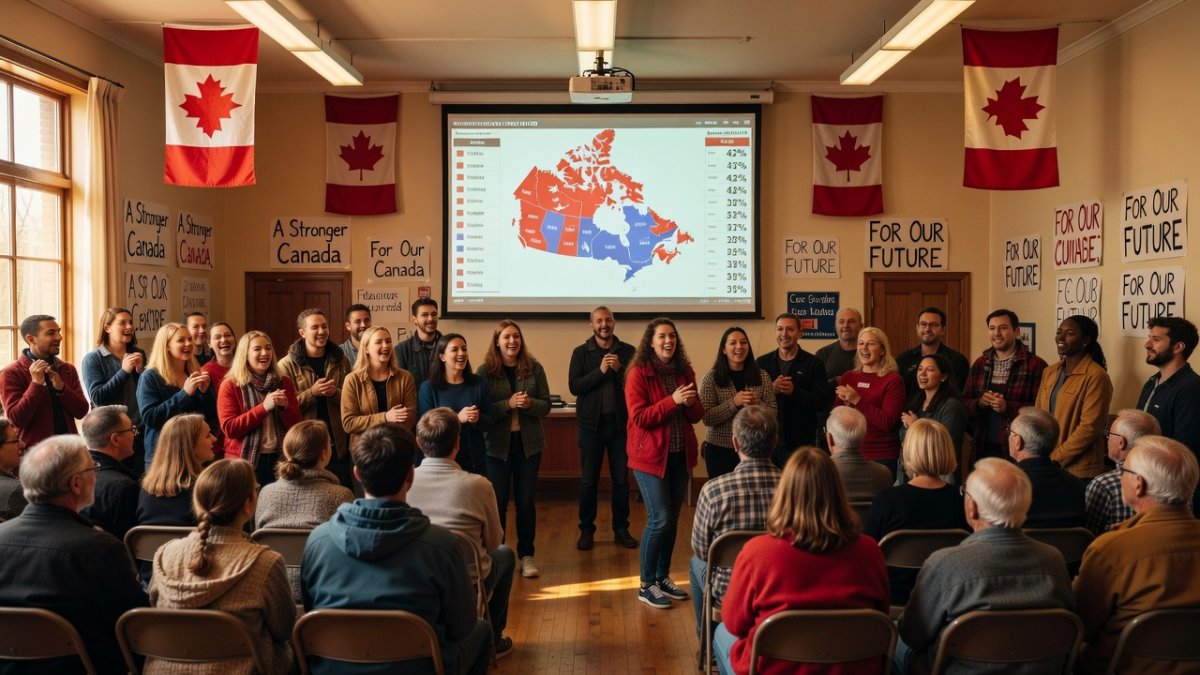
In North Vancouver-Capilano, Liberal candidate Braeden Caley, who most recently served as deputy chief of staff to Prime Minister Carney, won the riding that had been represented federally by Liberal Jonathan Wilkinson for more than a decade. Wilkinson had won four straight elections, including 59.8 per cent of the vote in 2025. The Greens finished third in the riding, a notable result in a region where environmental issues often play a significant role.
Prime Minister Carney congratulated the winners on social media, saying Caley's "values, work ethic and character" are known to him, and that Gobeil "will be a strong voice for rural Quebec and the entire agri-food sector."
Opposition parties had targeted Caley over his time living in North Vancouver, attempting to paint him as an outsider parachuted into the riding by the Prime Minister's Office. The strategy failed to gain traction, however, as Liberal MP Taleeb Noormohamed of neighbouring Vancouver Granville framed the contest in broader terms. Noormohamed said people want stability and want to send a message to Trump that "we're behind our prime minister, that we're united as Canadians and we will fight like hell in order to protect Canada." The Conservative vote share in North Vancouver-Capilano could end up lower than in 2025, according to early projections, a worrying sign for a party that had hoped to make gains in British Columbia's competitive suburban ridings.
A Test Amid a Renewed Trade War
The byelections were widely seen as a test of the Carney government amid a renewed Canada-U.S. trade war, with U.S. President Donald Trump repeatedly targeting Canada in recent online posts. The results suggest that Canadian voters are rallying behind the Liberal government in the face of external threats, a pattern that has been observed in past moments of national crisis.
Conservative Leader Pierre Poilievre's party lost a seat it had held — Chicoutimi-Le Fjord — and analysts noted the Conservative vote share was down in Beaches-East York and possibly North Vancouver-Capilano. The losses raise questions about the Conservative Party's ability to challenge the Liberals in the next general election, particularly in Quebec and urban centres.
The trade war context loomed large over the entire campaign. Trump has slammed Canada in a series of online posts in recent days, and the tariffs have become a central preoccupation for voters across the country. In Chicoutimi-Le Fjord, the issue was raised unprompted by residents during door-knocking, according to Gill, underscoring how deeply the economic conflict has penetrated everyday political consciousness. The Liberal strategy of framing the election as a choice between stability and chaos appears to have resonated, with voters in all three ridings choosing the party that has positioned itself as the defender of Canadian economic sovereignty.
Reactions on Parliament Hill
CBC's decision desk projected all three Liberal wins before midnight ET, though results were still being finalised as of early Tuesday morning. The speed of the projections reflected the decisive margins in each riding, leaving little doubt about the outcome even before all ballots were counted.
The results will be the focus of reporters' questions when Poilievre next meets the media, according to analysts who noted the Conservative vote share decline across multiple regions. The April 2026 byelections gave the Liberals majority status for the first time since 2019, and Monday's results ensure that majority holds even as vacant seats are filled. For the Bloc Québécois, the loss in Chicoutimi-Le Fjord is a setback in a region where the party had hoped to consolidate its position as the primary alternative to the Liberals in Quebec, though the party's overall seat count in the House of Commons remains unchanged.
What Happens Next
With the Liberal majority now secure, the government can turn its attention to the six byelections expected in the coming months, as well as its legislative agenda. Those contests are likely to take place this fall, providing further tests for all parties as they refine their strategies ahead of the next general election. The results also provide a boost for Carney, who has faced criticism from opposition parties over his handling of the trade file and his government's economic policies.
For Canadians, the byelections serve as a barometer of the political mood ahead of the next federal election, which is expected within the next two years. The Liberal sweep suggests that, at least for now, the party's message of stability and competence is resonating with voters across the country. The Conservative Party, meanwhile, faces a period of introspection as it seeks to understand why its message is failing to break through in key battlegrounds, particularly in Quebec and urban British Columbia. With more byelections on the horizon and a trade war that shows no signs of abating, the political landscape remains fluid — but Monday night belonged decisively to the Liberals.
By Alex Thompson, Staff Writer
This article was produced with AI-assisted research and editorial support. Reporting is based on sources cited in the article.
What's Your Reaction?
 Like
0
Like
0
 Dislike
0
Dislike
0
 Love
0
Love
0
 Funny
0
Funny
0
 Wow
0
Wow
0
 Sad
0
Sad
0
 Angry
0
Angry
0

Canada Correspondent at Global1.News. Based in Toronto, covering Canadian politics, energy, trade, and US-Canada relations. Provides the Canadian perspective on North American and global affairs.













Comments (0)