
Israeli media reports deepening rift between Netanyahu and army chief over Iran preparations ahead of elections
In the weeks leading up to Israel’s Knesset elections, a stark rift has emerged between Prime Minister Benjamin Netanyahu and Israel Defense Forces Chief of Staff Eyal Zamir.
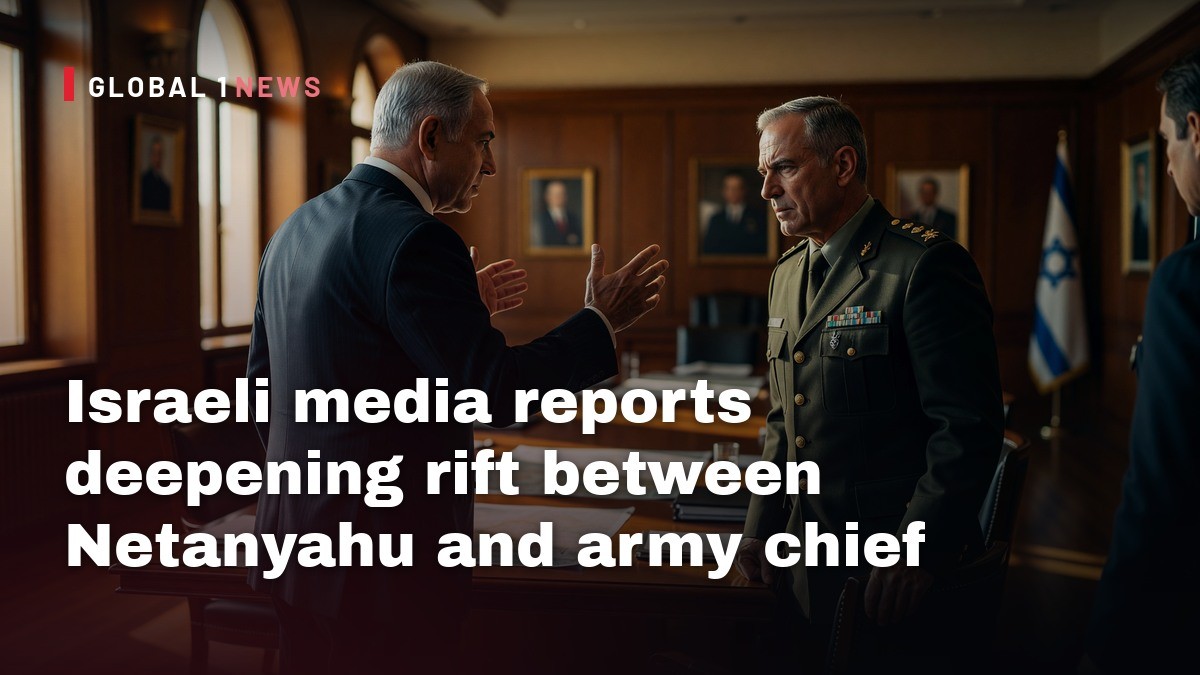
In the weeks leading up to Israel’s Knesset elections, a stark rift has emerged between Prime Minister Benjamin Netanyahu and Israel Defense Forces Chief of Staff Eyal Zamir. The disagreement, reported by Israeli television channels 12 and 13, centers on the timing and scope of military preparations aimed at Iran, and it has escalated into a political showdown that could reshape Israel’s security leadership if Netanyahu secures another term.
Background to the dispute
Netanyahu’s government has been weighing a series of preparatory steps that mirror those taken before previous confrontations with Tehran. According to three sources cited by Channel 12, the core of the disagreement does not involve an immediate strike but rather the very act of preparing for one. Zamir, who was appointed by Netanyahu to replace former chief Herzi Halevi, warned that moving forward with such preparations ahead of the election could provoke a miscalculation, potentially drawing an Iranian response that would destabilise the electoral process.
Channel 13 reported that during a closed‑door meeting, Netanyahu told senior officials, “I will fire the Chief of Staff if I win the election.” This statement, coupled with reports that Zamir may be forced out even if he does not resign voluntarily, underscores the high stakes of the internal clash.
Military versus political calculations
Zamir’s opposition is rooted in a strategic assessment of risk. He argued that the preparations, if undertaken now, could be perceived by Iran as an imminent threat, raising the likelihood of retaliation at a moment when Israel’s political system is already under strain from an upcoming vote. By contrast, Netanyahu, supported by Mossad Director Roman Gofman, Defense Minister Israel Katz, and Shin Bet Director David Zini, has framed the timeline as a matter of urgency, insisting that “time is not on our side.”
The divergence reflects a broader tension between military caution and political expediency. While the security establishment traditionally advises on operational timing, the prime minister’s willingness to override that counsel signals a shift toward politicised decision‑making in matters of national security.
Support within the security establishment
Reports indicate that Zamir’s isolation is growing among senior security figures. Channel 12 noted that the army chief appears increasingly marginalised within Israel’s senior security establishment, with key allies such as Mossad’s Roman Gofman openly backing Netanyahu’s stance. However, the picture is not uniform. Sources close to the Air Force commander Omer Tishler and Military Intelligence chief Shlomi Binder offered conflicting accounts: political sources claim they side with Netanyahu, while security sources suggest they align with Zamir.
This split highlights the fragmented nature of Israel’s security apparatus, where different branches may prioritize divergent assessments of threat and opportunity. The uncertainty surrounding the positions of Tishler and Binder adds another layer of complexity to an already volatile internal debate.
The role of legal and procedural safeguards
Zamir has reportedly demanded written authorization and a detailed briefing on any directives related to operations against Iran. The legal framework governing such high‑stakes military actions typically requires clear, documented orders to ensure accountability and to prevent unilateral decisions that could have far‑reaching consequences. The report notes that a signed document concerning a potential operation was presented to security agencies over a weekend, but it was ultimately rejected after objections from Zamir and senior Mossad officials.
The rejection raises questions about whether the procedural safeguards demanded by Zamir were met. The lack of clarity on whether the document satisfied the formal legal requirements previously requested by the army chief suggests a possible breach of established protocols, further deepening the mistrust between political leaders and the military.
Potential impact on the upcoming elections
The timing of this dispute is particularly consequential. Zamir warned that a miscalculation in the preparations could trigger an Iranian response that might disrupt the electoral process itself. If such a scenario were to unfold, it could cast a shadow over the legitimacy of the election results and fuel domestic unrest. Moreover, the public perception of a government willing to sideline military counsel in favor of political ambition could erode confidence in the ruling coalition.
Netanyahu’s declaration that he would dismiss Zamir if re‑elected adds a personal dimension to the political calculus. The prospect of a forced removal of the army chief could be viewed by voters as an attempt to consolidate power over the armed forces, a move that may influence electoral sentiment both within Israel and among the diaspora communities that closely monitor the country’s democratic health.
International legal considerations
Any Israeli military preparation aimed at Iran must be examined against the backdrop of international law, particularly the principles of proportionality and necessity that govern the use of force. While the reports do not detail the specific nature of the preparations, the fact that they are being debated at the highest political levels underscores their potential to cross thresholds that could be deemed illegal under the United Nations Charter if they lead to an unprovoked attack.
The involvement of senior security officials, including Mossad’s director and Shin Bet’s chief, indicates that the Israeli leadership is aware of the legal ramifications. However, the internal disagreement suggests that not all agencies share the same assessment of what constitutes a legitimate pre‑emptive measure, raising the risk that any unilateral move could attract international condemnation and possible sanctions.
Implications for Israel’s security posture
The clash between Netanyahu and Zamir reflects a broader dilemma facing Israel: how to balance urgent security concerns with the need for disciplined, law‑bound decision‑making. If Netanyahu proceeds with preparations without the army chief’s endorsement, it could set a precedent for future leaders to bypass military counsel, potentially eroding the professional autonomy of the IDF.
Conversely, if Zamir’s caution prevails, it may signal a re‑assertion of military prudence over political pressure, reinforcing the principle that armed forces should operate under clear, lawful directives. The outcome of this internal struggle will not only shape the immediate electoral landscape but also influence Israel’s long‑term approach to regional threats, the credibility of its democratic institutions, and its standing in the international community.
This article was produced with AI-assisted research and editorial support. Reporting is based on the source material cited below. Sources: Middle East Monitor; middleeastmonitor.com; Global1.News (27 October 2026).
By Fatima Al-Rashid, Staff Writer
What's Your Reaction?
 Like
0
 Dislike
0
 Love
0
 Funny
0
 Wow
0
 Sad
0
 Angry
0
Gulf/MENA Correspondent at Global1.News. Based in Doha, covering Gulf politics, energy markets, diplomacy, and development across the Middle East and North Africa. Tracks the economic transformation of the Gulf states.











Comments (0)