
Iran war damage to US bases may cost billions in reconstruction: Report
The war that erupted on 28 February 2026 after a series of US‑Israeli strikes on Iranian interests has now taken a heavy toll far beyond the battlefield.
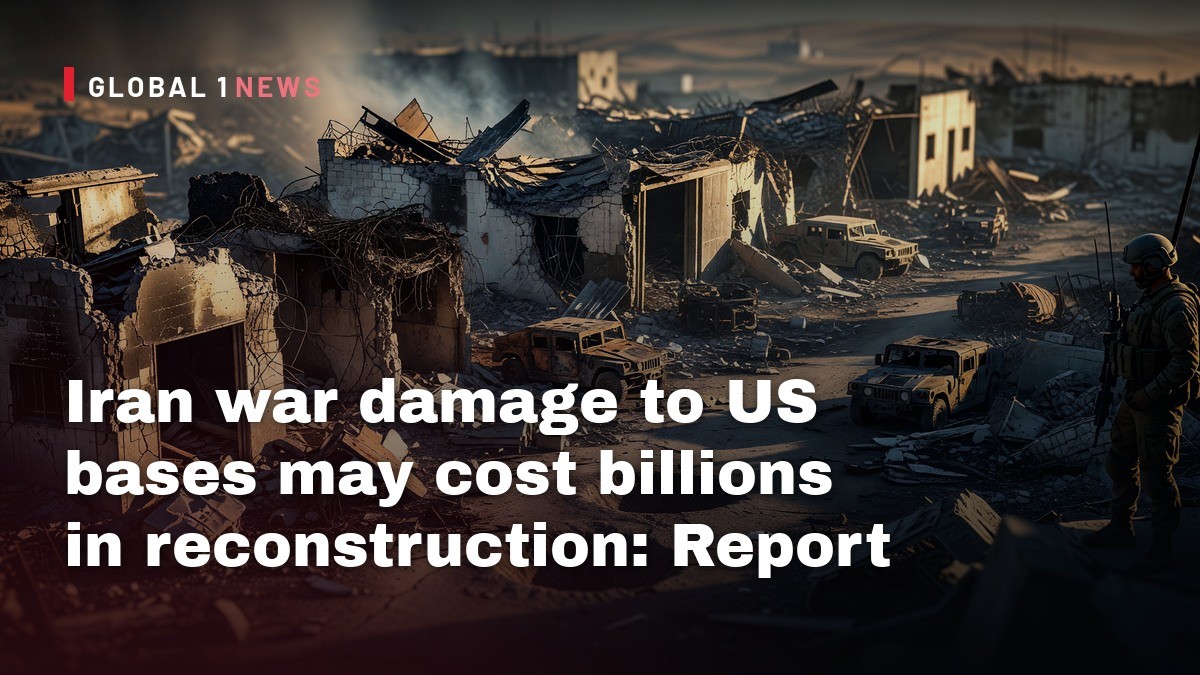
The war that erupted on 28 February 2026 after a series of US‑Israeli strikes on Iranian interests has now taken a heavy toll far beyond the battlefield. While the human cost—more than 20 American service members killed and over 400 wounded—has been widely reported, a new analysis reveals a parallel financial devastation: hundreds of U.S. military structures across the Middle East have been damaged, pushing the economic burden of the conflict into the billions. For the families of the fallen, for the soldiers who now serve amid crumbling facilities, and for the broader question of accountability under international law, these figures underscore a crisis that is both human and material.
Scale of the physical damage
Satellite imagery examined by the Wall Street Journal identified 274 structures across 24 U.S. installations that sustained damage in the first six months of the war. The analysis, which relied on high‑resolution observations, confirms that the destruction is not isolated to a single front but is spread throughout the region, affecting bases in Jordan, Bahrain, and other locations where American forces are stationed.
The most severe episode occurred on 17 July 2026 at Muwaffaq Salti Air Base in Jordan. An Iranian strike hit the base, killing three American service members and damaging at least 19 buildings, including barracks where troops sleep. The strike on the base’s sleeping quarters illustrates how the conflict has directly imperiled the safety and well‑being of soldiers, turning everyday spaces into sites of danger.
Financial estimates and their implications
The Washington‑based Center for Strategic and International Studies (CSIS) estimated that rebuilding the damaged structures alone would exceed $4 billion. This figure excludes the cost of replacing the equipment and systems housed within those buildings, suggesting that the true reconstruction bill could be considerably higher.
U.S. officials cited by the Wall Street Journal placed the Pentagon’s own estimate of base damage at a minimum of $5 billion, with the possibility of the total rising to $15 billion.
Human cost behind the numbers
Beyond the dollar signs, each damaged building represents a disruption to the daily lives of service members and the families who depend on them. The strike on Muwaffaq Salti Air Base, for example, not only claimed three lives but also rendered sleeping quarters unsafe, forcing troops to relocate to improvised shelters or to operate in compromised conditions.
The broader casualty figures—more than 20 U.S. servicemembers killed and over 400 wounded since the conflict began—highlight a pattern of escalating risk. Each injury or death reverberates through communities back home, amplifying the psychological toll on families and fellow soldiers who must continue their duties amid uncertainty and loss.
International‑law considerations
Under international humanitarian law, parties to a conflict must distinguish between military targets and civilian objects, and must take all feasible precautions to avoid or minimize incidental loss of civilian life and damage to civilian infrastructure. While U.S. bases are military installations, the presence of facilities where troops sleep raises questions about proportionality and the adequacy of protective measures.
The targeting of Muwaffaq Salti Air Base, a location that housed both operational assets and living quarters, underscores the need for a thorough legal assessment of whether the strike complied with the principle of distinction. Moreover, the repeated strikes on U.S. installations across the region could be examined under the doctrine of collective punishment if they are intended to coerce a broader political outcome beyond immediate military objectives.
Strategic ramifications for the United States
The financial strain of rebuilding damaged bases may force the United States to re‑evaluate its force posture in the Middle East. With reconstruction costs potentially reaching $15 billion, the Pentagon could face difficult budgeting choices, balancing the need to restore operational capability against competing priorities in other theaters.
Furthermore, the vulnerability of bases to missile strikes may prompt a shift toward hardened facilities, increased air‑defense systems, or even the relocation of certain assets. Such strategic adjustments, while enhancing security, could also signal a retreat or a re‑configuration of U.S. influence in the region, affecting long‑standing alliances and power dynamics.
Impact on regional stability
The destruction of U.S. infrastructure has ripple effects throughout the Middle East. Host nations that host American bases, such as Jordan, must grapple with the fallout of attacks on their soil, including potential civilian casualties, disruption of local economies, and heightened security concerns.
Iran’s willingness to strike deep into neighboring countries, as demonstrated by the July 17 attack in Jordan, raises the specter of a broader escalation. The Wall Street Journal report notes that Iran has warned the war could spread “much wider” if the United States pursues further military actions, suggesting that each strike on a U.S. base could be a calculated step toward expanding the conflict’s geographic scope.
Looking ahead: accountability and reconstruction
As the war enters its ninth month, the United States faces a dual challenge: rebuilding the physical damage while seeking accountability for the loss of life and the breach of international norms. Transparent reporting on reconstruction costs, timelines, and the safety measures to be implemented in rebuilt facilities will be essential for maintaining trust among service members and their families.
Equally important is the pursuit of diplomatic avenues that address the root causes of the conflict. The ongoing humanitarian toll—both in human lives and in the material destruction of military infrastructure—underscores the urgency of negotiations that can halt further strikes and lay the groundwork for a durable peace. Until such steps are taken, the financial figures will continue to rise, and the human cost will deepen, reminding the international community that the price of war is measured not only in dollars but in the lives forever altered by its violence.
This article was produced with AI-assisted research and editorial support. Reporting is based on the source material cited below. Sources: Middle East Monitor; middleeastmonitor.com; Global1.News (01 November 2026).
By Fatima Al-Rashid, Staff Writer
What's Your Reaction?
 Like
0
 Dislike
0
 Love
0
 Funny
0
 Wow
0
 Sad
0
 Angry
0

Gulf/MENA Correspondent at Global1.News. Based in Doha, covering Gulf politics, energy markets, diplomacy, and development across the Middle East and North Africa. Tracks the economic transformation of the Gulf states.















Comments (0)