
How Racism, Resentment and Changing Communities Fuelled Belfast Riots
The images of masked men burning homes and forcing families onto the street in Belfast this June were a visceral shock to the British public. But as a Channel 4 News investigation reveals, this was not a spontaneous explosion of violence — it was a targeted, organised pogrom, fuelled by a toxic cocktail of online incitement, paramilitary influence, and a deep-seated resentment of communities that are changing faster than many can accept.
The images of masked men burning homes and forcing families onto the street in Belfast this June were a visceral shock to the British public. But as a Channel 4 News investigation reveals, this was not a spontaneous explosion of violence — it was a targeted, organised pogrom, fuelled by a toxic cocktail of online incitement, paramilitary influence, and a deep-seated resentment of communities that are changing faster than many can accept.
How Racism, Resentment and Changing Communities Fuelled Belfast Riots
Belfast, UK – 17 June 2026 — At around 10:30pm on the evening of Sunday 8 June, a 44-year-old disabled man was set upon on Kinnaird Avenue in north Belfast. By the following night, streets across the city were alight. But the fire that consumed homes on Kinnaird Avenue and beyond was not lit by sectarian hatred between Catholic and Protestant — the historic fault line of this province. It was lit by something more sinister: a race-based pogrom targeting the newest residents of Northern Ireland.
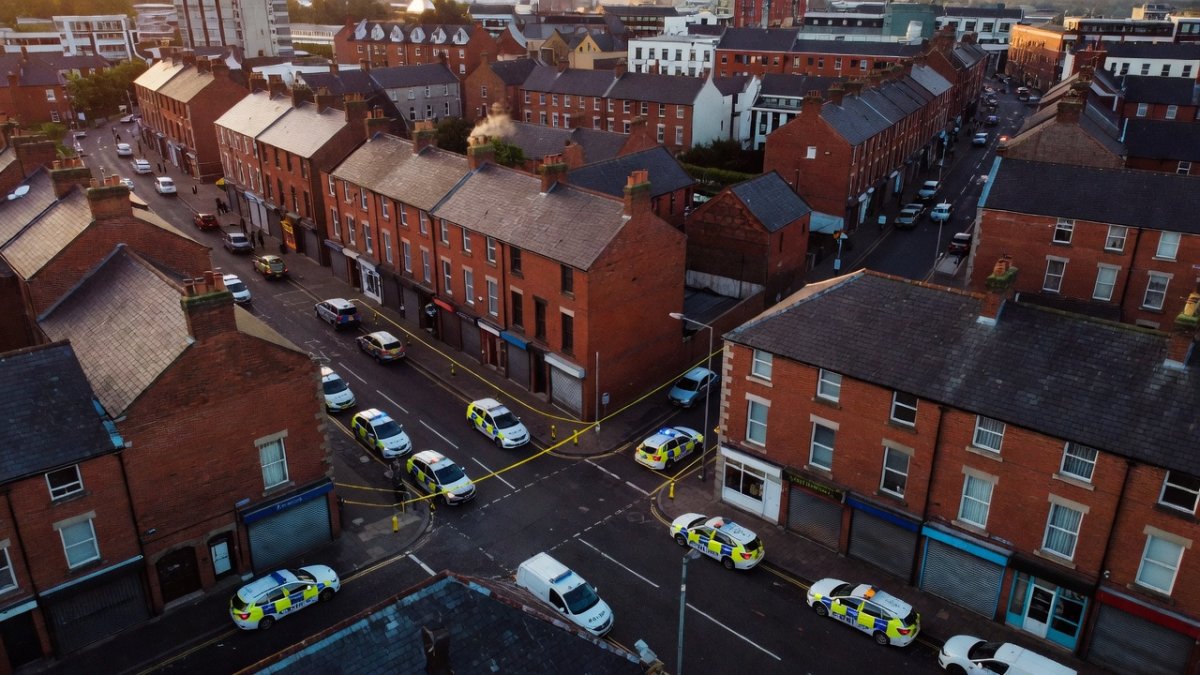
The catalyst was a brutal knife attack on 44-year-old Stephen Ogilvie, a disabled man who was set upon as he walked home. The suspect, 30-year-old Hadi Alodid — reported as Sudanese, though the PSNI is investigating the possibility he is from Chad — was granted refugee status in 2023 under a fast-track scheme after entering the UK via the Common Travel Area. He has been charged with attempted murder and remains in custody. But the violence that followed had nothing to do with justice for Mr Ogilvie. It was an excuse for a premeditated assault on the immigrant population of Belfast.
Mobs of masked men went door-to-door, attempting to identify houses occupied by foreigners. They burned homes, businesses and vehicles. A two-month-old baby was rescued from a blazing property. The chants were unambiguous: "foreigners out" and "kill all Muslims". Road checkpoints were set up by the mobs; one photographer told investigators that "some people got through the checkpoints and others didn't, depending on your skin colour". By the time the flames died down, 27 people had been made homeless — including Ugandan carers, a Ukrainian family, and a Romani family who, heartbreakingly, were being "put out" of their house for the third time.
A City Haunted by Its Past, Confronting a New Enemy
Northern Ireland is no stranger to people being burned out of their homes. The Belfast Pogrom of 1920, the 1969 riots that saw Bombay Street gutted, and the decades of loyalist paramilitary violence during the Troubles all involved the forced displacement of communities. But as author Michael Magee noted, the target has changed: "Instead of Catholics, ethnic minorities are now the target." The historical parallels are stark. Mary Lou McDonald invoked Bombay Street in the Dáil. The Irish Times called it "a race-based pogrom". The Times, more bluntly, labelled the violence "spontaneous pogroms".
This is not hyperbole. The PSNI has confirmed that 23 people were arrested by 13 June, with 17 charged. By 17 June, that number had risen to 25 arrests — and crucially, 10 of those arrested were aged 16 or under. The youngest was just 12 years old. These are children, many of whom, according to Northern Ireland Commissioner for Children and Young People Chris Quinn, were promised that their debts to paramilitary groups — drug debts, loans — would be cleared in exchange for participation in the violence. This is not spontaneous rage; this is orchestration.
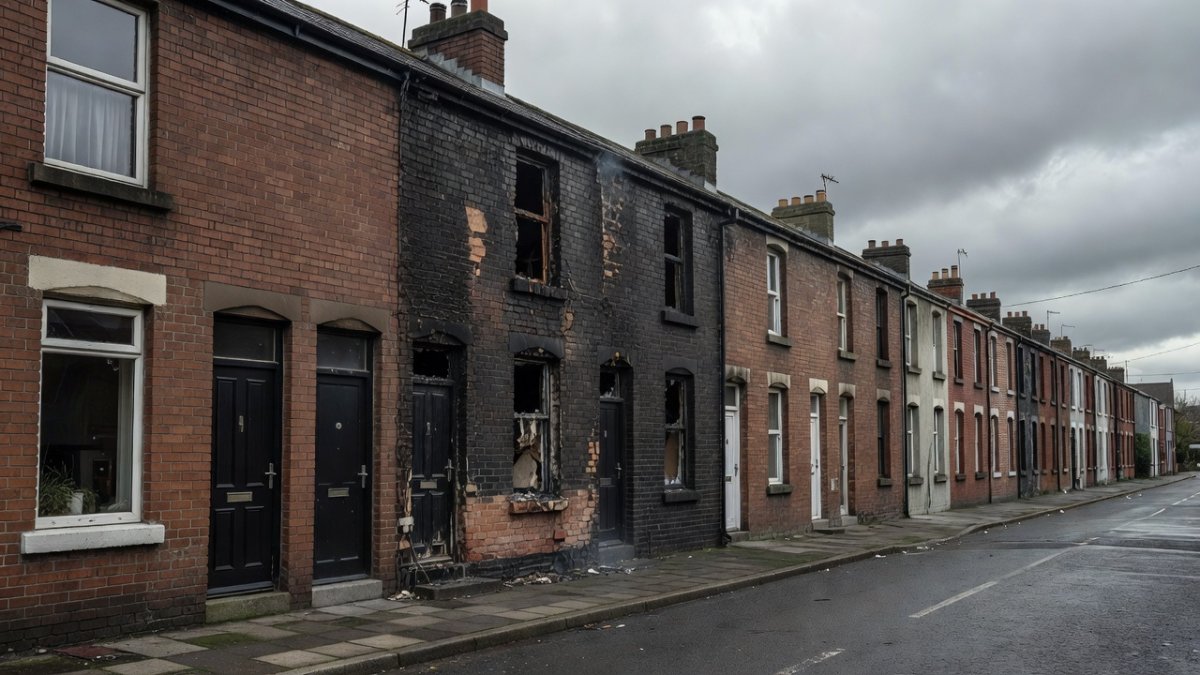
The PSNI's Chief Constable Jon Boutcher has blamed "faceless" online inciters, and the evidence supports him. On 10 June, a list of addresses in Belfast where immigrants were claimed to live began circulating on social media. The PSNI called it "totally unacceptable" and warned that sharing it "may be committing a criminal offence". Ofcom, the UK's communications regulator, wrote to online service providers the same day, reminding them of their duties under the Online Safety Act and launching investigations into several platforms.
The Online Engine Room: Musk, Robinson and the "Active Club" Network
The Channel 4 News investigation has uncovered the digital architecture of the riots. Researchers at the Center for Countering Digital Hate (CCDH) concluded that Elon Musk played an "instrumental" role in amplifying the disorder. In the days before the violence, Musk's platform X amplified content from Tommy Robinson, the far-right activist, who was announcing protest locations and sharing Restore Britain material. Rupert Lowe, the leader of Restore Britain, posted that a Restore Britain government "will put murderous third-world savages to death". This is not fringe content buried in a dark corner of the internet; this is mainstream, algorithmically-boosted incitement.
Wired magazine has reported that an "Active Club" network — a far-right fitness and street-fighting organisation — operating under the name "Ulster Youth Club" helped orchestrate the masked youths who led the door-to-door searches. This is a new model of far-right organising, one that borrows the aesthetics of paramilitarism without the historical baggage of the Troubles. It is younger, more online, and more dangerous.
The violence spread beyond Belfast. Protests erupted in Glasgow and Edinburgh, where 3 civilians and 2 police officers were injured, and in Southampton, which had already seen unrelated rioting the previous week following the arrest and murder of Henry Nowak. The PSNI deployed water cannons at the Sandyknowes roundabout in Newtownabbey and plastic bullets were fired during the disorder. Two officers were injured on 9 June, with a further 12 injured the following day. An additional 200 police officers were drafted in from Great Britain to support the stretched PSNI.
The Political Response: Condemnation and the Common Travel Area Question
The political establishment responded with rare unity. Prime Minister Sir Keir Starmer called the attack on Mr Ogilvie "abhorrent". Stormont's party leaders — Sinn Féin, the DUP, the UUP, the Alliance Party and the SDLP — issued a joint statement of condemnation. Northern Ireland Secretary Hilary Benn was unequivocal: "People being burnt out of their homes because of the colour of their skin... nothing can explain it away." First Minister Michelle O'Neill described the burning of homes as "disgusting cowardice", while Justice Minister Naomi Long insisted "there is no place for masked thugs".
But beneath the unity, a political fault line is emerging. The DUP's Gavin Robinson has criticised the "open porous border" of the Common Travel Area (CTA), which allows free movement between the UK and the Republic of Ireland. Labour Party chair Anna Turley has acknowledged there is a "live conversation" about ensuring the CTA is "not used as a back route" into the UK. The Guardian has reported that up to 90% of Ireland's asylum seekers may have entered from Northern Ireland via the CTA. This is a policy question that will not go away, and it is one that the far right is already weaponising.
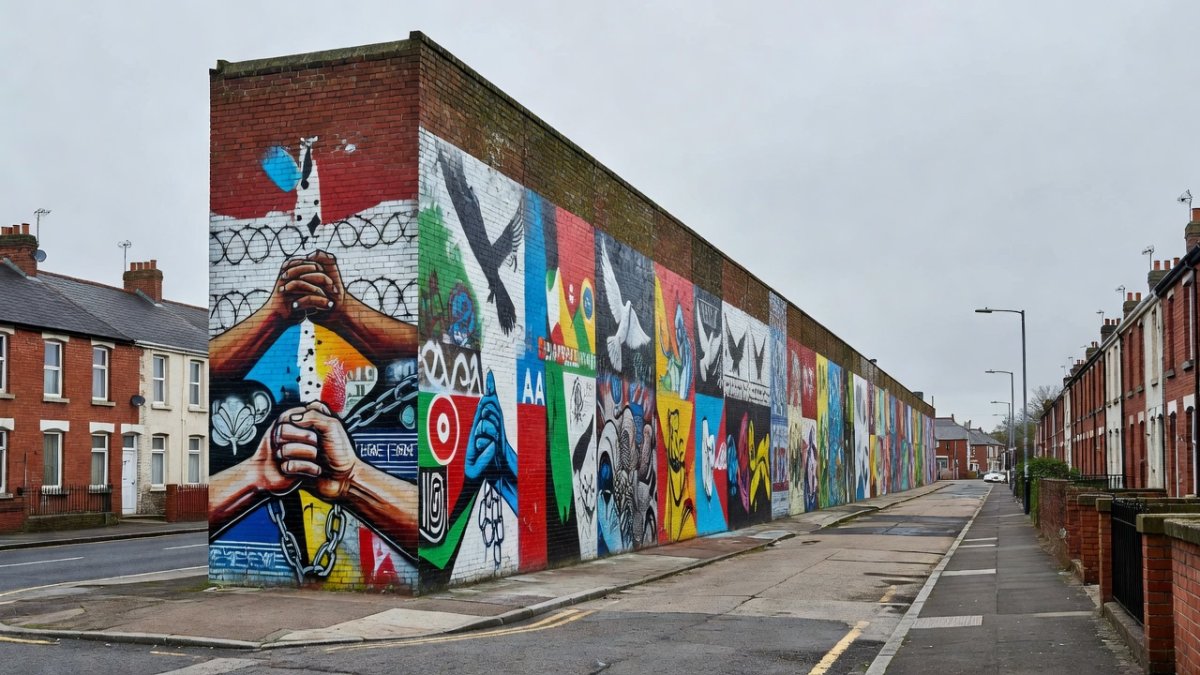
Mr Ogilvie's family, in a statement that should shame us all, urged that the attack on their loved one not be used to fuel hostility towards migrants. They noted the vital contribution migrants make to healthcare and hospitality in Northern Ireland. Stephen Ogilvie, who has lost his left eye and may lose sight in his remaining eye, remains in hospital. A fundraiser for him has raised over £30,000. A separate fundraiser for Maitiu Mág Tighearnán — the man who fought the attacker with a hurley, alongside his Portuguese friend Andre, who was first to reach Mr Ogilvie — raised over £34,000. Mág Tighearnán has donated £10,000 of that to Mr Ogilvie. These are the stories of decency that the rioters sought to drown out.
The Paramilitary Shadow: Who Was Really Directing the Violence?
The question that hangs over Belfast is whether loyalist paramilitaries — the UVF, the UDA and their successor groupings — were involved in directing the violence. Historian Aaron Edwards has noted the theories about loyalist paramilitaries "standing back" and allowing the violence to unfold. But in July 2026, PSNI Assistant Chief Constable Davy Beck told a joint Home Affairs/NI Affairs Select Committee that loyalist paramilitary members had been present and, in some cases, directed the violence. This is a chilling confirmation. The anti-immigrant symbols placed on some Twelfth of July bonfires — the annual loyalist celebration — suggest a deliberate attempt to fuse traditional sectarianism with the new politics of race.
The children involved are the most tragic element. The Northern Ireland Commissioner for Children and Young People has confirmed that children as young as 12 were recruited with promises of debt forgiveness. These are children growing up in communities that feel left behind, communities where the old certainties of the Troubles have been replaced by a new, unsettling diversity. They are being groomed by a far right that offers them a target — the immigrant — and a sense of purpose. It is a recruitment strategy that mirrors the paramilitary recruitment of the 1970s, and it is working.
The Counter-Response: Belfast's Largest Anti-Racism Gathering
But there is another Belfast, and it made itself heard. On 13 June, around 5,000 people gathered in the city centre in what has been described as the largest anti-racism gathering in Belfast's history. Crowds in Derry also turned out, carrying banners reading "Riots don't speak for Belfast" and "Belfast stands against racism". The speakers included Lord Mayor Róis-Máire Donnelly (Sinn Féin), Kate Nicholl (Alliance), Matthew O'Toole (SDLP), Gerry Carroll (People Before Profit) and Mal O'Hara (Green Party NI). It was a rare moment of cross-community unity, a reminder that the racists do not speak for the majority.
Claire Hanna MP, the SDLP's representative for South Belfast, captured the horror of the riots: "We are seeing men going door to door asking to get the foreigners out based exclusively on the colour of their skin." Her words echo the testimony of the photographer who watched the checkpoints. This was not about immigration policy or resource strain. This was about skin colour. Pure and simple.
The Bottom Line — What Comes Next
Northern Ireland is at a crossroads. The Good Friday Agreement of 1998 brought an end to the sectarian violence of the Troubles, but it did not address the underlying social and economic deprivation that fuels extremism. Now, a new form of hatred has emerged, one that targets not Catholics or Protestants, but anyone who is not white. The online incitement is not going away; Ofcom's investigations are ongoing, and the Online Safety Act will be tested in the courts. The political debate over the Common Travel Area will intensify, and the far right will continue to exploit it.
The PSNI has arrested 25 people, but the ringleaders — the faceless online inciters, the paramilitary figures who directed the violence, the Active Club organisers — remain largely at large. The children arrested — including one as young as 12 — will be dealt with by the justice system, but the adults who put them up to it are still walking the streets. The families who were burned out of their homes are still in temporary accommodation, their lives shattered by hatred they did nothing to provoke.
Stephen Ogilvie, the man whose attack sparked all of this, remains gravely injured — but his family has asked that his name not be used to justify racism. His family has pointed out that migrants work in our hospitals, our care homes, our restaurants. They are our neighbours. The question for Northern Ireland — and for the United Kingdom as a whole — is whether we will listen to Stephen Ogilvie's family, or to the masked men who burned his city. The answer will define the future of this province.
By Erica Thornton, Staff Writer
This article was produced with AI-assisted research and editorial support. Reporting is based on sources cited in the article.
What's Your Reaction?
 Like
0
Like
0
 Dislike
0
Dislike
0
 Love
0
Love
0
 Funny
0
Funny
0
 Wow
0
Wow
0
 Sad
0
Sad
0
 Angry
0
Angry
0

US Politics and Policy Correspondent at Global1.News. Based in Washington DC, covering American politics, policy, elections, and the courts. Knows how the system works and tells you what it actually means.









Comments (0)