
Count Binface declares himself 'the winning candidate who bothered to turn up' as Farage 'humiliated' in Clacton
Count Binface secured 9,455 votes in the Clacton by-election, declaring himself 'the winning candidate of the candidates who bothered to turn up' as Nigel Farage won with 22,239 votes but stayed away from the count amid disputed security claims.
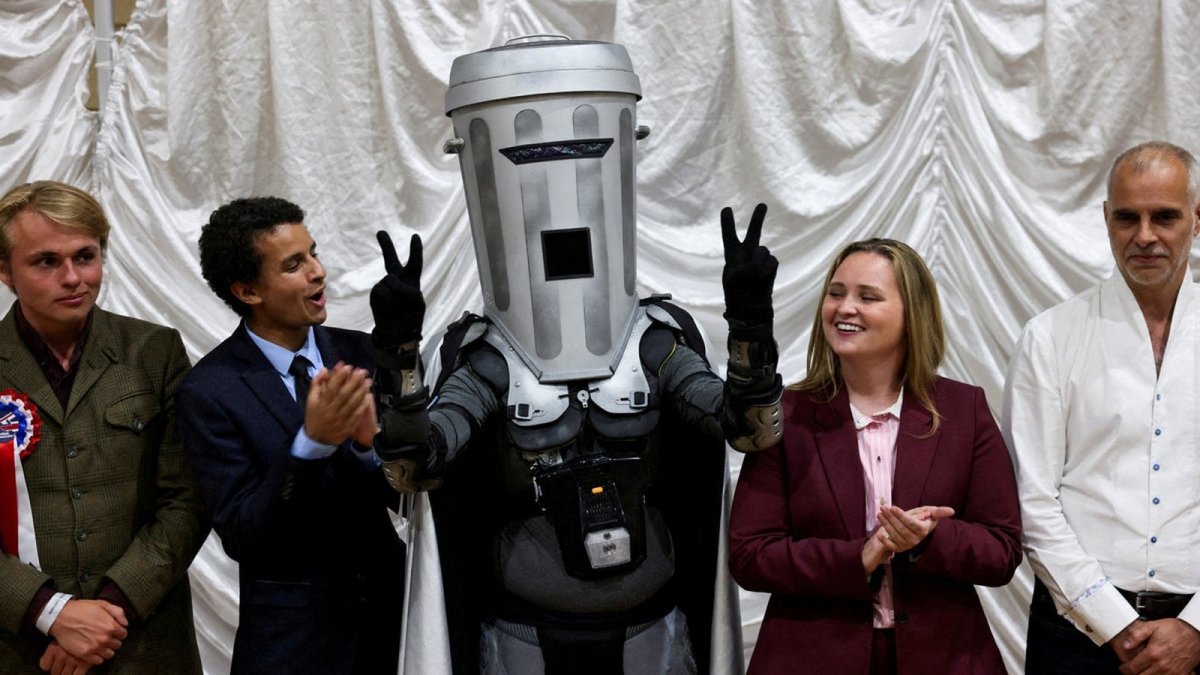
In one of the most extraordinary by-elections in modern British political history, Count Binface has declared himself “the winning candidate of the candidates who bothered to turn up for the results” after securing a stunning 9,455 votes in the Clacton contest, a result he claims has “humiliated” Nigel Farage. The joke candidate, who has become a staple of UK elections since his debut in 2019, swept up over 20 per cent of the ballot in the Essex constituency, with Mr Farage taking 22,239 votes. The result marks a seismic shift in the political landscape, with Count Binface’s vote share exceeding that of Labour, the Liberal Democrats and the Greens combined in the 2024 general election, and nearly matching the Conservative Party’s share.
A Result That Defies Political Gravity
The numbers coming out of Clacton this morning are nothing short of remarkable. Count Binface, whose real identity remains a closely guarded secret, managed to secure 9,455 votes, a figure that dwarfs his previous electoral performances. Just eight weeks ago, in the Makerfield by-election, he received a mere 95 votes. The contrast could not be starker, and the Count was quick to point out the mathematical significance of his surge. “That means I’ve got against Nigel Farage 10,000 per cent more votes than I got against Andy Burnham,” he said in a video posted to X in the wake of the results. “What does that tell you? Well, it tells you that Nigel, who said that he didn’t want to be humiliated, maybe has been.”
The result has sent shockwaves through Westminster, not least because of the sheer scale of Count Binface’s support. His 20 per cent share of the ballot is a figure that most serious political parties would envy, and it raises profound questions about the mood of the electorate in Clacton. The constituency, which has been a focal point of Reform UK’s rise, has now delivered a verdict that appears to go far beyond the usual protest vote. Count Binface, ever the showman, was characteristically effusive in his victory address. “As for me, I’m over the moon. I’m over your moon. I’m over my moons. And what comes next? Well, we shall see,” he said. “But you know what? We know this for a fact. Over one in four people in this constituency would rather have Count Binface as their MP than the leader of Reform UK, and I’m just getting started.”
The Count’s Verdict on Clacton’s Mood
For political observers, the Count’s performance is being interpreted as a damning indictment of Mr Farage’s standing in the constituency he has represented since 2024. The fact that a candidate whose platform includes policies such as making the London Underground a “loop line” and requiring all new buildings to have a “pub on the ground floor” has managed to secure the support of one in four voters suggests a deep-seated disillusionment with the political establishment. Count Binface’s success is all the more striking given that he was not even the official opposition to Mr Farage in the contest. Labour, the Liberal Democrats and the Greens all fielded candidates, yet their combined vote share fell short of the Count’s tally.
The Count’s reference to his previous contest against Andy Burnham, the Mayor of Greater Manchester, is telling. In that election, he received a paltry 95 votes, a figure that he has now surpassed by a factor of nearly 100. The implication is clear: the voters of Clacton were not simply casting a protest vote against the political system; they were delivering a specific message to Mr Farage. The Count’s assertion that he is “the winning candidate of the candidates who bothered to turn up for the results” is a pointed reference to Mr Farage’s decision to stay away from the count, a move that has sparked controversy and raised questions about the Reform UK leader’s conduct.
Farage’s Absence and the Disputed Security Claims
Mr Farage’s decision not to attend the count in Clacton has become a major story in its own right. The Reform UK MP, who forced the contest with his resignation last month amid ongoing scrutiny over his financial affairs, refused to appear at the Essex constituency’s count over disputed claims of a “credible threat” against him. Instead, he spent the entire evening at “Farage Fest”, an event several miles away in the Essex countryside, where he told supporters that police had informed him of an “organised campaign to disrupt and degrade the result”. Reform UK said overnight that police had advised him not to attend the count due to the alleged threat.
However, The Independent understands that Essex Police did not advise any candidate not to attend the count. This discrepancy has raised serious questions about the veracity of Mr Farage’s claims and has led to accusations that he was seeking to avoid the possibility of an awkward confrontation with Count Binface. The Count, for his part, has made no secret of his view that Mr Farage’s absence was a sign of weakness. By declaring himself the winner among those who “bothered to turn up”, he has effectively turned Mr Farage’s no-show into a central narrative of the by-election.
Mr Farage celebrated his win with a one-line post on X, featuring a photograph of him taken at the overnight “Farage Fest”. “The result in Clacton speaks for itself,” he wrote. But the optics of a leader celebrating a by-election victory from a countryside event while his constituency’s count took place without him are unlikely to do much to dispel the perception that he is out of touch with the voters he claims to represent.
Sir John Curtice’s Analysis: Turnout and the Reform Narrative
Pollster Sir John Curtice has provided crucial context to the result, noting that voters turned out in “numbers that are quite healthy by the standards of modern by-elections”. The turnout in Clacton stood at 44 per cent, a figure that Sir John pointed out is 10 points above what happened in David Davis’s by-election in 2008, the contest that is most similar to this one. Mr Davis won 72 per cent of the vote in that election, a figure that Mr Farage fell well short of matching. Sir John told BBC Radio 4’s Today Programme: “The argument that was being used by Farage’s opponents is this was a stunt; it was a farce, as exemplified by the fact that Count Binface was seemingly his own serious candidate.”
However, Sir John suggested that Reform UK will be able to use the turnout figures to counter this narrative. “Reform will now be able to point out not only as a result of the high turnout, the number of votes that they’ve got, but that also that evidently at 44 per cent, the turnout is 10 points above what happened in David Davis’s by-election,” he said. “It’s not much below what it was in either Runcorn or Gorton and Denton in the by-elections there, and it was actually higher than the two parliamentary by-elections in Scotland recently. Therefore, I think they will be able to argue that, for the voters at least, it is not obvious that they regarded this as a stunt or a farce. They did turn out in numbers that are quite healthy by the standards of modern by-elections.”
Sir John’s analysis suggests that while Mr Farage may have won the seat, the manner of his victory is far from convincing. The high turnout, combined with Count Binface’s extraordinary vote share, indicates that a significant portion of the electorate was motivated by a desire to send a message to the Reform UK leader. Whether that message was about his financial affairs, his leadership style, or simply a broader dissatisfaction with the political class, the result has undoubtedly weakened Mr Farage’s position.
Labour’s Response and the Wider Political Context
Labour was quick to seize on the result, with the party’s chairperson, Bridget Phillipson, issuing a blistering statement that sought to frame the by-election as a humiliation for Mr Farage. “Let’s be clear: this is no victory for Nigel Farage,” she said. “The mountain of sleaze and scandal he and Reform are now engulfed in has grown and grown while he’s been trying to distract the public by fighting a by-election against a bin. This morning, Nigel Farage shouldn’t be celebrating – he should wake up and smell the coffee. He must come clean with the public and put all the facts on the table over his secret £5 million gift, his relationship with a convicted fraudster, and the other scandals his Party is drowning in. Farage’s distraction by-election doesn’t clear his name – it just shows he likely has so much more to hide.”
Ms Phillipson’s reference to the “secret £5 million gift” and Mr Farage’s “relationship with a convicted fraudster” speaks to the ongoing scrutiny that has dogged the Reform UK leader in recent months. It was this scrutiny that prompted his resignation last month, forcing the by-election in the first place. The decision to call the contest was widely seen as an attempt to reset the political narrative, but the result suggests that the strategy may have backfired spectacularly. By allowing Count Binface to become the story of the by-election, Mr Farage has handed his opponents a gift that they are unlikely to let go of anytime soon.
A Defining Moment for UK Politics
The Clacton by-election will be remembered as a defining moment in British politics, not because of who won, but because of the extraordinary circumstances surrounding the result. Count Binface’s 9,455 votes represent a protest against the political establishment that goes far beyond the usual boundaries of joke candidacies. The fact that one in four voters in a constituency represented by the leader of Reform UK chose to back a candidate whose platform is built on satire and absurdity speaks volumes about the current state of public trust in politics.
For Mr Farage, the result is a warning that his grip on the electorate is far from secure. The high turnout, which Sir John Curtice noted was healthy by modern by-election standards, suggests that voters were engaged and motivated, yet a significant portion of them chose to back a candidate who openly mocks the political process. The disputed security claims and Mr Farage’s decision to stay away from the count have only added to the sense of chaos surrounding his leadership.
As the dust settles on this extraordinary contest, one thing is clear: the political landscape in Britain is shifting in ways that few could have predicted. Count Binface may not be taking his seat in Parliament, but his performance in Clacton has sent a message that will resonate far beyond the Essex coast. Whether Mr Farage heeds that message remains to be seen, but for now, the joke candidate has had the last laugh.
By Erica Thornton, Staff Writer
This article was produced with AI-assisted research and editorial support. Sources: The Independent, The Guardian, The New York Times, Al Jazeera.
What's Your Reaction?
 Like
0
Like
0
 Dislike
0
Dislike
0
 Love
0
Love
0
 Funny
0
Funny
0
 Wow
0
Wow
0
 Sad
0
Sad
0
 Angry
0
Angry
0

US Politics and Policy Correspondent at Global1.News. Based in Washington DC, covering American politics, policy, elections, and the courts. Knows how the system works and tells you what it actually means.











Comments (0)