
Haredi Draft Protests Erupt Over IDF Detention in Bnei Brak
In a recent i24NEWS English report, ultra-Orthodox Jews blocked roads across Israel in a coordinated protest against military conscription, escalating a national crisis that has pitted the IDF's manpower needs against the Haredi community's centuries-old tradition of Torah study.
In a recent i24NEWS English report, ultra-Orthodox Jews blocked roads across Israel in a coordinated protest against military conscription, escalating a national crisis that has pitted the IDF's manpower needs against the Haredi community's centuries-old tradition of Torah study. The demonstrations, which paralyzed traffic on Highway 4 near Bnei Brak and in Jerusalem, come as Israel's High Court of Justice weighs the fate of a controversial law that halted enlistment of most ultra-Orthodox men—legislation that has become a central battleground ahead of the October 27 elections.
Haredi Protesters Block Highways, Clash With Police Over Draft Dodger Detention
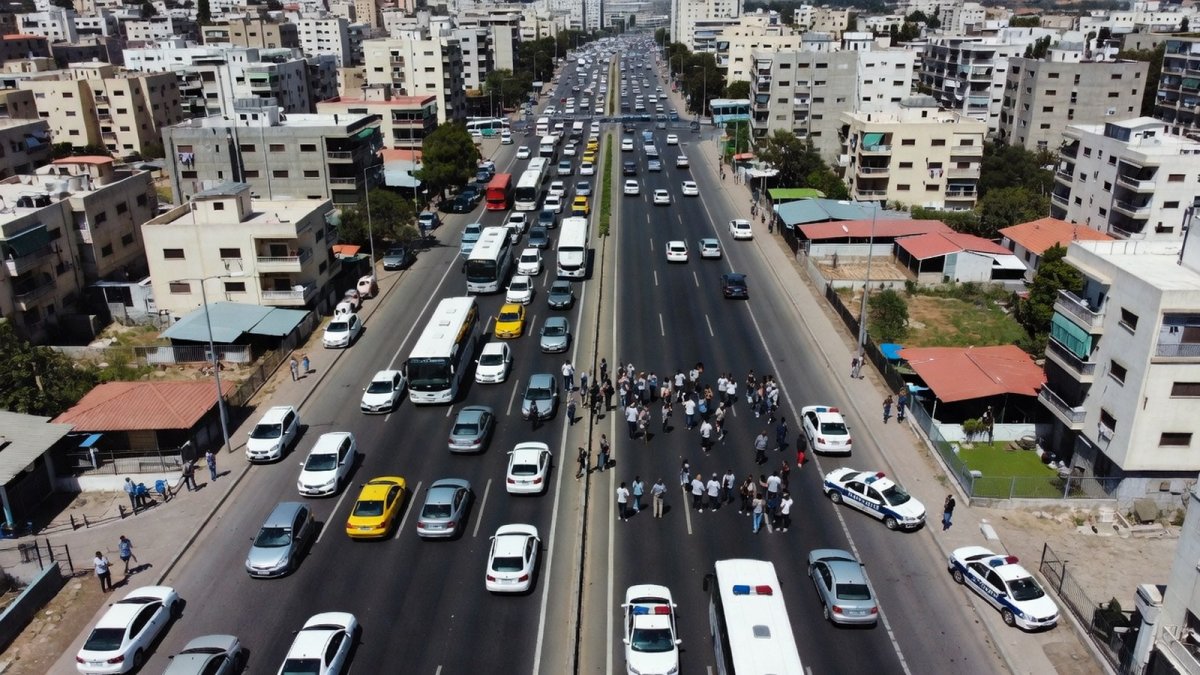
Jerusalem, Israel — Hundreds of ultra-Orthodox demonstrators blocked Highway 4 near Bnei Brak on Wednesday in protest against the detention of a draft dodger, according to N12 News. Israel Police declared the demonstration illegal later in the day, with footage showing demonstrators leaving the highway and heading into the central Haredi city. The protest, organized by the extremist ultra-Orthodox Jerusalem Faction (Peleg Yerushalmi), marked the first of its kind in several weeks, with organizers calling on adherents to "make the earth shake."
The Arrest That Sparked the Outrage
The detained Haredi man at the center of Wednesday's protest was arrested on Tuesday while exiting a police station after being questioned on an unrelated matter. A military police vehicle was waiting outside the station, Channel 12 reported, and he was transferred to a military prison. The suspect was initially summoned by Lahav 433, Israel's national fraud investigation unit, for questioning—but was transferred to the military police once it became apparent he was a draft dodger.
An organization that aids Haredi draft dodgers said the suspect was released approximately half an hour later, before the Military Police could arrive. N12 reported that after the man was arrested, word spread among the Haredi community and a large group arrived to pressure police to release the suspect. As part of preparations, Israel Police blocked off major roads in Bnei Brak, shutting down a stretch of Jabotinsky Road—which runs from Petah Tikva to Tel Aviv—and a portion of Route 4 abutting the ultra-Orthodox city from the east.
Holocaust Imagery and Political Firestorm
Protesters sat and stood in the middle of Route 4, some wearing yellow stars with the word "Haredi" emblazoned, comparing their plight to that of victims of the Holocaust. One man held a sign reading in English and Hebrew: "It was better to die as a Jew in the Holocaust than to spiritually die in IDF camps." The provocative imagery drew sharp condemnation from across the political spectrum, even as it underscored the depth of the community's opposition to conscription.
Shas MK Moshe Abutbul claimed the man, whom he described as a "yeshiva guy," had approached police to "assist" in an ongoing fraud investigation. Abutbul said he contacted Police Commissioner Insp.-Gen. Danny Levi, calling the arrest "a crossing of a red line and a serious violation of the commissioner's commitment to the Haredi public... This is not how you build trust. This is how you destroy it." The MK also sent a letter to National Security Minister Itamar Ben-Gvir demanding procedures for Haredim to file complaints with police be refined "immediately and clearly to allow haredim to file complaints at police stations without being arrested... Continuing such conduct could seriously damage public trust in the police, and cause citizens to avoid contacting them when necessary, which could cost lives."
Police disputed Abutbul's account, stating: "The suspect was summoned for questioning with a warning at Lahav 433 for serious criminal offenses... Upon learning that the suspect was wanted by the military police, a report was submitted as is customary and required." Police added that "any other publication is incorrect and intended to reinforce a biased and false narrative."
Political Reactions and the Election Battle
Yisrael Beytenu chairman Avigdor Liberman, whose party has long campaigned against blanket exemptions, mocked the demonstrators on X, suggesting they would make "great soldiers" if they can "block roads in this heat." "After October 27, they won't have time for blockades—they'll be busy putting on uniforms!" he wrote, referencing the upcoming election date. The draft crisis has become a central campaign issue, with the Knesset having dissolved on July 17 and elections mandated by October 27.
The protests come against a backdrop of intense legal and political maneuvering. The Knesset passed laws on July 14 that halted enlistment of most ultra-Orthodox men, froze arrests of draft evaders, and elevated Torah study as a foundational state value—significant concessions by Prime Minister Benjamin Netanyahu's Likud party to ultra-Orthodox politicians. However, the High Court of Justice froze the law, first temporarily on July 15, then maintained the freeze on Tuesday with a final ruling expected soon. Justice Grosskopf's interim order focused on the court's longstanding rulings on enlistment of yeshiva students and the unequal treatment the law grants to "only certain sections of the population."
Legal Challenges and the Court's Skepticism
Attorney-General Gali Baharav-Miara asked the court to strike down the law, calling it a "group immunity mechanism" that protects one sector from arrest, investigation, and prosecution while leaving other draft evaders exposed to the full force of the law. The Knesset's own legal advisers, attorney Yitzhak Bart, argued the law introduced a "new subject" unrelated to the original bill—a procedural defect so rare that annulment was warranted.
The court's skepticism was palpable during hearings. Justice David Mintz reacted incredulously when a Haredi attorney, Natan Rosenblatt of Emet L'Yaakov, argued a Haredi man could not enlist because "the Torah forbids him from doing so": "I simply cannot believe what I am hearing." Israel Hofsheet, one of the petitioners, saw its CEO Uri Keidar declare that "the attempt by the government to torpedo equality before the law and grant immunity to haredi draft evaders will not succeed." The government filed a two-page position saying the outcome was "known in advance" and accusing the court of violating separation of powers.
IDF's Manpower Crisis and National Fatigue
IDF Chief of Staff Eyal Zamir criticized the bills as "clearly and unequivocally inconsistent" with the military's needs: "It is inconceivable that the military system under my command, which demands unprecedented sacrifice from its personnel, would be party to granting mass exemptions from prosecution." The military is grappling with troop shortages after nearly three years of wars in Gaza, Lebanon, and Iran—and many Israelis have grown tired of a system that allowed ultra-Orthodox men to avoid service while reservists bear repeated call-ups.
Opposition leader Yair Lapid called the law "an utter desecration of God's name" and "spitting in the face" of Israeli soldiers. UTJ MK Moshe Gafni, the bill's sponsor, called passage historic: "For thousands of years, Torah study was the force that preserved the Jewish people." Meanwhile, PM Netanyahu reportedly told officials last week that if re-elected, he would NOT advance the contentious freeze law—saying the legislation was unsuccessful and would be discontinued in the next government, according to a KAN report. Netanyahu added that draft evaders who do not study Torah will either "enlist or go to prison."
Escalating Violence and a Community on Edge
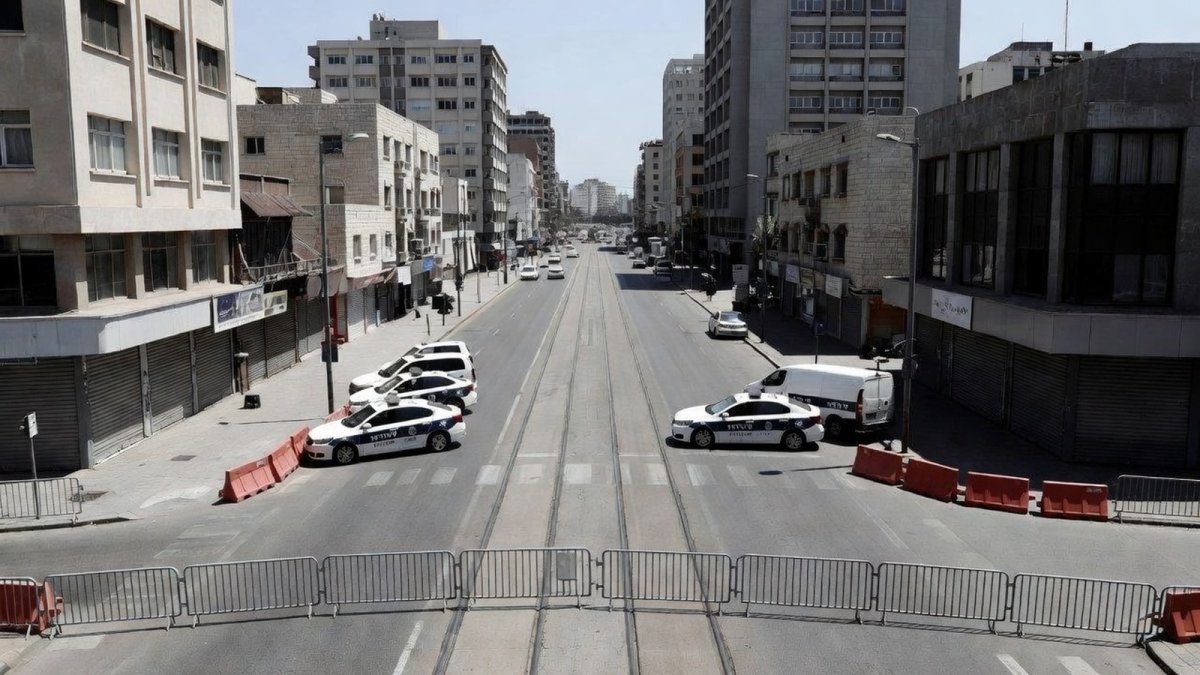
Wednesday's protest followed a series of increasingly confrontational demonstrations. On Monday evening, dozens of Haredi protesters blocked entrances and exits to Jerusalem near the Chords Bridge, forcing suspension of light rail service and closure of Begin Boulevard in both directions. Police dispersed demonstrators outside the home of the head of the Traffic Division in Jerusalem using stun grenades. At the Ganot Interchange, protesters blocked Route 4 in both directions; a soldier who got off a bus was surrounded and attacked, with police rescuing him using riot dispersal measures. The radical Jerusalem Faction also held a protest at the Mazleg Junction near Netivot.
The unrest has not been without tragedy. Last month, a teenage boy was killed after a bus drove into a crowd at a Haredi anti-draft protest. In June, protests erupted outside the Bet Lid military prison in Kfar Yona over detention of draft evaders. The Dispatch's analysis suggests the military crisis is threatening to unseat Netanyahu, with calls to reverse blanket exemptions growing amid the IDF's appeal for manpower. Roughly 13,000 ultra-Orthodox men reach conscription age of 18 each year, but less than 10% enlist, according to a parliamentary committee—a disparity that has become untenable for many Israelis after years of war.
The exemptions date to Israel's 1948 founding, and the Supreme Court has repeatedly ruled them illegal. Yet the political calculus has long protected the status quo. Now, with the High Court poised to rule on the freeze law and elections weeks away, the streets of Bnei Brak and Jerusalem have become the frontline of a battle over the very character of the Jewish state—one that pits equality of burden against the preservation of a way of life. As the Jerusalem Faction's call to "make the earth shake" reverberates through the community, and as the IDF demands the manpower to sustain its wars, Israel faces a reckoning that no election result may fully resolve.
By Hannah Berg, Staff Writer
This article was produced with AI-assisted research and editorial support. Reporting is based on sources cited in the article.
What's Your Reaction?
 Like
0
Like
0
 Dislike
0
Dislike
0
 Love
0
Love
0
 Funny
0
Funny
0
 Wow
0
Wow
0
 Sad
0
Sad
0
 Angry
0
Angry
0
Israel Correspondent at Global1.News. Based in Tel Aviv, covering Israeli politics, security, technology, and society. Provides balanced, deeply-sourced reporting on one of the most closely-watched regions in the world.












Comments (0)