
Haiti extradites 18 suspects in assassination of president to US
The flight of eighteen suspects from Haiti to Miami marks a new chapter in a saga that has haunted the Caribbean nation for half a decade. The men, most of them former Colombian soldiers, are now slated to face U.S.
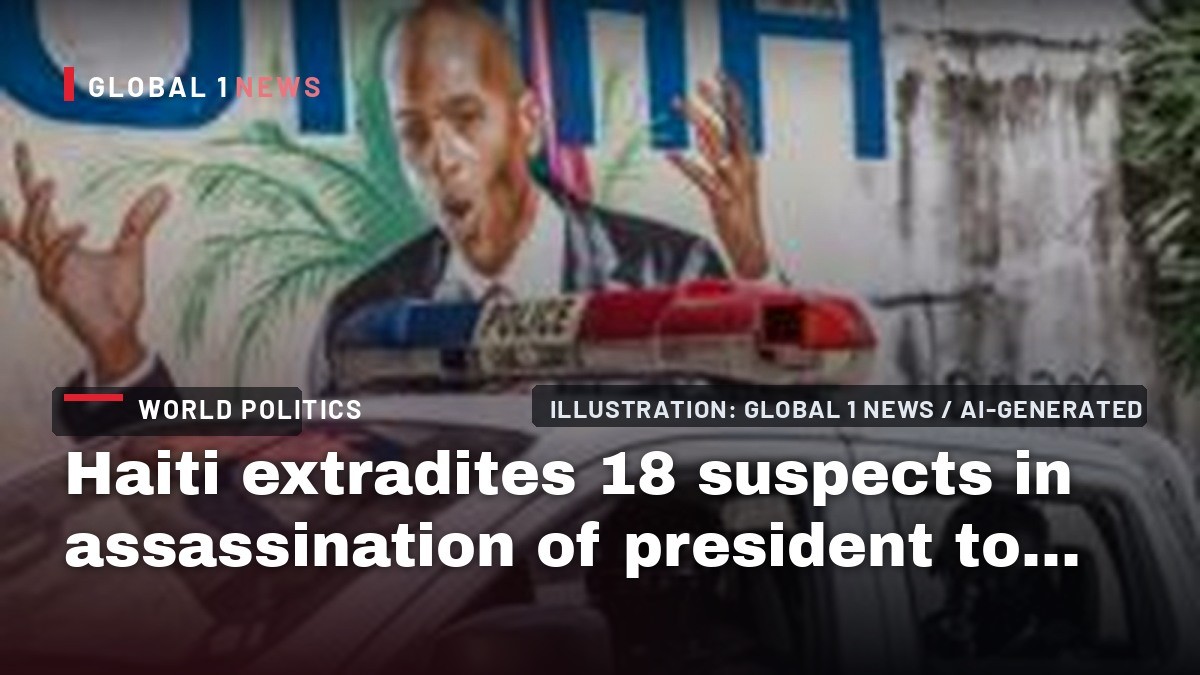
The flight of eighteen suspects from Haiti to Miami marks a new chapter in a saga that has haunted the Caribbean nation for half a decade. The men, most of them former Colombian soldiers, are now slated to face U.S. courts for their alleged role in the killing of President Jovenel Moïse, a crime that shattered Haiti’s fragile post‑earthquake recovery and set off a wave of gang violence that still grips the country. While the extradition offers a glimmer of accountability, it also underscores the deep‑seated challenges that have left Haiti’s own justice system in ruins and forced foreign prosecutors to step in.
The assassination and its immediate fallout
On a July night in 2021, gunmen stormed the private residence of President Moïse in Port‑au‑Prince, opening fire in his bedroom. The 53‑year‑old leader fell dead, and the attack sent shockwaves through a nation already reeling from political instability and natural disasters. The brutality of the act, carried out with apparent ease, left many Haitians bewildered and fearful, as the nation’s security forces seemed powerless to prevent the breach.
Early investigations pointed to a contingent of mainly Colombian mercenaries, a claim that has persisted despite the chaos that followed. The murder not only removed a head of state but also opened a vacuum that gangs quickly filled, plunging Haiti into a period of lawlessness that has persisted ever since.
U.S. involvement and the road to extradition
U.S. prosecutors have taken the lead in pursuing the case, citing the dire state of Haiti’s justice system. According to the Southern District of Florida, the planning and financing of the assassination were orchestrated from Florida, the Dominican Republic, and Haiti itself. This transnational dimension prompted U.S. authorities to bring the suspects to Miami, where they can be tried under American law.
Jason Reding Quiñones, the U.S. Attorney for the Southern District of Florida, framed the extradition as “the next major phase in our pursuit of accountability.” He noted that thirty suspects have been indicted so far, and that the effort to bring them before American courts is ongoing. The FBI’s involvement, highlighted by special agent Brett Skiles, emphasized the “multi‑location and international arrests” that underline the agency’s commitment to the case.
The composition of the extradited group
Among the eighteen individuals flown to Miami were seventeen former Colombian soldiers and Joseph Badio, a senior official from the former Haitian government who once worked in an anti‑corruption unit within the justice ministry. The presence of a former Haitian official alongside foreign mercenaries illustrates the tangled web of local and external actors implicated in the plot.
A Miami‑based security firm has been accused of facilitating the hiring of the Colombian ex‑soldiers, suggesting that private contractors played a pivotal role in assembling the hit squad. The former soldiers have claimed they were misled into believing they were participating in a coup, not a presidential assassination, a defense that will be tested in U.S. courts.
Legal proceedings in the United States
Four men were already convicted in a Miami court in May for their part in the conspiracy, facing potential life sentences. The charges against the newly extradited suspects include conspiracy to kill or kidnap President Moïse and conspiracy to provide material support for the killing. These serious offenses carry the possibility of life imprisonment, reflecting the gravity with which U.S. prosecutors view the crime.
The legal strategy hinges on the claim that the plot was financed and coordinated from Miami, linking the city directly to the orchestration of the murder. By anchoring the case in American jurisdiction, prosecutors aim to sidestep Haiti’s dysfunctional courts and deliver a verdict that carries international weight.
The human toll of Haiti’s ongoing violence
Since the assassination, Haiti has been engulfed in a wave of gang violence that has claimed thousands of lives. The United Nations Integrated Office in Haiti reported that from April through June of this year alone, at least 1,408 people were killed and 656 injured. The figures illustrate a grim reality: the murder of a president has translated into a broader crisis of security, with ordinary citizens bearing the brunt of the carnage.
Rural areas have not been spared. Recent attacks have left at least sixteen people dead and forced thousands from their homes. The displacement crisis adds another layer of humanitarian distress, as families flee gang‑controlled territories in search of safety, often ending up in overcrowded camps with limited access to basic services.
Political implications and the looming elections
Haiti is preparing to hold its first presidential and legislative elections since 2016 on December 13, 2026, provided the security situation permits. The elections represent a potential turning point, offering a chance to restore democratic governance after years of turmoil. However, the specter of gang violence and the fragile state of public order cast doubt on whether citizens will be able to vote freely and safely.
The extradition of the suspects may influence public perception of justice and accountability. If the U.S. trials result in convictions, they could be seen as a step toward redressing the trauma of Moïse’s murder. Yet, reliance on foreign courts also highlights Haiti’s inability to prosecute such crimes domestically, a reality that fuels resentment toward external intervention.
Looking ahead: justice, sovereignty, and the quest for stability
The Miami proceedings will test the balance between delivering justice and respecting Haitian sovereignty. While the United States has stepped in to fill a judicial vacuum, the episode raises questions about the long‑term capacity of Haiti to handle high‑profile cases without external assistance. The involvement of a Miami‑based security firm and the alleged financing from Florida also point to a broader pattern of transnational criminal networks exploiting the region’s instability.
For Haitians, the hope is that the trials will bring closure to a painful chapter and signal that even the most powerful actors can be held accountable. For the international community, the case serves as a reminder that interventions must be carefully calibrated: too little, and impunity reigns; too much, and the narrative of foreign dominance deepens. As Haiti approaches its December elections, the outcome of these trials may shape the nation’s path toward a more secure and sovereign future.
This article was produced with AI-assisted research and editorial support. Reporting is based on the source material cited below. Sources: BBC News Latin America; bbc.co.uk; Global1.News (22 September 2026).
By Elena Vasquez, Staff Writer
What's Your Reaction?
 Like
0
Like
0
 Dislike
0
Dislike
0
 Love
0
Love
0
 Funny
0
Funny
0
 Wow
0
Wow
0
 Sad
0
Sad
0
 Angry
0
Angry
0

Latin America Correspondent at Global1.News. Based in Mexico City, covering politics, economics, energy, and culture across the region. Brings an on-the-ground perspective to stories spanning from the Rio Grande to Patagonia.













Comments (0)