
Greenland Issues Strong Warning as Trump-Linked Texas Oil Firm Lands Drilling Gear Without Permits
An American oil company with ties to President Donald Trump has effectively dared Greenland's government to stop it — landing drilling equipment on Arctic shores without the permits it needs, while the president publicly looms over the island in AI-generated posts.
An American oil company with ties to President Donald Trump has effectively dared Greenland's government to stop it — landing drilling equipment on Arctic shores without the permits it needs, while the president publicly looms over the island in AI-generated posts. This is not just an energy story; it is the sharpest test yet of Greenland's sovereignty against Trump's annexation ambitions.
Trump-Circle Oil Firm Sparks Arctic Sovereignty Showdown
Nuuk, Greenland — Article continues...
The Warning That Shook Nuuk
Greenland's government, the Naalakkersuisut, issued a "strong warning" on July 30, 2026, to Greenland Energy, a Texas-based company established in 2025 with direct links to President Trump's political circle. The warning, delivered through the Ministry of Trade and Mineral Resources' Department of Industry and Minerals, came after the company brought drilling equipment ashore on Greenland's remote eastern coast without securing final approval from the mineral resources authority.
The government's statement was unambiguous: "A strong warning will be sent to the licensee with a warning that all future logistical matters must be advised and approved by the mineral resources authority – before they are carried out." The rebuke marked a rare public confrontation between the semi-autonomous Danish territory and an American company operating in one of the most geopolitically sensitive regions on Earth.
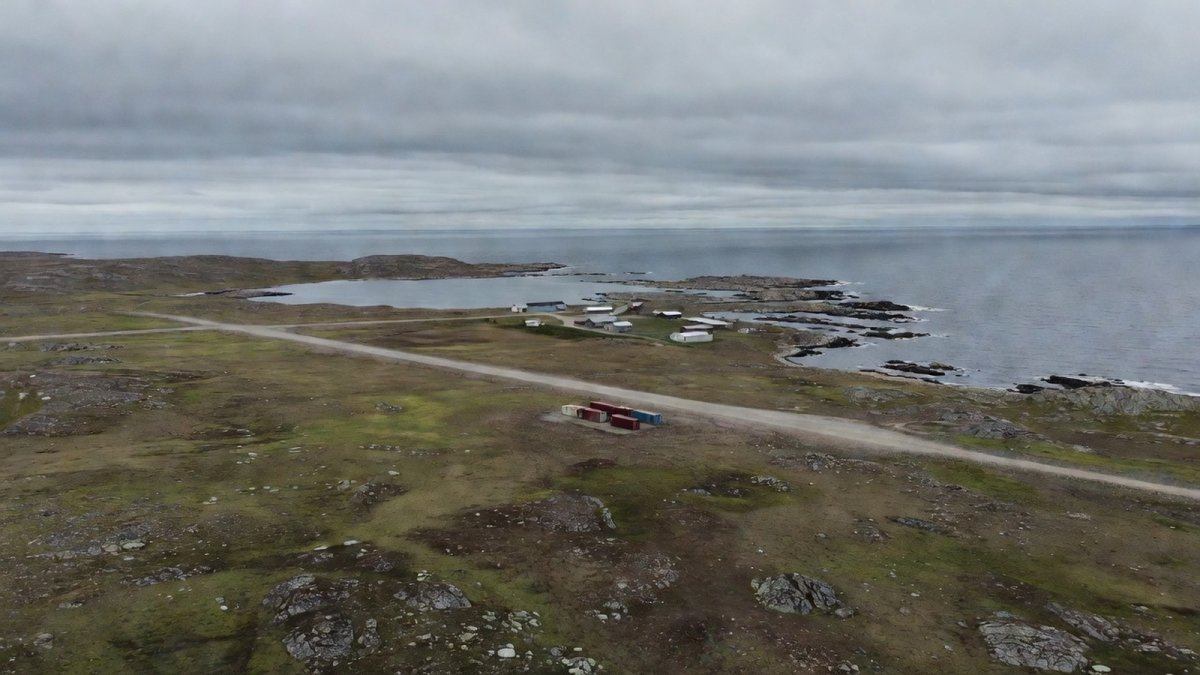
Officials confirmed that no approval had been granted to land the equipment. However, they also acknowledged that it "would not be proportionate" to demand the gear be shipped back. Instead, the equipment will be stored at Nerlerit Inaat airport and will not be moved further until all approvals are in place. The decision reflects the delicate balancing act facing Greenland's leaders as they navigate pressure from Washington, Copenhagen, and their own constituents.
Who Is Behind Greenland Energy?
Greenland Energy is chaired by Larry Swets, a significant shareholder described as enjoying access to Trump's inner circle. The company was established in 2025, and its rapid entry into Greenland's oil sector has raised eyebrows among observers who see the timing as more than coincidental. Swets has publicly stated that the oil project is "not related to American annexation," a claim that many in Nuuk view with skepticism.
The company's operational strategy has been aggressive from the start. In late July 2026, local residents in the Jameson Land region, known locally as Nunap Qeqqa, spotted a tug pulling a barge shorewards, unloading a dozen containers of drilling equipment. Danish investigative outlet Danwatch quoted the shipping company's head confirming the delivery was for Greenland Energy — a delivery made without the necessary permits.
Adding to the controversy, the company has retained Phil McGraw, the prominent rightwing former talkshow host known as "Dr Phil" who served on Trump's religious freedom commission, to produce a documentary series that will "capture the mission of these modern-day wildcatters." The company has also appointed as a director a US Navy veteran working on Golden Dome, the missile defense plan for which Trump says controlling Greenland is "vital."
The License Maze Behind the Standoff
The legal situation is complex. White Flame Energy A/S, owned by British firm 80 Mile PLC, holds three oil exploration licenses for the Nunap Qeqqa and Jameson Land area. These permits were issued before 2021 and remain valid until 2028. Greenland stopped granting new oil and gas exploration permits in 2021 over climate and environmental concerns, but existing permits remain valid due to the legal complexity of revocation.
White Flame had received permission in 2025 to move a small amount of equipment from Tasiilaq, but bad weather prevented the move before the approval expired in December 2025. The company reapplied in 2026, and that application is still being processed. Despite this, the equipment was moved anyway from Tasiilaq to Nerlerit Inaat — a direct violation of the permitting process that triggered the government's warning.
Greenland Energy acquired the right to earn a majority stake of up to 70 percent in the project from 80 Mile by funding exploration, with 80 Mile retaining 30 percent. This arrangement gives the Texas company effective operational control while the British firm maintains a financial interest in any eventual production.
Trillion-Dollar Claims Meet Arctic Reality
Company executives have claimed that up to $1 trillion of crude may lie beneath Jameson Land, a figure that has been met with considerable skepticism from geologists and industry analysts. The company had planned to spend approximately $60 million on two exploratory wells, but has now scaled back to a single well for the 2026-2027 winter season — a reduction that some interpret as a sign of financial strain or regulatory caution.
The Greenland government has made clear that commercial quantities of oil at Jameson Land have not yet been determined. Technical approvals, environmental and social impact assessments, and public consultations all still must be completed before drilling can be approved. These are not mere formalities; they represent the core of Greenland's regulatory framework for resource extraction.
Adding another layer of complication, the planned wells may fall within a conservation area protected by the Ramsar convention on wetlands. This international treaty obligation could provide the government with additional legal grounds to restrict drilling, though it also raises the stakes for any approval that does come through.
A Pattern of Overreach and Confusion
This is not the first time Greenland Energy has stepped over the line. In June 2026, a company representative falsely claimed at a Jameson Land community meeting that the company had permission to land equipment. When confronted, Swets offered a telling explanation: "Our enthusiasm for the project led us to communicate in a way that created confusion."
The pattern of overreach has not gone unnoticed in Nuuk or Copenhagen. Two days after the government's rebuke, Trump posted an AI-generated image on Truth Social showing a giant Trump looming over a Greenlandic village with the caption "Hello, Greenland!" The timing appeared designed to pressure Greenland's leaders, though the company has insisted its operations are separate from presidential politics.
In an August 6, 2026 shareholder letter, the company struck a more conciliatory tone: "Recent high-level meetings between project leadership and Greenlandic regulatory and oversight authorities have been constructive, and we continue to be encouraged by the progress being made toward the remaining approvals required for drilling." Whether this optimism is justified remains to be seen.
The Geopolitical Tightrope
Greenland is a semi-autonomous territory of the Kingdom of Denmark, and decisions on natural resources rest with its local elected leaders. They face a delicate choice: grant permission or refuse — with some worrying that refusal gives Trump a pretext to advance annexation ambitions. Trump in January 2025 declined to rule out using military force to take Greenland, saying the US needed the territory "for national security purposes."
Since then, Trump has moderated his rhetoric but continues to call Greenland "vital" to Golden Dome, the missile defense initiative. Danish Prime Minister Mette Frederiksen has warned that US aggression would spell the end of NATO, a statement that underscores the alliance-shattering stakes of the current standoff. Greenland's strategic location between North America and Europe makes it central to both Arctic security and transatlantic defense.
The company's appointment of a Golden Dome-linked director only deepens the perception that this oil project is intertwined with broader US strategic interests. For Greenland's leaders, every decision about drilling permits now carries implications far beyond energy policy.
What Happens Next
According to a Newsmax report, approximately 300 containers of drilling equipment are expected to ship from Canada on September 12, with drilling targeted for October if approvals are secured. That timeline is ambitious, given that the government has stated that technical approvals, environmental and social impact assessments, and public consultations still must be completed.
The equipment currently stored at Nerlerit Inaat airport represents a physical test of Greenland's regulatory authority. If the government holds firm, the gear stays put until proper approvals are granted. If it caves to pressure, the precedent could open the door to further violations by other companies eager to exploit Greenland's resources.
Greenland Energy has declined to respond to questions from The Guardian, leaving observers to speculate about its next moves. The company's aggressive tactics suggest it believes time is on its side — that political pressure from Washington will eventually force Nuuk to capitulate. But Greenland's leaders have shown a willingness to push back, and the strong warning issued on July 30 suggests they are not easily intimidated.
The Stakes for Arctic Governance
This confrontation is being watched closely across the Arctic, where climate change is opening new shipping routes and resource opportunities. Greenland's decision to stop granting new exploration permits in 2021 was hailed as a landmark environmental move, but the existing licenses and the aggressive tactics of Greenland Energy threaten to undermine that legacy.
The Ramsar convention issue adds a legal dimension that could prove decisive. If the planned wells fall within a protected wetland area, the government may have international obligations that prevent approval regardless of political pressure. Environmental groups are likely to seize on this angle in the coming weeks.
For now, the equipment sits at Nerlerit Inaat airport, a monument to corporate ambition and regulatory tension. The September 12 shipment from Canada looms, and the October drilling target remains on the table. Greenland's government has drawn a line in the Arctic ice — the question is whether it will hold.
By Jessica Ali, Staff Writer
This article was produced with AI-assisted research and editorial support. Sources: The Guardian, UPI, Eye on the Arctic (RCI), Telegraph, Danwatch, PressTV.
What's Your Reaction?
 Like
0
Like
0
 Dislike
0
Dislike
0
 Love
0
Love
0
 Funny
0
Funny
0
 Wow
0
Wow
0
 Sad
0
Sad
0
 Angry
0
Angry
0

Editor-in-Chief at Global1.News. Atlanta-based journalist who cuts through the BS and tells it like it is. Lead anchor, host, and the voice you hear when the spin stops and the truth starts.













Comments (0)