
French rescue operation picks up 140 migrants attempting Channel crossing
Around 140 migrants were picked up by a French maritime rescue operation after a night-time attempt to cross the English Channel, in an ordeal that saw groups stranded by the tide and 82 people refuse to board a dinghy in bad weather, with one child treated for hypothermia.
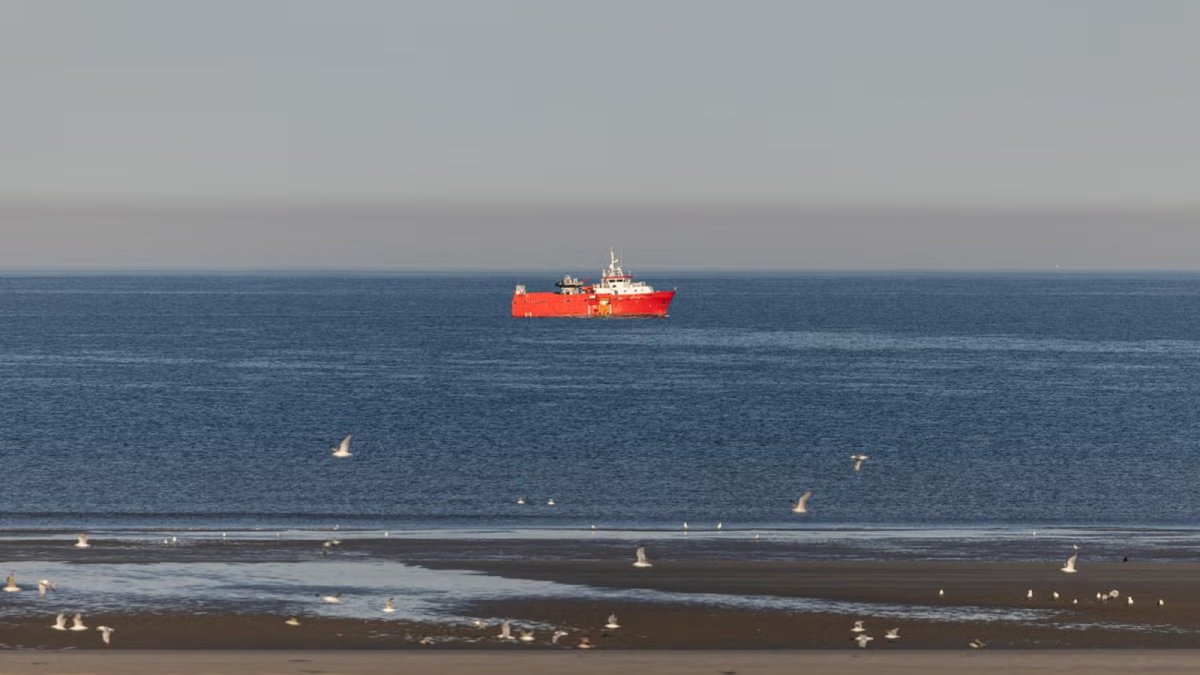
Around 140 migrants attempting to cross the English Channel to the UK were picked up by a French maritime rescue operation in the early hours of Saturday morning, after a night-time ordeal that saw them stranded by tides, refusing assistance, and ultimately abandoning their vessel.
London, UK — The complex operation, which deployed a number of rescue boats, began on Friday morning when the monitoring station in Saint-Aubin-sur-Mer spotted a migrant boat heading towards Dieppe, a fishing port on the Normandy coast. Two patrol boats were then used to track the vessel as it made its way up to the Pas de Calais, the French authorities said on Saturday.
A Night of Strandings and Refusals
The sequence of events, detailed by the French maritime prefecture, paints a picture of chaos and desperation unfolding over several hours. Late on Friday, around 40 people were waiting in the water off the coast near Berck-sur-Mer for what the authorities described as a 'taxi-boat'. Lifeboats monitored them, fearing they would be stranded by the tide, the maritime prefecture explained. And when they did become stranded, they were taken to the beach to be met by the fire and rescue service.
The boat then resumed its northward journey at around 1am, and reached another beach where 82 people were wearing life-jackets waiting to board. At this time, there were around 20 people already on board the small boat, the prefecture said. Those waiting for the dinghy decided against boarding due to bad weather, and were again met by French rescuers back on land. Eventually, those on board abandoned their attempt to cross at around 3.30am. One child received medical attention for hypothermia.
French Authorities Defend Tactics
The French maritime prefecture for the English Channel and the North Sea issued a stark statement on Saturday, defending the approach taken by rescue services during the operation. “Determined to reach the United Kingdom, migrants attempting the crossing in precarious boats refuse assistance offered by French resources, accepting it only in cases of extreme emergency,” the statement read.
“Given the inherent fragility of these systematically overcrowded vessels, the decision is made not to force migrants onto state rescue ships, thus avoiding endangering lives in the event of a shipwreck.” The prefecture added a direct warning: “The maritime prefecture for the English Channel and the North Sea warns anyone considering crossing the Channel about the risks involved.”
Record-Breaking Overcrowding Raises Alarm
The incident comes just days after a record 230 people arrived in the UK in a single boat on Monday (10 August 2026). The inflatable boat was seen 'buckling' in the water and could have led to a tragedy, according to French rescuers. The French lifeboat crew based at Berck-sur-Mer said the dinghy was 15m (49ft) long and was already carrying around 50 passengers when it was spotted heading towards a beach to pick up more.
French rescuers said around 30 people ended up in the water during the rush to climb aboard the vessel at 5pm last Sunday (9 August), and had to be rescued. The dinghy then headed towards the UK and was 'buckling under the swell'. The sheer scale of these vessels, once designed for leisure use, is now pushing the limits of what is survivable on one of the world’s busiest shipping lanes.
A Deepening Crisis in the Channel
These latest events underscore the increasingly perilous nature of the crossings, which remain a defining political issue in Britain. The government has pledged to 'smash the gangs' behind people-smuggling, yet the flow of small boats shows no sign of abating. The issue sits at the centre of UK-France cooperation on border security, with the two countries maintaining a long-running bilateral arrangement on Channel patrols and interception.
However, the scenes off the Normandy coast this weekend highlight a grim reality: the smugglers’ business model now relies on packing ever more people into increasingly unseaworthy craft. The record 230-person boat seen buckling under the swell on Monday was not an anomaly but a worrying indicator of the trend. For French rescue services, the priority remains saving lives, even when those being saved are determined not to be saved.
The shift towards ever-larger vessels represents a significant escalation in the smugglers' operational calculus. For years, the typical crossing involved rigid-hulled inflatable boats carrying dozens of people, but the recent surge to 140 and even 230 passengers per boat signals a move towards industrial-scale logistics. This is not merely a matter of cramming more people into a dinghy; it reflects a deliberate strategy to overwhelm the capacity of French and British rescue services simultaneously. When a single vessel carries the population of a small village, the logistical challenge of a safe interception multiplies, forcing authorities to make split-second decisions about triage rather than prevention.
For the 140 individuals picked up this weekend, the immediate aftermath is a return to French soil and a processing system already stretched thin. Those who are rescued or intercepted in French waters are typically taken to designated reception centres, where they are registered and given temporary accommodation while their asylum claims are processed under French law. The alternative, had they reached the UK, would have placed them into a British asylum system grappling with a record backlog of cases, many applicants housed in temporary accommodation while their claims are assessed.
The human reality behind these statistics is one of profound desperation. The individuals waiting in the water off Berck-sur-Mer, standing in the cold Channel as they awaited a boat that might not come, are not simply economic migrants seeking a better life. Many are fleeing conflict, persecution or environmental catastrophe, and have often paid large sums to smugglers, sold possessions and endured harrowing journeys across Europe, only to find themselves facing the most dangerous leg of their odyssey. The decision to refuse assistance from French rescue services, as noted by the maritime prefecture, is not born of stubbornness but of fear that being rescued means being returned to a country where they have no future.
The Human Cost of the 'Taxi-Boat' Method
The tactic of using a single, large vessel to shuttle migrants from beach to beach before making the final push towards the UK adds a new layer of danger. The episode near Berck-sur-Mer, where 40 people stood in the water waiting for a boat that could not safely take them, illustrates the desperation of those involved. The decision by 82 people to refuse boarding due to bad weather, only to be met by rescuers on land, suggests that even those determined to cross are being forced to reckon with the elements.
The child treated for hypothermia is a stark reminder of the vulnerability of those making the journey. Cold water shock and hypothermia are ever-present threats on a crossing that can take hours. The French maritime prefecture’s warning is clear, but for many, the perceived promise of the UK outweighs the very real dangers of the crossing.
The physical dangers of the Channel crossing cannot be overstated. The English Channel is one of the busiest shipping lanes in the world, with hundreds of commercial vessels passing through its narrowest point at the Strait of Dover every day. These include massive container ships, tankers and ferries that dwarf the small inflatable boats used by migrants. For a vessel barely 15 metres long, often overloaded and low in the water, being caught in the wake of a large freighter can be catastrophic. The darkness of a night crossing, combined with the absence of navigation lights on many migrant boats, makes them nearly invisible to commercial shipping, increasing the risk of a collision that would almost certainly be fatal for everyone on board.
The cold water of the Channel presents an equally insidious threat. Even in the height of summer, the sea temperature rarely exceeds 18 degrees Celsius, and in the early hours of the morning it can drop significantly lower. Cold water shock, which occurs when the body is suddenly immersed in cold water, can cause immediate gasping, hyperventilation and a rapid increase in heart rate, leading to drowning within minutes even for strong swimmers. Hypothermia sets in quickly, impairing cognitive function and physical coordination, making it difficult for individuals to cling to a capsized vessel or stay afloat. The child treated for hypothermia this weekend is a reminder that the most vulnerable - the young, the elderly and the infirm - are particularly susceptible to these conditions.
Political Pressure Mounts on Both Sides
In Westminster, the pressure to demonstrate progress on stopping the boats is intense. The government’s pledge to dismantle the smuggling networks is a central pillar of its domestic agenda, and each new record number of arrivals fuels opposition criticism. Yet the solutions remain elusive, caught between the need for humanitarian compassion and the demand for border control.
The French, for their part, are increasingly vocal about the burden placed on their rescue services. The maritime prefecture’s statement, with its pointed reference to migrants refusing assistance, reflects a growing frustration in Paris. The bilateral arrangement on Channel patrols is functional, but it is not a solution. As long as the smugglers adapt, and as long as the demand to reach the UK remains, the scenes of overcrowded dinghies buckling under the swell will continue to define the summer.
The events of Friday night and Saturday morning are a microcosm of a much larger crisis. A boat tracked for hours, a beach filled with people in life-jackets, a refusal of help, and an eventual abandonment of the attempt. For the 140 people picked up by French rescuers, their journey to the UK ended not on a beach in Kent, but in the hands of the French authorities. For the British government, the political problem remains as intractable as ever.
By Erica Thornton, Staff Writer
This article was produced with AI-assisted research and editorial support. Sources: The Independent.
What's Your Reaction?
 Like
0
Like
0
 Dislike
0
Dislike
0
 Love
0
Love
0
 Funny
0
Funny
0
 Wow
0
Wow
0
 Sad
0
Sad
0
 Angry
0
Angry
0

US Politics and Policy Correspondent at Global1.News. Based in Washington DC, covering American politics, policy, elections, and the courts. Knows how the system works and tells you what it actually means.













Comments (0)