
Farage Wins Clacton By-Election Amid Resumed Gifts Probe
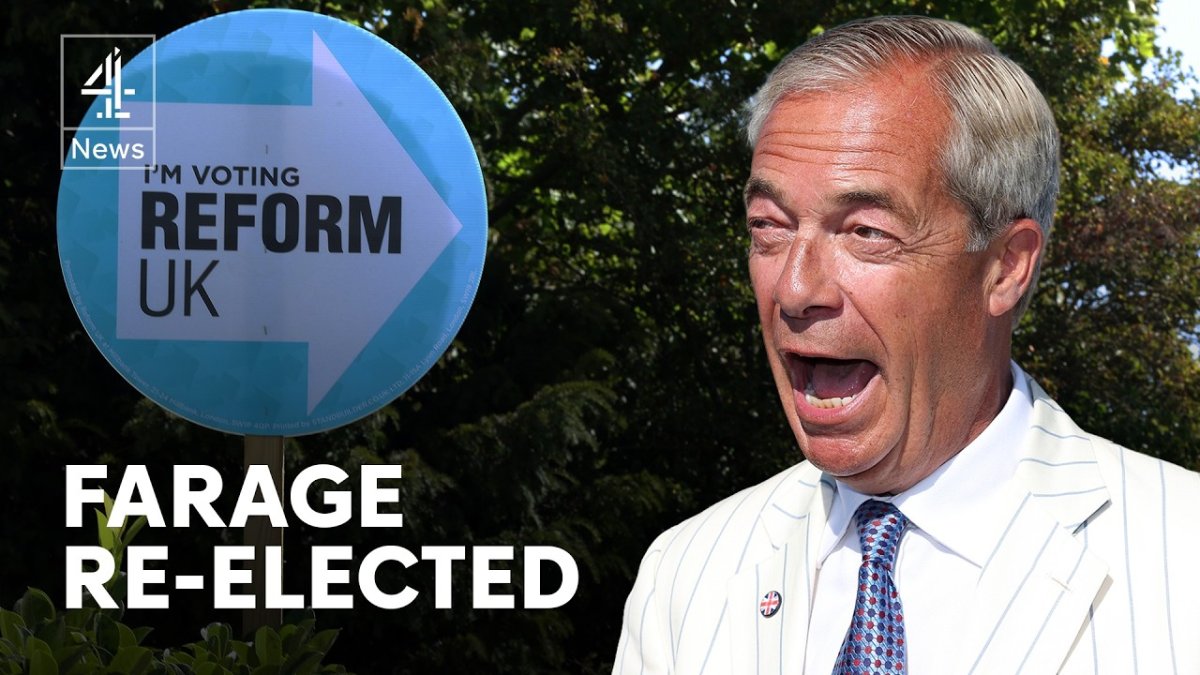
The voters of Clacton-on-Sea have delivered their verdict, and it is characteristically emphatic. Nigel Farage has been re-elected as their Member of Parliament with a thumping 63.34 per cent of the vote, a result he immediately framed as a populist uprising against a "political establishment" he claims is out to get him.
The voters of Clacton-on-Sea have delivered their verdict, and it is characteristically emphatic. Nigel Farage has been re-elected as their Member of Parliament with a thumping 63.34 per cent of the vote, a result he immediately framed as a populist uprising against a "political establishment" he claims is out to get him. Yet even as the champagne corks popped in Essex, the machinery of that very establishment was already whirring back into action, with the parliamentary standards watchdog formally resuming its investigation into a £5 million gift the Reform UK leader received from a wealthy businessman.
Farage Triumphs in Clacton as Standards Watchdog Resumes £5m Gift Investigation
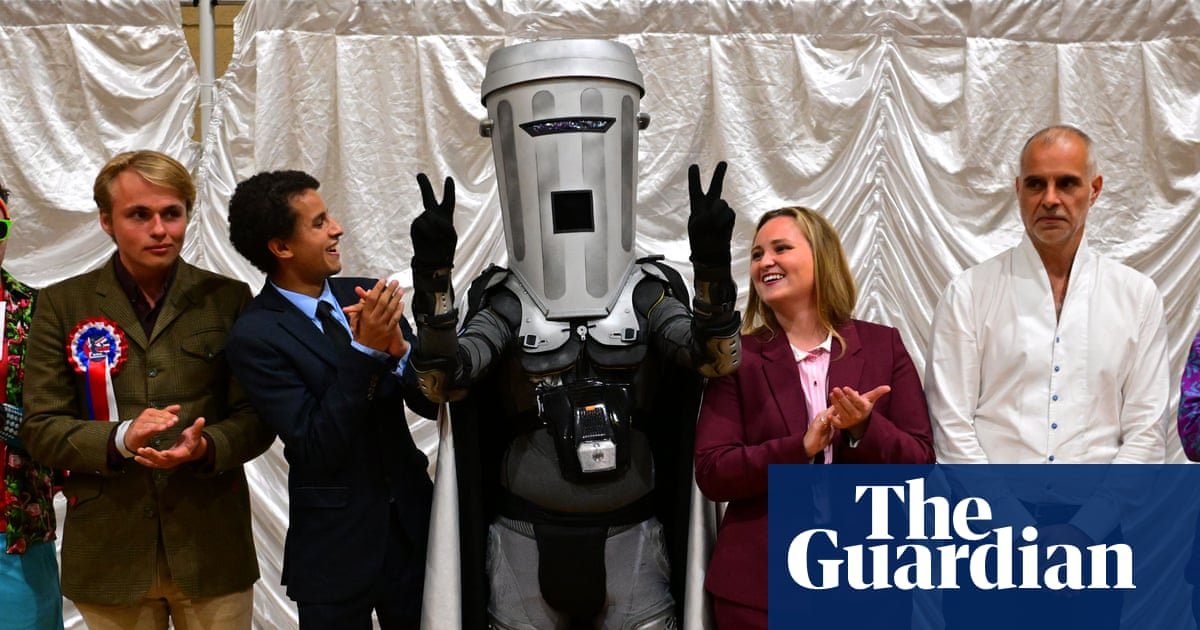
Clacton-on-Sea, Essex – 14 August 2026 — The result was never really in doubt, but the political aftershocks are only just beginning. Nigel Farage has won the Clacton by-election with 22,239 votes, a commanding majority that saw him see off a field of 34 candidates, including a surprisingly strong second-place finish from the satirical candidate Count Binface. The victory, however, comes at a peculiar moment: the Parliamentary Commissioner for Standards has formally reopened its probe into a £5 million donation from businessman Christopher Harborne, a move that threatens to cast a long shadow over what the Reform UK leader has hailed as a "people versus the establishment" triumph.
A Landslide Wrapped in a Boycott
The scale of Farage's victory is undeniable. With a turnout of 35,111 voters — some 44 per cent of the constituency — he secured 63.34 per cent of the vote, a figure that would be the envy of any sitting MP. Yet the numbers tell only part of the story. The Labour Party, the Conservatives, the Liberal Democrats and the Greens all boycotted the contest, a coordinated act of political defiance that left the field open for a motley assortment of independents, single-issue campaigners and, most notably, Count Binface.
The Count, a perennial candidate known for his satirical manifestos, secured 9,455 votes (26.93 per cent), a personal best that he described as "gratifying". It is a remarkable showing that underscores the peculiar nature of this contest. One candidate, by contrast, received just seven votes. The boycott, orchestrated by the major parties in protest at Farage's decision to resign his seat in July, was intended to delegitimise the contest. Instead, it handed him a stage on which to perform his favourite role: the outsider battling a hostile elite.
Yet the boycott is a double-edged sword for the established parties. By refusing to field candidates, they have effectively conceded the constituency to Farage while handing him a propaganda victory. In the East of England, where Reform UK has been steadily eroding Conservative support since the 2024 general election, the abstention risks being read by voters not as principled opposition but as an admission of defeat. The strategy echoes Labour's decision not to contest the 2021 Old Bexley and Sidcup by-election, a move widely criticised as a dereliction of democratic duty. In Clacton, however, the stakes are higher: Farage is not a conventional opposition MP but a figure who has repeatedly threatened to upend the Westminster order, and handing him an uncontested platform may prove a strategic error the party leaderships come to regret.
The Resignation That Backfired
To understand the by-election, one must revisit the resignation that triggered it. In July 2026, Farage stood down as MP for Clacton in protest at a parliamentary investigation into undeclared donations. He framed the move as a principled stand against a "kangaroo court" in Westminster, declaring that the voters of Clacton deserved the chance to deliver a verdict on the establishment's treatment of him. It was a high-stakes gamble, and on Thursday night, it paid off spectacularly.
"The voters of Clacton have stuck two fingers up to the entire political establishment," Farage declared in his victory address, though notably he skipped the formal result declaration at the count, explaining he had no wish to be "humiliated by nobodies". His team cited a "credible threat" to his safety, with Farage claiming that Essex Police had warned him of an organised campaign to disrupt the count. Essex Police, however, were quick to push back on that characterisation, stating that they had no intelligence to suggest such a plot. The discrepancy has raised eyebrows, even among some of his supporters.
The resignation was a calculated gamble that sought to convert a procedural investigation into a public referendum on his legitimacy. Where most politicians who force by-elections find themselves punished by the electorate, Farage has managed to invert the dynamic: rather than being punished for his conduct, he has been rewarded with an increased majority, a testament both to his unique standing and to the deep disillusionment with the mainstream parties he has so skilfully harnessed.
Yet the decision to skip the formal declaration is a curious one for a politician who thrives on public spectacle. By citing a security threat that Essex Police have publicly disputed, Farage has opened himself up to accusations of stage-managing the event, a charge that his critics have been quick to level. The episode also raises questions about his relationship with the police and the broader security apparatus, which he has often portrayed as part of the establishment he claims to oppose. For a man who has built his career on authenticity, the discrepancy between his account and the police's version of events is a vulnerability that his opponents may seek to exploit in the coming months.
The £5 Million Question
Beneath the triumphalism lies a more uncomfortable reality. Hours after the polls closed, the Parliamentary Commissioner for Standards formally resumed its investigation into the £5 million gift from Christopher Harborne, a businessman with interests in aviation and cryptocurrency. The probe, which had been paused during the by-election campaign, centres on whether the donation was properly declared and whether it constitutes a conflict of interest.
The timing is awkward for Farage, who has long positioned himself as a scourge of Westminster's opaque funding rules. The investigation was the very reason he resigned in the first place, and its resumption means the issue will not simply disappear now that he has been re-elected. The Commissioner's office has not indicated when it expects to conclude its work, but the political implications are significant. If the probe finds against Farage, it could trigger a suspension from the House of Commons, a sanction that would reignite the very "establishment versus the people" narrative he has so skilfully cultivated.
The resumption of the investigation also raises a broader question about the effectiveness of the parliamentary standards regime. The Commissioner's decision to pause the probe during the by-election campaign was widely seen as an attempt to avoid influencing the outcome, but it may have had the opposite effect: by allowing Farage to claim victory before the investigation could conclude, it hands him a platform to portray any subsequent finding as a politically motivated attack on the will of the people. It is a dynamic familiar to students of Westminster, where the timing of standards inquiries has repeatedly fuelled public cynicism about a rigged system — precisely the grievance Farage trades on.
There is also the question of what the investigation might uncover. The £5 million gift from Harborne is one of the largest political donations in recent British history, and its provenance and purpose are likely to come under intense scrutiny. Harborne, who has business interests in aviation and cryptocurrency, has been a significant donor to Reform UK in the past, but the scale of this particular gift has raised eyebrows even among seasoned political observers. If the Commissioner finds that the donation was not properly declared, or that it created a conflict of interest that Farage failed to disclose, the consequences could be severe. A suspension from the Commons of more than 10 sitting days would trigger a recall petition, potentially forcing yet another by-election in Clacton — a prospect that would delight Farage's critics but further drain the public purse.
A Pyrrhic Victory?
The Economist, never one to mince words, has already described the outcome as "a pyrrhic victory". The magazine's assessment is not without merit. Farage has won his seat, but at what cost? The by-election itself cost the taxpayer an estimated £250,000, a sum that will do little to endear him to critics who accuse him of treating the constituency as a personal fiefdom. Moreover, the boycott by the major parties means his mandate, while numerically impressive, is politically hollow. He has been re-elected, but he has not beaten anyone who matters.
There is also the question of what happens next. Farage has represented Clacton since the 2024 general election, and his victory on Thursday cements his position as the dominant political figure in the constituency. But his ambitions have always extended far beyond the Essex coast. He has spoken openly of his desire to reshape British politics, and this by-election was, in his own words, a "referendum on the establishment". Having won it, he now faces the challenge of translating that victory into tangible political power.
The comparison to recent by-election history is instructive. In 2023, the Conservatives suffered a string of by-election defeats widely read as a rejection of the government's record. Farage, by contrast, has turned a by-election into a personal triumph — but the circumstances are so unusual that broader conclusions are hard to draw. The boycott means his victory tells us little about the national mood, and the enthusiasm of his core supporters may not be replicable in a general election. The £250,000 cost, meanwhile, is likely to become a recurring theme for his critics, who will note that a quarter of a million pounds of public money was spent to secure a seat he already held.
There is also the question of his long-term strategy. Farage has repeatedly hinted at a desire to lead a broader populist movement capable of challenging the Conservative Party's dominance on the right, and Clacton will be seen as a stepping stone. But the path to national power is fraught: Reform UK's support remains concentrated in the East of England and parts of the North, and the first-past-the-post system makes it difficult for a party with geographically dispersed support to translate votes into seats. His immediate focus, therefore, is likely to be on consolidating Clacton and using his Commons platform to amplify the message, rather than any imminent bid for government.
What Clacton Thinks
On the streets of Clacton-on-Sea, the mood on Friday morning was a mixture of triumph and resignation. For many voters, Farage remains a champion of the working class, a man who speaks their language and fights their battles. "He's the only one who tells it like it is," said Margaret, a retired care worker who has lived in the town for 40 years. "The others are all the same. They don't care about people like us."
Others, however, are less convinced. "It's a circus," said Tom, a local shopkeeper who voted for Count Binface. "He's turned this town into a stage for his own ego. The by-election cost a quarter of a million pounds, and for what? So he can say he's won a race nobody else was running in." The divide is emblematic of the broader national mood, where Farage's brand of populism continues to polarise opinion.
The local dynamics are worth examining. Clacton has a higher-than-average proportion of older voters, many of them former Labour supporters who switched to the Conservatives in 2019 and then to Reform in 2024 — a demographic receptive to Farage's messages on immigration and sovereignty. Yet the town also has a younger population struggling with housing costs and wages, less swayed by nostalgic appeals to a bygone era of British greatness. Count Binface's near-27 per cent showing suggests a substantial minority dissatisfied with the mainstream but unwilling to embrace Farage's populism — a group that could prove crucial in future elections if the major parties can find a way to re-engage it.
The broader regional context is also significant. The East of England has become a battleground between the Conservatives and Reform UK, with the latter making significant inroads in areas such as Essex, Suffolk and Norfolk. Farage's victory in Clacton will be seen as a warning to Conservative MPs in neighbouring constituencies, many of whom are facing the prospect of a Reform UK challenge at the next general election. The party's national strategy appears to be focused on targeting these seats, and the Clacton result will give its activists a significant morale boost. However, the boycott by the major parties means that Reform UK has not yet been tested in a full-scale electoral contest, and it remains to be seen whether the party can maintain its momentum when faced with a proper opposition.
The Road Ahead
For Westminster, the immediate challenge is how to deal with a re-energised Farage. His victory, however hollow, will be seen as a vindication by his supporters and a warning by his detractors. The resumed standards investigation adds a layer of uncertainty, but Farage has shown time and again that he thrives on adversity. The coming months will test whether he can convert his Clacton mandate into a broader political movement, or whether, as The Economist suggests, this is a victory that ultimately leads nowhere.
One thing is certain: the £250,000 price tag of this by-election will be scrutinised in the coming weeks, as will the conduct of Essex Police and the timing of the standards investigation. For now, though, Nigel Farage can bask in the glow of a resounding personal victory. The establishment may have boycotted him, but in Clacton, at least, the people have spoken.
The immediate parliamentary arithmetic is also worth considering. Farage's return to the Commons gives Reform UK a single, highly visible MP, but it does little to change the balance of power in a chamber where the governing party holds a comfortable majority. His influence will therefore be exercised primarily through the media and through his ability to set the political agenda, rather than through legislative victories. This is a role that Farage has always relished, and his victory in Clacton will give him a renewed platform to press his case for electoral reform, tighter immigration controls and a more confrontational approach to the European Union. Whether he can sustain this momentum over the long term, however, remains an open question, particularly if the standards investigation concludes with a finding against him.
For the major parties, the road ahead is fraught. The boycott has left them with no clear strategy for countering Farage's influence in Clacton, and they will need to find a way to re-engage with the constituency if they are to win it back at the next general election. The Conservatives, in particular, face an existential choice between tacking right to reclaim Reform voters and positioning themselves as the party of moderate conservatism. Labour, meanwhile, must reckon with the fact that its abstention alienated voters who might otherwise have been sympathetic. The coming months will be a test of strategy and nerve, and the outcome will shape British politics for years.
By Erica Thornton, Staff Writer
This article was produced with AI-assisted research and editorial support. Reporting is based on sources cited in the article.
What's Your Reaction?
 Like
0
Like
0
 Dislike
0
Dislike
0
 Love
0
Love
0
 Funny
0
Funny
0
 Wow
0
Wow
0
 Sad
0
Sad
0
 Angry
0
Angry
0

US Politics and Policy Correspondent at Global1.News. Based in Washington DC, covering American politics, policy, elections, and the courts. Knows how the system works and tells you what it actually means.












Comments (0)