
Far-right AfD plans talks to get Russian gas back for Germany
Germany’s energy dilemma sits at the intersection of domestic politics, European security and the broader great‑power contest that continues to shape the Middle East.
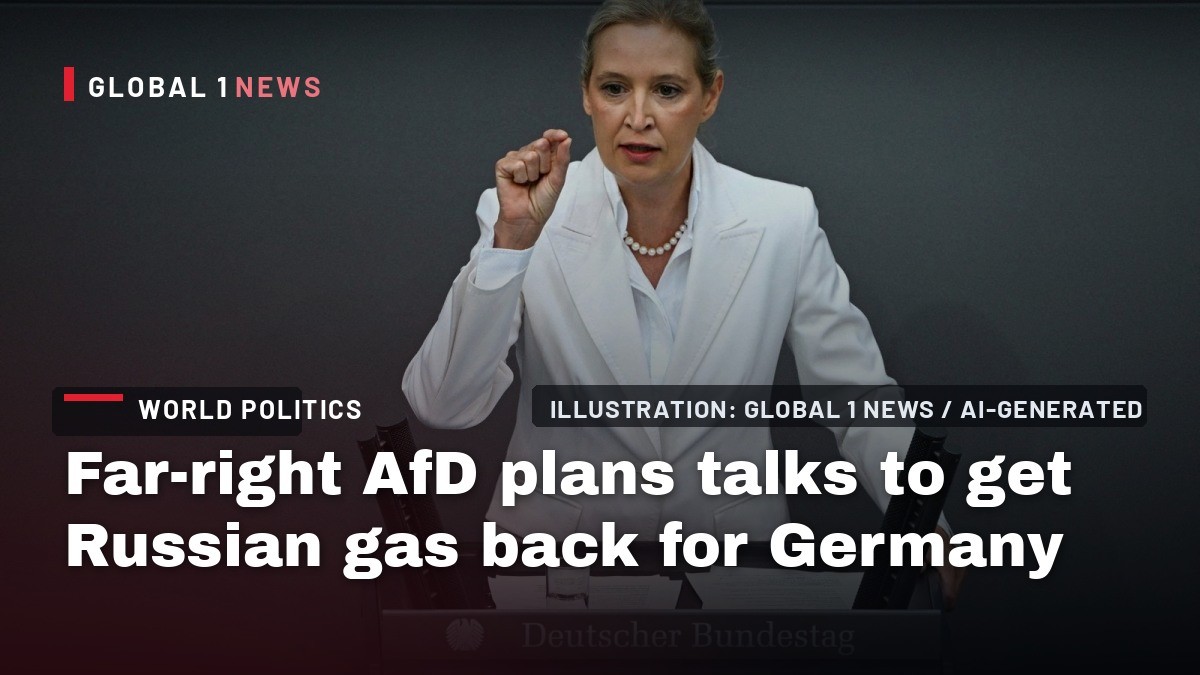
Germany’s energy dilemma sits at the intersection of domestic politics, European security and the broader great‑power contest that continues to shape the Middle East. As the continent grapples with the fallout of the 2022 Nord Stream sabotage, the resurgence of a far‑right party’s overt overtures to Moscow underscores how energy security, geopolitical rivalry and internal electoral calculations remain tightly intertwined.
AfD’s diplomatic overture to Moscow
The Alternative für Deutschland (AfD), Germany’s most popular party among voters despite being excluded from government, has moved from rhetoric to concrete planning. According to a report from Daily Sabah Middle East, AfD co‑leaders Alice Weidel and Tino Chrupalla are preparing to meet with Kirill Dmitriev, the head of Russia’s sovereign wealth fund and a close adviser to President Vladimir Putin. The proposed talks, slated for as early as March 2027, would focus on restarting Russian gas supplies to Europe.
Organisers have signalled that the meeting would only proceed if a “peace framework” between Russia and Ukraine is first secured, suggesting a conditional approach that ties energy restoration to broader diplomatic outcomes. Potential venues include Israel, the United Arab Emirates or India, indicating a willingness to locate the dialogue in neutral or strategically allied territories.
Political stakes within Germany
The AfD’s initiative highlights the fragility of Germany’s coalition system. While mainstream parties have traditionally refused any partnership with the far‑right, the AfD’s recent electoral successes—most notably becoming the biggest party in the Saxony‑Anhalt state election—have amplified its leverage. The party now seeks to showcase foreign‑policy competence, positioning itself as a pragmatic alternative to the perceived inertia of the governing coalition.
Critics warn that the AfD’s alignment with Moscow could embolden factions within the Christian Democratic Union (CDU) that share a more conciliatory stance toward Russian energy. Roderich Kiesewetter, a CDU parliamentarian, warned that the AfD’s outreach “could embolden those in his party who also favored buying Russian gas,” underscoring internal party tensions over energy policy and national security.
Energy economics and the Nord Stream dilemma
Before the 2022 sanctions, Russia supplied more than half of Germany’s natural gas and a substantial share of its crude oil imports. The abrupt shutdown of the Nord Stream pipelines—partly the result of explosions in September 2022—triggered a severe energy crisis that cost Germany billions of euros, according to Green lawmaker Michael Kellner. He described the crisis as a “treasonous” prospect if repeated, emphasizing the political sensitivity of any move to restore Russian gas.
The AfD frames the resumption of Russian gas as a cost‑saving measure, with Weidel describing “cheap energy from Russia” as “the secret of the success of ‘Made in Germany.’” This narrative seeks to link lower energy prices directly to domestic industrial competitiveness, a message that resonates with voters feeling the pinch of high utility bills.
International reactions and the U.S. dimension
The proposed summit has already drawn attention from Washington. Dmitriev recently met U.S. representatives Steve Witkoff and Jared Kushner in Moscow, and organisers hope they would also attend the gas talks. However, a senior U.S. official confirmed that neither Witkoff nor Kushner have been invited or briefed, indicating a cautious American stance toward any Germany‑Russia‑U.S. energy dialogue.
Meanwhile, the American Chamber of Commerce in Moscow welcomed the idea, describing it as “a positive and timely step” that could create a broader platform for discussing issues of global significance. This endorsement reflects the business community’s interest in stabilising energy supplies, even as political leaders remain wary of the security implications.
Security concerns and regional implications
Reopening the Nord Stream pipelines would not only revive German energy imports but also raise profound security questions. Critics argue that Russia uses energy infrastructure as a “hybrid weapon,” a point underscored by Green lawmaker Michael Kellner and CDU member Roderich Kiesewetter. Restoring the pipelines could be perceived as rewarding Russian coercion, potentially undermining European collective security.
The debate also reverberates in Eastern Europe, where countries remain highly sensitive to any resurgence of Russian influence. The AfD’s overtures risk alienating Germany’s eastern neighbours, many of whom retain historical sympathies for Russia yet remain wary of renewed dependence on Moscow’s energy exports.
Domestic political calculus and upcoming elections
The AfD’s energy gambit is timed against a backdrop of imminent state elections in Mecklenburg‑Western Pomerania, a region through which the Nord Stream pipelines enter Germany. Success in these elections could further cement the AfD’s position as a kingmaker in German politics, allowing it to press its energy agenda more forcefully.
By positioning itself as the party capable of delivering “cheap energy,” the AfD seeks to capitalize on voter fatigue with high energy costs. This strategy aims to translate electoral gains into tangible policy influence, even though the party does not currently hold governmental power.
Strategic outlook: energy, geopolitics and the Middle East
While the AfD‑Russia dialogue is a European issue, its ramifications echo across the Middle East. Energy‑rich states in the Gulf watch European attempts to diversify away from Russian gas with keen interest, as they seek to expand their own export markets. Moreover, the involvement of potential summit venues such as the United Arab Emirates signals a willingness to integrate Middle Eastern diplomatic platforms into broader Eurasian negotiations.
In a region where Sunni‑Shia competition and great‑power rivalry shape foreign‑policy calculations, the prospect of a Germany‑Russia‑U.S. energy summit underscores how energy security can serve as a conduit for wider geopolitical realignments. As Europe wrestles with the legacy of the Nord Stream crisis, the AfD’s push to re‑engage Moscow may well become a litmus test for how far‑right actors can leverage energy dependencies to reshape the continent’s strategic landscape.
This article was produced with AI-assisted research and editorial support. Reporting is based on the source material cited below. Sources: Daily Sabah Middle East; dailysabah.com; Global1.News (19 September 2026).
By Malik Hassan, Staff Writer
What's Your Reaction?
 Like
0
Like
0
 Dislike
0
Dislike
0
 Love
0
Love
0
 Funny
0
Funny
0
 Wow
0
Wow
0
 Sad
0
Sad
0
 Angry
0
Angry
0

Middle East Correspondent at Global1.News. Based in Beirut, covering politics, conflict, energy, and society across the Middle East. Brings context and depth to a region often reduced to headlines.










Comments (0)