
Dakar Closes Africa's First Olympic Games, and Nobody Will Say If There's a Next One
Dakar 2026 closes today as the first Olympic event ever staged in Africa, with African athletes setting a Youth Olympics medals record and the IOC refusing to say what happens after 2028.
Dakar 2026 closes today, and the first Olympic event ever staged on African soil is heading into its final hours. The closing ceremony is scheduled for 18:00 local time at the Youth Olympic Village in Diamniadio, reserved for athletes and accredited delegations and broadcast live on olympics.com. Folks, here is what matters: the party is almost over, and nobody in power will tell you what comes next.
Dakar Closes Africa's First Olympic Games, and Nobody Will Say If There's a Next One
Dakar, Senegal — Senegal is the first African country to host an Olympic sporting event, and the final hours are here. The question hanging over Diamniadio is not whether Dakar delivered a show. It is whether the movement and the country will say plainly what the show cost, who it served, and whether there is a next one.
The Flame That Took Africa Until 2026 to Hold
Dakar was awarded these Youth Olympic Games in October 2018, two months after Senegal announced its stadium plans. The Games were then postponed from 2022 to 2026 because of the COVID-19 pandemic, and Africa, which has never hosted a full Olympic Games, waited four more years. The Olympic flame left Athens on 10 September and toured all 14 regions of Senegal before reaching Diamniadio, where fencer Abdourahmane Marième Sy and judoka Aïcha Diop lit the cauldron. President Bassirou Diomaye Faye declared the Games open at 19:57 local time on 31 October. The opening ceremony at the Abdoulaye Wade Stadium carried the theme "The Rise of Sitoé." More than 1,000 performers took part, including about 100 wrestlers performing the bakk, while Baaba Maal led a parade honouring Africa's 54 countries with 360 dancers forming a map of the continent. Kiné Lam performed.
What Dakar Actually Put On
The Games ran across three locations — Dakar, Diamniadio and Saly, which sits about 80 km, or 50 miles, from the capital — using eight venues. Beach handball was staged at Saly Beach West on the Petite Côte, with its medal matches falling on Friday 13 November, the final day, in the sport's second Youth Olympic appearance after Buenos Aires 2018. Organisers put the programme at approximately 2,655 athletes from 204 national Olympic committees across 25 sports and 153 events. Reuters reported "almost 2,700 young athletes from 204 national Olympic committees." The IHF describes 35 disciplines on the programme, a figure that counts differently from the organisers' sport total. Senegal fielded 135 athletes of its own. The Refugee Youth Olympic Team took part for the first time in the Games' history, entering behind Greece, with host nation Senegal marching in last.
The Number That Matters Is African
The African medal count moved during the Games, so the date attached to it matters. Story Africa, citing RT en français, reported 66 medals for African athletes as of the evening of 11 November. Olympics.com reported on 12 November that the total had risen to 69 — 27 gold, 14 silver and 28 bronze — surpassing the previous benchmark of 56 set at Buenos Aires 2018, with 20 sets of medals still to be awarded before the flame went out. Five African nations sat in the top ten on 11 November: Egypt fourth with six gold, Ethiopia fifth with five, Senegal sixth with five, Kenya eighth with four and South Africa ninth with three. Kenya became the first African nation to win gold in rugby sevens at the Youth Olympics. Tunisia's Rayen Briki took bronze in men's windsurfing, a medal for Africa at the first Olympic event held on the continent. Nigeria swept the 100m titles on 8 November, with Rosemary Nwankwo winning the women's race in 11.16 seconds and Gift Bright taking the men's in 10.28, a new Youth Olympic Games record.
The Gambia Waited Since 1984 for This
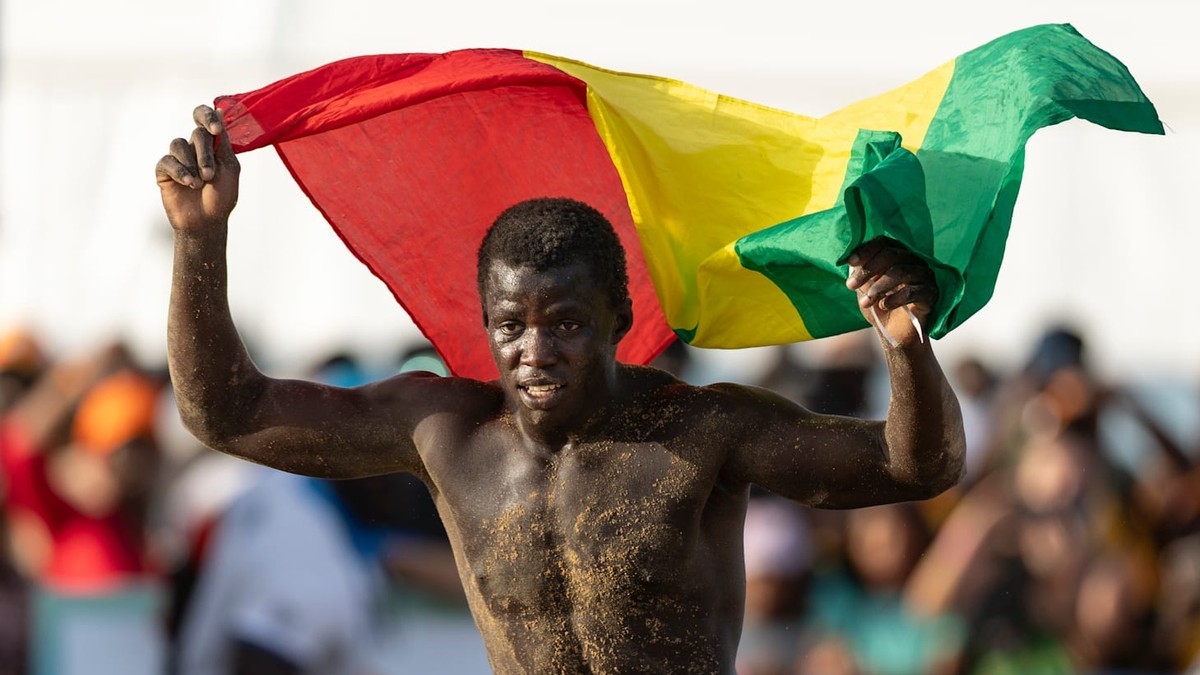
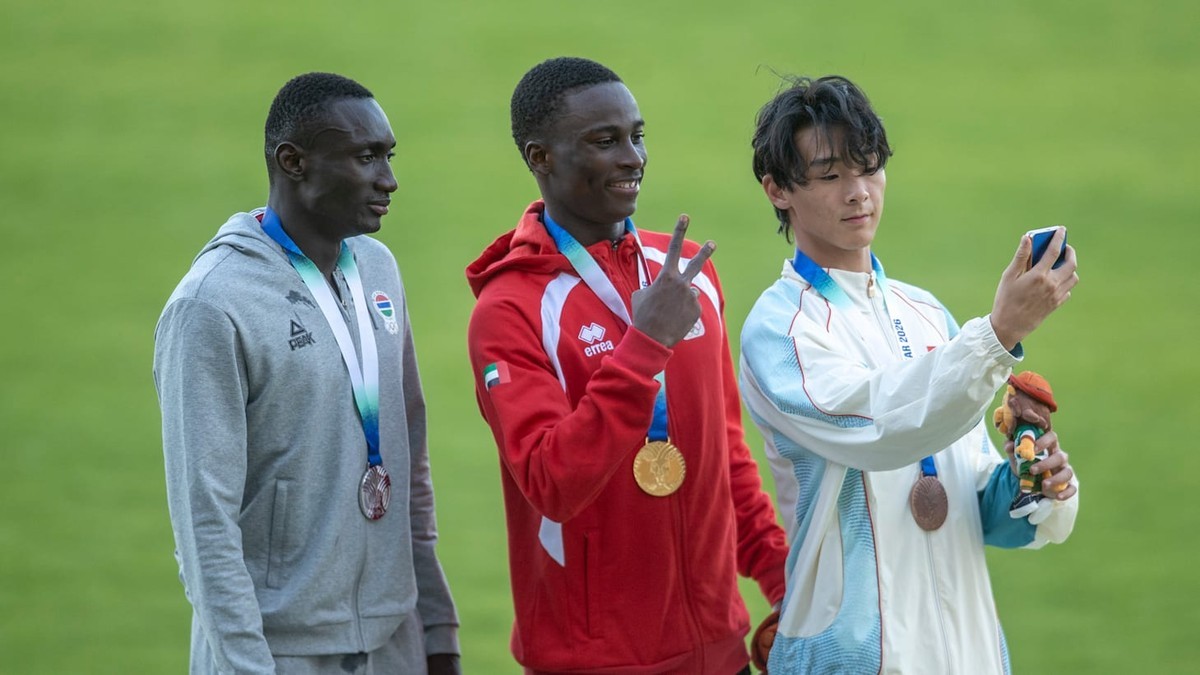
Mustapha Jadama, 16, from Brikama, won silver in the men's 400m in 46.93 seconds, 0.53 behind gold medallist Saeed Omar of the United Arab Emirates, who ran 46.40 for a personal best. China's Liu Han took bronze in 47.16. Jadama is The Gambia's first-ever medallist in an Olympic event — the smallest nation by land mass on continental Africa, completely enveloped by Senegal, had waited a long time. Gambian athletes debuted at the LA 1984 Games and have competed at every edition since without a medal, a drought that also covered three previous Youth Olympic Games. "They said they are waiting for me for the celebration," Jadama said of his family. He named the 2027 All-African Games and the LA 2028 Olympics as his next targets.
Coventry's Verdict: Magnificent, and Unsettled
IOC President Kirsty Coventry gave a closing press conference in Diamniadio on Thursday 12 November, a day before the closing ceremony, and she did not hide her enthusiasm. "Everyone came here with certain expectations and those expectations have been far exceeded," she said. "It has been a magnificent journey. It has been extremely magical." She was equally direct about the harder question. "We have to be very realistic as to what we want the Youth Olympic Games to be," Coventry said, citing a "15% conversion" rate of athletes from the Youth Olympic Games to the Olympic Games. On the village, she said several athletes had named it their favourite part of Dakar 2026: "They loved the competition, but they really enjoyed coming together, eating together, living together, learning about each other." That is the upside, and it is real. The unsettled part is that Coventry did not say when a decision on the future is likely, and she did not announce a host.
The 2030 Question Hangs Over the Village
The IOC Executive Board decided on 7 May 2026 to put the election process for the 2030 Summer Youth Olympic Games on hold. The host had been due to be elected in June. The board acted after a survey of all National Olympic Committees and International Federations returned what the IOC called "somewhat inconclusive results," inside a broader "Fit for the Future" discussion about the movement's strategy. "We took a pause..and we are analysing and that's where we are," Coventry said. "We are still analysing. The data we will collect from Dakar will be added." No timetable for a decision was announced, and no host has been chosen. India has "expressed interest" in the 2030 edition, viewing the Youth Games as a stepping stone towards an ambition to host the 2036 Olympic Games. The IOC says it remains "fully committed" to the 2028 Winter Youth Olympic Games in Dolomiti Valtellina, Italy.
What Was Never in the Bid
The Abdoulaye Wade Stadium was never an IOC requirement. The IOC told Play the Game the decision to build it was taken independently by the Government of Senegal before the Games were awarded, and that it formed no part of Dakar's candidature. "As the stadium had already been built and was operational, it was treated as an existing venue under the Olympic Agenda 2020 principles," the IOC said in a written reply. The stadium opened in February 2022, was originally known as the Diamniadio Olympic Stadium, and sits roughly 30 km outside Dakar. Play the Game reports 50,000 seats; the IHF describes a 55,000 capacity. The sources differ. It was built by the Turkish company Summa and is operated by the state-owned company SOGIP, and it hosted just two events: the opening ceremony and the archery competition from 6 to 10 November. In October 2025, SOGIP director general Dame Mbodji said the stadium makes no money and runs at a loss, kept afloat by the company's other venues.
Who Pays When the Flame Goes Out
Djirèye Clotilde Coly, Senegal's Minister of Youth and Sports, told RFI on 5 October 2026 that the overall projected cost of the Games is 104 billion CFA francs, which the interviewer put at more than 150 million euros. Coly framed the spending as an investment in legacy rather than an immediate return. "An event of this kind should not be thought of in terms of an automatic and immediate return on investment," she said, "but rather in terms of legacy." "So yes, it is an investment," she said, "but it is a long-term investment." She gave no figure for expected returns. The government committed 36 billion CFA francs, about $60 million, to organising the Games, including 11.3 billion for venue renovations. Story Africa reported a separate split, with 54 billion CFA francs from the IOC, 13 billion from the City of Dakar and a French Development Agency loan of roughly 52 billion. The bill lands in a country whose reported finances were found to have been understated: the Court of Auditors confirmed in February 2025 that the 2020 deficit was 9.17% of GDP, not the 6.4% reported, and debt 75.5%, not 63.06%, findings the IMF endorsed a month later. Moody's has since downgraded Senegal four times, most recently in August 2026 to Caa2. Play the Game could not establish whether the stadium loan was among those omitted debts.
Five Thousand Beds for a Two-Week Event
The Youth Olympic Village sits at Amadou Mahtar Mbow University, next to the stadium in Diamniadio. The campus has around 5,000 beds. Students living there were ordered to move out on 31 May 2026, and on-campus teaching is suspended until January 2027 — a disruption of 218 days for a two-week event, with in-person teaching due to resume on 4 January 2027. Computers and internet access promised for remote study had not arrived by mid-May, and Senegalese media reported strikes and police on campus in the spring. Mouhamadou Diop, president of the student collective, says the equipment has since been handed out and students moved home. "Since the entire remainder of the academic year is taking place online thanks to the equipment that was distributed, the costs of accommodation and living expenses are borne entirely by the students themselves and their families," he said. The IOC said the village is being delivered through university renovations and that afterwards the facilities "will return to university use, providing students with improved accommodation and campus infrastructure that will remain as a lasting legacy."
What Dakar Proved, and What It Still Owes
Dakar proved it can stage an Olympic event. What it still owes is an honest accounting of who paid and who was moved. Mamadou Wadji inherited his father's shoemaking shop in Dakar's Medina neighbourhood, and in September authorities evicted him to make way for a stadium expansion. He says he and other artisans were moved into an unfinished school behind a neighbourhood market. "We, the general population, and especially those of us in the informal sector, should have been the first to benefit from it, unfortunately that has not been the case," Wadji said. Momar Assane Diouf, a 33-year-old entrepreneur, was blunter: "These expenses are neither mandatory nor essential for the Senegalese people, who believe these funds could have been better spent elsewhere, for instance, on lowering the cost of living or boosting the purchasing power of the average citizen." The government's investment agency APIX is seeking private operators to run the venues afterwards. Against that: organisers said 5,647 volunteers helped deliver the Games as of Thursday, and the sports minister says more than 900,000 young people went through school programmes tied to the event. Both things are true. Only one shows up on a balance sheet.
By Jessica Ali, Staff Writer
This article was produced with AI-assisted research and editorial support. Photographs: OIS/Felix Diemer and OIS/Hassan Wamwayi, handout images supplied by OIS/IOC. Cover: Global 1 News editorial image composited over an OIS/IOC handout photograph. Sources: Reuters, Xinhua, Olympics.com, RFI via Africa Files, Africanews, Play the Game, allAfrica, World Sailing and CGTN.
What's Your Reaction?
 Like
0
 Dislike
0
 Love
0
 Funny
0
 Wow
0
 Sad
0
 Angry
0

Editor-in-Chief at Global1.News. Atlanta-based journalist who cuts through the BS and tells it like it is. Lead anchor, host, and the voice you hear when the spin stops and the truth starts.













Comments (0)