
Drone Strikes Kill Three in Belgorod as Russia Downs 150 Ukrainian Drones
Three people were killed and 25 injured in a Ukrainian drone attack on Belgorod, Russian authorities said Sunday. Moscow reported intercepting over 150 drones as strikes spread to Novorossiysk, Ufa and energy sites across Russia.
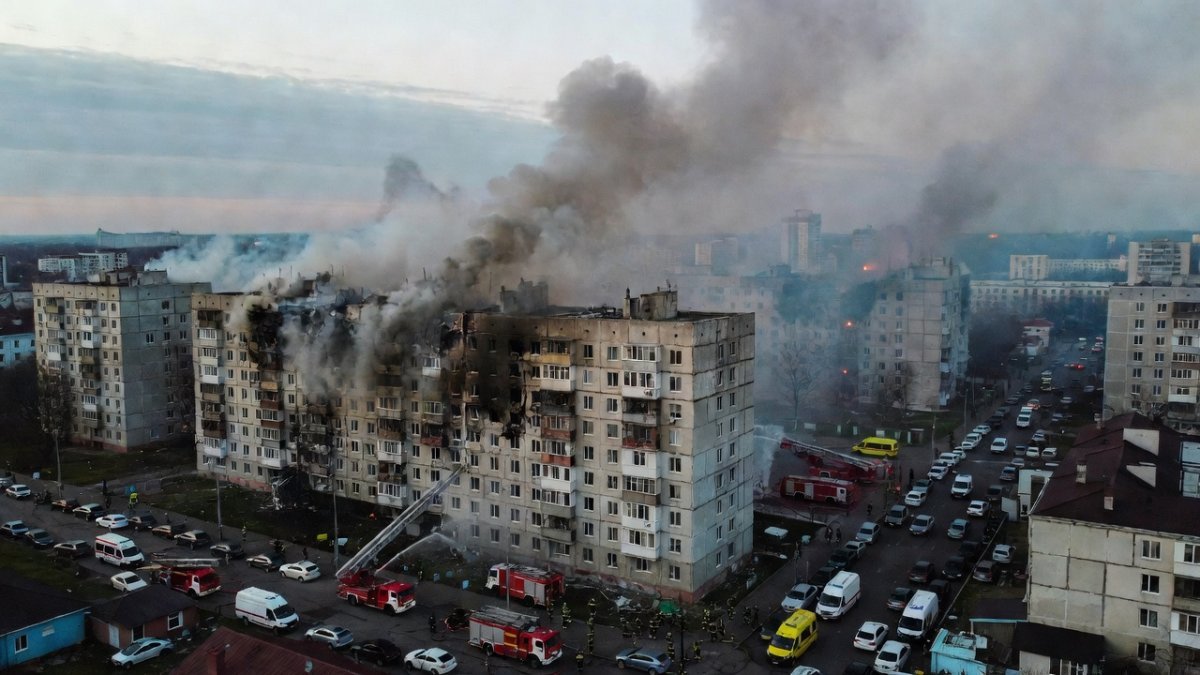
The overnight Ukrainian drone assault on Belgorod killed three residents and injured 25 others, according to local authorities, marking one of the deadliest strikes on the Russian border region in recent weeks. Acting Governor Alexander Shuvayev reported that fires broke out in two apartment buildings, while a wide array of residential and non-residential structures sustained damage. Russia's Defense Ministry stated that its forces intercepted more than 150 Ukrainian drones across the European part of the country, annexed Crimea, the Black Sea and the Sea of Azov.
Belgorod, Russia – Sunday — Russian officials confirmed three deaths and 25 injuries from the Ukrainian drone attack that struck the city of Belgorod overnight. Acting Governor Alexander Shuvayev described the assault as large-scale and directed at civilian areas, noting that emergency crews extinguished fires in two apartment buildings. He added that numerous homes and other structures were damaged across the city.
Casualties Mount in Border Region
Independent European outlets reported at least 13 people injured in the Belgorod strikes, including two children, with Russian authorities citing 25 total injuries — a gap that reflects differing reporting windows and casualty classifications. Acting Governor Alexander Shuvayev stated that a four-year-old boy was hospitalized with shrapnel wounds to the chest. Among the wounded were a doctor and a paramedic, with eight people requiring hospitalization, authorities said. The figures highlight the presence of minors among the victims.
Local emergency services responded rapidly to the scenes of impact, focusing first on containing the fires that erupted in the two apartment buildings. Shuvayev emphasized that the damage extended beyond those structures to include both residential homes and non-residential facilities throughout the city. The concentration of injuries in civilian zones has prompted questions about the precise targeting of the drones involved in the overnight operation.
Medical personnel on the ground treated a range of wounds consistent with shrapnel and blast effects. The hospitalization of eight individuals, including the young child, underscores the immediate human cost in the border region. Officials continue to monitor the condition of those affected as investigations into the incident proceed.
Russian Air Defenses Claim Broad Success
Russia's Defense Ministry reported the destruction of more than 150 Ukrainian drones over the European part of the country as well as over annexed Crimea, the Black Sea and the Sea of Azov. The ministry provided no independent verification of the intercepts. Similar claims followed earlier strikes, including the downing of 397 drones during the previous night across multiple regions.
These interception figures represent the official Russian assessment of the scale of the Ukrainian operation that night. The ministry's statements attribute the protection of broader Russian territory to coordinated air defense efforts. Without external confirmation, the precise number of drones that reached their intended targets remains subject to interpretation by analysts.
The pattern of such announcements in recent days suggests a consistent emphasis on defensive capabilities. This approach allows Russian authorities to frame the events as largely contained despite the reported casualties in Belgorod. Observers note that the ministry's updates often coincide with periods of heightened cross-border activity.
Incidents Reported in Novorossiysk and Ufa
In the Black Sea port of Novorossiysk, drone debris fell on two facilities, according to Mayor Alexander Kravchenko, who did not identify the sites. In Bashkortostan, a Ukrainian drone struck a building under construction and a crane in Ufa, state-run RIA news agency reported, citing local emergency services. These incidents illustrate the geographic spread of the attacks far from the immediate border zone.
The debris impacts in Novorossiysk occurred in a key commercial area, though details on the affected facilities remain limited. Kravchenko's statement focused on the fact of the debris without elaborating on operational disruptions. This limited disclosure aligns with the cautious approach often taken by regional officials when addressing security incidents.
In Ufa, the strike on the construction site and crane caused localized damage but no reported casualties. Emergency services assessed the scene promptly, consistent with standard procedures for such events. The distance from Belgorod highlights the reach of the drone activity reported on Sunday.
Energy Infrastructure Targeted in Krasnodar and Samara
Separately on Saturday, Ukrainian drones struck an oil refinery in Russia's Krasnodar region, where fire spread across roughly 300 square meters. Another strike hit an industrial facility in the Samara region, regional governor Vyacheslav Fedorishchev said. The Syzran Oil Refinery in Samara, owned by Rosneft, accounts for about 3 percent of Russia's total oil refining capacity and supplies fuel to the Russian Armed Forces, while the Ilsky refinery in Krasnodar processes over 6 million tons of oil per year.
These strikes on energy sites occurred in the context of the broader overnight drone activity that also affected Belgorod. Fedorishchev confirmed the industrial impact in Samara without providing further operational details. The involvement of facilities linked to military fuel supplies adds a layer of strategic significance to the reported events.
Firefighting efforts at the Krasnodar refinery contained the blaze to the stated area. Such incidents demonstrate the vulnerability of energy infrastructure to long-range drone operations. Russian officials have not released comprehensive assessments of production impacts from these particular strikes.
Long-Range Strikes Reach the Urals
Ukrainian long-range drones hit a Wildberries warehouse in Yekaterinburg in the Ural Mountains, more than 2,000 km from the border, on Friday. The attack demonstrated Kyiv's ability to project force deep into Russian territory. Russian officials have not released damage assessments from that strike.
The warehouse incident preceded the Belgorod attack by one day and formed part of a sequence of drone operations reported this week. Its location far from the border underscores the extended range claimed for Ukrainian systems. Local emergency services handled the aftermath without public statements on the extent of structural damage.
Analysts suggest that such distant strikes test the limits of Russian air defense coverage. The absence of detailed official commentary on the Yekaterinburg event contrasts with the more immediate reporting from Belgorod. This variation in disclosure may reflect differing priorities in regional information management.
Mutual Civilian Toll and Black Sea Disruptions
Russian airstrikes killed about 400 Ukrainian civilians last month, the highest monthly figure since 2022, amid a sustained summer campaign of large-scale aerial assaults. On August 3, a drone exploded on a Russian beach, killing seven people, officials said. Turkey has restricted Black Sea traffic as drone attacks on commercial vessels have increased, affecting regional shipping lanes.
The civilian casualties on both sides illustrate the reciprocal nature of the current phase of strikes. The August 3 incident on the Russian beach stands as a prior example of drone-related fatalities in civilian settings. Turkish restrictions on Black Sea traffic respond directly to the rising frequency of such attacks on vessels.
These developments occur alongside the Belgorod events and contribute to a broader picture of escalating aerial exchanges. Officials on each side attribute responsibility to the other for the civilian impacts. The resulting disruptions extend beyond immediate strike zones to affect maritime operations in the region.
Analysis and Implications
This pattern of reciprocal long-range strikes could indicate a further erosion of previous restraints on targeting rear-area infrastructure and civilian zones. Analysts suggest the involvement of energy facilities such as the Rosneft-linked Syzran refinery signals an effort by Ukraine to pressure Russian fuel supplies that support military operations. The Kremlin's continued emphasis on air-defense successes, voiced through the Defense Ministry, may serve to reassure domestic audiences even as border regions like Belgorod absorb repeated hits.
The widening geography of attacks, from Belgorod to the Urals and Black Sea ports, points to sustained pressure on both sides' logistics and energy networks. How Moscow and Kyiv calibrate future responses will shape whether these exchanges remain contained or expand into broader economic disruption across the region.
Interpretation of the Sunday Belgorod attack must account for the simultaneous reports of drone activity elsewhere. The confirmed deaths and injuries in the city remain the central verified outcome of the operation. Continued monitoring by local authorities will determine the full scope of recovery efforts in the affected areas.
By Irina Volkov, Staff Writer
This article was produced with AI-assisted research and editorial support. Sources: The Moscow Times, regional officials, RIA Novosti, Reuters.
What's Your Reaction?
 Like
0
Like
0
 Dislike
0
Dislike
0
 Love
0
Love
0
 Funny
0
Funny
0
 Wow
0
Wow
0
 Sad
0
Sad
0
 Angry
0
Angry
0

Russia/Eastern Europe Correspondent at Global1.News. Covering Russian politics, energy, security, and the shifting dynamics of the post-Soviet space. Provides clear-eyed analysis on one of the world's most opaque regions.















Comments (0)