
DMZ Landmine Blast Injures Three South Korean Officers Ahead of UN Inspection
Three South Korean officers were injured, one losing an ankle, when a suspected landmine exploded during a route-clearing operation inside the Demilitarized Zone. Seoul says all possibilities remain open, including a mine planted by North Korean troops.
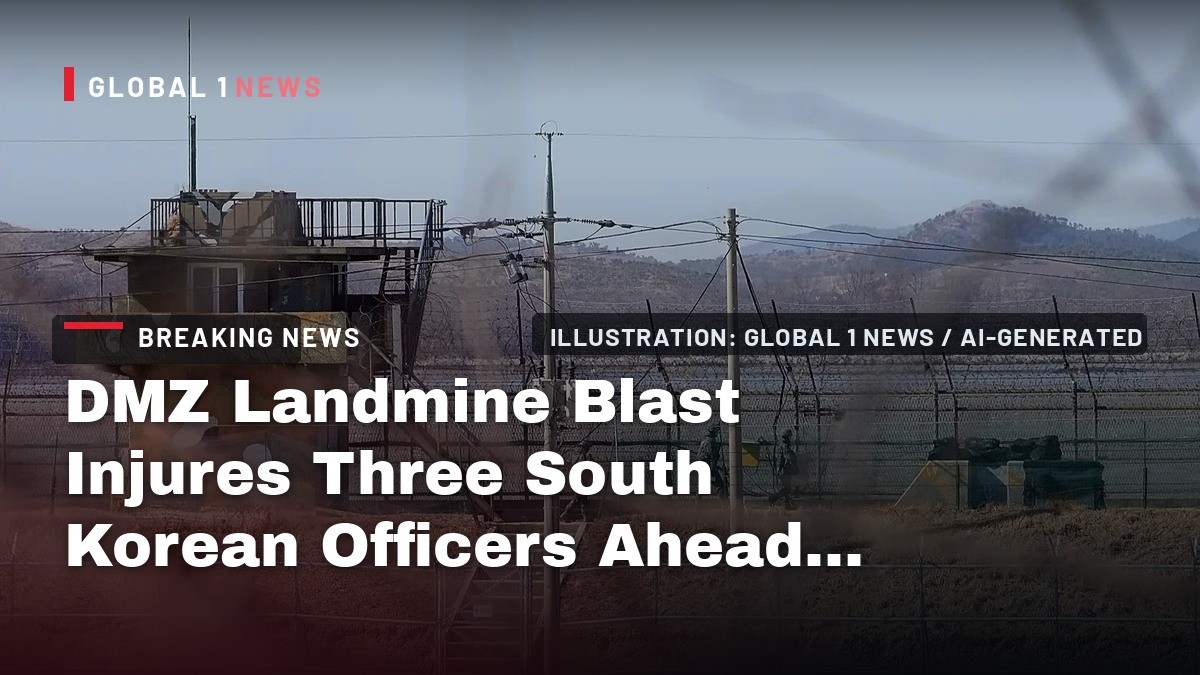
Three South Korean officers are in hospital after a suspected landmine tore through a route-clearing mission inside the Demilitarized Zone. One lost his ankle. The blast came eleven days after a lawmaker used a parliamentary audit to name six places where the border itself had moved.
DMZ Landmine Blast Injures Three South Korean Officers
SEOUL - The explosion happened at about 10:50 a.m. local time on Monday, 21 September 2026, south of the Military Demarcation Line in the western sector of the DMZ, in Paju, Gyeonggi Province, inside the operational sector of the South Korean Army's 25th Infantry Division. Roughly a dozen troops were working with mine detectors when it detonated. The Joint Chiefs of Staff confirmed the details at a press briefing the following day.
What Happened at the Demarcation Line
Three South Korean military officers were injured. One lost his ankle. Two sustained serious injuries. None of the wounded was in a life-threatening condition, and the two seriously hurt officers were wearing protective clothing and demining gear when the blast hit, according to the Joint Chiefs of Staff.
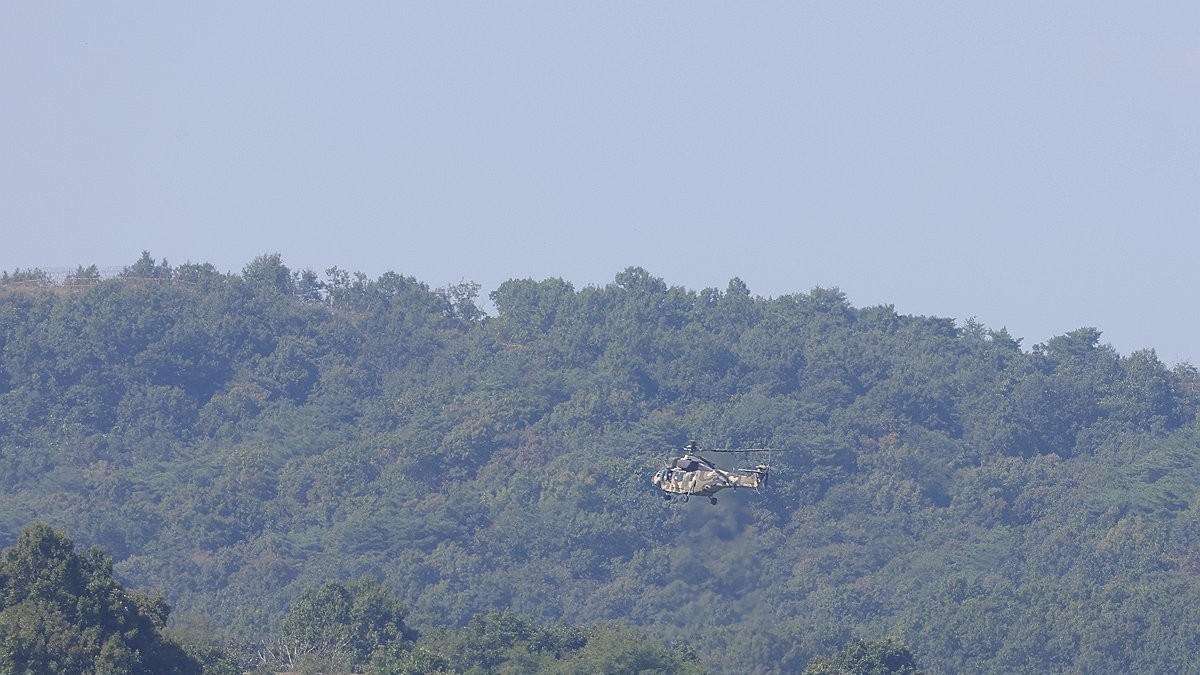
Two officers were airlifted by emergency helicopter to the Armed Forces Capital Hospital in Seongnam, south of Seoul, where they underwent surgery and were reported in stable condition. The third officer was transported by land and was later assessed as not seriously injured. Other troops involved in the operation were also taken to the hospital for detailed examinations and health checks.
It is the first time in approximately eleven years that South Korean troops have sustained such severe injuries from a landmine explosion in the DMZ. It is also the first reported explosion inside the DMZ in about ten months, since 20 November 2025, when a staff sergeant in his twenties on a mine-detection mission in the western-front DMZ in Paju suffered an injury suspected to be an ankle fracture.
The Mission Was a Route Clearance Before a UN Inspection
Here is what matters. This was not a routine patrol. South Korean surveillance assets had detected terrain changes near the MDL on the western front, and Seoul requested an on-site inspection by the United Nations Command, which had been scheduled for early next week.
Monday's operation was intended to open a search route and prepare access to the area before the UNC team entered it. JCS spokesperson Jang Do-young told reporters the site of the explosion was near the MDL.
Jang said the military plans to determine the exact location and cause of the explosion through an on-site inspection, once safety is secured, in coordination with the UNC. The JCS did not disclose the blast site's precise location. It also said it had not established whether the blast was linked to North Korean mine-laying.
Three Explanations, and None of Them Confirmed
The JCS said it was highly likely to have been a landmine, but that the cause remains under investigation and that a landmine had not been conclusively determined. Three possibilities are on the table.
One: an unidentified South Korean mine. Two: a North Korean mine displaced by flooding or other natural causes. Three: a mine recently planted by North Korean troops. The JCS said it is keeping all possibilities open and will thoroughly determine the cause before taking necessary measures.
A JCS official, per Yonhap, put it this way: there was an unidentified explosion, and it appears there is a high probability that it was a landmine explosion. That is the state of the official record. No cause has been fixed.
Why the Cause Is the Whole Story
Folks, the difference between those three explanations is the difference between an old accident and something deliberate. An aged South Korean mine washed loose by rain is a tragedy of maintenance and terrain. A North Korean mine displaced by flooding is a hazard Seoul itself warned about in July 2026, when the JCS said landmines laid by North Korea in the DMZ may have been washed into the South after heavy rainfall.
A mine recently planted by North Korean troops is something else entirely. That would mean soldiers crossed the MDL and left explosives under the feet of a South Korean unit. The JCS has not made that call, and until an on-site inspection is complete, nobody should.
SBS reported that a key government official told it the explosive was confirmed to be a landmine, and that given the accident occurred in an area soldiers do not normally pass through, the possibility the North Korean military planted it cannot be ruled out.
A Lawmaker Says He Warned Them on 10 September
Rep. Yu Yong-weon of the People Power Party, a member of the National Assembly Defense Committee, held a press conference at the National Assembly on 21 September and said the area where the explosion occurred is near a minefield created by North Korean troops south of the MDL between last year and early this year.
Yu said it has not yet been accurately confirmed whether the landmine that exploded was planted by North Korean troops. But he said North Korean troops have recently continued large-scale landmine planting operations near the MDL, and that he already revealed through a parliamentary audit on the 10th that there are six areas, including minefields created by North Korean troops, that have encroached approximately 10-15 meters south of the MDL within the 25th Division's border zone.
Yu also said the Ministry of National Defense had consistently maintained a vague and passive attitude toward the encroachment issue, responding with statements such as "We have identified some terrain changes".
What the Military Says About the Location
The location is contested, and both versions stand on the record. The JCS spokesperson told the Tuesday briefing the site was near the MDL. Chosun reported on 22 September that a JCS official had stated the accident site was not near the zone, meaning not near the North Korean landmine area.
Proximity to the MDL and proximity to the minefield Rep. Yu identified are not the same claim. The JCS has declined to give a precise location, which leaves the public unable to check either account against a map.
SBS reported that North Korean troops recently crossed the MDL and laid new landmines inside the 25th Division's operational sector, and that the JCS had earlier disclosed it identified terrain changes in some areas south of the DMZ and was in consultations with the UNC over the possibility that North Korean troops had laid landmines. Chosun reported that sources said the commander of the reconnaissance battalion, a lieutenant colonel, suffered a severe injury with his ankle amputated and was evacuated by helicopter to the Armed Forces Capital Hospital.
Eleven Years Since the Wooden-Box Mines
The comparison is unavoidable. On 4 August 2015, North Korean soldiers crossed 440 metres south of the MDL and planted wooden-box landmines at an access gate along a fence near a South Korean guard post. When the mines detonated, Staff Sergeant Ha Jae-heon lost both legs and Staff Sergeant Kim Jungwon lost his right leg.
Seoul concluded that North Korean soldiers had crossed the MDL to plant the mines. Pyongyang denied it. The incident prompted South Korea to resume anti-North Korea loudspeaker broadcasts along the border.
That is the precedent this week's injury figures are being measured against, and it is why eleven years is the number appearing in every dispatch out of Seoul.
A Border That Has Been Moving for Two Years
The DMZ was established under the 1953 armistice that halted the Korean War and runs roughly 250 km across the Korean Peninsula. It is one of the world's most heavily fortified borders. Around 800,000 mines are estimated to be buried around the area, according to military data cited by Yonhap, many dating to the Korean War, though mine-laying has continued in recent years.
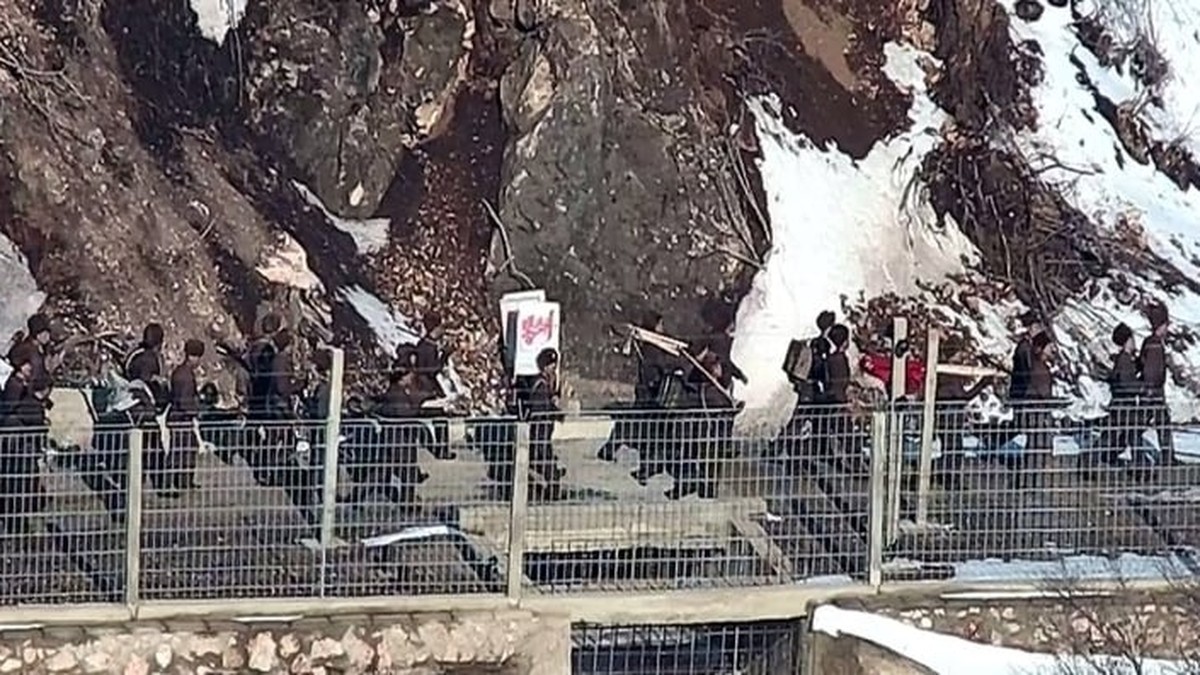
In late 2023, North Korean leader Kim Jong Un declared inter-Korean relations to be those of two states hostile to each other. Since April 2024, North Korea has fortified the border: clearing land, reinforcing tactical roads and barbed wire fences, installing anti-tank barriers, creating barren land and laying large numbers of landmines near the MDL.
North Korean forces have crossed the MDL more than 20 times in the past month, according to Chosun. That is the tempo against which Monday's blast has to be read.
A President Between Dialogue and Deterrence
President Lee Jae-myung responded on 21 September. He said he received news that three troops were injured in a landmine explosion during the clearing of a DMZ reconnaissance route, extended his deepest condolences to the families, and said the government will provide all necessary support for the treatment and recovery of the troops.
U.S. Forces Korea Commander Xavier Brunson, in a post on X, extended his deepest sympathies on behalf of United Nations Command, Combined Forces Command and U.S. Forces Korea to the injured soldiers and their families, wished them a full and speedy recovery, and said the ROK-U.S. Alliance stands with the Republic of Korea Armed Forces.
Lee has repeatedly called for unconditional dialogue with the North, overtures that have so far gone unanswered by Pyongyang. On 20 September, North Korea fired a short-range ballistic missile from the Wonsan area toward the East Sea, prompting South Korea to convene an emergency security meeting. On 9 September, the top South Korean and U.S. commanders reaffirmed border deterrence amid the increased MDL crossings. On 19 August, the United States and South Korea scaled back joint military drills after an order from President Donald Trump.
What Happens Next
The UNC on-site inspection is scheduled for early next week. That inspection is the only mechanism currently on the table that can establish what detonated, where it came from, and who put it there. Until it reports, the cause is unestablished and the JCS says so plainly.
Watch three things. First, whether the UNC team is granted safe access to the site and whether the JCS releases a precise location afterward. Second, whether the terrain changes detected on the western front are confirmed as new North Korean mine-laying or as something older. Third, whether Rep. Yu's six encroachment areas inside the 25th Division's border zone get a formal answer from the Ministry of National Defense, which has so far offered only that some terrain changes were identified.
Three officers are recovering. One will not get his ankle back. The question of who is responsible is still open, and it should not be closed by anyone before the inspectors walk the ground.
By Jessica Ali, Staff Writer
This article was produced with AI-assisted research and editorial support. Sources: Yonhap News Agency, the Joint Chiefs of Staff of the Republic of Korea, SBS News, The Chosun Ilbo, UPI, Euronews, AJP Press, Xinhua and China Daily.
What's Your Reaction?
 Like
0
Like
0
 Dislike
0
Dislike
0
 Love
0
Love
0
 Funny
0
Funny
0
 Wow
0
Wow
0
 Sad
0
Sad
0
 Angry
0
Angry
0

Editor-in-Chief at Global1.News. Atlanta-based journalist who cuts through the BS and tells it like it is. Lead anchor, host, and the voice you hear when the spin stops and the truth starts.















Comments (0)