
Diesel prices in Türkiye near $2 per liter as fuel costs hit record high
Turkey’s diesel market has surged to an unprecedented level, with prices edging toward the $2‑per‑liter mark as regional conflict and supply disruptions converge with domestic fiscal measures.
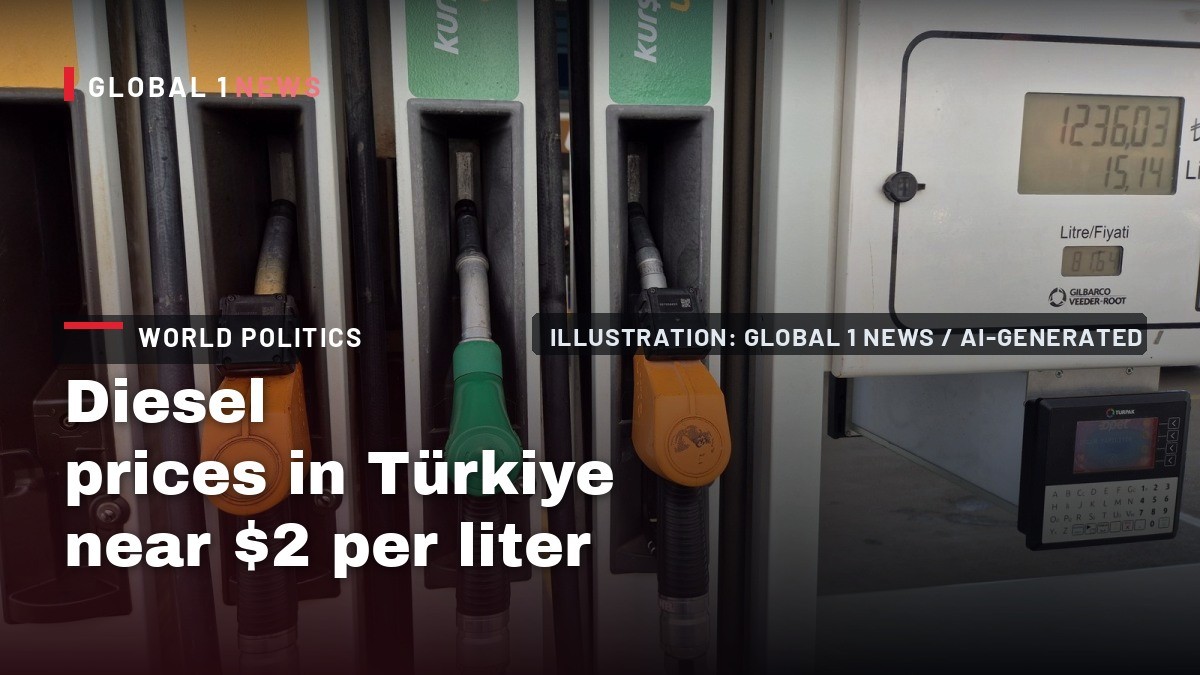
Turkey’s diesel market has surged to an unprecedented level, with prices edging toward the $2‑per‑liter mark as regional conflict and supply disruptions converge with domestic fiscal measures. The latest spike, recorded on 15 September 2026, underscores how the intertwining of geopolitical turbulence, currency volatility and tax policy can rapidly translate into higher transport costs and, ultimately, broader inflationary pressures across the Turkish economy.
Geopolitical shockwaves and fuel supply constraints
The immediate catalyst for the record diesel price is the intensifying war in the Middle East, which has tightened fuel supplies across the region. Recent Ukrainian strikes on Russian refineries have further strained global oil markets, limiting the flow of refined products that Turkey traditionally imports to meet domestic demand. As a result, the supply chain for diesel, a critical input for freight and logistics, has become increasingly fragile.
Compounding these external shocks, the escalation of hostilities between the United States and Iran has driven crude oil prices higher. Brent crude futures rose to $105.74 per barrel on Tuesday, after peaking at $108.43 during the session, while U.S. West Texas Intermediate reached $101.66, after touching $104.21. The upward trajectory of these benchmarks feeds directly into diesel pricing, given the close correlation between crude oil and refined fuel costs at the pump.
Currency volatility and the tax burden
Turkey’s domestic currency dynamics have amplified the impact of rising oil prices. The Turkish lira’s depreciation has translated international oil price movements into steeper local‑currency costs. The latest TL 6.5 increase in the special consumption tax (SCT) on diesel, applied on Tuesday, pushed the price above TL 95 per litre in Istanbul, with Ankara and Izmir seeing even higher levels at TL 96.75 and TL 97.02 respectively.
Beyond the immediate tax hike, the government’s broader fiscal approach has added layers of pressure. After temporarily suspending the SCT on diesel until the end of August, authorities reinstated it this month, planning incremental monthly increases of TL 3 until the tax reaches approximately TL 13.1 per litre on 1 January 2027—the pre‑suspension level. This policy trajectory signals a sustained upward pressure on diesel costs throughout the coming months.
Historical price trajectory and recent acceleration
Comparing the current price with the previous year highlights the rapid acceleration. In September 2025, diesel was selling at around TL 54.40 per litre. By September 2026, the price has risen by roughly 76 percent, reflecting both external oil price hikes and the cumulative effect of domestic tax adjustments. Moreover, the price surge intensified after the U.S. and Israel’s attacks on Iran in late February 2026, when diesel stood at about TL 60.30 per litre. Since then, the price has climbed by almost 60 percent, underscoring the direct link between geopolitical events and fuel costs.
The steep rise has pushed diesel toward a psychological threshold: the TL 100 per litre mark. Industry sources suggest an additional increase of TL 2.5 to TL 3 could be imminent, potentially breaching this level in 45 provinces and bringing major urban centres like Istanbul, Ankara and Izmir close to TL 98 per litre.
Implications for transportation and freight costs
Diesel’s central role in Turkey’s freight and delivery networks means that higher pump prices reverberate across the supply chain. Transport operators, from long‑haul trucking firms to urban delivery services, face heightened operating expenses that are likely to be passed on to businesses and, ultimately, consumers. The article notes that “higher diesel prices mean more expensive transportation for a long list of everyday goods,” a warning that the cost pressure will be felt in retail prices for everything from food staples to manufactured products.
Given the breadth of diesel‑dependent logistics, the price shock could also affect regional trade flows. Turkey’s position as a transit hub for goods moving between Europe, the Middle East and Central Asia means that any sustained increase in transport costs may erode its competitive advantage, prompting shippers to reconsider routing decisions or negotiate higher freight rates.
Policy responses and the sliding‑scale tax adjustment system
The government’s recent removal of diesel from the sliding‑scale tax adjustment system—an instrument designed to cushion consumers from volatile oil prices—signals a shift in fiscal strategy. While gasoline and liquefied petroleum gas (LPG) will remain under the system until 1 October 2026, diesel has been excluded, exposing it to full market fluctuations and tax increments.
This policy choice reflects a balancing act: protecting consumers from price spikes on widely used fuels while attempting to preserve fiscal revenues. However, the exclusion of diesel may exacerbate the cost burden on sectors most reliant on the fuel, potentially prompting calls for targeted subsidies or temporary relief measures if the price trajectory continues upward.
Broader economic context and inflationary pressures
Turkey’s inflation dynamics have already been strained by currency depreciation and rising import costs. The diesel price surge adds another layer to this challenge, as transport costs feed into the price of consumer goods, feeding back into headline inflation. The article’s reference to “higher diesel prices mean more expensive transportation for a long list of everyday goods” highlights the risk of a secondary inflationary loop, where fuel price shocks translate into broader price rises across the economy.
Moreover, the timing of the price increase coincides with a period of heightened geopolitical risk, limiting the scope for monetary policy to offset inflation without further destabilising the lira. Policymakers will need to navigate these intertwined pressures, balancing the need to contain inflation with the risk of tightening financial conditions in an already volatile external environment.
Outlook and potential scenarios
Looking ahead, the trajectory of diesel prices will hinge on several variables. If the conflict in the Middle East escalates further, oil prices could sustain or even exceed current levels, reinforcing upward pressure on diesel. Conversely, any de‑escalation or resolution could ease crude price dynamics, offering some relief.
Domestically, the scheduled incremental SCT increases will continue to push diesel toward and beyond the TL 100 per litre threshold, especially if the anticipated TL 2.5‑TL 3 hike materialises. Should the government decide to intervene—through temporary tax relief, subsidies, or re‑inclusion of diesel in the sliding‑scale system—price volatility could be mitigated. Absent such measures, the sustained high cost of diesel is likely to deepen transport‑related cost pressures, feeding into broader inflation and potentially prompting a reassessment of fiscal and monetary policy stances in the months to come.
This article was produced with AI-assisted research and editorial support. Reporting is based on the source material cited below. Sources: Daily Sabah Middle East; dailysabah.com; Global1.News (16 September 2026).
By Malik Hassan, Staff Writer
What's Your Reaction?
 Like
0
Like
0
 Dislike
0
Dislike
0
 Love
0
Love
0
 Funny
0
Funny
0
 Wow
0
Wow
0
 Sad
0
Sad
0
 Angry
0
Angry
0

Middle East Correspondent at Global1.News. Based in Beirut, covering politics, conflict, energy, and society across the Middle East. Brings context and depth to a region often reduced to headlines.















Comments (0)