
Deutsche Bank Backs Momenta as China Self-Driving Expands in Europe
Deutsche Bank initiates Buy coverage of Momenta with a 400 Hong Kong dollar price target as China's autonomous-driving champions Pony.ai and Momenta push deeper into Europe, with a 2,000-robotaxi Uber partnership and Germany's first Chinese Level 4 testing approval.
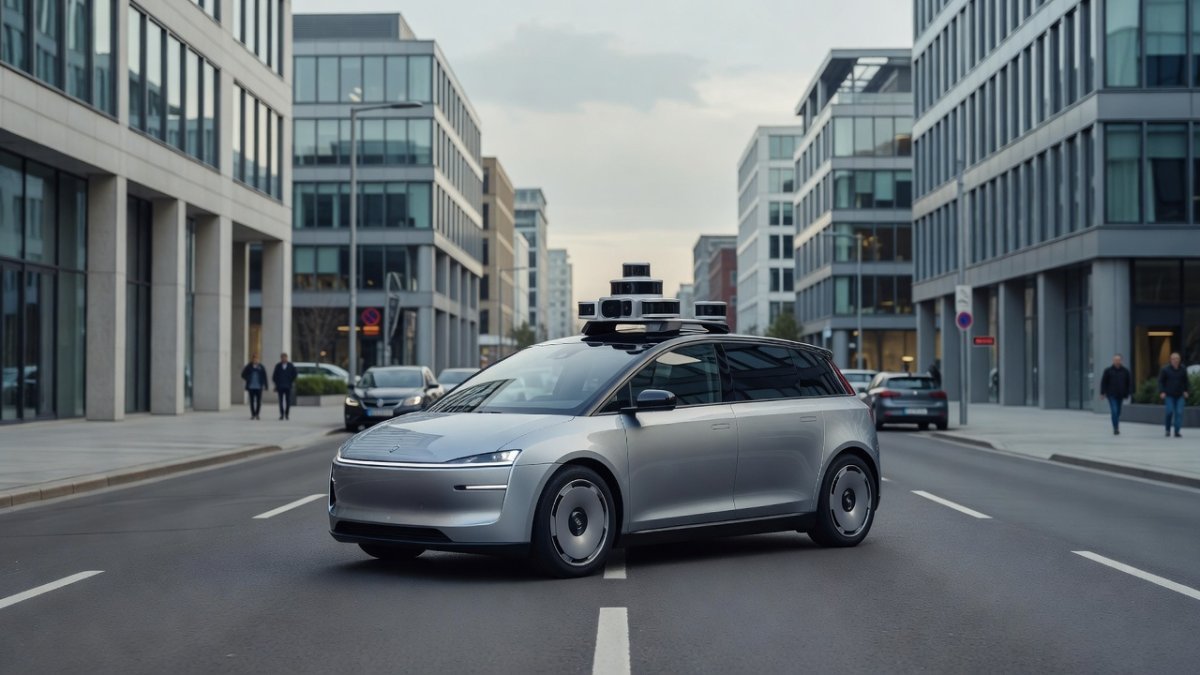
China's Autonomous-Driving Champions Win Over European Banks and Regulators
China's autonomous-driving industry is gaining ground in Europe on multiple fronts, with Deutsche Bank initiating coverage of Momenta with a "Buy" rating and a HK$400 (US$51.2) price target on Monday, and Pony.ai expanding its robotaxi partnership with Uber to more than 2,000 vehicles across five European cities.
The developments mark a turning point for Chinese self-driving technology, which is moving from domestic dominance to international validation. Deutsche Bank analyst Bin Wang called Momenta the "No 1 independent autonomous-driving solution provider globally," particularly in the urban "navigation on autopilot" (NOA) segment, according to a research note released on Monday.
Tags: Momenta, Pony.ai, Deutsche Bank, autonomous driving, robotaxi, Uber, Level 4, Hong Kong IPO, China technology, Europe, KBA approval, Toyota, navigation on autopilot, self-driving, electric vehicles
The Deutsche Bank Call: A 64.5 Per Cent Share of Urban NOA
Deutsche Bank's bullish initiation centres on Momenta's commanding position in the market for advanced driver-assistance software. The analyst estimated Momenta's market share in the urban NOA segment at 64.5 per cent, noting that the company collaborates with nine of the top 10 global automakers and counts Mercedes-Benz, Toyota and General Motors among its strategic shareholders.
The German bank set a target price of HK$400 per share, compared with Friday's closing price of HK$268.40, and assigned a "Buy" rating. The coverage comes roughly a month after Momenta raised about HK$5.9 billion (US$752 million) in its Hong Kong initial public offering. Swiss bank UBS also initiated coverage last month with a "Buy" rating and a HK$360 price target.
Deutsche Bank is one of Momenta's listing sponsors for the Hong Kong IPO, a relationship the bank's note did not hide. The endorsement nonetheless carries weight at a moment when global investors are reassessing which autonomous-driving players can convert technology leadership into sustained revenue.
A Regulatory Breakthrough in Germany
The bank's optimism follows a regulatory milestone: Germany's Federal Motor Transport Authority, known as the KBA, granted Momenta nationwide approval in late July to conduct Level 4 autonomous-driving tests on urban roads. The permit, reported on July 29, made Momenta the first Chinese firm to win Germany-wide Level 4 testing authorisation.
Level 4, or "high automation," is the second-highest level of vehicle automation and the standard used in commercial robotaxi services. Level 5 would represent full automation. The approval allows Momenta to validate its systems across Germany without seeking permission city by city, fast-tracking its European robotaxi rollout and giving the company a regulatory beachhead that few rivals can match.
For Chinese autonomous-driving companies, Germany's framework is significant because it combines one of Europe's most demanding vehicle markets with a clear legal pathway for testing advanced systems. The KBA decision signals that European regulators are willing to accept Chinese technology when it meets safety standards, even as Brussels debates broader restrictions on Chinese software and data practices.
Pony.ai and Uber: 2,000 Robotaxis Across Europe
Alongside Momenta's regulatory advance, Pony.ai, the Baidu-backed autonomous-driving firm listed on NASDAQ and the Hong Kong exchange, announced on August 13 an expanded strategic partnership with Uber to deploy more than 2,000 robotaxis across Europe. The collaboration, which began in 2025, will extend beyond Pony.ai's existing commercial service in Zagreb, Croatia, to four additional European cities, with the Middle East also included in the plan.
Under the arrangement, Pony.ai provides Level 4 autonomous-driving technology and operational experience, while Uber contributes its ride-hailing network and demand generation. The model mirrors the partnership structure that has allowed Chinese firms to enter Western markets without building consumer brands from scratch.
The expansion underscores a broader shift: China's carmakers already dominate the global electric-vehicle market, and their suppliers are now extending that lead into software-defined mobility. European cities, facing pressure to modernise urban transport, are becoming testing grounds for Chinese technology at scale. For Uber, the partnership deepens a strategy of renting autonomous technology from multiple suppliers rather than building its own self-driving stack in-house.
Why Independent Providers Are Winning
Deutsche Bank's note argues that third-party independent solution providers are better positioned than automakers' in-house teams in the autonomous-driving race. Their advantages include faster algorithm iteration, supported by access to larger fleets across multiple original equipment manufacturer partners, and lower unit development costs as artificial intelligence, sensor-integration and cloud-training expenses spread across a broader customer base.
Market data supports the thesis. Penetration of autonomous systems at Level 2, or "partial automation," and above rose from 29 per cent in 2022 to 66 per cent in 2025, and is expected to reach 98 per cent by 2030, according to Bin. That trajectory implies a software market spanning nearly every new vehicle sold, with independent suppliers capturing an increasing share of the value.
For Japan's automakers, the trend carries a competitive warning: partnerships with Chinese software specialists may become a necessity rather than a choice, even as Tokyo weighs the security implications of relying on Chinese technology in vehicles sold in Japan. The global race is no longer confined to China and the United States; Europe's regulators and Japan's industrial champions are now active participants in deciding which software stack powers the next generation of cars.
The Japan Angle: Toyota's Bet and Tokyo's Own Race
Toyota's strategic stake in Momenta is the most visible sign of Japan's entanglement in China's autonomous-driving ascent. The Japanese automaker has historically kept core technology development in-house, but the complexity and capital intensity of autonomous systems have forced even Toyota to seek external partnerships. Its investment in Momenta, alongside Mercedes-Benz and GM, gives Toyota a window into China's most successful independent self-driving software house.
Japan is also running its own race. Uber named Hinomaru Kotsu as the operating partner for its Tokyo robotaxi pilot, which will run a fleet of Nissan LEAF vehicles using Wayve's AI Driver software, the first time Uber has deployed autonomous vehicles in Japan. The choice of British AI company Wayve over Chinese suppliers highlights the competitive dynamics: even as Chinese firms expand across Europe, Japan's regulatory environment and security sensitivities create openings for Western alternatives.
Nissan, for its part, is working toward commercialising its in-house autonomous-drive mobility services with a target date of 2027, while Nissan and Mitsubishi have formed a joint venture focused on Level 4 robotaxi services and EV battery storage. The Japanese approach remains more cautious than China's, but the destination is the same: a mobility market where software, not horsepower, decides the winners.
What to Watch For
Three signals will shape the next phase of China's self-driving expansion in Europe. First, whether the KBA's approval for Momenta becomes a template for other Chinese firms seeking Germany-wide testing permits, and whether Brussels responds with harmonised rules or new restrictions. Second, how quickly Pony.ai and Uber can convert their 2,000-robotaxi plan into operational services, and which four European cities they ultimately select. Third, how Japan's automakers reconcile their partnerships with Chinese software suppliers against Tokyo's growing scrutiny of Chinese technology in critical infrastructure.
For investors, the Deutsche Bank initiation adds a second major bank to the bullish case on Momenta, following UBS's Buy rating in July. For the broader Asia-Pacific region, the story is clear: Chinese autonomous-driving companies are no longer waiting for permission to compete globally; they are setting the agenda, one regulatory approval and one ride-hailing partnership at a time.
By Kenji Tanaka, Staff Writer
This article was produced with AI-assisted research and editorial support. Reporting is based on sources cited in the article.
What's Your Reaction?
 Like
0
Like
0
 Dislike
0
Dislike
0
 Love
0
Love
0
 Funny
0
Funny
0
 Wow
0
Wow
0
 Sad
0
Sad
0
 Angry
0
Angry
0

Japan Correspondent at Global1.News. Tokyo-based voice covering Japanese politics, technology, economy, and culture. Tracks the intersection of tradition and innovation in one of the world's most dynamic societies.














Comments (0)