
Criminalising bid-rigging to bring ‘revolutionary overhaul’ to sector: minister
Secretary for Justice Paul Lam Ting‑kwok announced on Sunday that the Hong Kong government will introduce sweeping legislative amendments aimed at eradicating bid‑rigging within the city’s building maintenance sector.
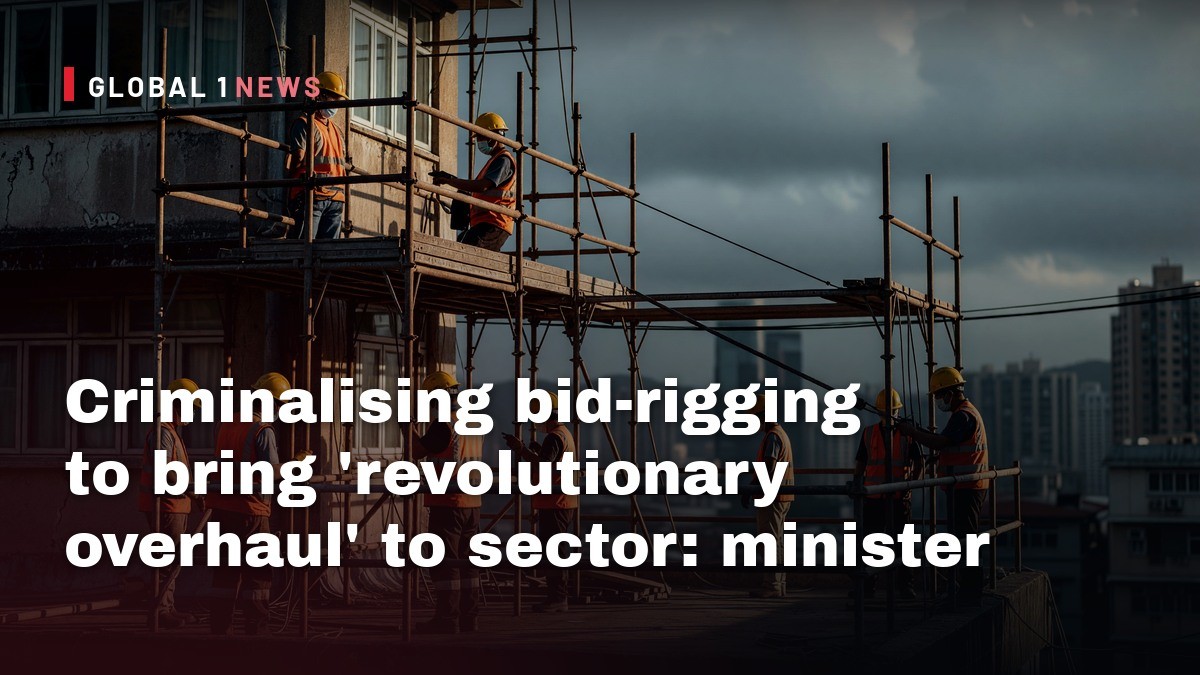
Secretary for Justice Paul Lam Ting‑kwok announced on Sunday that the Hong Kong government will introduce sweeping legislative amendments aimed at eradicating bid‑rigging within the city’s building maintenance sector. The move follows the government’s rapid response to an independent committee’s findings on the tragic Tai Po fire, a disaster that has sharpened public scrutiny of the standards governing building safety and maintenance. Lam described the current market as offering “too lucrative a piece of ‘fat meat’ that has been monopolised by bad people,” signalling a determination to dismantle entrenched networks of collusion and replace them with a framework that favours reputable professionals.
Background to the Tai Po fire inquiry
The Tai Po fire, which prompted an independent committee to examine systemic failures in building safety, highlighted glaring gaps in oversight of maintenance contracts. While the committee’s full report is not reproduced here, its conclusions underscored the ease with which a small number of contractors could dominate lucrative maintenance work through opaque bidding processes. The incident has thus become a catalyst for broader regulatory reform, with the justice ministry positioning the upcoming legislation as a direct response to the committee’s recommendations.
In the wake of the fire, public confidence in the integrity of the building maintenance ecosystem has eroded, prompting calls from both civic groups and industry stakeholders for stronger safeguards. The government’s decision to act swiftly reflects an awareness that lingering doubts could undermine the city’s reputation for safety and reliability, especially as Hong Kong continues to host multinational corporations and high‑rise developments.
The scope of the proposed legislative amendments
Lam’s remarks indicate that the forthcoming amendments will focus on raising standards and strengthening oversight across the entire maintenance value chain. By targeting the “market currently offers” for maintenance contracts, the reforms aim to curtail the concentration of business among a limited pool of operators deemed “bad people.” Although the precise mechanisms have not been disclosed, the language suggests a shift toward more transparent tendering processes and stricter qualification criteria for contractors.
The justice minister’s emphasis on “revolutionary overhaul” implies that the reforms will go beyond incremental adjustments. Instead, they are likely to introduce new compliance obligations, potentially including mandatory disclosure of bidding histories, enhanced penalties for collusion, and a reinforced role for regulatory bodies tasked with monitoring contract awards. Such measures would align Hong Kong’s maintenance sector with international best practices, where transparency and competition are central to preventing corruption.
Implications for contractors and industry players
For contractors operating within Hong Kong’s building maintenance market, the announced reforms signal a period of adjustment. Companies that have relied on informal networks or opaque bidding arrangements may find their business models challenged by stricter vetting and oversight. Conversely, firms that have cultivated a reputation for professionalism and compliance stand to benefit from a level playing field that rewards merit rather than connections.
The justice minister’s framing of the market as being “monopolised by bad people” suggests that the government intends to dismantle entrenched monopolies, opening opportunities for new entrants who meet higher standards of integrity. This could stimulate competition, drive innovation in maintenance services, and ultimately raise the quality of building upkeep across the city.
Potential impact on building safety and public confidence
At its core, the bid‑rigging crackdown is a safety initiative. By ensuring that maintenance contracts are awarded on transparent and competitive grounds, the government aims to secure higher-quality workmanship and more reliable oversight of critical building systems. In the long term, this should translate into fewer incidents similar to the Tai Po fire, reinforcing public confidence in the safety of Hong Kong’s built environment.
Public sentiment, still raw from the recent tragedy, is likely to be closely monitored as the reforms roll out. Successful implementation could restore trust not only in the maintenance sector but also in the broader regulatory framework that governs construction and building management. Conversely, any perception of half‑measures or continued loopholes could reignite criticism and erode confidence further.
Legal and regulatory considerations
The justice ministry’s involvement underscores the legal dimension of the reforms. By positioning the amendments within a legislative context, the government signals that bid‑rigging will be treated as a serious offence, potentially subject to criminal penalties. This aligns with global trends where anti‑collusion statutes are increasingly used to deter corrupt procurement practices.
Strengthening oversight may also involve empowering existing regulatory agencies or establishing new bodies tasked with monitoring compliance. While the source material does not detail these structures, the emphasis on “raising standards” suggests that the government will adopt a more proactive stance, possibly including regular audits, whistleblower protections, and clearer channels for reporting violations.
Economic ramifications for the construction and maintenance sectors
The maintenance sector represents a substantial portion of Hong Kong’s construction‑related economy. By reshaping how contracts are awarded, the reforms could have ripple effects on related industries, including suppliers of building materials, engineering firms, and specialist service providers. A more competitive market may drive down costs for building owners while encouraging firms to differentiate themselves through quality and compliance.
However, the transition may also impose short‑term costs on contractors who must adapt to new compliance requirements, invest in training, and possibly restructure their procurement processes. The government’s approach to balancing enforcement with support for legitimate businesses will be crucial in mitigating any adverse economic impact.
Future outlook and next steps
In the coming weeks, the justice ministry is expected to present the detailed legislative proposal to the Legislative Council for debate. Stakeholders, including industry associations and consumer advocacy groups, will likely submit feedback, shaping the final form of the amendments. The process will be closely watched as an indicator of the administration’s commitment to curbing corruption and enhancing public safety.
Ultimately, the success of the “revolutionary overhaul” will depend on effective implementation, robust enforcement, and sustained political will. If the reforms achieve their intended goals, Hong Kong could set a benchmark for transparent, accountable building maintenance practices in the region, reinforcing its status as a global financial hub with a safe and well‑maintained urban landscape.
This article was produced with AI-assisted research and editorial support. Reporting is based on the source material cited below. Sources: South China Morning Post; scmp.com; Global1.News (01 November 2026).
By Kenji Tanaka, Staff Writer
What's Your Reaction?
 Like
0
 Dislike
0
 Love
0
 Funny
0
 Wow
0
 Sad
0
 Angry
0

Japan Correspondent at Global1.News. Tokyo-based voice covering Japanese politics, technology, economy, and culture. Tracks the intersection of tradition and innovation in one of the world's most dynamic societies.















Comments (0)