
Rescuers scramble for survivors with 180 dead in Colombia earthquake
A magnitude 7.4 earthquake struck western Colombia on Monday, killing at least 181 people with local officials' figures suggesting the toll may exceed 240. Cali, Pereira and Manizales suffered widespread destruction as rescuers raced to find survivors amid more than 70 aftershocks.
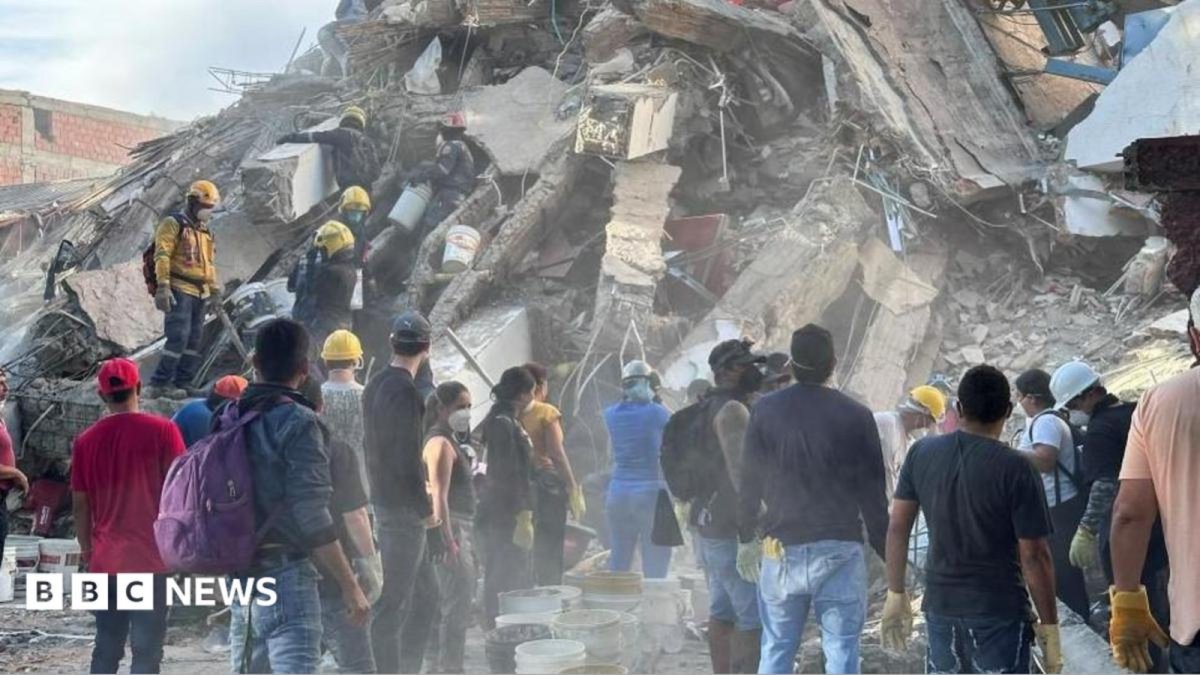
The ground beneath western Colombia has not stopped moving since Monday morning, when a magnitude 7.4 earthquake — the strongest to hit the country in a decade — tore through cities and towns, collapsing hospitals, schools, and apartment blocks. As rescue workers dig through rubble with their bare hands and heavy machinery, the official death toll stands at 181, though local officials' figures suggest the true number may already exceed 240. Tuesday brought no respite: more than 70 aftershocks have rattled the region, and thousands of families spent the night in open parks and streets, too terrified to return to homes that may no longer be standing.
Bogotá, Colombia — The numbers are staggering, but they fail to capture the human weight of this disaster. President Abelardo de la Espriella declared a state of emergency on Monday and has since confirmed that nearly 2,600 people are injured, almost 200 remain missing, and more than 1,100 homes have been destroyed, with over 8,000 damaged. The quake struck at 07:34 local time Monday, its epicenter located roughly 61 kilometers west of Pereira at a depth of 110 kilometers — deep enough to spread destruction across hundreds of miles, from Cali to Bogotá, and even into neighboring Ecuador, Panama, and Venezuela.
Death Toll Climbs as Rescue Efforts Continue
The official count of 181 dead is already a national tragedy, but it is almost certainly an undercount. An aggregated figure gathered from local officials across the affected departments puts the toll at more than 240, and with nearly 200 people still unaccounted for, that number could rise further in the coming days. President Espriella, speaking Tuesday from Pereira — one of the hardest-hit cities — urged Colombians to prepare for the possibility of more casualties as rescue teams reach the deepest layers of collapsed structures.
In Pereira, the city's fire department has confirmed 79 deaths. The city has implemented a car-free day to allow search operations to proceed unimpeded, and hundreds of volunteers have joined professional rescuers in removing debris by hand. Footage from the city shows the massive scale of the effort: lines of people passing buckets of rubble, firefighters calling for silence to listen for voices beneath the concrete, and families waiting in anguish at the edges of cordoned-off zones.
Cali: A City of 2.2 Million Under Rubble
Cali, a city of 2.2 million people, has borne the brunt of the disaster with 95 confirmed deaths. Mayor Alejandro Eder reported Tuesday that 239 people remain trapped in collapsed structures, with 949 injured and 45 buildings either completely or partially destroyed. Among the most heartbreaking losses is the Gimnasio Calima school in the northern neighborhood of Calima, where a section of the building collapsed, killing four children and injuring dozens more. Mayor of Calima, Antonio Cadavid, confirmed that 30 children were referred to care centers, some with serious injuries.
The city's hospital infrastructure has also been compromised. Several upper floors of one of Cali's main hospitals — including areas dedicated to pediatric care — collapsed, leaving patients trapped inside. Rescue teams have been working around the clock to free them, but the damage to medical facilities complicates an already dire situation. To combat the threat of looting in the chaos, Mayor Cadavid has ordered a curfew from 20:00 local time Tuesday until 06:00 Wednesday morning.
Pereira and Manizales: The Wider Devastation
In Pereira, the scene near the city's airport in the Parque Industrial neighborhood is one of utter devastation. A resident who spoke to BBC Mundo described the impossibility of moving through the city center. "It's impossible to get around the city center. In Bolívar Square, at least one building collapsed. Furthermore, there are structures where buses and trucks are trapped, and people are afraid those structures will collapse as well," he said. "We're all in shock. It was really awful."
Manizales, a city of steep hills and coffee-country charm, has also been hit hard. Mayor Jorge Eduardo Rojas confirmed five deaths and reported that 60 buildings in the city had partially or totally collapsed. The damage to Manizales is particularly concerning given its topography — the city is built on unstable slopes, and the combination of seismic shaking and potential landslides poses ongoing risks. Rojas has cautioned residents about the danger of aftershocks and urged the public not to share chain messages or social media posts from unknown sources, warning that they "may contain false or unverified information... which could cause greater concern and alarm among the public."
Aftershocks and the Danger of Misinformation
Colombia's geological service has recorded more than 70 aftershocks since Monday's main quake. Early Tuesday, two earthquakes of magnitude 3.6 occurred — one in San José del Palmar and another in Santander. While these are significantly weaker than the initial tremor, they are a stark reminder that the earth beneath western Colombia remains unstable. Each aftershock sends fresh waves of panic through communities already on edge, and rescue workers must balance the urgency of their mission against the risk of further collapses.
The misinformation problem is real and dangerous. In the digital age, rumors spread faster than seismic waves. Mayor Rojas's warning about unverified social media posts is not just cautionary — it is a public safety measure. False reports of impending mega-quakes or exaggerated casualty figures can trigger panic, hamper rescue efforts, and divert resources from where they are most needed. For a region already traumatized, the spread of disinformation is an additional threat that authorities are working to contain.
A Region on the Pacific Ring of Fire
Colombia sits on the Pacific Ring of Fire, where the Nazca plate subducts beneath the South American plate along the Pacific coast. This geological reality means earthquakes are not anomalies here — they are a recurring feature of life. The 1999 Armenia earthquake, magnitude 6.2, killed approximately 1,190 people. The 1983 Popayán quake, magnitude 5.5, claimed around 300 lives. Each disaster has prompted updates to building codes — Colombia's NSR-10, introduced in 2010, mandates seismic-resistant design for new construction — but the legacy of older, informal buildings remains a deadly vulnerability.
This earthquake is a brutal reminder that building codes are only as effective as their enforcement. The collapse of the Gimnasio Calima school, a place where children should be safest, raises urgent questions about the structural integrity of educational facilities across the region. As Latin American nations grapple with aging infrastructure and rapid urbanization, the lessons from Colombia's tragedy extend far beyond its borders. From Quito to Mexico City, from Lima to São Paulo, the region must confront the reality that seismic resilience is not a luxury — it is a matter of life and death.
International Solidarity — and What Comes Next
In the face of catastrophe, the international community has mobilized. UN Secretary-General António Guterres expressed his solidarity with the people and government of Colombia, with the UN working to support the government's response. Spain's Foreign Minister, José Manuel Albares, reported that 164 Spaniards remain missing, though there are no reports of injuries or deaths among Spanish citizens. The Trump administration, which backed President Espriella in his successful election earlier this year, announced a donation of $15.5 million to support relief efforts.
But for Latin Americans, the most meaningful offers of help have come from closer to home. Ecuador, Brazil, El Salvador, and Venezuela have all offered assistance — a demonstration of regional solidarity that transcends political differences. As a Brazilian journalist, I know that when disaster strikes one of our sister nations, we do not hesitate. Brazil's offer of help is not just diplomatic protocol; it is a recognition that we share not only a continent but a common vulnerability to the forces of nature. The Pacific Ring of Fire does not respect borders, and neither should our capacity for mutual aid.
The road ahead for Colombia is long and painful. The immediate priority is finding survivors — the 239 people still trapped in Cali, the nearly 200 missing across the region, the families waiting in anguish at the edges of rescue sites. But beyond the rescue effort lies the monumental task of rebuilding: more than 1,100 homes destroyed, 8,000 damaged, hospitals in ruins, schools reduced to rubble. The state of emergency declared by President Espriella provides the legal framework for a coordinated response, but the emotional and psychological recovery will take far longer than any reconstruction project.
For now, Colombians are doing what they have always done in times of crisis: they are showing up. Volunteers in Pereira work alongside firefighters in Cali. Neighbors dig through the ruins of buildings they once called home. The world watches, and the world helps. But as the aftershocks continue and the dust settles, one question remains: what will Latin America learn from this tragedy? The earth will shake again — it always does. The only question is whether we will be ready.
By Elena Vasquez, Staff Writer
This article was produced with AI-assisted research and editorial support. Reporting is based on sources cited in the article.
What's Your Reaction?
 Like
0
Like
0
 Dislike
0
Dislike
0
 Love
0
Love
0
 Funny
0
Funny
0
 Wow
0
Wow
0
 Sad
0
Sad
0
 Angry
0
Angry
0

Latin America Correspondent at Global1.News. Based in Mexico City, covering politics, economics, energy, and culture across the region. Brings an on-the-ground perspective to stories spanning from the Rio Grande to Patagonia.












Comments (0)