
Colombia Earthquake: Death Toll Tops 250 as Rescue Teams Keep Digging
A 7.4 magnitude earthquake has killed more than 250 people in western Colombia, with rescue teams including Mexico's Los Topos Azteca digging through rubble in Cali as President Abelardo de la Espriella declares a national emergency.
In a recent DW News report, the scale of devastation in western Colombia came into sharp focus as international rescue teams, including Mexico’s legendary Los Topos Azteca, raced against time to find survivors beneath the rubble. The report highlighted the urgent plea from President Abelardo de la Espriella for global assistance, underscoring a crisis that has already claimed more than 250 lives and left thousands missing. As the clock ticks past the 48-hour mark, the window for finding survivors narrows, but the determination of the rescue brigades remains unwavering.
Colombia Earthquake: Death Toll Tops 250 as Rescue Teams Keep Digging
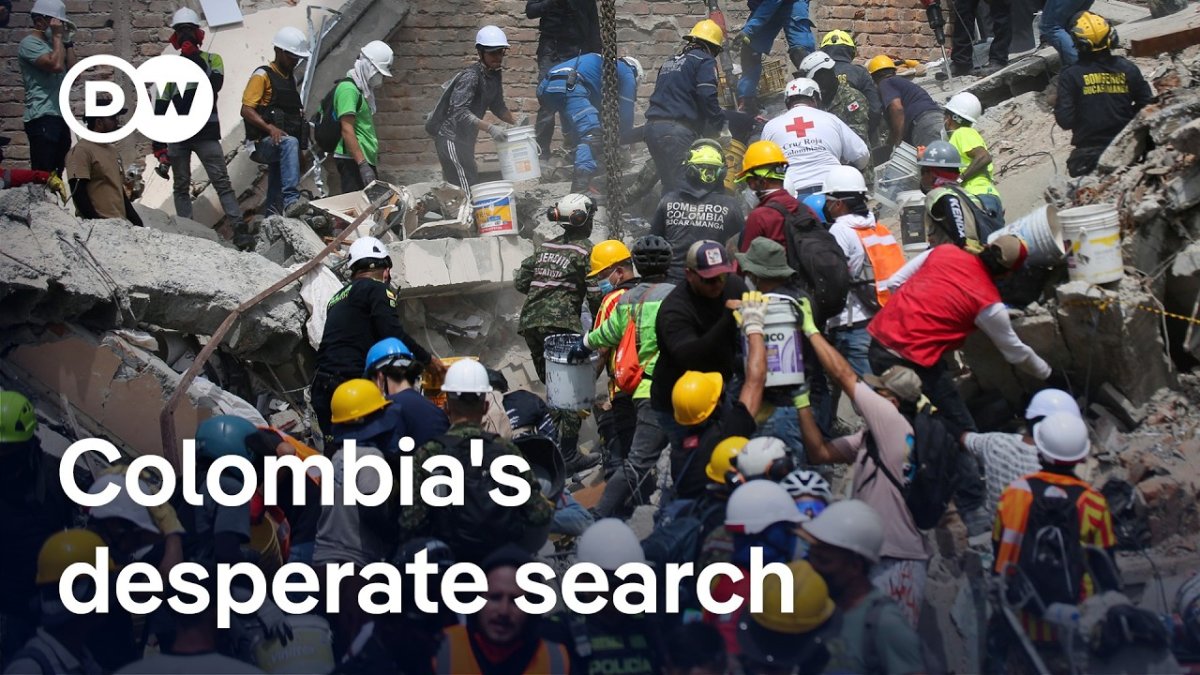
MEXICO CITY, Mexico – Aug 13, 2026 — The earth moved with a violence that Colombia has not witnessed in a century. At approximately 7:34 a.m. local time on Monday, August 10, 2026, a magnitude 7.4 earthquake ripped through the western departments of Chocó and Valle del Cauca, leaving a trail of collapsed buildings, shattered infrastructure, and profound grief. The epicenter, located near the remote municipality of San José del Palmar in Chocó, struck at a depth of about 103 kilometers (64 miles), a deep tremor that nonetheless unleashed catastrophic energy across a wide swath of the Andean nation.
A Century’s Most Powerful Tremor Shakes the Region
The seismic event is now officially the most powerful earthquake to hit Colombia this century, a sobering statistic that places the disaster in historical context. The tremor was not confined to Colombia’s borders; it was felt with alarming intensity in neighboring Panama, Ecuador, and Venezuela, a testament to the sheer force of the quake. In Colombia, the impact was most acutely felt in the bustling urban centers of Cali, the nation’s third-largest city, as well as Pereira, a city of approximately 500,000 residents located a mere 35 miles from the epicenter, and Manizales, a key coffee-region hub.
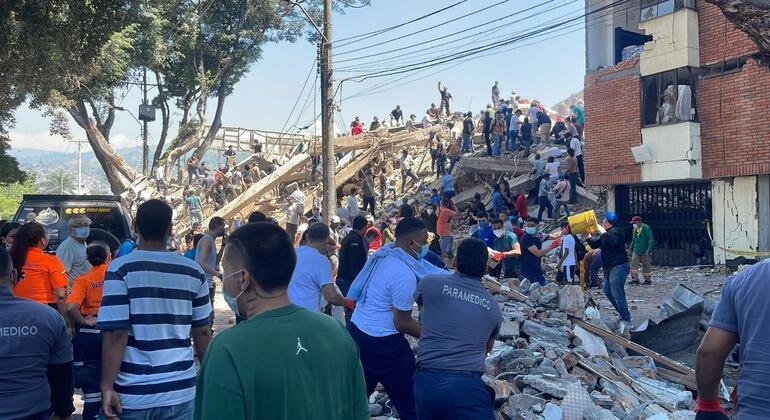
The human cost is staggering. More than 48 hours after the initial shock, official reports confirm that the death toll has surpassed 250 people, with over 1,300 individuals injured. The number of missing persons remains fluid and deeply troubling, with some reports suggesting that up to 3,000 people are unaccounted for. The physical destruction is equally immense: more than 150 buildings have completely collapsed, while approximately 1,575 homes have been damaged and 37 destroyed. The region’s social fabric has been torn, with at least 18 health centers and 52 educational facilities suffering significant damage, crippling essential services during the hour of greatest need.
President De la Espriella Faces First Major Test
This catastrophe lands squarely on the shoulders of a newly inaugurated leader. President Abelardo de la Espriella, who took the oath of office just three days before the quake on August 7, 2026, has been thrust into a national emergency of unprecedented scale. In a televised address from Bogotá, President De la Espriella declared a national emergency and made an impassioned appeal for international support, stating unequivocally that the immediate priority is rescuing people trapped under the rubble. His administration has activated all emergency response mechanisms, though the logistical challenges are immense.
The government’s response has been swift in its mobilization, but the geography of the disaster presents a formidable obstacle. Several airports in western Colombia have suspended operations, complicating the delivery of aid and the evacuation of the wounded. Evacuation orders were issued as far away as Bogotá, a city located approximately 250 miles from the epicenter, a precautionary measure that speaks to the tremor’s reach. The new president’s hardline stance against armed groups, coupled with his recent decision to join the US "Shield of the Americas" security alliance, adds a complex political layer to the humanitarian response, as the nation’s security apparatus is now split between disaster relief and internal security operations.
Los Topos Azteca: Mexico’s Heartbeat in the Rubble
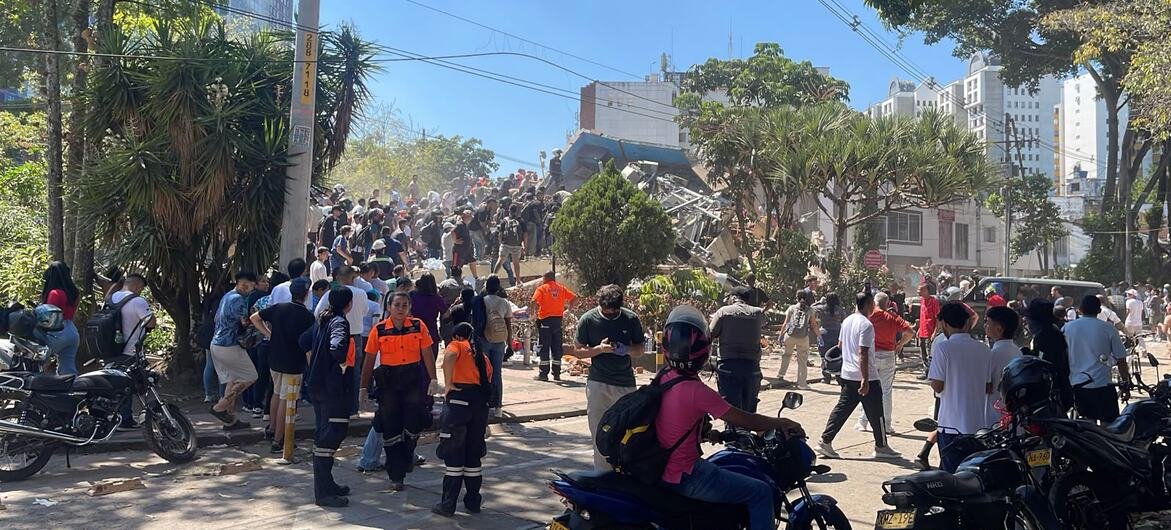
In a display of regional solidarity that transcends politics, Mexico’s legendary rescue brigade, Los Topos Azteca, arrived in Cali on Wednesday, August 12, to join the search-and-rescue effort. The team, led by the experienced Héctor Méndez, did not travel directly from Mexico. Instead, they arrived from Venezuela, where they had spent 41 grueling days responding to two powerful earthquakes near La Guaira. This 45-member Mexican team brings with them a unique expertise forged in tragedy—Los Topos Azteca was founded in the aftermath of the devastating 1985 Mexico City earthquake, when untrained civilians, armed with nothing but picks and shovels, organized themselves to rescue neighbors trapped in the debris.
Their presence in Cali is more than just a logistical asset; it is a symbol of shared seismic destiny. Mexico and Colombia are both earthquake-prone nations, having experienced devastating quakes in Mexico City in 1985 and 2017, and Puebla in 2017. The Topos understand the desperation of the families waiting outside collapsed structures, and they understand the grim mathematics of survival. Their expertise was immediately put to use in the dense urban neighborhoods of Cali, where the search for survivors is a race against dehydration, crush injuries, and time. The brigade’s arrival was met with emotional embraces from local residents, who see in the orange helmets a glimmer of hope.
Chocó: A Region Already on the Brink
While the urban centers of Cali and Pereira capture the headlines, the true depth of this tragedy lies in the remote, impoverished department of Chocó. This region, one of Colombia’s poorest, is also one of the hardest hit by decades of armed conflict. Even before the earthquake, Chocó was reeling from a humanitarian crisis, with more than 21,000 people experiencing forced confinement—the highest figure in the country. The earthquake has now severed the few lifelines that remained. Aid access to remote areas like the San Juan and Baudó river regions is either severely limited or completely cut off, leaving indigenous and Afro-Colombian communities isolated without food, water, or medical care.
The timing of the quake could not be worse. Colombia was already facing its worst humanitarian crisis in years, with more than 1.6 million people affected by violence and armed conflict last year—a figure that is three times the number recorded in 2024. The earthquake has compounded this existing vulnerability, creating a layered disaster where the effects of violence and nature intertwine. The Red Cross has mobilized a nationwide response, with Colombian search and rescue teams on the ground in Chocó, but the lack of road access and the threat of ongoing instability are hampering their progress. In the DW News report, Loyce Pace, Regional Director for the Americas at the International Federation of Red Cross & Red Crescent Societies (IFRC), emphasized the critical need for sustained international funding to reach these forgotten communities.
International Solidarity and a Glimmer of Hope
The international community has begun to rally around Colombia. The United Nations has offered its full support, with UN Resident Coordinator in Colombia, María José Torres Macho, coordinating closely with national authorities. UN Deputy Spokesperson Farhan Haq confirmed that the UN stands ready to help, though the logistical hurdles of reaching the most affected zones remain a primary concern. The US, which has already pledged $1 billion in security assistance to Colombia under the new "Shield of the Americas" alliance, is now being called upon to pivot some of its resources toward humanitarian aid.
Amidst the rubble and the grief, there are stories of extraordinary resilience. In Cali, Diana Marcela Troncoso was freed after nearly 30 hours trapped in the debris, her rescue broadcast live on national television, offering a momentary reprieve from the grim news. Her survival is a testament to the tireless work of the rescue teams, but it also highlights the brutal reality that for every Diana, there are hundreds of others still waiting. As the search continues, the focus remains on the human impact—the families in Pereira who have lost their homes, the children in Manizales whose schools are now piles of concrete, and the communities in Chocó who are cut off from the world. The road to recovery will be measured in years, not months, and it will require a sustained commitment from both the Colombian government and the international community to rebuild not just the infrastructure, but the lives of the millions affected by this seismic catastrophe.
By Rosa Martinez, Staff Writer
This article was produced with AI-assisted research and editorial support. Reporting is based on sources cited in the article.
What's Your Reaction?
 Like
0
Like
0
 Dislike
0
Dislike
0
 Love
0
Love
0
 Funny
0
Funny
0
 Wow
0
Wow
0
 Sad
0
Sad
0
 Angry
0
Angry
0
Latin America/Andes Correspondent at Global1.News. Based in Bogota, covering politics, environment, energy, and social movements across the Andean region. Passionate about environmental journalism and communities protecting their land.











Comments (0)