
Cloud GPUs Kill the Hardware Excuse for Running Big AI
Jessica Ali demolishes the hardware excuse for AI, showing how oobabooga's web UI on RunPod or Colab lets anyone rent GPUs for pennies an hour and run open-source LLMs. Democratization is here, but cloud limits and data privacy remain real concerns.
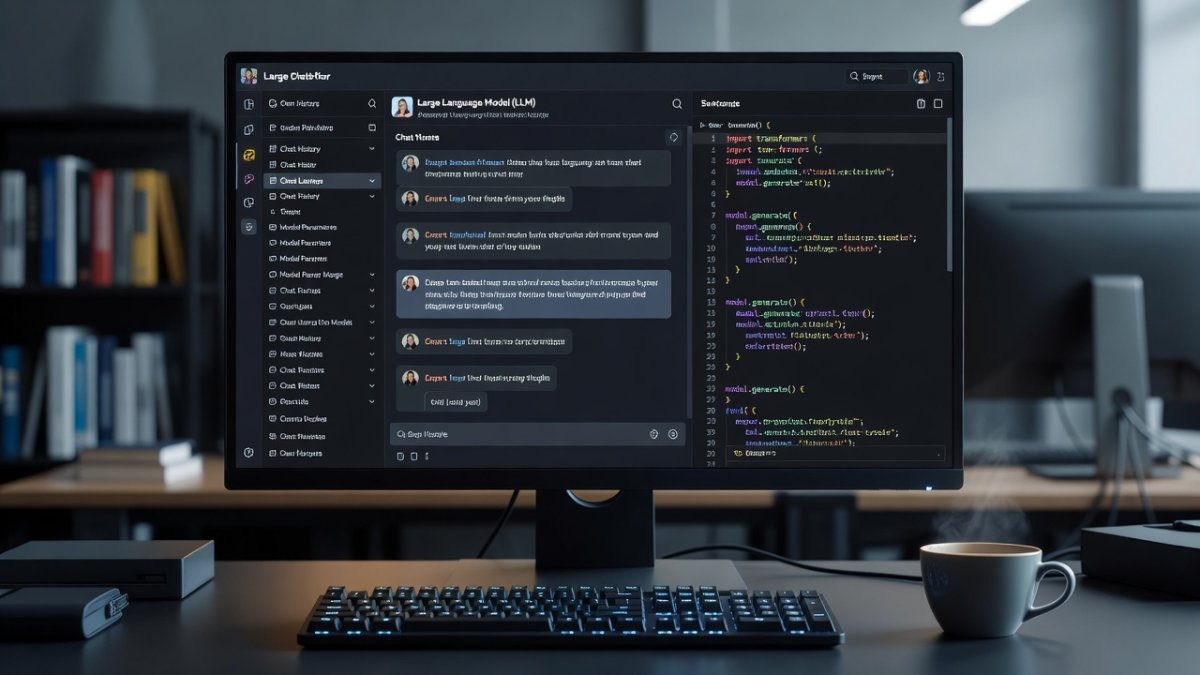
Folks, let's cut the whining right here and now. You don't need a $3,000 graphics card sitting under your desk to run the most powerful open-source AI models on the planet. That excuse is dead. Buried. Gone. And if you're still using "I can't afford the hardware" as your reason for sitting on the sidelines, you're not being honest with yourself - you're just not paying attention. This video from Aitrepreneur, the open-source AI evangelist channel that's been screaming this truth from the rooftops for years, lays it out in plain English: rent the damn GPU, run the model, and stop pretending the barrier to entry is still a wall. It's a speed bump now, and I'm about to show you why.
RUN TextGen AI WebUI LLM On Runpod & Colab! Cloud Computing POWER! - The Hardware Excuse Is Officially Dead
Atlanta, GA - The video in question, "RUN TextGen AI WebUI LLM On Runpod & Colab! Cloud Computing POWER!" from Aitrepreneur, isn't just another tutorial. It's a demolition of the last remaining excuse hobbyists, indie developers, and even some professionals cling to when they say they can't get into serious AI work. The premise is brutally simple: you don't buy the supercomputer, you borrow it by the hour. And the tool that makes it all possible is oobabooga's text-generation-webui, the open-source Gradio-based interface that has become the undisputed Swiss Army knife for running, tweaking, and training large language models without a PhD in computer science.
The "AUTOMATIC1111 of LLMs" Is Your New Best Friend
Here's the thing, folks. If you've been anywhere near the AI image generation scene, you know the name AUTOMATIC1111. It's the go-to web interface for Stable Diffusion that turned a complex, command-line nightmare into a browser-based point-and-click playground. oobabooga's text-generation-webui is that exact same energy, but for text models. It's not just a pretty face either. This thing is a multi-backend monster. It supports Transformers, llama.cpp, ExLlama, and a whole host of other execution engines, meaning you can run models from Meta, Mistral, and a thousand other open-source labs without needing to recompile your entire life. It handles LoRA and QLoRA fine-tuning, lets you play with quantization to squeeze models into smaller memory footprints, and has an extension ecosystem that adds everything from text-to-speech to web search integration. And for the developers out there, it even exposes an OpenAI-compatible API, so you can plug it into your existing tools without rewriting a single line of code. This isn't a toy. This is a professional-grade tool that costs you nothing but the electricity to run your browser.
RunPod: The Rental Market That Makes Bezos Look Like A Pawn Shop
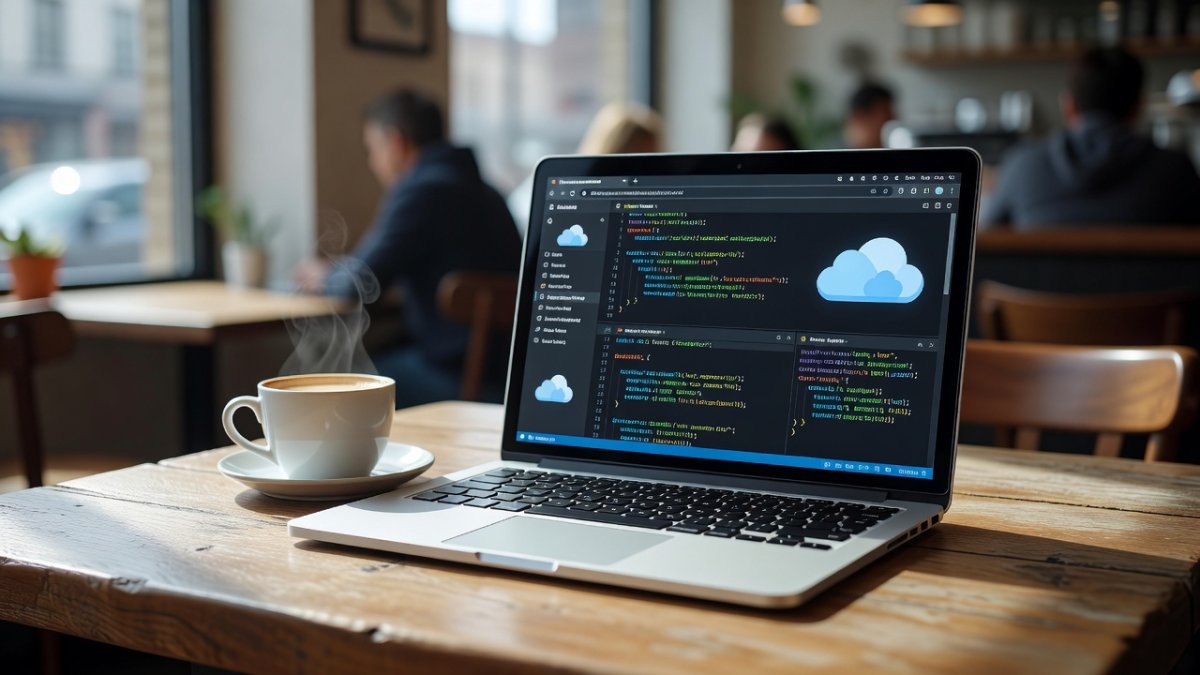
Now let's talk about the real star of the show: RunPod. This is the platform that Aitrepreneur highlights, and for good reason. RunPod is a cloud GPU rental service that operates on per-second billing. You spin up a "Pod" - which is essentially a dedicated GPU instance - use it for exactly as long as you need, and then shut it down. No long-term contracts, no massive upfront capital expenditure. Just pure, on-demand compute. The pricing in 2026 is almost laughably accessible. We're talking about an RTX 4090, which is still a beast of a card, for roughly $0.35 an hour. An A100, the data center workhorse that was once the exclusive domain of billion-dollar tech companies, runs you somewhere between $0.89 and $2 an hour depending on region and provider. And if you need the absolute top-tier H100, the card that powers the bleeding edge of AI research, you're looking at around $2.89 to $3.50 an hour. Let me put that in perspective for you. That's less than the cost of a single craft cocktail in Manhattan. You can run a state-of-the-art AI model for an entire evening for the price of a mediocre dinner out. That's not a luxury. That's a steal.
Google Colab: The Free Lunch That's Still On The Table
But what if you're even more broke than that? What if you're a student, a tinkerer, or just someone who wants to dip a toe in before committing a single dollar? That's where Google Colab comes in. Colab has been the gateway drug for AI enthusiasts for years, and it still offers a free tier with limited GPU access. It's not going to give you an H100 for free, and your sessions can be interrupted if you're idle for too long, but for running a 7B or even a 13B parameter model with the right quantization, it's more than enough to get your feet wet. The paid Pro and Pro+ tiers give you better GPUs and longer session limits, but the point stands: you can start experimenting with open-source LLMs today, right now, without spending a dime. The video walks you through the exact steps to get oobabooga's web UI running on Colab, and it's a process that takes minutes, not hours. The democratization of AI infrastructure isn't a future promise. It's a present-day reality, and it's sitting right there in your Google account.
Hugging Face: The Candy Store For Open-Source Models
Once you've got your rented GPU humming, where do you get the models? That's where Hugging Face comes in. Hugging Face is the GitHub of machine learning, a massive repository where researchers and companies publish their open-source models for anyone to download. The beauty of oobabooga's web UI is that it integrates seamlessly with Hugging Face. You don't need to manually download files and wrestle with directory structures. You just paste the model name into the UI, hit download, and the interface handles the rest. It's a browser point-and-click experience that turns what used to be a multi-hour technical ordeal into a five-minute coffee break. You want to run Llama 3? Click. You want to try Mistral's latest? Click. You want to experiment with a niche model fine-tuned for legal document analysis? Click. The entire open-source AI ecosystem is at your fingertips, and the only thing standing between you and it is a few cents of GPU rental time.

What This Means
Here's the thing, folks. This isn't just about convenience. This is about power. For the last few years, the narrative has been that serious AI work requires serious capital. You need a data center. You need a cluster of A100s. You need to be a tech giant with an endless budget. That narrative was always a lie, but it was a convenient lie for the companies that wanted to maintain their moats. Now, with platforms like RunPod and Colab, the moat is gone. A solo developer in a basement in Ohio can rent the same compute power as a Fortune 500 company, run the same models, and build the same applications. The barrier to entry has collapsed from a million-dollar capex to a credit card charge that won't even trigger a fraud alert. This is the democratization of AI infrastructure, and it's happening right now, in real time. The video from Aitrepreneur isn't just a tutorial. It's a manifesto. It's a declaration that the hardware excuse is officially dead, and anyone still using it is just admitting they haven't done their homework.
The Honest Counterpoints: It's Not All Rainbows And Unicorns
Now, I'm not here to sell you a fantasy. I'm here to give you the truth, and the truth has some wrinkles. First, cloud sessions can be interrupted. RunPod and Colab don't guarantee uptime, and if you're in the middle of a long training run, you could get kicked off and lose your progress. Second, costs add up. That $0.35 an hour might seem cheap, but if you leave a pod running 24/7 for a month, you're looking at over $250. It's still cheaper than buying a card, but it's not free. Third, free tiers have limits. Colab's free GPU is a shared resource, and you'll often find yourself waiting in a queue or getting throttled. Fourth, data leaves your machine. When you're renting a cloud GPU, you're sending your data to a third-party server. If you're working with sensitive or proprietary information, that's a real concern. And finally, setup still takes some technical comfort. The video makes it look easy, and it is easier than ever, but you still need to understand basic concepts like Python environments, model quantization, and API keys. This isn't for your grandma. But it is for anyone with a modicum of technical curiosity and a willingness to learn.
The Bottom Line
Folks, the era of the personal GPU as a status symbol for AI enthusiasts is over. The future is rented, it's on-demand, and it's accessible to anyone with an internet connection and a few bucks. Aitrepreneur has spent years proving that big AI no longer requires a big wallet, and this video is the culmination of that mission. It's a practical, no-nonsense guide that shows you exactly how to get from zero to running a powerful open-source LLM in under an hour. The hardware excuse is dead. The cost excuse is dead. The complexity excuse is on life support. The only thing left is your own initiative. So, what are you waiting for? Go rent a GPU, download a model, and start building. The tools are there. The infrastructure is there. The only question is whether you have the guts to use them.
By Jessica Ali, Staff Writer
--- Jessica Ali, Global 1 News --- cutting through the BS, one story at a time.
This article was produced with AI-assisted research and editorial support. Sources: Aitrepreneur YouTube, RunPod, Google Colab, GitHub (oobabooga/text-generation-webui), open-source AI community coverage.
What's Your Reaction?
 Like
0
Like
0
 Dislike
0
Dislike
0
 Love
0
Love
0
 Funny
0
Funny
0
 Wow
0
Wow
0
 Sad
0
Sad
0
 Angry
0
Angry
0

Editor-in-Chief at Global1.News. Atlanta-based journalist who cuts through the BS and tells it like it is. Lead anchor, host, and the voice you hear when the spin stops and the truth starts.













Comments (0)