
China Spied on Taiwanese President’s Son – in the US
In October 2026 the Federal Bureau of Investigation announced the arrest of a naturalized U.S. citizen, Wanying “Heather” Zhang, on charges of espionage targeting Lai Ting‑yu, the eldest child of Taiwan’s President Lai Ching‑te.
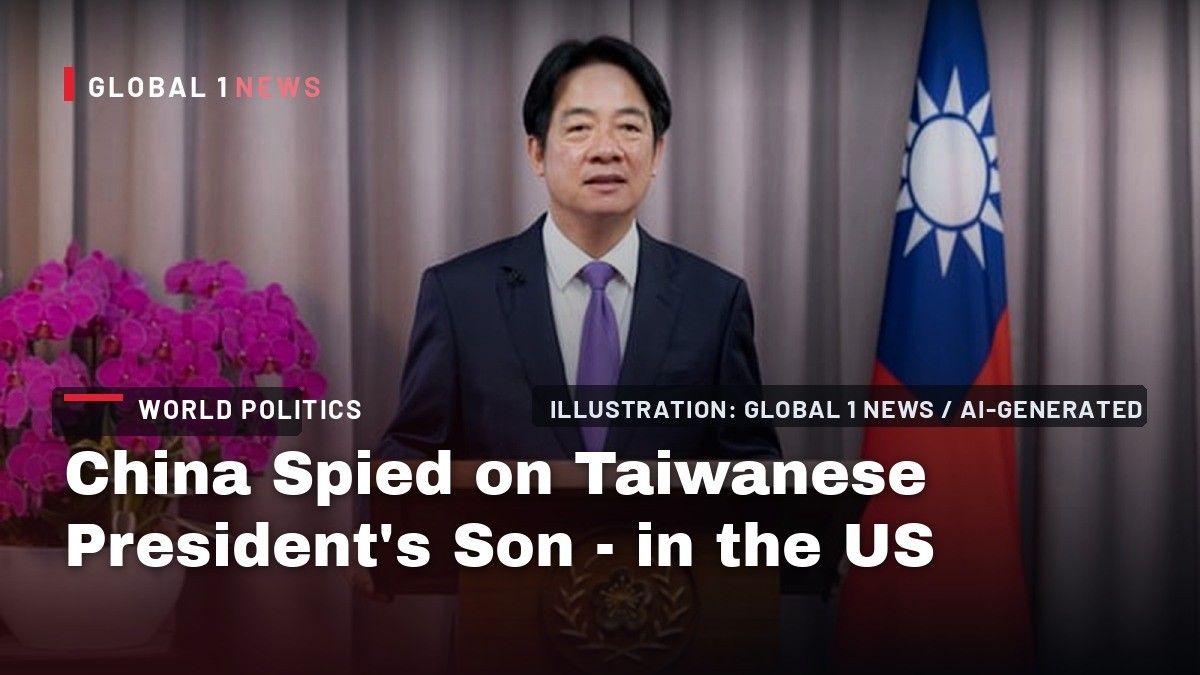
In October 2026 the Federal Bureau of Investigation announced the arrest of a naturalized U.S. citizen, Wanying “Heather” Zhang, on charges of espionage targeting Lai Ting‑yu, the eldest child of Taiwan’s President Lai Ching‑te. The case, which unfolded in Irvine, California, and culminated in Zhang’s detention while attempting to board a flight to Shanghai, offers a stark illustration of Beijing’s expanding repertoire of transnational repression against Taiwanese political elites and their families. By situating this incident within the broader pattern of Chinese intelligence operations abroad, the Taiwanese government’s diplomatic response, and the domestic political ramifications in Taiwan, we can better assess the evolving security environment that underpins the island’s defense and foreign‑policy calculus.
Chronology of the arrest and the alleged espionage operation
The FBI’s indictment alleges that Zhang, a former resident of Changsha who emigrated to the United States and later naturalized, engaged in surveillance of Lai Ting‑yu in September 2025. According to the indictment, Zhang coordinated with unnamed Chinese handlers and employed classic tradecraft—rental of vehicles for brief periods, short‑notice flight bookings, and rapid relocation of equipment—to conceal her activities. The surveillance reportedly involved a network of accomplices, though the precise composition of that network remains undisclosed.
Zhang was apprehended in October 2026 as she attempted to board a commercial flight bound for Shanghai. The FBI has not disclosed the specific method by which investigators uncovered her operation, but the arrest underscores the agency’s heightened focus on foreign intelligence threats linked to China’s covert services. The case also highlights the increasing sophistication of agents described in intelligence circles as “disposable,” who receive professional training yet are expected to operate with minimal longevity.
Motivations behind targeting Lai Ting‑yu
While Lai Ting‑yu holds a doctorate in bioengineering from the University of Washington and works for Philips in Seattle, he does not occupy a formal political role. The FBI’s filing therefore raises questions about the strategic calculus behind surveilling a private citizen. Analysts have posited two primary motives. First, domestic Taiwanese politics may have played a role: the pan‑Blue camp has repeatedly criticized President Lai for his son’s residence abroad, framing it as hypocrisy given Lai’s calls for heightened defense spending. Surveillance of Lai Ting‑yu could therefore be intended to generate material for political exploitation.
Second, Beijing may have sought to demonstrate its capacity to reach Taiwanese elites beyond the island’s borders, thereby cultivating leverage over President Lai Ching‑te. The notion that China could consider kidnapping or coercing relatives of senior officials during a conflict has surfaced in public discourse, notably in the dramatized narrative of the 2025 television series “Zero Day Attack.” Although the series is fictional, it reflects a genuine strategic concern within Taiwanese security circles about the use of family members as bargaining chips in a potential invasion scenario.
Historical context of Chinese transnational repression of Taiwanese figures
The Zhang case is not isolated. In 2023, individuals alleged to be acting for China were arrested for surveilling former President Tsai Ing‑wen’s movements in California. Earlier, in 2025, the Chinese military attaché in Prague allegedly attempted to ram a vehicle into the motorcade of then‑vice‑president‑elect Hsiao Bi‑khim, an episode that coincided with a Kuomintang‑proposed bill to trigger a new presidential election should the vice‑president‑elect die. These incidents illustrate a pattern of both covert surveillance and, on rarer occasions, kinetic intimidation aimed at high‑profile Taiwanese officials.
Beyond direct attacks, Beijing has employed economic sanctions against members of the Democratic Progressive Party (DPP) and their families, restricting their ability to conduct business in China. Figures such as Robert Tsao, Lin Fei‑fan, and legislator Puma Shen have been targeted, with sanctions extending to relatives—illustrating a broader strategy of pressure that combines financial, legal, and personal dimensions.
Implications for Taiwan’s domestic security and civil defense
The Mainland Affairs Council reported in June 2026 a rise in the number of Taiwanese detained in China, including 23 individuals held on religious grounds and one on a national‑security charge. While many detentions are framed as criminal cases, the pattern suggests an expanding toolkit of coercive measures that can be leveraged against political dissenters and their kin. The potential for “fifth‑column” activity within Taiwan—whether through organized crime groups such as the Bamboo Union or alleged paramilitary cells—has been highlighted by security analysts who warn that such groups could be activated in the event of a Chinese invasion.
Nevertheless, the most common manifestations of repression on Taiwanese soil have been acts of vandalism rather than overt violence. A recent incident in September 2026 involved a comedy club in Taipei whose entrance was defaced with white paint and feces, allegedly commissioned for NT$50,000 by a local individual. While the motive appears linked to mockery of Chinese President Xi Jin‑ping, the episode underscores how low‑level intimidation can be employed to signal hostility without escalating to lethal force.
Diplomatic responses and the international legal framework
Following the FBI’s announcement, the Taiwanese Ministry of Foreign Affairs condemned the operation as a violation of international law and an act of transnational repression. The ministry called for coordinated action among democratic partners to counter Chinese espionage networks operating on foreign soil. While the United States has not publicly detailed its investigative methods, the arrest reflects a broader U.S. policy of confronting Chinese intelligence activities, consistent with statements from the Department of State emphasizing the protection of democratic institutions.
From a legal perspective, the case raises questions about the applicability of existing statutes governing foreign intelligence activities, particularly the Foreign Agents Registration Act (FARA) and espionage provisions of the United States Code. The prosecution of Zhang may set a precedent for how similar cases involving “disposable” agents are handled, potentially influencing future diplomatic negotiations on extradition and mutual legal assistance between the United States, Taiwan, and allied nations.
Strategic outlook: Taiwan’s defense posture and regional ramifications
President Lai Ching‑te’s administration has repeatedly advocated for increased defense spending to counter the “Chinese threat,” a stance that gains renewed urgency in light of the Zhang incident. The surveillance of a presidential family member abroad underscores the breadth of Beijing’s reach and may reinforce arguments for bolstering counter‑espionage capabilities within Taiwan’s intelligence community, as well as deepening security cooperation with the United States and Japan.
Looking forward, the convergence of covert surveillance, economic sanctions, and the activation of proxy groups suggests a multi‑layered pressure strategy by China aimed at eroding Taiwan’s political resilience. Scholars at the Asan Institute and the Korea Development Institute (KDI) have noted that such hybrid tactics—combining hard and soft power—are increasingly characteristic of Beijing’s regional behavior. For Taiwan, the imperative will be to integrate these threat assessments into a comprehensive security doctrine that addresses both external aggression and the subtler, but equally destabilizing, dimensions of transnational repression.
This article was produced with AI-assisted research and editorial support. Reporting is based on the source material cited below. Sources: The Diplomat; thediplomat.com; Global1.News (19 October 2026).
By Prof. David Park, Staff Writer
What's Your Reaction?
 Like
0
 Dislike
0
 Love
0
 Funny
0
 Wow
0
 Sad
0
 Angry
0

East Asia/Technology Correspondent at Global1.News. Seoul-based voice covering Korean politics, technology, business, and culture. Analyzes how technology and geopolitics intersect across East Asia.











Comments (0)