
China Factory Activity Contracts in July as Demand Slumps, Typhoons Disrupt Output
China's manufacturing PMI fell to 49.2 in July, its first contraction since February, as domestic demand slumped and typhoons disrupted production. Construction hit a record low and services weakened, while the Politburo pledged incremental policies to shore up growth in the second half.
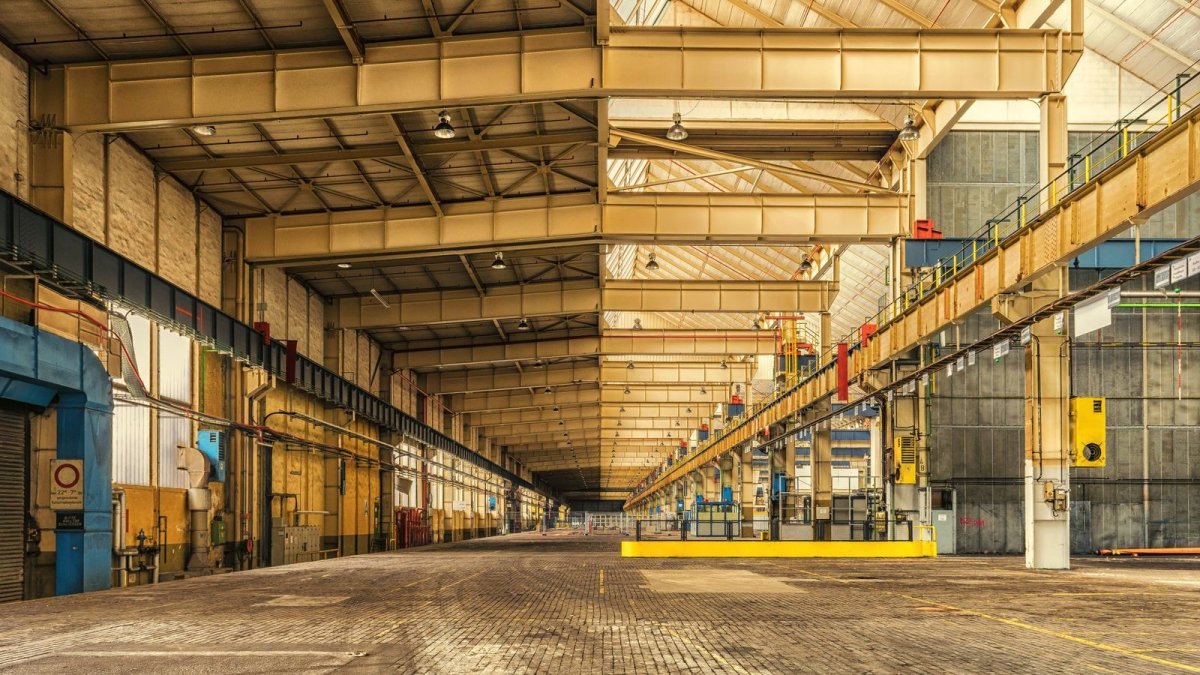
China Factory Activity Contracts in July as Demand Slumps, Typhoons Disrupt Output
China's manufacturing sector fell back into contraction in July for the first time since February, as domestic demand weakened and typhoons disrupted production, official data released Friday showed. The National Bureau of Statistics (NBS) reported the manufacturing purchasing managers' index (PMI) at 49.2, down from 50.3 in June and below the 50-point threshold that separates expansion from contraction. The reading missed economists' median forecast of 50.0, and it ended a four-month run at or above 50 that had been propped up by exporters rushing shipments ahead of U.S. tariff increases.
Tags: China PMI, China economy, manufacturing, National Bureau of Statistics, Politburo, stimulus, US-China trade, factory activity, construction, yuan
The Numbers: A Broad-Based Slide
The July headline masked weakness that ran across the entire official survey. The new orders sub-index fell to 48.5, the lowest reading in 38 months, according to official data accessed via Wind, signalling that the demand problem is concentrated at home rather than abroad. The factory-gate prices sub-index also extended its decline after a brief war-driven energy spike earlier this year, pointing to continued producer price weakness and margin pressure on manufacturers.
The deterioration was not confined to factories. The construction PMI slumped to a record low of 47.0, the services gauge fell to its weakest level since the initial Covid-19 lockdowns, and the composite PMI — which blends manufacturing and non-manufacturing activity — dropped to 49.3, the lowest since the pandemic ended in 2022. The NBS's broader non-manufacturing index, which covers construction and services, fell to 49 from 50.2 in June, according to Caixin Global's report on the data release.
The breadth of the decline matters because it rules out a single-sector explanation. When manufacturing, construction, and services all sit below 50 in the same month, it points to an economy-wide softening in demand rather than a sector-specific shock. That is precisely the pattern that has historically preceded more aggressive policy responses from Beijing — and it is the pattern policymakers were hoping to avoid after the export-driven resilience of the spring.
Typhoons and a Seasonal Lull
Chinese statisticians were quick to point to temporary factors. Huo Lihui, chief statistician at the NBS, attributed the decline to multiple factors, and a statistics bureau spokesperson said a recent spate of typhoons had halted work on many projects across the country's coastal manufacturing belt. Extreme weather, combined with the traditional seasonal lull in July, weighed on both production and demand, according to Caixin's coverage of the official release.
Analysts caution, however, that weather explains only part of the story. "Domestic weakness appears largely to blame — while the export orders index softened a bit," said Julian Evans-Pritchard, head of China economics at Capital Economics, in a note published after the data. He expects local governments to follow through on Beijing's policy support pledges to prop up domestic demand in the second half of the year.
The distinction between weather-driven disruption and underlying demand weakness is not academic. If typhoons were the main culprit, the August reading should rebound as weather normalizes. If domestic demand is the problem, the PMI will stay below 50 until policy support changes the calculus for households and businesses. The expectations sub-indices, which held up well across the official surveys in July, suggest firms themselves lean toward the former interpretation — but the new orders data argues for caution.
Front-Loading Unwinds as Trade Tensions Persist
The July contraction carries particular significance because it marks the end of an export-driven stretch of resilience. Through the spring and early summer, manufacturers had been rushing shipments to the United States ahead of expected tariff increases, producing a surge in trade figures. In June, shipments to the U.S. rose 14% and overall exports jumped 27% — the fastest pace in nearly five years.
That momentum has now begun to unwind. The 10% broad-based U.S. tariff expired on July 24, and manufacturers had braced for additional levies stemming from President Donald Trump's Section 301 probes. The China Beige Book, a research firm that surveys businesses on the ground, found that U.S.-bound shipments fell outright in July for the first time in several months, and that retail sales declined from both the prior month and a year earlier, with travel and restaurants seeing a sharp on-year downturn.
The export picture is central to understanding the July print. Had exports remained robust, the manufacturing PMI would likely have held above 50 despite domestic softness — the pattern seen in recent months when tariff front-loading masked underlying weakness. With the front-loading now unwound, the PMI is reflecting the true state of domestic demand, and the picture is considerably softer than the headline trade figures suggested.
Politburo Pledge: Incremental Policies, Accelerated Spending
The weak data lands a day after China's top policymakers acknowledged the headwinds. At its mid-year meeting, the Politburo said the economy faces "difficulties and challenges," pledging to accelerate fiscal spending and roll out "incremental policies" to shore up growth in the second half of the year. The readout stopped short of concrete measures, however, leaving markets to guess at the scale and timing of any new support.
The stakes are clear. China's economy expanded 4.3% in the second quarter from a year earlier, the slowest pace in more than three years and below the lower end of the government's full-year target range of 4.5% to 5%. Eurasia Group analysts said in a note after the Politburo meeting that Chinese leaders see growth at risk of falling below target in the second half, as new-economy sectors such as artificial intelligence fail to offset the slowdown in traditional industries. "Officials continue to prioritize risk containment over near-term growth," Eurasia Group wrote, framing property, local government debt and smaller financial institutions as structural risks to manage over time rather than problems to solve quickly.
That framing helps explain the market's muted reaction to the Politburo readout. Investors have learned from past policy cycles that Beijing's language is often more ambitious than its implementation, particularly when the authorities are juggling multiple structural objectives. The construction PMI's record low of 47.0 is a reminder that the property sector — once the economy's most powerful growth engine — remains a persistent drag, and that resolving developer debt will take years, not months.
What This Means for Asia and Japan
For Japan and the wider Asia-Pacific region, China's manufacturing contraction is more than a headline number. China remains Japan's largest trading partner, and its factory orders feed directly into Japanese supply chains — from precision machinery and semiconductors to chemicals and auto components. When Chinese manufacturers cut output and hold off on capital spending, Japanese exporters feel it in their order books within a quarter.
The July data also complicate the regional picture at a delicate moment. The Bank of Japan is navigating its own normalization path, and a further slowdown in Chinese demand would weigh on Japan's export-led recovery, potentially reinforcing expectations that the BOJ will proceed cautiously with any additional rate hikes. For South Korea and Taiwan, whose export cycles are tightly correlated with Chinese manufacturing, the reading adds to evidence that the region's trade engine is cooling in tandem with the world's second-largest economy.
There is a strategic dimension as well. Chinese manufacturers under pressure at home have historically responded by pushing harder into export markets, including Southeast Asia, Latin America, and the Middle East. A sustained demand slump in China could therefore accelerate competitive pressure on Japanese and South Korean firms in third markets — a dynamic Tokyo's policymakers watch closely as they assess the trajectory of regional trade relationships.
What to Watch For
Markets will now watch for three signals. First, whether the Caixin/S&P Global manufacturing PMI, a private survey that better captures smaller and export-oriented firms, confirms the official picture when it is released early next week — a contraction there would harden expectations for easing. Second, whether the Politburo's "incremental policies" materialize as accelerated local government bond issuance, additional rate cuts, or renewed support for the property sector. And third, whether export orders stabilize after the tariff front-loading unwinds, which would determine how much of the slowdown is domestic versus trade-driven.
Notably, forward-looking expectations indices within the official PMI held up well in July, including an improvement in construction. "Firms believe the latest deterioration in activity will prove short-lived, perhaps because they anticipate a stronger tailwind from fiscal policy over the rest of the year," Evans-Pritchard observed. Whether that confidence is rewarded will depend on how quickly Beijing converts its pledges into spending on the ground — and whether the typhoons, for now, prove to be the bigger story in August.
By Kenji Tanaka, Staff Writer
This article was produced with AI-assisted research and editorial support. Reporting is based on sources cited in the article.
What's Your Reaction?
 Like
0
Like
0
 Dislike
0
Dislike
0
 Love
0
Love
0
 Funny
0
Funny
0
 Wow
0
Wow
0
 Sad
0
Sad
0
 Angry
0
Angry
0

Japan Correspondent at Global1.News. Tokyo-based voice covering Japanese politics, technology, economy, and culture. Tracks the intersection of tradition and innovation in one of the world's most dynamic societies.














Comments (0)