
Drought Tightens Its Grip Across the Caribbean: Jamaica Restricts Water Use as Regional Crisis Deepens
Drought tightens its grip across the Caribbean as Jamaica prepares to ban non-essential water use in seven parishes from Monday, with Puerto Rico running 48-hour shutoffs and experts warning that leaking pipes and weak infrastructure are amplifying the crisis.
The dry season was supposed to be over by now. But as any Trinidadian who has watched their garden wither or waited on a WASA truck will tell you, the weather does not always read the calendar. Across the Caribbean, from the foothills of the Blue Mountains to the streets of San Juan, the taps are running dry, and the region is being forced to confront a hard truth: we are not just dealing with a bad spell of weather, but a structural crisis in how we manage our most precious resource.
Caribbean Water Crisis Deepens as Jamaica Imposes Restrictions and Puerto Rico Cuts Supply
Port of Spain, Trinidad – August 16, 2026 — The Caribbean is entering what could be one of its most challenging dry periods in recent memory, with nations from Jamaica to Puerto Rico scrambling to ration water as reservoirs dwindle and temperatures climb. This week, Jamaica’s National Water Commission (NWC) is expected to issue a formal prohibition notice, banning non-essential water use across seven parishes, with restrictions coming into force from Monday, August 17. The decision, reached after a high-level stakeholder meeting with the NWC and the Meteorological Service, confirms what many have suspected for weeks: rainfall has been critically low, and the heat is not letting up.
Jamaica’s Tough Choice: Protecting Schools or Businesses
For Jamaicans, the news hits close to home. The seven parishes under the water-use prohibition are bracing for immediate disruption, particularly for commercial operations that rely on high water consumption. Car washes, laundries, and agricultural irrigators across the affected areas are facing sudden revenue loss, a bitter pill to swallow in an economy already grappling with inflation and the rising cost of living.
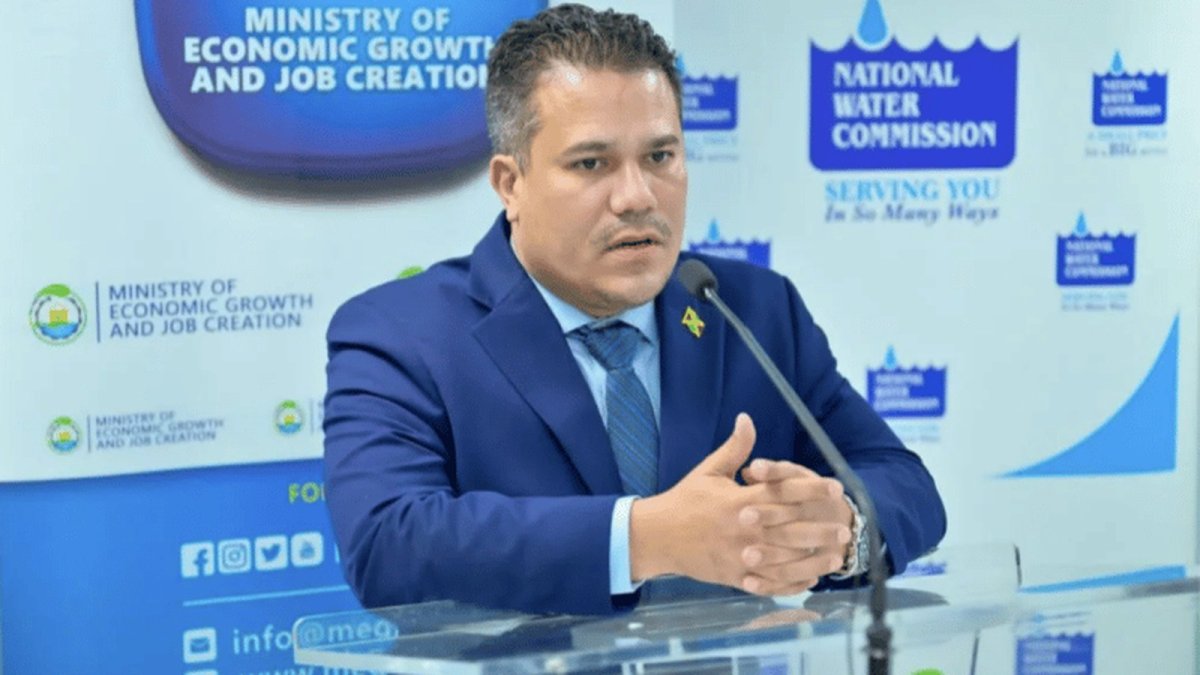
Minister of Water, Environment and Climate Change Matthew Samuda has acknowledged the disproportionate burden falling on these commercial users. In a statement that sought to balance empathy with necessity, Samuda said the government’s overriding obligation is to protect the water supply for essential services. Chief among those concerns is the upcoming September school term. With classrooms set to reopen, the NWC is prioritising the preservation of supply for schools, hospitals, and other critical public facilities. It is a classic Caribbean dilemma: how do you keep the economy moving when the very resource that powers it is running out?
Puerto Rico and Cuba: Islands in Peril
Jamaica is not alone in this fight. Across the region, the picture is increasingly bleak. Puerto Rico is already implementing rotating 48-hour shutoffs, a measure that is affecting roughly 180,000 properties. For Puerto Ricans, this is a grim reminder of the fragility of their infrastructure, which has never fully recovered from the devastation of Hurricane Maria in 2017. The shutoffs are a logistical nightmare for families who must store water in buckets and bottles, and for businesses that cannot operate without a reliable supply.
The situation in Cuba is even more dire. According to the National Institute of Hydraulic Resources, nearly 3 million people are experiencing difficulty accessing water. That is a staggering figure for an island nation that has long prided itself on its social programmes and resilience. In Havana and other cities, residents are queuing for water trucks, and the government is struggling to keep up with demand. Meanwhile, Guadeloupe has been placed under a formal drought alert, adding another territory to the list of those in crisis.
The data from the US Drought Monitor paints a stark picture: as of late July 2026, only 17.68% of the US Caribbean escaped some degree of abnormal dryness. In other words, more than 80% of the region is feeling the heat in some form or another. San Juan, the capital of Puerto Rico, reported its driest July since records began in 1899, with just 0.54 inches of rain — a mere 9% of normal. The combined June-July period was also the driest on record, at 2.06 inches, just 20% of normal. These are not just statistics; they are the lived reality of millions of people.
El Niño and the Climate Change Factor
So, what is driving this crisis? The Caribbean Institute for Meteorology and Hydrology (CIMH) has issued a stark warning: as El Niño strengthens, the probability of rainfall-generating tropical activity decreases. In plain English, the conditions that usually bring us relief in the form of afternoon showers or tropical waves are being suppressed. The CIMH has flagged eight territories as similarly exposed for 2026, suggesting that this is not a one-off event but a pattern that could persist.
Puerto Rican hydrologist Odeh Quiñones argues that climate change is intensifying each El Niño cycle, making these dry spells more frequent and more severe. But Quiñones is quick to point out that the Caribbean’s water crises are not solely the fault of the weather. She warns that the region is looking at long-standing failures in infrastructure and governance, and that treating the crisis as a purely natural phenomenon obscures the need for structural reform. It is not just about the rain; it is about what we do with the rain when it falls.
This is a sentiment echoed closer to home. Shakeer Baig, Director of the Trinidad and Tobago Meteorological Service, has warned that the current conditions could have serious implications for our twin-island republic. “This could result in lower inflows into our reservoirs, which in turn may affect the availability of water for domestic, agricultural, industrial and commercial use,” Baig told the Trinidad Guardian. For those of us who remember the harsh dry seasons of recent years, when WASA imposed restrictions and trucked water became a lifeline for many communities, these words carry a familiar weight.
The Leaky Pipes Problem: 46% of Water Lost
Here is the uncomfortable truth that we often avoid: the Caribbean loses an average of 46% of its treated water before it ever reaches a consumer. In some utilities, that figure is as high as 75%. Think about that for a moment. Nearly half of the water we treat and pay for is leaking into the ground through ageing pipes, poor maintenance, and weak governance. The drought is not just a problem of low rainfall; it is a problem of systemic inefficiency that amplifies every dry spell.
In Trinidad and Tobago, we know this all too well. WASA has long struggled with non-revenue water loss. The pipes in Port of Spain and San Fernando are decades old, and the investment needed to replace them is enormous. But the cost of inaction is even higher. Every time we ration water, every time a school has to close because its tanks are empty, every time a farmer loses a crop, we are paying the price for years of underinvestment.
The good news is that some governments are beginning to act. Jamaica’s planned investment in the Hermitage Dam has been described as a genuine step in the right direction. Increasing storage capacity is essential, but it is only part of the solution. We also need to fix the pipes, modernise our distribution networks, and invest in technologies like smart metering and leak detection. And we need to do it now, not when the next crisis hits.
Trinidad and Tobago: A Ray of Hope for Tobago
In Trinidad and Tobago, there is a glimmer of hope on the horizon, particularly for our sister isle, Tobago. Ministers have proposed a mobile desalination facility for Tobago, which they say could come online within weeks. Desalination is not a silver bullet — it is energy-intensive and expensive — but in an emergency, it can provide a critical buffer. For Tobago, where tourism is the lifeblood of the economy, ensuring a reliable water supply is not just a matter of convenience; it is a matter of survival. A hotel without water cannot host guests, and a Tobago without tourists is a Tobago in crisis.
But we must be careful not to treat desalination as a permanent fix. The Caribbean is a small island developing state (SIDS) region, and we are on the front lines of climate change. We are also on the front lines of a global energy transition, and the cost of desalination is tied to the cost of energy. If we are not careful, we could find ourselves trading one crisis for another.
Rationing Toward the Next Crisis
As the region grapples with this drought, the verdict from experts is clear: the restrictions being imposed in Jamaica, Puerto Rico, and elsewhere are justified. We cannot allow essential services to fail, and we cannot put lives at risk. But we must also recognise that rationing is not a solution. It is a stopgap, a way of managing scarcity rather than preventing it.
Without urgent infrastructure investment across the region, the Caribbean is simply rationing its way toward the next crisis. The pipes are still leaking, the reservoirs are still undersized, and the governance structures are still weak. Every dollar spent on emergency water trucking is a dollar that could have been spent on fixing a main or building a new storage facility. For us in Trinidad and Tobago, the message is clear: we cannot afford to wait until WASA is forced to impose wide-scale restrictions of our own. We need to invest in our water infrastructure now, not just for the dry season but for the long term, and we need to do it as a region, sharing knowledge, resources, and best practices.
The Caribbean has always been a region of resilience. We have weathered hurricanes, economic shocks, and global pandemics. But resilience is not the same as preparedness. As the taps run dry from Kingston to San Juan, we must ask ourselves whether we are doing enough to secure our water future — or whether we are just waiting for the next drought to remind us of what we have failed to do. The rains will eventually come, but the next dry spell is never far behind. Let us hope that when it does, we are ready.
This article was produced with AI-assisted research and editorial support. Sources: Caribbean360.
By Sharon Sahatoo, Staff WriterWhat's Your Reaction?
 Like
0
Like
0
 Dislike
0
Dislike
0
 Love
0
Love
0
 Funny
0
Funny
0
 Wow
0
Wow
0
 Sad
0
Sad
0
 Angry
0
Angry
0

Caribbean Correspondent at Global1.News. Based in Port of Spain, Trinidad, covering Caribbean politics, economy, energy, climate, and culture. Amplifying the voices and stories of the Caribbean region.














Comments (0)