
‘Can’t shut kids out,’ students tell Mamdani at prayer vigil outside Gracie Mansion
On Friday morning, about 400 students from three Modern Orthodox day schools gathered outside Gracie Mansion, the New York City mayor’s residence, for a “prayer vigil” that blended religious observance with a clear political message.
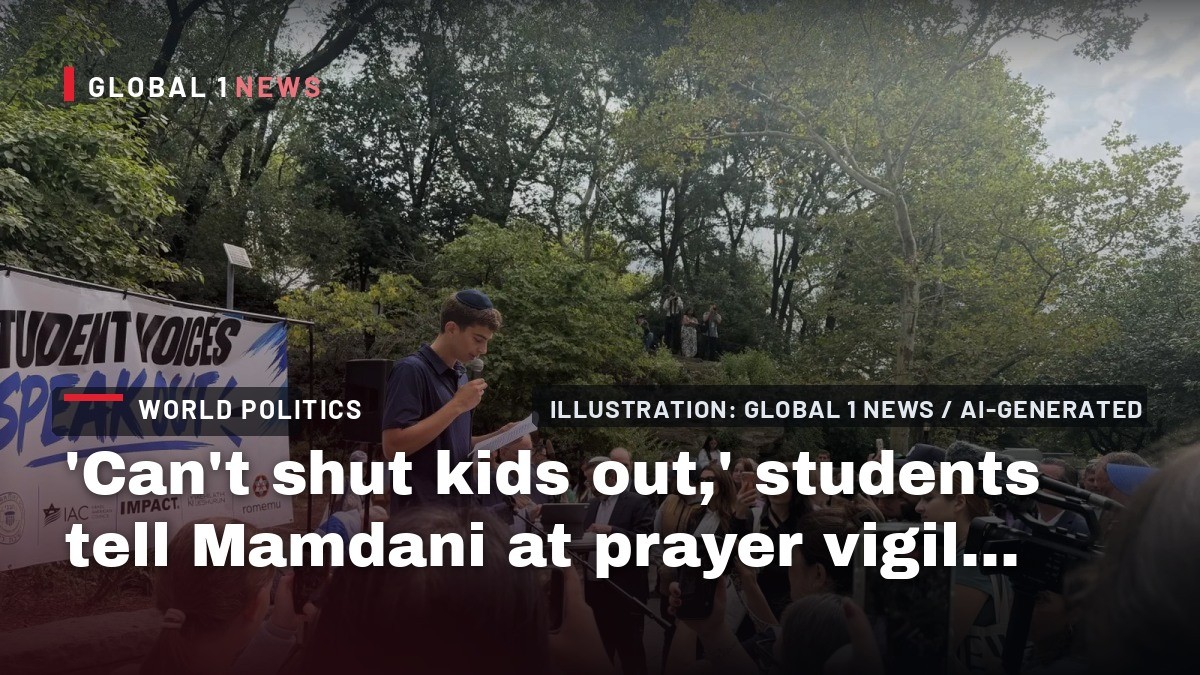
On Friday morning, about 400 students from three Modern Orthodox day schools gathered outside Gracie Mansion, the New York City mayor’s residence, for a “prayer vigil” that blended religious observance with a clear political message. The event, organized by SAR Academy, the Ramaz School and Park East Synagogue, was intended to demonstrate the community’s demand for safety, recognition of Zionism and direct engagement from Mayor Zohran Mamdani, who was notably absent.
Students and faculty lead a public prayer
The gathering began around 9:30 a.m. with student‑led prayers. A minyan—a quorum of ten adult men—was formed, and many participants wore tefillin and tallitot, underscoring the ritual’s traditional character. At 10 a.m., after the sound permit took effect, students, teachers and event organizers took turns addressing the crowd, leading songs and prayers that emphasized safety for the Israel Defense Forces and U.S. elected officials.
Rabbi Binyamin Krauss, principal of SAR Academy, explained that the purpose was to convey a simple yet powerful message: “We’re here. We’re Jewish. We want to be safe and express our Zionism.” He added that the mayor’s busy schedule had kept him away, but expressed hope that the vigil would still reach him: “I think he’ll get the message anyway, I hope.”
Mayor Mamdani’s response and the political backdrop
When asked about the gathering, Mayor Mamdani said the schools could hold a vigil or even a protest, and that they had the right to use the space outside Gracie Mansion. He indicated he would likely be elsewhere in the city at the time of the event. This response, coupled with his absence, was interpreted by many participants as a dismissal of their concerns.
Inna Vernikov, a Jewish member of the New York City Council, voiced frustration, stating that “nobody expected Mamdani to be here, but quite frankly, we don’t want him here.” She praised the students for their loud and proud display of Jewish identity and for sending a message that the community would not be silenced.
Student voices: demand for inclusion and safety
Ari Fogelson, a sophomore who attended the vigil, told JNS that the students came voluntarily and wanted the mayor to “Get out of office and stop interfering with our stuff. Stop being so cruel to Jews.” He described the mayor as “mean to Jews” and accused him of “trying to almost commit genocide, like mental genocide.” Fogelson emphasized that, despite being children, they mattered and could not be shut out.
These remarks reflect a broader sentiment among the youth that their safety and right to express Zionist identity are under threat. The presence of the students, many of whom were wearing tefillin and chanting “Acheinu” (“Our brothers”) alongside the Israeli national anthem, was meant to signal both resilience and a demand for political acknowledgment.
Historical continuity: From Soviet Jewry to today
Rabbi Haskel Lookstein, 94, a towering figure in New York’s Modern Orthodox community, linked the vigil to his lifelong activism. He recalled leading protests for Soviet Jewry three to four decades ago, noting that “2 million Soviet Jews got out because of, among other things, our efforts.” He framed the current gathering as part of a continuum of Jewish advocacy: “Jews are under attack as loyal Americans. We love our country… we are also loyal Jews, and we believe in Judaism for 4,000 years.”
Lookstein’s participation underscored the symbolic weight of the event. He compared the Friday vigil to his only other public prayer outside a political setting—leading a mincha service at Auschwitz on Tisha B’Av, an affirmation of survival. By gathering at Gracie Mansion just days before Yom Kippur, he reinforced the message that “We’re here” resonates across generations.
Community leaders stress resilience and future voting power
Aaron Herman, CEO and co‑founder of IMPACT, one of the event’s co‑sponsors, highlighted the significance of the students’ presence for the community’s long‑term political influence. He noted that these youngsters will eventually become voters and that moments like the vigil become “building blocks” for future civic engagement. Herman urged the mayor to listen: “He has to listen to the community. Young people will show up and show that they’re proud to be Jewish and that they’re concerned about the rise of antisemitism.”
David Rosenberg, an elderly attendee, echoed this sentiment, stressing the need for more youth participation in public demonstrations. He observed that many protests he attends are dominated by older adults, and the influx of young voices adds vitality and a sense of continuity to the fight against antisemitism.
Opposition and the limits of the protest
While the majority of participants framed the gathering as a prayer vigil, some critics labeled it a protest and circulated a petition alleging that the event exploited students. Nonetheless, the organizers maintained that the event was voluntary and rooted in religious practice. A small group of Neturei Karta activists—an anti‑Zionist fringe movement—stood behind police lines, underscoring the contested nature of public expressions of Zionism in New York.
Jewish actor and comedian Michael Rapaport, who attended the vigil, expressed surprise at the large youth turnout and praised the atmosphere, describing it as “beautiful” and “very nice.” He rejected the notion that the gathering was a political statement, emphasizing instead its communal and spiritual dimensions.
Implications for New York’s Jewish community
The vigil outside Gracie Mansion illustrates a growing willingness among New York’s Orthodox youth to publicly assert their identity and demand political recognition. By aligning religious ritual with a clear call for safety and support for Israel, the students signaled that any perceived indifference from city officials will be met with organized, visible opposition.
Mayor Mamdani’s decision to stay away, coupled with his remarks that the schools could hold a vigil or protest, may deepen mistrust between the municipal administration and the city’s Jewish constituency. As the community continues to confront rising antisemitism and debates over Zionism, events like this vigil serve both as a rallying point for internal cohesion and a reminder to policymakers that Jewish voices are mobilizing in unprecedented numbers.
This article was produced with AI-assisted research and editorial support. Reporting is based on the source material cited below. Sources: JNS (Jewish News Syndicate); jns.org; Global1.News (19 September 2026).
By Hannah Berg, Staff Writer
What's Your Reaction?
 Like
0
Like
0
 Dislike
0
Dislike
0
 Love
0
Love
0
 Funny
0
Funny
0
 Wow
0
Wow
0
 Sad
0
Sad
0
 Angry
0
Angry
0

Israel Correspondent at Global1.News. Based in Tel Aviv, covering Israeli politics, security, technology, and society. Provides balanced, deeply-sourced reporting on one of the most closely-watched regions in the world.













Comments (0)