
Canada's Retaliation Begins: Dollar-for-Dollar Tariffs Hit U.S. Goods at Midnight
At 12:01 a.m. Tuesday morning, the clock runs out on patience. Canada's dollar-for-dollar retaliation against the new U.S. tariffs kicks in, and the carefully managed trade relationship that has defined North American commerce for three decades takes another hard hit.
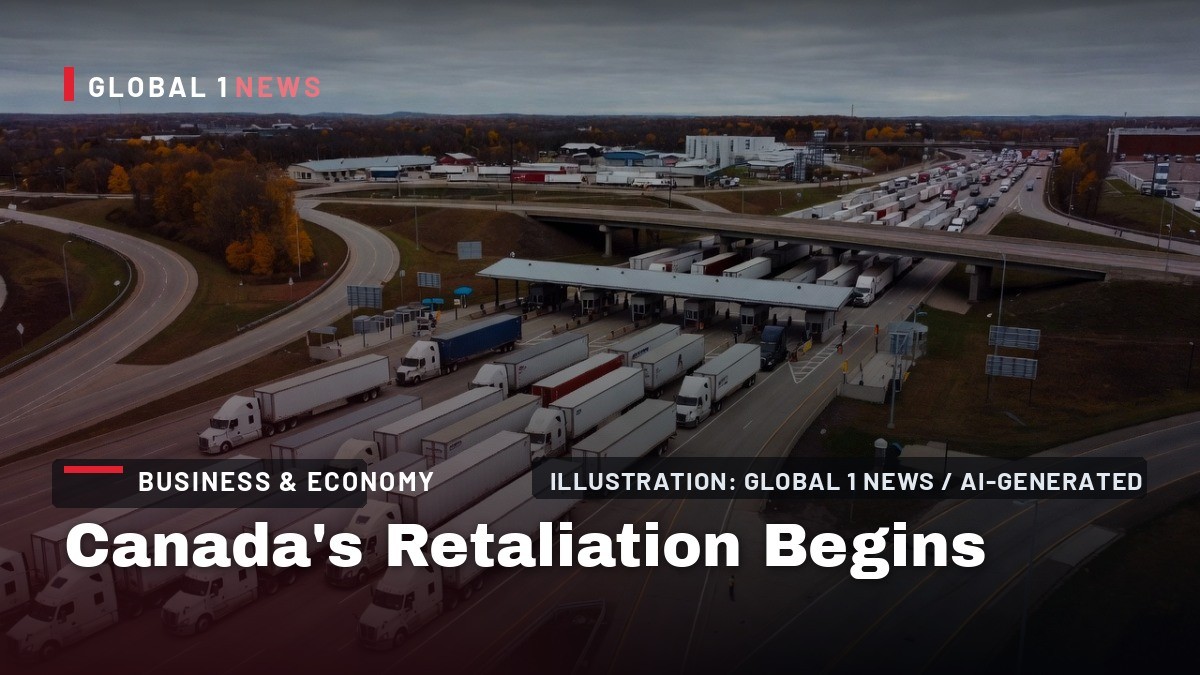
At 12:01 a.m. Tuesday morning, the clock runs out on patience. Canada's dollar-for-dollar retaliation against the new U.S. tariffs kicks in, and the carefully managed trade relationship that has defined North American commerce for three decades takes another hard hit. There will be no last-minute reprieve, no eleventh-hour phone call. The paperwork is done. The lists are published. The rates are set.
For the past two weeks, businesses on both sides of the border have been scrambling to figure out what hits when, which shipments are exempt, and how deep the damage will run. Tonight, they get their answers - whether they like them or not. Canadian customs officials will begin applying counter-tariffs of 15, 25, and 50 percent on hundreds of U.S. products, matching the rates Washington slapped on Canadian goods last month under a never-before-used trade law.
This is not a symbolic gesture. This is a full-scale economic counteroffensive, designed to hurt American exporters in the same places the U.S. tariffs hurt Canadian producers. And it lands at a moment when the future of the entire North American trading bloc is in question.
Canada's Retaliation Begins: Dollar-for-Dollar Tariffs Hit U.S. Goods at Midnight
Washington, D.C. - Monday, September 7, 2026 - The trade war between the United States and Canada enters its most dangerous phase yet tonight, as Ottawa's matching tariffs on American goods take effect at 12:01 a.m. Tuesday. The countermeasures are a direct response to the 50 percent tariffs the Trump administration imposed on roughly $27.6 billion worth of Canadian products on August 22, using Section 338 of the Tariff Act of 1930 - a provision that had never before been used by a U.S. president to impose tariffs in the modern era.
The Midnight Deadline: What Changes at 12:01 a.m.
When the clock strikes midnight, Canadian border agents will begin applying new duties on U.S. goods entering the country. The tariffs are tiered - 15 percent, 25 percent, and 50 percent - depending on the product. They cover roughly 700 to 800 product lines, drawn from the same categories Washington targeted in its own Section 338 and Section 232 tariffs.
Canada's finance department says the counter-tariffs apply to about $27.6 billion in annual U.S. imports, though Reuters has reported the figure closer to $20 billion. The official Canadian list contains more than 629 tariff items; media counts vary, with NBC reporting more than 800 entries when subcategories are included.
Goods already in transit to Canada as of Tuesday are exempt. That's a small mercy for companies that loaded shipments before the deadline. But for everything else, the new rates apply immediately. Companies seeking remission - a refund of the counter-tariffs - must claim it at the time of entry. Officials warn that refunds can take months to process.
There's also a complication for goods that don't qualify under CUSMA marking rules. Non-CUSMA U.S. goods can face double exposure: the standard most-favored-nation rate plus the countermeasure duty. Importers who thought they had a workaround may find themselves paying twice.
How We Got Here: Section 338 and the Collapse of Talks
The immediate trigger was the U.S. decision on August 22 to impose a 50 percent tariff on Canadian goods including wine, furniture, dairy, cement, clothing, fishing rods, hockey equipment, plastics, plywood, and electrical equipment. The administration cited Section 338 of the Tariff Act of 1930, a law designed to retaliate against countries that discriminate against U.S. commerce. It had never been used by a president to impose tariffs in the modern era.
The Trump administration also invoked Section 232 authorities, which allow tariffs on imports deemed threats to national security. The administration said the tariffs were partly a response to retaliatory tariffs Canada placed last year on some U.S. imports, particularly autos.
Trade talks collapsed late Friday night, August 21, just hours before the U.S. tariffs took effect. Prime Minister Mark Carney said Washington proposed "unfair" and "uneconomic" terms at the last minute. "We could not accept what the U.S. had offered, nor could we give what they asked," Carney said. He called it a "bad deal."
U.S. Trade Representative Jamieson Greer offered a different version of events. Greer said the U.S. had "sought to accommodate the Canadians by... cutting tariffs in half on steel, on aluminum, and extensively reducing them on autos and even on things like softwood lumber."
The gap between those two accounts is more than a matter of spin. It reflects a fundamental disagreement about what the talks were supposed to achieve. Canada believed it was negotiating a return to normal trade. The U.S. believed it was extracting concessions. Neither side got what it wanted.
What's Actually on Canada's List: Three Tiers of Pain
Canada's counter-tariffs are not a blanket response. They are carefully calibrated to match the U.S. rates product by product. The structure mirrors the American tariff schedule, with three distinct tiers.
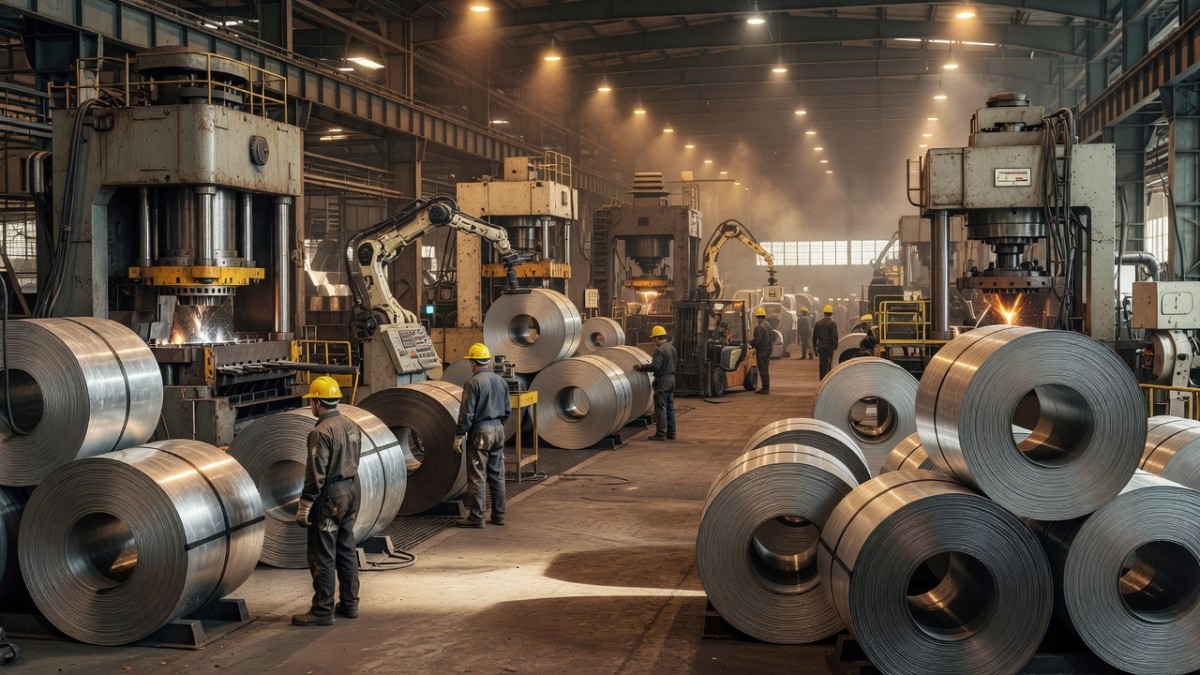
The 50 percent tier hits steel and aluminum products that were previously subject only to a 25 percent counter-tariff. Also in this top tier: natural honey, furniture, clothing and apparel, makeup, and perfume. These are products with significant U.S. export volumes to Canada, and the 50 percent rate is designed to make them uncompetitive in the Canadian market.
The 25 percent tier covers appliances, dairy products such as cheese, fish and seafood, and certain steel and aluminum derivative products. These are goods where U.S. producers have historically enjoyed strong access to Canadian shelves. That access now comes with a significant price penalty.
The 15 percent tier includes other products, such as rubber molds and machinery parts. These are less consumer-facing but still critical inputs for Canadian manufacturers who rely on U.S. supply chains.
Canada's finance minister, Francois-Philippe Champagne, announced the package on Tuesday, August 25, in Ottawa, flanked by Industry Minister Melanie Joly and ministers Patty Hajdu and Evan Solomon. Champagne was blunt: Canada will match the U.S. tariffs "dollar for dollar, rate for rate."
Existing counter-tariffs, including those on U.S. automobiles, remain in place. The new measures stack on top of an already complex web of trade barriers that have been building since the trade war began in February 2025.
The C$7.5 Billion Support Package: Who Gets Help
Alongside the tariffs, Ottawa announced a C$7.5 billion package of new and enhanced measures for affected workers and businesses. The money is designed to cushion the blow for industries that rely on cross-border trade and will now face higher costs or lost sales.
The package includes interest-free loans from the Business Development Bank of Canada ranging from C$2.5 million to C$5 million. It expands access to Employment Insurance for workers who lose jobs as a result of the tariffs. And it creates a Canada Strong Diversification Fund, administered through the Strategic Response Fund, to help companies find new markets outside the United States.
This builds on nearly C$25 billion in support the Canadian government has provided since U.S. tariffs first began. Champagne promised more if needed: "We stand united in fighting for Canada... we will support our workers, our businesses, and our industry with whatever it takes for as long as it takes."
Joly urged Canadians to buy domestic products. "We cannot control the decisions made in Washington, but we can control what we build here at home," she said.
The support package is not just about economics. It's about politics. The Canadian government is trying to show it can fight back without leaving its own citizens exposed. Whether C$7.5 billion is enough remains an open question. University of Calgary economics professor Trevor Tombe estimates roughly 90,000 Canadian jobs - about 0.4 percent of the labor force - could be lost if the new tariffs persist.

The Escalation: Trump's Threats and Carney's Response
The rhetoric on both sides has been heated, and it shows no signs of cooling. President Trump has told Canadian leaders to "fall in line" or face consequences "far WORSE." He posted on social media that "We don't need Canada, they need us." He has threatened to hike U.S. tariffs on Canadian autos to 50 percent, with some reports suggesting the increase could take effect as soon as January 1. He has even mocked Canada over a proposal to rename Lake Ontario "Lake America."
Carney has responded in kind. He accused Washington of wanting to "destroy our major industries," including autos, steel, and aluminum. He said the U.S. tariffs were designed to "hurt and divide us." He has pointed to cumulative revenue from Canada's retaliatory tariffs - over C$90 billion before remissions since the trade war began - as evidence that Canada can sustain this fight.
Carney has also emphasized that Canada is actively diversifying its trade partners, particularly toward Europe. The message is clear: Canada is not going to beg for mercy, and it is not going to wait indefinitely for the U.S. to change its mind.
Not everyone in Canada is eager to escalate. Ontario Premier Doug Ford declined to take the bait, saying, "I'm not going to take the bait." Ford's restraint reflects a broader anxiety among provincial leaders who worry about the economic consequences of a prolonged trade war.
In the United States, the Business Roundtable has warned that the new tariffs and retaliation "risk raising costs for American businesses and families, disrupting vital supply chains," and the group has urged a negotiated resolution.
What Economists and Businesses Say on Both Sides
The economic stakes are enormous. Canada exported $454 billion in goods and services to the United States last year - a large majority of its total exports - while importing $426 billion, according to U.S. Commerce Department data. The two economies are deeply integrated, with supply chains that cross the border multiple times before a finished product reaches a consumer.
Matthew Holmes, chief of public policy at the Canadian Chamber of Commerce, described the new U.S. tariffs as "very diffuse, and they hit, in particular, small and many medium enterprises in various parts of the country and in radically different supply chains." That diffuseness makes the damage harder to predict and harder to mitigate.
Former Canadian trade minister Mary Ng offered a broader critique: "We don't see the United States valuing the integration of our markets that we have developed for decades." Ng noted that Canada is the top export customer for at least 25 U.S. states and among the top three customers for more than 40 states.
Those numbers matter. When the U.S. hits Canadian goods with tariffs, it's not just punishing Canada. It's punishing American exporters who sell to Canada. The tariffs raise costs for U.S. companies, disrupt supply chains, and invite retaliation that hits U.S. workers in industries from dairy to furniture to cosmetics.
On the Canadian side, the concern is more existential. The tariffs target the industries that anchor Canada's manufacturing base: steel, aluminum, autos, and their derivatives. If those industries shrink, the effects ripple through the entire economy.
What It Means for U.S. Consumers, Workers, and Companies
For American consumers, the immediate impact may be hard to see. Canadian counter-tariffs don't directly raise prices on U.S. shelves. But they do affect U.S. companies that export to Canada, and those companies employ American workers.
Consider the dairy industry. U.S. cheese producers who sell to Canada will now face a 25 percent tariff. That makes their products more expensive for Canadian buyers, who may switch to domestic or other foreign suppliers. Lost sales mean lost revenue, and lost revenue can mean layoffs.
The same logic applies to furniture makers, clothing manufacturers, and cosmetics companies. These are not monolithic industries dominated by a few giants. They include small and medium-sized businesses that may not have the resources to absorb a sudden 50 percent price increase in their largest export market.
There's also the uncertainty factor. Businesses hate uncertainty more than they hate tariffs. Companies that rely on cross-border trade are now trying to plan for a future where the rules can change overnight. That uncertainty discourages investment, delays hiring, and slows economic growth on both sides of the border.
A recent survey found that 38 percent of Canadians in the workforce worry the trade fight will affect their jobs, and 89 percent worry it will worsen the cost of living. Those numbers reflect a broader anxiety that the era of frictionless North American trade is over.
What Happens Next: Can Talks Resume, and What's at Stake for USMCA
The bigger question is whether this escalation can be reversed. The trade war has already put the future of the USMCA - the North American trade pact known in Canada as CUSMA - in question. If the agreement collapses, the consequences would be felt across the continent.
Mexican President Claudia Sheinbaum has dispatched economy secretary Marcelo Ebrard to Washington for emergency talks after negotiations with Canada collapsed. Mexico is watching closely. If the U.S. can unilaterally impose tariffs on Canada under Section 338, it can do the same to Mexico.
There are no scheduled talks between the U.S. and Canada at this point. The two sides are not even speaking the same language about what the dispute is really about. The U.S. sees tariffs as leverage to force Canada to open its markets further. Canada sees tariffs as an existential threat to its economic sovereignty.
Carney has said Canada is actively diversifying its trade partners, but that is a long-term project. In the short term, Canada has few options beyond retaliation and support for affected industries. The U.S., for its part, shows no sign of backing down.
What happens next depends on whether either side blinks. The midnight deadline is just the beginning. The tariffs will take effect, and then the real test begins: how long can both economies absorb the damage before the political pressure to negotiate becomes unbearable?
For now, the answer is unclear. What is clear is that the relationship between the United States and Canada - once described as the closest economic partnership in the world - has entered uncharted territory. And there is no map for finding a way out.
By Jessica Ali, Staff Writer
This article was produced with AI-assisted research and editorial support. Sources: Reuters, The Associated Press, BBC News, NBC News, The New York Times, Government of Canada Department of Finance, Al Jazeera.
What's Your Reaction?
 Like
0
Like
0
 Dislike
0
Dislike
0
 Love
0
Love
0
 Funny
0
Funny
0
 Wow
0
Wow
0
 Sad
0
Sad
0
 Angry
0
Angry
0

Editor-in-Chief at Global1.News. Atlanta-based journalist who cuts through the BS and tells it like it is. Lead anchor, host, and the voice you hear when the spin stops and the truth starts.















Comments (0)