
Beijing Condemns Taiwan's New PLA Report as Separatist Pretext Amid Record Defense Push
China's Defense Ministry spokesman Jiang Bin rejected Taiwan's 2026 PLA Military Power Report as a DPP pretext for stoking war fears, insisting reunification is inevitable. Taipei's own assessment warns Beijing is refining blockade and landing capabilities as Lai Ching-te proposes a record NT$1.1225 trillion defense budget.
Beijing Condemns Taiwan's New PLA Report as Separatist Pretext Amid Record Defense Push
In a CGTN report published Friday, China's Ministry of National Defense delivered a sharp rebuke to Taiwan's latest military assessments, framing them as a deliberate distortion of facts designed to justify a separatist agenda. Senior Colonel Jiang Bin, the ministry's spokesman, condemned the Democratic Progressive Party (DPP) administration for releasing its "2026 PLA Military Power Report" and "Five-Year Force Buildup and Administration Plan Report," calling them a pretext to stoke war fears and advance independence through military means. "Taiwan is an inalienable part of China," Jiang Bin asserted, adding that any attempt to seek Taiwan independence through military means is destined to fail. The exchange marks another escalation in the rhetorical and strategic contest across the Taiwan Strait, set against record Taiwanese defense spending, a contentious legislative battle over military budgets, and an unpredictable American variable in the form of a withheld arms package.
The timing is significant. Taiwan's Ministry of National Defense (MND) submitted its annual assessment of the People's Liberation Army (PLA) to the Legislative Yuan on Monday, September 1, alongside a proposed 2027 budget and a five-year force buildup plan; the public release of the documents on September 3-4 drew Beijing's formal response within hours. The substance of the Taiwanese assessment is sobering: it concludes that the PLA is intensifying preparations for a potential blockade of the island, even as Beijing insists such operations are routine. The following analysis examines the military assessments, the political dynamics in Taipei, and the broader geopolitical calculus that will define cross-strait relations in the coming year.
The PLA's Evolving Blockade and Landing Doctrine
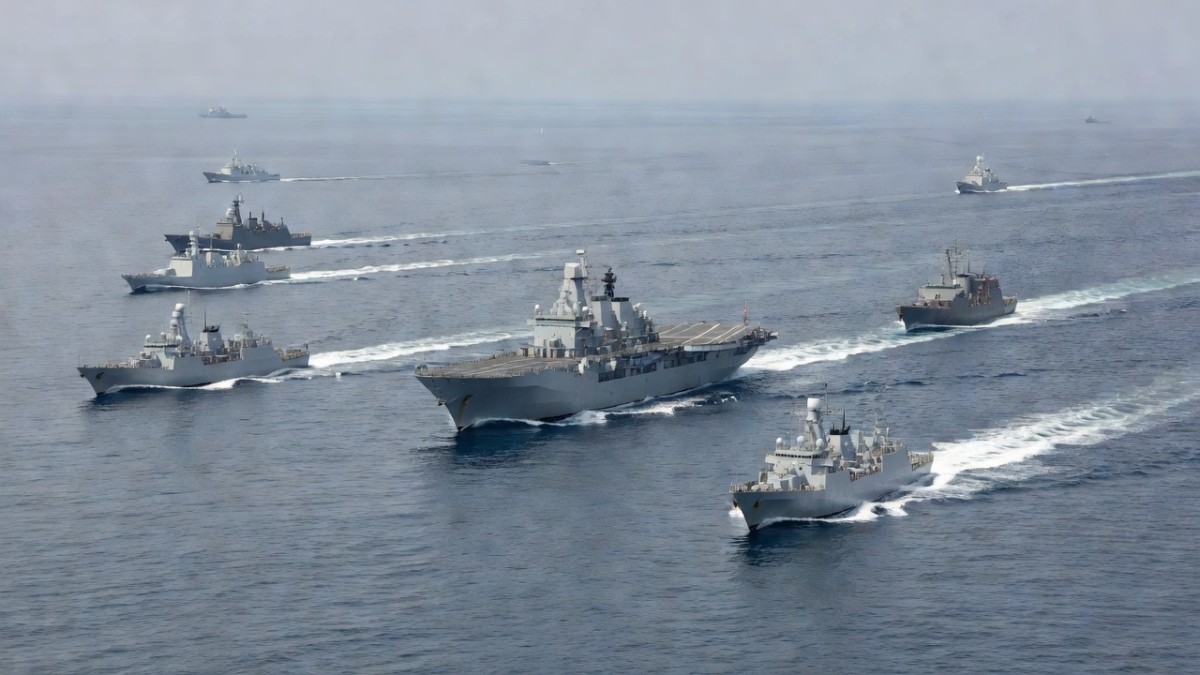
Taiwan's MND report portrays a PLA methodically refining capabilities for two related scenarios: blockade and invasion. It highlights a growing emphasis on joint control of Taiwan's external air and sea routes, involving not just the PLA Air Force and Navy but also China Coast Guard vessels and maritime militia — a layered approach designed to establish an encirclement that could cut the island off from energy imports, trade, and reinforcement without necessarily triggering a full-scale invasion. The inclusion of gray-zone harassment tactics, drawing lessons from the wars in Ukraine and the Middle East, points to a PLA studying modern warfare's hybrid nature, where economic coercion and military intimidation blur. Equally telling is the report's increased focus on joint island-landing capabilities. It describes a first-wave assault concept built around air-delivered troops using aircraft and helicopters to bypass coastal defenses, rapidly seizing key infrastructure before sea-borne forces arrive. To overcome the logistical challenge of unloading heavy equipment at ports that would likely be destroyed or contested, the PLA Navy is reportedly developing the Type 076 amphibious assault ship and new landing barges, including self-elevating platforms and "water-bridge" vessels. As analyst Chieh Chung of Taiwan's Institute for National Defense and Security Research (INDSR) notes, these innovations target the shortfall in pierless unloading — a critical vulnerability in any amphibious operation — while PLA Army Aviation helicopter units practice fuel and ammunition resupply from offshore platforms. Despite these advances, Taiwan's MND maintains a crucial assessment: the PLA still lacks the capability to mount a full-scale, large-scale landing assault. The distinction matters. A blockade, imposable with existing naval and air assets, is the more plausible near-term coercive tool; Taiwan's defense planners see the most immediate threat not as a D-Day-style landing but as a slow, grinding strangulation that tests the island's political will and its international support.
Taipei's Record Budget and the Legislative Struggle
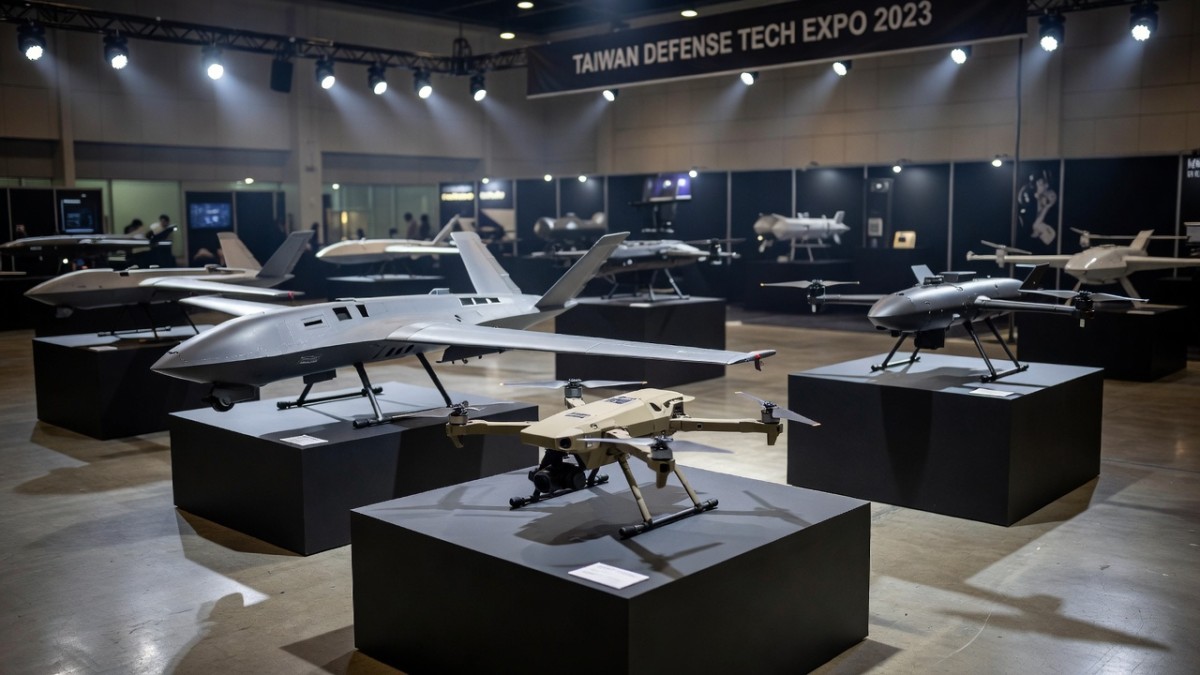
The report's release coincides with a fierce political battle in Taipei over defense resources. President Lai Ching-te's government has proposed a record NT$1.1225 trillion (about US$35.2 billion) defense budget for 2027 — a roughly 18 percent increase that pushes spending above the symbolic NT$1 trillion threshold. The figure, which includes coast guard, pensions, and special budgets for US arms purchases, signals the Lai administration's determination to prioritize defense. Defense Minister Wellington Koo has been the public face of the push, arguing the investment is essential to the island's survival. The opposition-controlled Legislative Yuan, however, has proven a formidable obstacle. Lawmakers have repeatedly squeezed the president's defense requests, and in May they cut a proposed NT$1.25 trillion special defense budget — a significant setback. The Legislature did separately approve roughly NT$780 billion for US arms purchases, signaling a willingness to fund specific procurement even as it scrutinizes the broader envelope. The August passage of the Act on Strengthening Defense Autonomy and Developing the Unmanned Vehicles Industry adds another layer: NT$40 billion annually for six years for domestic unmanned systems, backing the MND's goal of acquiring more than 40,000 coastal attack drones, 600 coastal reconnaissance drones, and 100 small one-way unmanned surface vessels in 2027 alone. Combined with roughly NT$36 billion through 2032 for the indigenous "Strong Bow" anti-tactical ballistic missile system, the strategy is a bet on asymmetric, layered defense — a "porcupine" posture meant to make invasion prohibitively costly, even as legislative friction raises questions about coherence and sustainability.
Beijing's Strategic Calculus and the Reunification Imperative
From Beijing's perspective, the events of September are a predictable, if unwelcome, consequence of the DPP's political trajectory. Jiang Bin's insistence that PLA operations around Taiwan are "routine and legitimate" directly rebuts the MND's characterization of them as escalatory. For Beijing, the one-China principle is non-negotiable, and the notion of a "median line" in the Taiwan Strait is a fiction it has never accepted. The PLA's sorties and exercises are framed as necessary to safeguard national sovereignty and territorial integrity — a legal and political position rooted in China's Anti-Secession Law, which reserves the option of non-peaceful means under specified conditions. The strategic calculus rests on a long-term conviction that reunification is inevitable and that the balance of power is shifting inexorably in China's favor. Force modernization, including the Type 076 assault ship and advanced landing craft, aims to create a credible military option that deters Taiwan from moving toward formal independence. The declining trend in PLA sortie counts from the peaks of 2025 — August 2026 recorded 171 sorties with 55 median-line crossings, down from July's 261 sorties and 75 crossings, and March's 173 sorties against 431 in March 2025 — does not indicate reduced intent. Rather, Taiwan's own tallies suggest a shift toward sustainable, higher-quality readiness, retaining the capacity for periodic high-intensity days such as the 36-aircraft joint patrol of March 17, 2026.The US Factor: A Transactional Deterrent or a Hollow Guarantee?
The Wall Street Journal's report that President Donald Trump has withheld approval of a roughly US$14 billion arms package for Taiwan, calling it "a very good negotiating chip," injects a volatile element into the equation. The characterization signals a transactional approach that prioritizes bilateral deals with Beijing over long-standing commitments to Taipei — a departure from the more predictable arms-transfer policies of previous administrations. For Taiwan, the vulnerability is profound: its defense planning is predicated on a steady flow of advanced US weaponry, and any interruption, even temporary, creates gaps in capability and complicates long-term planning. For Beijing, the decision is a double-edged sword. It weakens Taiwan's near-term military position and reinforces the narrative that the US commitment is transactional and unreliable, potentially eroding Taiwanese confidence in security guarantees. But it also risks emboldening the DPP if it feels abandoned, or pushing Taiwan toward a more conciliatory stance if it feels isolated. Beijing's preferred outcome is a Taiwan neither too strong to be coerced nor too destabilized to be managed; the ambiguity of the US position adds a layer of unpredictability to an already volatile standoff, and any signal that Washington's deterrent is hollow could encourage miscalculation on either side.Regional Stability and the Risk of Miscalculation
The escalating rhetoric and military preparations carry significant risks for regional stability. Taiwan's 2026 Han Kuang exercise, the island's largest annual drill, for the first time treated response to maritime quarantine and blockade as a core task; one scenario assumed Taiwan's major western ports and shipping lanes were blocked, with supplies and assistance routed through a "strategic lifeline" on the east coast. That planning reflects a realistic reading of the island's vulnerabilities and a determination to preserve resilience under siege. The danger of miscalculation is ever-present. Operations Beijing deems legitimate exercises of sovereignty are read in Taipei as escalatory pressure, and the absence of reliable military-to-military communication raises the risk that a minor incident spirals into crisis. The wider region — Japan, South Korea, and Southeast Asian states with profound stakes in freedom of navigation and sea-lane stability — would face immediate and severe economic consequences from any blockade, disrupting supply chains across the Asia-Pacific. The international community remains broadly committed to the status quo but divided on how to answer Chinese assertiveness, and an ambiguous US posture only complicates allied calculations.Charting a Course Through Uncharted Waters
The confrontation over Taiwan's latest military report is more than a rhetorical skirmish; it reflects a deep and enduring strategic impasse. Beijing's commitment to reunification, Taiwan's determination to maintain its autonomy, and the unpredictable role of the United States form a volatile mix that defies easy resolution. Taiwan's own assessment concedes that the PLA has not yet reached the level required for a successful large-scale invasion — a window of relative capability that offers room for diplomacy even as it slowly closes with China's military growth. The coming months will be critical. Legislative battles over defense spending will determine whether Taiwan's ambitious modernization plans can be realized; the fate of the withheld US arms package will signal the depth of Washington's commitment; and Beijing's next moves — continuation of its pressure campaign or a turn toward conciliation — will shape the trajectory of the relationship. The fundamental question is whether both sides can manage their differences without resorting to force, for the stakes extend well beyond the strait to the stability of the entire Asia-Pacific order. By Prof. Marcus Chen, Staff Writer This article was produced with AI-assisted research and editorial support. Sources: CGTN; Taiwan's Ministry of National Defense reports as reported by CNA and Focus Taiwan; Taiwan News; Taipei Times; The Wall Street Journal; Gate News.What's Your Reaction?
 Like
0
Like
0
 Dislike
0
Dislike
0
 Love
0
Love
0
 Funny
0
Funny
0
 Wow
0
Wow
0
 Sad
0
Sad
0
 Angry
0
Angry
0

Marcus Chen
World Politics Analyst at Global1.News. Based in Beijing, covering US-China relations, global trade, and geopolitical strategy. Brings deep analytical perspective to the power dynamics shaping international affairs.












Comments (0)