
At Least 24 Killed in Ukraine, Zelensky Condemns One of Russia's Most 'Vile Strikes'
Russia launched a massive wave of missiles and drones against Ukraine on Wednesday, a strike that Ukrainian President Volodymyr Zelensky condemned as one of the most “vile” attacks of the war.
Russia launched a massive wave of missiles and drones against Ukraine on Wednesday, a strike that Ukrainian President Volodymyr Zelensky condemned as one of the most “vile” attacks of the war. The assault killed at least 24 people, including children, and caused extensive damage to residential, industrial and energy facilities across several regions. The timing, coinciding with President Vladimir Putin’s birthday, underscores the symbolic intent behind the operation and raises fresh questions about Moscow’s escalation strategy.
Scale of the attack and immediate casualties
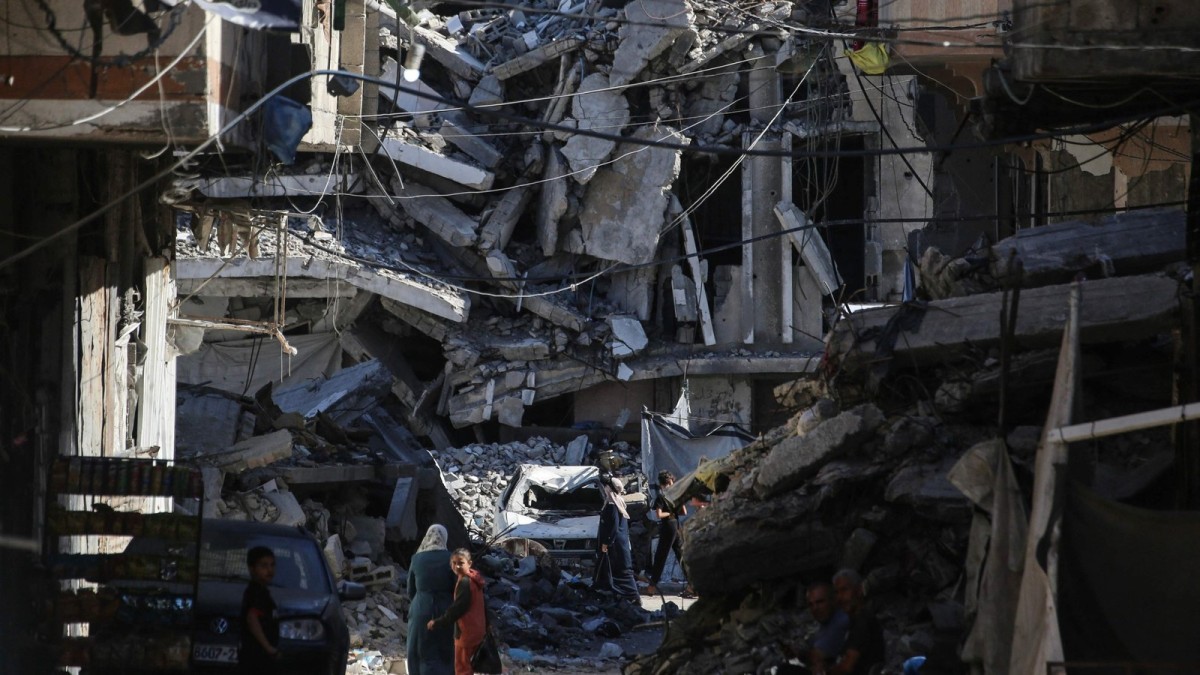
According to Ukrainian officials, Russian forces fired 70 missiles overnight, many of them high‑velocity ballistic munitions, and launched dozens of Shahed attack drones. The most lethal strike hit the northern town of Pryluky in Chernihiv region, where a missile obliterated a five‑storey residential block. Local authorities reported at least 18 deaths at the site, including four children, and said roughly 55 people were wounded.
Rescue crews described a chaotic scene of excavators, shovels and ladders as they worked through collapsed sections of the building. Fifteen survivors were pulled from the rubble, while the deputy mayor of Pryluky, Danylo Savenko, recounted fleeing to an air‑raid shelter as the missiles fell. Six additional fatalities were recorded in Kyiv, Oleksandria and Kremenchuk, bringing the confirmed death toll to at least 24.
Russia’s official narrative
The Russian Defence Ministry framed the operation as a “massive strike” on military‑industrial facilities, claiming the use of high‑precision land, sea and air‑launched weapons, as well as drones, targeted sites where Ukrainian defence firms produce missiles and drones. The ministry specifically cited targets in Kyiv, Chernihiv, Kirovohrad, Dnipropetrovsk, Poltava and Kharkiv, naming the defence company Fire Point and its Flamingo cruise missiles and medium‑ and long‑range drones as objectives.
From Moscow’s perspective, the attack was presented as a legitimate effort to degrade Ukraine’s war‑making capacity. By emphasizing “high‑precision” weaponry, the Russian narrative seeks to distance the strikes from civilian casualties, despite the evident impact on residential structures and the resulting civilian death toll.
Ukrainian air‑defence performance
Ukraine’s air force reported downing just over 80 % of the 46 jet‑powered Shahed drones launched in the assault, a marked improvement from recent weeks when interception rates hovered between 50 % and 60 %. The air force did not explain the sudden rise in success, and it declined to comment further when approached for clarification.
Analysts note that the increase may reflect heightened alertness after intelligence warnings and the deployment of additional air‑defence assets. However, the same officials reiterated that high‑velocity ballistic missiles remain the primary challenge, as current Ukrainian systems lack sufficient capability to reliably intercept them.
Patriot systems and the supply crunch
Zelensky highlighted the urgent need for additional Patriot missile‑interception systems, describing the search for such weapons as a daily priority. The United States‑made Patriot remains the only known system in Ukraine’s arsenal capable of stopping high‑velocity ballistic missiles. Yet global supplies are strained, with the Iran‑Israel conflict and the ongoing Ukraine war depleting available stockpiles.
The European Union approved a new tranche of 1.2 billion euros for Ukraine on the same day, earmarked for defence needs, according to Prime Minister Serhii Koretskyi. While the exact allocation of these funds remains undisclosed, the timing suggests they will support procurement of critical air‑defence assets, potentially including additional Patriot batteries.
Ukrainian retaliation and strategic messaging
In response to the Russian barrage, Ukrainian forces reportedly struck four targets inside Russia over the previous 24 hours, hitting two oil facilities and a training ground in the Perm, Samara and Astrakhan regions. Zelensky indicated that future Ukrainian attacks would continue to focus on Russian energy assets, positioning them as a direct counter‑measure to Moscow’s strikes on civilian infrastructure.
These retaliatory strikes serve a dual purpose: they aim to degrade Russian logistical capabilities while sending a political signal that Ukrainian forces can project power deep into Russian territory. The mention of Fire Point’s domestically produced ballistic missile, recently used in combat, underscores Ukraine’s growing indigenous strike capability, with a longer‑range FP‑9 missile expected by autumn, according to the company.
Human impact and civilian resilience
Beyond the strategic calculus, the attacks inflicted profound human suffering. Residents of Kyiv, accustomed to nightly alerts, sought refuge in deep underground metro stations, described by a 49‑year‑old local, Lesia, as a relative sanctuary compared to high‑rise apartments. The psychological toll of living under constant missile threat, especially for those on upper floors, remains a critical yet under‑reported dimension of the conflict.
In Pryluky, the community grappled with the immediate aftermath of a collapsed residential block, while emergency responders worked tirelessly to extract survivors. The deputy mayor’s personal account of fleeing to a shelter illustrates the pervasive sense of vulnerability that pervades Ukrainian towns under attack.
Implications for the Kremlin’s escalation strategy
The scale and timing of the October 2026 strike suggest a deliberate escalation by the Kremlin. By launching a massive missile and drone barrage on Putin’s birthday, Moscow signaled both domestic resolve and a willingness to intensify pressure on Ukrainian civilian centres. The focus on high‑velocity ballistic missiles, which remain difficult for Ukrainian defences to intercept, indicates a strategic shift toward weapons that can inflict maximum damage with limited warning.
At the same time, the attack risks galvanising further international support for Ukraine. The EU’s fresh financial package and the continued emphasis on Patriot procurement reflect a broader coalition response to Russian escalation. As the conflict enters its third year, the pattern of tit‑for‑tat strikes on energy infrastructure points to a widening front in the war’s economic dimension, where both sides seek to erode each other’s logistical and industrial capacity.
This article was produced with AI-assisted research and editorial support. Reporting is based on the source material cited below. Sources: The Moscow Times; themoscowtimes.com; Global1.News (09 October 2026).
By Irina Volkov, Staff Writer
What's Your Reaction?
 Like
0
Like
0
 Dislike
0
Dislike
0
 Love
0
Love
0
 Funny
0
Funny
0
 Wow
0
Wow
0
 Sad
0
Sad
0
 Angry
0
Angry
0

Russia/Eastern Europe Correspondent at Global1.News. Covering Russian politics, energy, security, and the shifting dynamics of the post-Soviet space. Provides clear-eyed analysis on one of the world's most opaque regions.













Comments (0)