
Argentina's All-White Squad: A Reckoning South Africa Understands
The 2026 World Cup final ended in heartbreak for Lionel Messi and Argentina, but the debate that has followed the tournament's conclusion cuts far deeper than a 1-0 extra-time defeat to Spain at MetLife Stadium.
The 2026 World Cup final ended in heartbreak for Lionel Messi and Argentina, but the debate that has followed the tournament's conclusion cuts far deeper than a 1-0 extra-time defeat to Spain at MetLife Stadium. As the world watched Argentina's all-white squad take the field, a viral conversation about race, colonial history and national identity has erupted — one that resonates powerfully here in South Africa, where transformation in sport remains a daily national conversation.
Argentina's All-White Squad Sparks Global Reckoning — And South Africa Is Listening
Johannesburg, South Africa – 15 August 2026 — The final whistle had barely sounded at MetLife Stadium in New Jersey when the questions began. Not about Ferran Torres' 106th-minute winner, not about Enzo Fernandez's 48th-minute red card that left Argentina a man down for over an hour, but about something far more uncomfortable: why does Argentina's national football team look the way it does?
Argentina's 2026 World Cup squad contained no Black players. Zero. In a tournament where France fielded 21 players of African descent in their 26-man squad, where England counted 15, the Netherlands 14, and the United States 12, Argentina stood alone among the footballing elite as a team with no visible representation of African heritage. The statistic has ignited a global debate about race, national identity, and the historical erasure of Afro-Argentine heritage — a debate that hits especially close to home for South Africans who have spent three decades grappling with transformation in sport.
The Numbers Behind the Debate
The viral TikTok that framed this tournament's racial map was created by Adiv (@adivunsolicited), who described the 2026 World Cup as "almost the most comprehensive map where slavery and colonialism actually went." His breakdown was stark: 21 of France's 26 players trace African roots, 15 in England's squad, 9 each in Belgium and Germany, 12 in the US squad. Brazil's squad draws heavily on descendants of the roughly 4.9 million Africans forcibly transported to that country. Haiti, the first nation to abolish slavery, was forced in 1825 to pay reparations to France. Curacao qualified for the first time with a squad largely raised in the Netherlands. "That's not diversity," Adiv concluded. "It's displacement on a pitch."
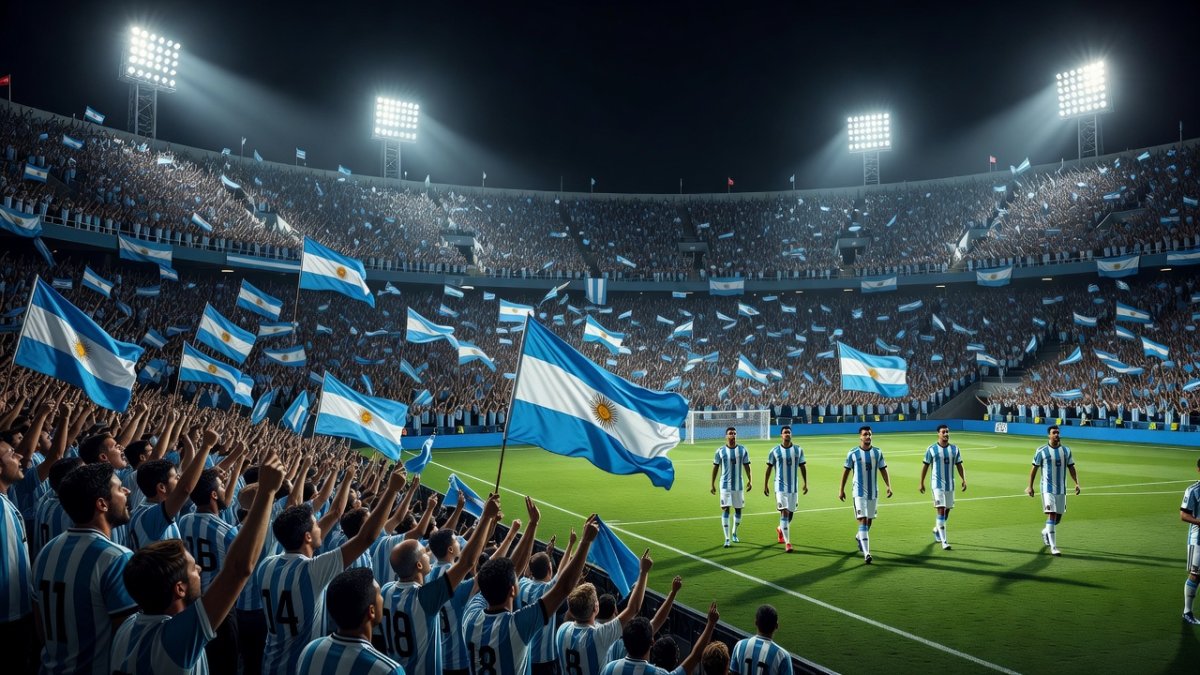
Argentina's population stands at roughly 46.23 million, yet Afro-Argentines number approximately 302,936 — just 0.66% of the population. But here's the historical gut-punch: in the late 18th and early 19th centuries, Black people comprised roughly a third of Buenos Aires's population in some counts. The erasure was not natural. It was engineered.
A History of Deliberate Erasure
The 1853 Argentine constitution and subsequent policies actively encouraged European immigration. Between 1850 and 1950, approximately 7 million Europeans — mostly Spanish and Italian — reshaped the nation's demographics and, crucially, its self-image. Argentina's "Generation of '80" elite in the late 19th century pursued a deliberate project: build a European-style nation on South American soil. Through biased education systems and selective census tactics, they systematically wrote Afro-Argentines out of the national story.
By the late 19th century, the government simply stopped systematically recording African descendants in the national census. It wasn't until the 2022 census — the first in Argentine history to include a question identifying people of African descent — that any official statistical recognition occurred. That's over a century of institutional invisibility. Yet the culture remembers: tango and candombe both carry enduring Afro-Argentine roots, and the term "morocho" — an inoffensive label still used today — nods to the history of Black and Indigenous erasure that the state preferred to forget.
What This Means for South Africa
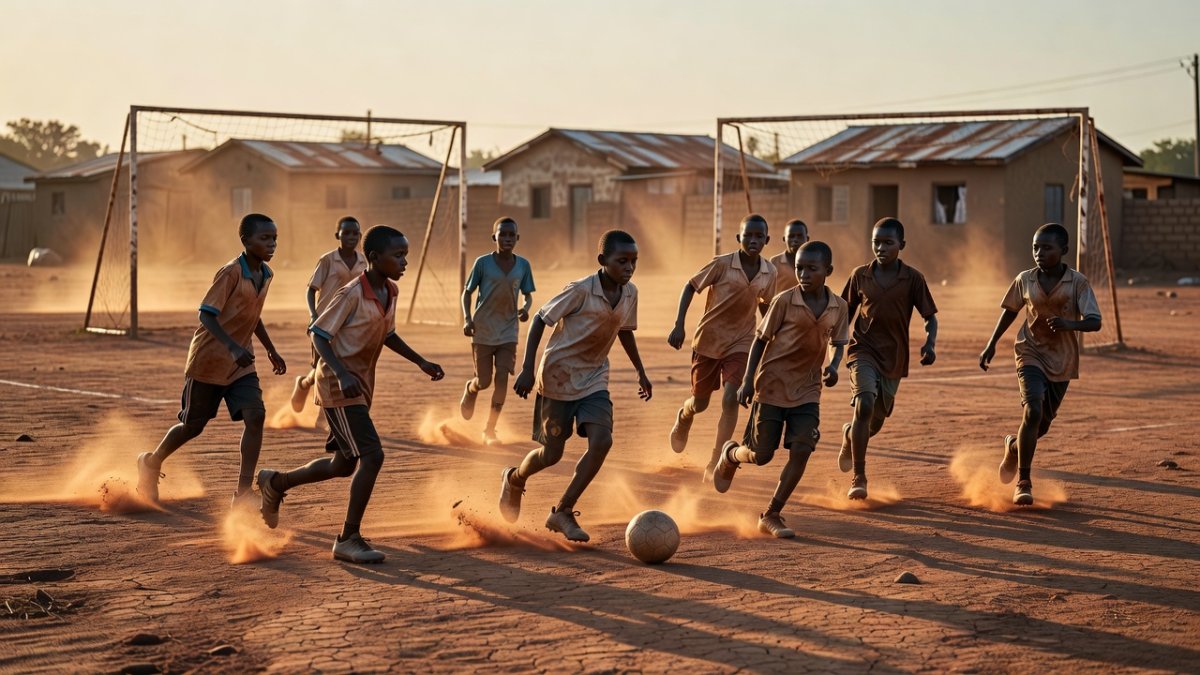
For South Africans, this debate is not academic. It mirrors our own journey from a system that deliberately excluded Black athletes to a sporting landscape still fighting for meaningful transformation. When Siya Kolisi lifted the Webb Ellis Cup in 2019 and again in 2023, he carried not just a trophy but the weight of a nation's reconciliation project. The Springboks' 1995 triumph under Nelson Mandela remains the template for how sport can heal — and how representation matters.
Bafana Bafana's own history at this very World Cup tells a different story. On 25 June 2026, Thapelo Maseko's 63rd-minute header against South Korea in Monterrey secured a 1-0 victory that sent Bafana into the knockout stage for the first time in their history — sixteen years after hosting the 2010 tournament. That squad, drawn from the rich diversity of the rainbow nation, finished second in Group A on four points after a 2-0 loss to hosts Mexico and a 1-1 draw with Czechia, setting up a last-16 clash against Canada. The contrast with Argentina's monochrome squad could not be starker.
South Africa's transformation journey has been fraught — SARU's transformation targets, CSA's transformation policies, the ongoing debates about quotas and pathways. But the fundamental principle remains: our national teams must reflect our nation. When Argentina takes the field with no Black players, it raises uncomfortable questions about who gets to represent a country, and whose history gets told.
Beyond the Pitch: Racism and National Identity
The racial composition of Argentina's squad was not the only controversy to dog their campaign. During the tournament, Argentina fans were accused of violence and racism by Egyptian and Cape Verde supporters. In Atlanta, where Argentina trailed Egypt 2-0 before staging a late comeback, Argentine fans threw beer on Egyptian supporters after equalising. They also waved the Israeli flag toward the Egyptian coaching staff — a pointed provocation given that Egypt coach Hossam Hassan is a vocal pro-Palestine figure. In Miami, Cape Verde fans reported that Argentina supporters threw beer bottles at them after every goal their team scored in the round-of-32 match.
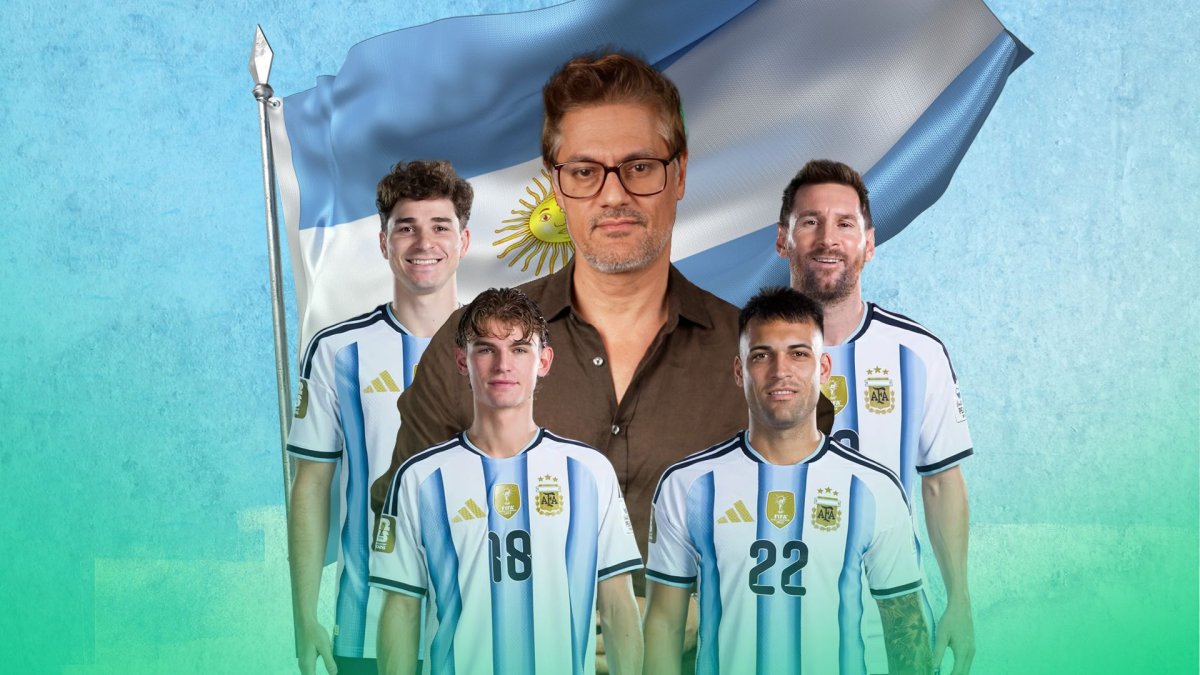
FIFA said it "immediately initiated an investigation" into a separate incident involving influencer IShowSpeed at the Argentina vs Cape Verde match, terming the World Cup "a celebration of unity, diversity, and respect." The irony was not lost on observers. Argentina's semi-final victory over England — a 2-1 win celebrated with a banner reading "Las Malvinas son Argentinas," referencing the 1982 Falklands War — further stoked nationalist fervour that critics say crosses into exclusionary territory.
The Football Itself: A Final for the Ages
Amid the identity politics, it's worth remembering that Argentina came within a whisker of defending their 2022 crown. Emiliano Martinez produced a record 11 saves in the final — a goalkeeping display for the ages that kept Argentina in a match where Spain registered 20 shots to Argentina's two. Enzo Fernandez's 48th-minute red card left the champions playing more than an hour a man down, and Ferran Torres' strike around the 106th minute finally broke Argentine resistance. Spain claimed their second World Cup title, their first since 2010, and Messi's likely final World Cup ended in tears.
Argentina's knockout run had been remarkable: a round-of-32 victory over Cape Verde in Miami, a stunning comeback from 2-0 down to beat Egypt in Atlanta, a quarterfinal win over Switzerland in Kansas City, and that emotionally charged semi-final victory over England. But the final proved one hurdle too many against a Spanish side that controlled possession and created chance after chance.
What South African Fans Should Watch For
As the dust settles on this World Cup, South African football has reason for genuine optimism. Bafana Bafana's knockout-stage breakthrough — their first in history — signals progress under SAFA's development structures, with the MultiChoice Diski Challenge and PSL continuing to unearth talent from every corner of the country. The debate around Argentina's squad should sharpen our own resolve: transformation is not just about numbers on a spreadsheet, but about who gets to dream of wearing the national jersey.
The conversation Argentina now faces is one South Africa has been having for decades. Our answer has been imperfect, contested, and ongoing — but the principle is clear. A national team should look like its nation. Argentina's all-white squad is not a matter of chance; it is the product of a century of deliberate policy. The question now is whether Argentina will confront that history the way South Africa has been forced to confront its own.
For Messi, the tears at MetLife Stadium may mark the end of an era. For Argentina, the reckoning has only just begun. And for South Africa, the lesson is clear: sport reflects society, and neither can hide from history forever.
By Dante Williams, Staff Writer
This article was produced with AI-assisted research and editorial support. Reporting is based on sources cited in the article.
What's Your Reaction?
 Like
0
Like
0
 Dislike
0
Dislike
0
 Love
0
Love
0
 Funny
0
Funny
0
 Wow
0
Wow
0
 Sad
0
Sad
0
 Angry
0
Angry
0

Breaking News and Investigations Correspondent at Global1.News. Based in London, covering global breaking news, security, and investigative stories. Known for digging deeper and connecting the dots across continents.











Comments (0)