
AI Is Hiring Thousands of People to Dig Trenches - and That Tells You Everything
AT&T is spending $250 billion on fiber and hiring thousands of technicians as AI data centers drive demand for physical cable work. With 178,000 fiber jobs unfilled by 2032, the real bottleneck may be people willing to dig.
AI Is Hiring Thousands of People to Dig Trenches - and That Tells You Everything
Let me tell you something that stopped me mid-scroll this morning. NBC News ran a report titled "AI is looking for thousands of people to dig trenches for internet cables." Not software engineers. Not prompt whisperers. People to dig trenches. And before you laugh, I want you to think about what that actually means, because I've been running hosting infrastructure for over a decade, and I can tell you right now: that headline is the most honest thing anyone has said about the AI buildout in months.
The AI industry has spent the last two years convincing the world it runs on GPUs, magic, and venture capital. But every one of those $200 billion capex plans has to land somewhere physical. It lands in a data center. It lands on a power grid. And it lands on a fiber network that somebody has to dig into the ground, splice by hand, and maintain in the rain. The industry that is automating white-collar work out of existence is now competing with itself for people willing to do manual labor. That's not a footnote. That's the story.
The Numbers Nobody in Tech Wants to Hear
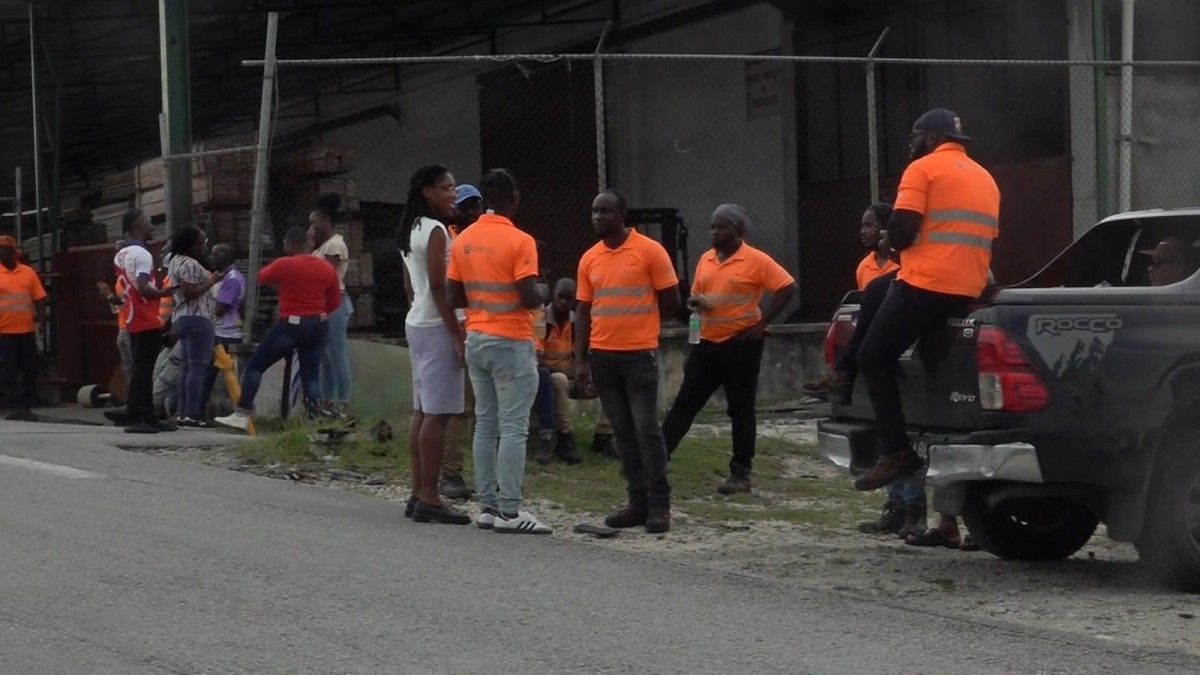
Start with AT&T, because AT&T is the canary here. Back in March, the company announced it would spend more than $250 billion over five years on network infrastructure in the United States - fiber and wireless - and hire thousands of technicians in 2026 alone. Not "thousands of engineers." Technicians. The people who climb poles, pull cable, and yes, dig trenches. Reuters covered it. AT&T said only 5 percent of its jobs require a four-year degree. Read that again. The second-largest Tier-1 network provider in the country is telling you that the skills it needs most are not the ones universities are mass-producing.
Now layer in the broader numbers, because this is not one company's problem. America is in the middle of a roughly $65 billion push to build out fiber-optic infrastructure, and the industry is already short on the people to do it. The Wall Street Journal reported that the fiber buildout faces a severe shortage of skilled workers, with an estimated 178,000 positions unfilled by 2032. That shortage isn't just a rural broadband problem - it's an AI problem, because every AI data center that comes online needs massive amounts of fiber to move data in and out.
The data center hiring data tells the same story from the other side. Indeed's Hiring Lab looked at who's actually getting hired in the AI buildout and found that electrical, installation, and maintenance workers now account for roughly a quarter of all data center hiring. The largest 10 tech firms account for 71 percent of data center postings, and their hiring footprint has exploded in places like Columbus, Ohio; Jackson, Mississippi; and Reno, Nevada - metros that went from under 2 percent of local postings in mid-2025 to over 10 percent today. The New York Times ran the same story in July: AI companies are recruiting electricians and carpenters by the thousands, because the future of artificial intelligence depends on skilled humans doing very physical jobs.
The Job Ladder Just Flipped Upside Down
Here's what nobody in the "AI eats jobs" debate wants to admit: the ladder flipped in the middle. The entry-level white-collar rungs are the ones getting automated. College graduates who used to start their careers processing information, drafting reports, handling routine communications - those jobs are increasingly done by AI tools. Meanwhile, the physical rungs - fiber optic technicians, data center engineers, network installers - are the ones with the labor shortages and the open requisitions. Those jobs require physical presence, specialized training, and hands-on problem solving. You cannot prompt your way out of a splice tray.
I have watched this from the server room for years. The people I struggle to hire are not the ones who can write Python. It's the ones who can terminate fiber without turning a $2,000 circuit into a paperweight. It's the ones who understand power distribution, cooling, and physical security. And now the hyperscalers and the telcos have discovered the same thing, and they're bidding up the same small pool of people.
There's an uncomfortable detail in the Indeed data worth sitting with: much of this new hiring pays less than the software roles that defined the sector. So the AI buildout is creating jobs, but it's creating them in occupations with worse pay and different status than the tech economy we got used to. That's a real tension for the workforce narrative - the industry is telling workers "come build the future," and the future happens to pay like construction, because it is construction.
The Bottleneck Nobody's Watching - Fiber Is the Forgotten Layer
Every conversation about AI infrastructure bottlenecks starts and ends with GPUs, power, and cooling. Nobody talks about the trench. But here's the thing I keep coming back to: a GPU cluster that can't move its data is just an expensive heater. AI training and inference generate enormous east-west traffic - data moving between servers inside a cluster and between clusters. That traffic has to live on fiber. When you push rack densities up and move to 1.6-terabit speeds, the network design changes, and the demand for physical fiber capacity goes through the roof.
So while the industry obsesses over chip allocations and electricity interconnection queues, the actual constraint on the buildout might be a labor shortage in the telecom workforce. If there aren't enough people to lay and splice fiber, then data center campuses wait for connectivity, metro transport prices rise, and every independent operator downstream feels it in their interconnection costs. This is the secondary bottleneck that nobody is pricing in - the forgotten physical layer between the data center and the internet.
The Counter-Argument - Won't AI Just Fix This Too?
I can hear the pushback already. "Allan, AI will automate construction. Robots will dig the trenches. You're being dramatic." Fine. Let me give the counter-argument its due, and then dismantle it.
Yes, there are autonomous excavators in pilot programs. Yes, there's investment in construction robotics. And yes, AI can help design networks and optimize routing - AT&T itself is using machine learning for traffic routing and predictive maintenance. But here's the reality: construction robotics is still nascent, and even where it works, somebody has to manage the robot, fix the robot, and handle the 90 percent of jobs that are too messy for automation. Trenches cross private property. Permits need humans. Rights-of-way need negotiations. Fiber gets cut by backhoes and has to be re-spliced by a person standing in a hole. You cannot software-patch your way out of physical work. The physical layer moves at the speed of shovels, not silicon, and no amount of capex changes that.
What This Means for Independent Hosting Providers
If you're running an independent hosting business, this story isn't abstract. It's your cost structure. Here's what I'd tell you to do, and I'm doing all of these myself.
First, treat backhaul as a strategic asset, not a utility bill. If fiber labor is scarce, then the fiber paths you already have are worth more. Build redundancy now - a second carrier, a different physical route - before the shortage makes new circuits expensive and slow to deliver. The operators who wait until they need the capacity will be the ones paying peak prices.
Second, watch interconnection pricing like a hawk. Metro transport and transit costs are going to creep up as carriers scramble for fiber capacity and the labor to maintain it. Model your pricing against that reality. If your margin depends on bandwidth costs staying flat, you need a new assumption.
Third, hire the physical-layer people before the giants do. Network engineers, fiber splicers, datacenter technicians - this is the scarce talent now. The hyperscalers and telcos are hiring them by the thousands. You can't outbid AT&T, but you can move faster, offer better quality of life, and lock in the good ones before the market gets tighter. That's been my play for years, and it's about to pay off.
Fourth, factor labor into your capacity planning. If you're building out colo space or expanding a network, assume schedules slip. Construction labor shortages don't just hit fiber - they hit concrete, electrical, and cooling installation too. Build the delay into your business plan, not just your wish list.
The Structural Reality - Every AI Dollar Ends Up in a Ditch
Step back and look at the whole picture. The hyperscalers are spending somewhere in the neighborhood of $700 billion a year on AI infrastructure. That money flows into chips, buildings, power, and connectivity. And every one of those dollars eventually ends up in a physical place - a foundation, a transformer, a cable in the ground. The industry has spent two years pretending the bottleneck is compute. It's not. The bottleneck is everything that has to be built by hand around the compute.
This isn't a one-quarter problem or a one-year problem. The fiber labor shortage is a decade-long structural issue, and it's colliding with the biggest infrastructure buildout in a generation. Every data center that powers up needs more connectivity than the one before it. Every AI model that gets bigger needs more bandwidth. The demand curve keeps bending up, and the supply curve is limited by how many people are willing to stand in a trench in August.
The Bottom Line
So here's my truth bomb for the day: the most important worker in the AI economy right now might be the person with a shovel. The companies that understand this - that respect the physical layer, that lock in connectivity and labor early - are the ones that will be standing when the hype cycle shakes out. The ones still arguing that software eats the world will find out that software doesn't dig trenches.
I've said it before and I'll say it again: the boring infrastructure is the real infrastructure. AI can write the code, but somebody has to dig the hole. Plan accordingly.
-- Allan Ali, Founder
This article was produced with AI-assisted research and editorial support. Reporting is based on sources cited in the article.
What's Your Reaction?
 Like
0
Like
0
 Dislike
0
Dislike
0
 Love
0
Love
0
 Funny
0
Funny
0
 Wow
0
Wow
0
 Sad
0
Sad
0
 Angry
0
Angry
0

Publisher of Global1.News. Automation architect, systems builder, and the guy making sure the truth gets published.












Comments (0)